Laboratory of Experimental Psychology, Department of Brain and Cognition, KU Leuven, Leuven, Belgium.
Leuven Autism Research (LAuRes), KU Leuven, Leuven, Belgium.
J Autism Dev Disord. 2018 Jul;48(7):2478-2489. doi: 10.1007/s10803-018-3508-y.
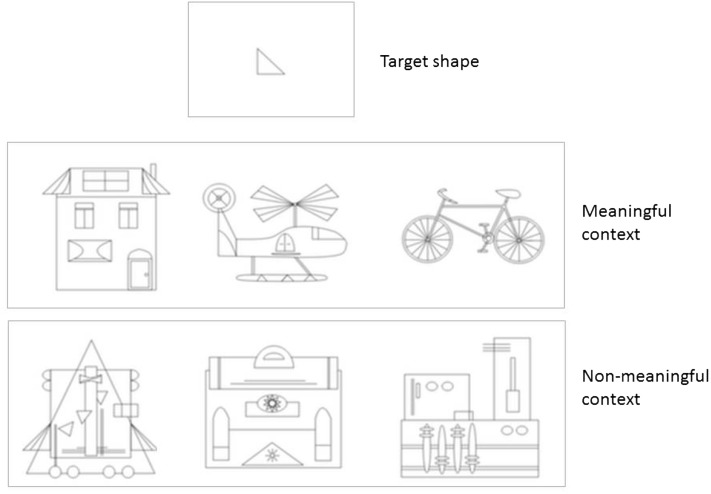
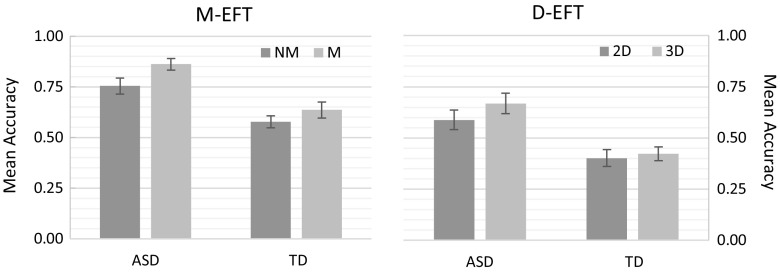
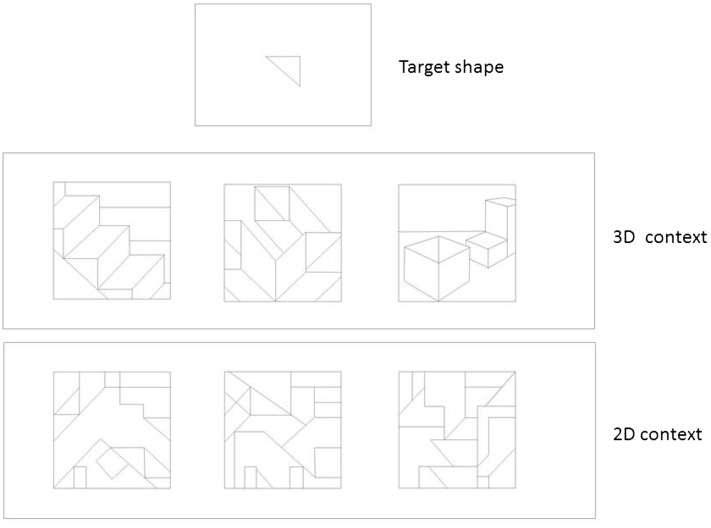
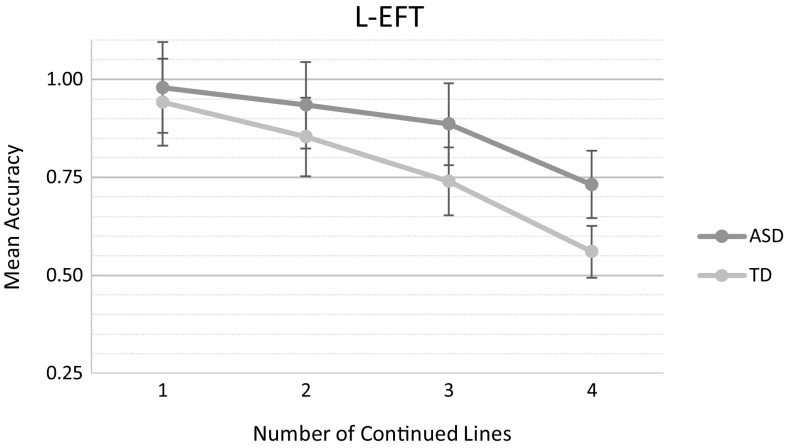
Since its initial development, the embedded figures test (EFT) has been used extensively to measure local-global perceptual style. However, little is known about the perceptual factors that influence target detection. The current study aimed to investigate disembedding in children with and without ASD, aged 8-15 years, using the newly developed, stimulus-controlled L-EFT, M-EFT and D-EFT. Firstly, results revealed superior disembedding for children with ASD, irrespective of the type of target or embedding context, although the ASD group took more time in both the M-EFT and D-EFT. Secondly, the number of target lines continuing into the context proved more of a hindrance for the controls. Taken together, these findings provide strong evidence to support the notion of superior disembedding in ASD.
自最初开发以来,嵌入式图形测试(EFT)已被广泛用于测量局部-整体感知风格。然而,对于影响目标检测的感知因素知之甚少。本研究旨在使用新开发的受刺激控制的 L-EFT、M-EFT 和 D-EFT,研究有无自闭症的 8-15 岁儿童的解嵌入情况。首先,结果表明,自闭症儿童的解嵌入能力更好,无论目标类型或嵌入环境如何,尽管自闭症组在 M-EFT 和 D-EFT 中都花费了更多的时间。其次,对于对照组来说,进入上下文的目标线数量更多是一种障碍。总的来说,这些发现为自闭症中存在更好的解嵌入能力的观点提供了有力的证据。