de-Wit Lee, Huygelier Hanne, Van der Hallen Ruth, Chamberlain Rebecca, Wagemans Johan
Institute of Continuing Education, University of Cambridge, Cambridge, United Kingdom.
Department of Psychology and Language Sciences, University College London, London, United Kingdom.
PeerJ. 2017 Jan 24;5:e2862. doi: 10.7717/peerj.2862. eCollection 2017.
The Embedded Figures Test (EFT, developed by Witkin and colleagues (1971)) has been used extensively in research on individual differences, particularly in the study of autism spectrum disorder. The EFT was originally conceptualized as a measure of field (in)dependence, but in recent years performance on the EFT has been interpreted as a measure of local versus global perceptual style. Although many have used the EFT to measure perceptual style, relatively few have focused on understanding the stimulus features that cause a shape to become embedded. The primary aim of this work was to investigate the relation between the strength of embedding and perceptual grouping on a group level.
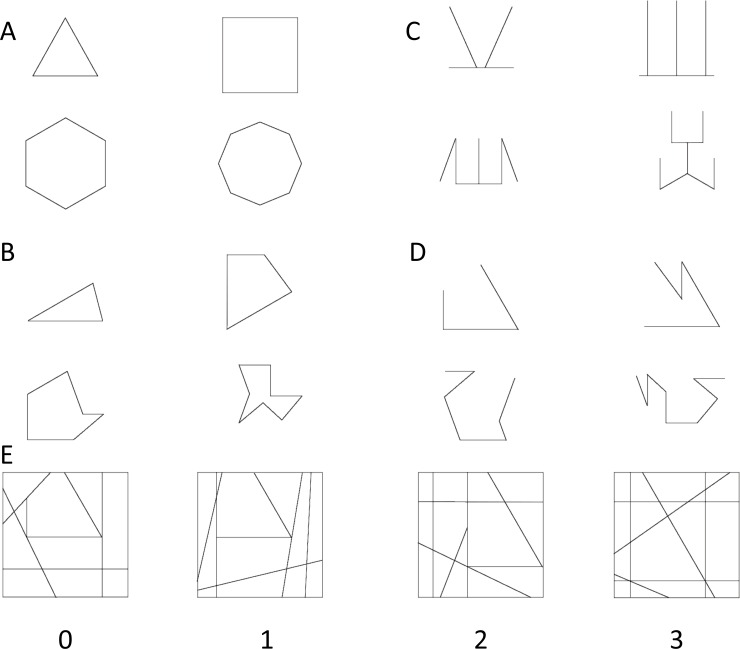
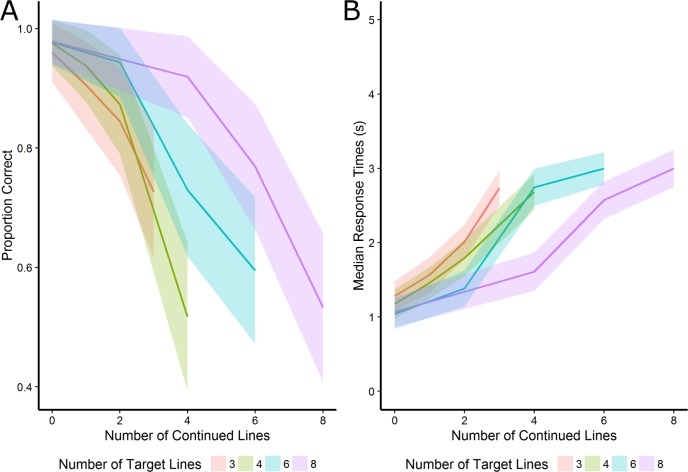
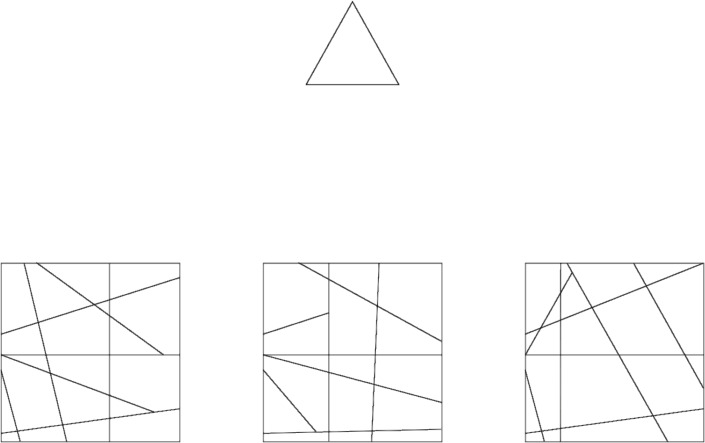
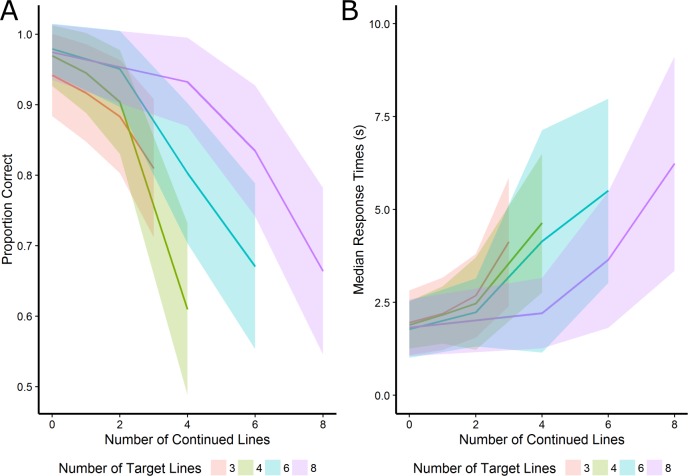
New embedded figure stimuli (both targets and contexts) were developed in which stimulus features that may influence perceptual grouping were explicitly manipulated. The symmetry, closure and complexity of the target shape were manipulated as well as its good continuation by varying the number of lines from the target that continued into the context. We evaluated the effect of these four stimulus features on target detection in a new embedded figures task (Leuven Embedded Figures Test, L-EFT) in a group of undergraduate psychology students. The results were then replicated in a second experiment using a slightly different version of the task.
Stimulus features that influence perceptual grouping, especially good continuation and symmetry, clearly affected performance (lower accuracy, slower response times) on the L-EFT. Closure did not yield results in line with our predictions.
These results show that some stimulus features, which are known to affect perceptual grouping, also influence how effectively a stimulus becomes embedded in different contexts. Whether these results imply that the EFT measures individual differences in perceptual grouping ability must be further investigated.
嵌入图形测验(EFT,由威特金及其同事于1971年开发)已广泛应用于个体差异研究,尤其是在自闭症谱系障碍研究中。EFT最初被概念化为一种场(非)独立性的测量方法,但近年来,EFT的表现被解释为一种局部与整体感知风格的测量方法。尽管许多人使用EFT来测量感知风格,但相对较少有人关注理解导致形状嵌入的刺激特征。这项工作的主要目的是在群体层面上研究嵌入强度与感知分组之间的关系。
开发了新的嵌入图形刺激(包括目标和背景),其中明确操纵了可能影响感知分组的刺激特征。通过改变从目标延续到背景中的线条数量,操纵了目标形状的对称性、闭合性和复杂性以及其良好延续性。我们在一组本科心理学学生中,在一项新的嵌入图形任务(鲁汶嵌入图形测验,L-EFT)中评估了这四个刺激特征对目标检测的影响。然后在第二个实验中使用略有不同版本的任务对结果进行了重复验证。
影响感知分组的刺激特征,尤其是良好延续性和对称性,明显影响了L-EFT的表现(准确率降低、反应时间延长)。闭合性的结果与我们的预测不符。
这些结果表明,一些已知会影响感知分组的刺激特征,也会影响刺激在不同背景中嵌入的有效程度。这些结果是否意味着EFT测量的是感知分组能力的个体差异,必须进一步研究。