Departments of Pediatrics, Division of Pediatric Hematology-Oncology.
Medicine, Division of Hematology-Oncology.
J Immunother. 2018 Jun;41(5):248-259. doi: 10.1097/CJI.0000000000000216.
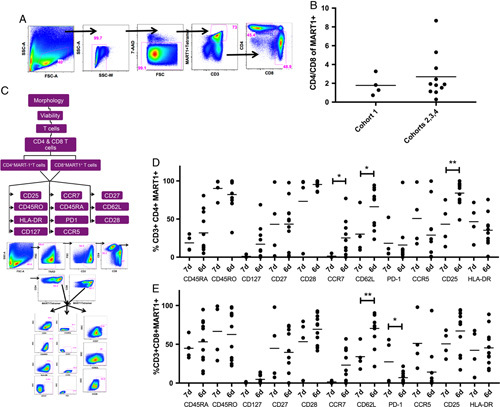
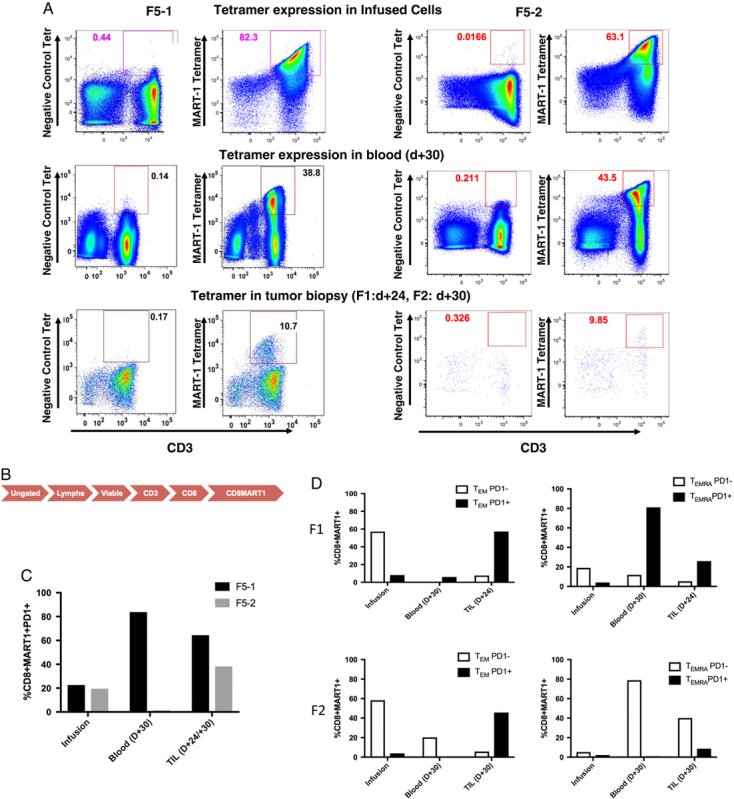
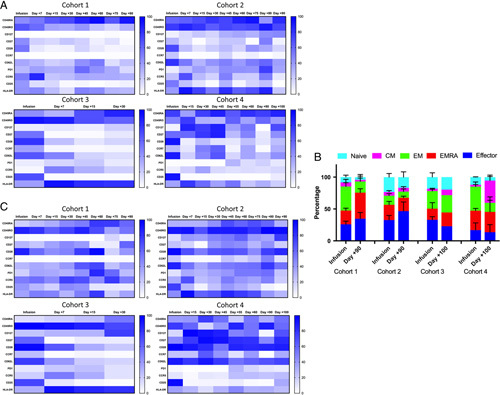
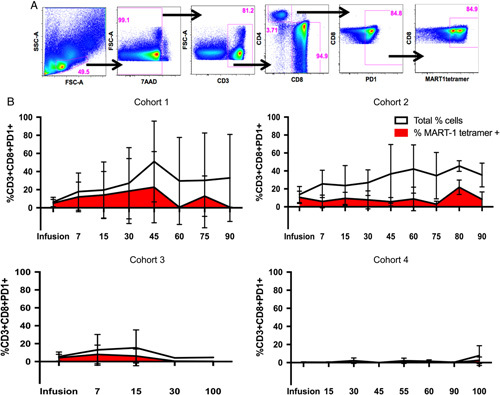
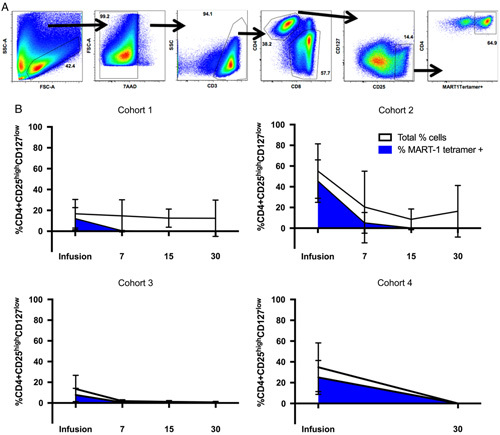
Adoptive cell therapy (ACT) consisting of genetically engineered T cells expressing tumor antigen-specific T-cell receptors displays robust initial antitumor activity, followed by loss of T-cell activity/persistence and frequent disease relapse. We characterized baseline and longitudinal T-cell phenotype variations resulting from different manufacturing and administration protocols in patients who received ACT. Patients with melanoma who enrolled in the F5-MART-1 clinical trial (NCT00910650) received infusions of MART-1 T-cell receptors transgenic T cells with MART-1 peptide-pulsed dendritic cell vaccination. Patients were divided into cohorts based on several manufacturing changes in the generation and administration of the transgenic T cells: decreasing ex vivo stimulation/expansion time, increased cell dose, and receiving fresh instead of cryopreserved cells. T-cell phenotypes were analyzed by flow cytometry at baseline and longitudinally in peripheral blood. Transgenic T cells with shorter ex vivo culture/expansion periods displayed significantly increased expression of markers associated with less differentiated naive/memory populations, as well as significantly decreased expression of the inhibitory receptor programmed death 1 (PD1). Patients receiving fresh infusions of transgenic cells demonstrated expansion of central memory T cells and delayed acquisition of PD1 expression compared with patients who received cryopreserved products. Freshly infused transgenic T cells showed persistence and expansion of naive and memory T-cell populations and delayed acquisition of PD1 expression, which correlated with this cohort's superior persistence of transgenic cells and response to dendritic cell vaccines. These results may be useful in designing future ACT protocols.
过继细胞疗法(ACT)由表达肿瘤抗原特异性 T 细胞受体的基因工程 T 细胞组成,具有强大的初始抗肿瘤活性,随后 T 细胞活性/持久性丧失,疾病频繁复发。我们对接受 ACT 治疗的患者因不同的制造和管理方案导致的基线和纵向 T 细胞表型变化进行了特征描述。参与 F5-MART-1 临床试验(NCT00910650)的黑色素瘤患者接受了 MART-1 受体转基因 T 细胞输注,这些 T 细胞与 MART-1 肽脉冲树突状细胞疫苗联合使用。根据转基因 T 细胞的生成和管理中的几项制造变化,患者被分为几个队列:减少体外刺激/扩增时间、增加细胞剂量以及接受新鲜而不是冷冻保存的细胞。通过流式细胞术在基线和外周血的纵向分析 T 细胞表型。具有较短体外培养/扩增期的转基因 T 细胞显著增加了与分化程度较低的幼稚/记忆群体相关的标志物的表达,同时显著降低了抑制性受体程序性死亡 1(PD1)的表达。与接受冷冻产品的患者相比,接受新鲜输注的转基因细胞的患者表现出中央记忆 T 细胞的扩增和 PD1 表达的延迟获得。新鲜输注的转基因 T 细胞表现出幼稚和记忆 T 细胞群体的持久性和扩增,以及 PD1 表达的延迟获得,这与该队列中转基因细胞的持久性和对树突状细胞疫苗的反应更好相关。这些结果可能对设计未来的 ACT 方案有用。