Department of Emergency Medicine, Wayne State University School of Medicine, Detroit, MI, 48201, USA.
Department of Emergency Medicine, University of Michigan Medical School, Ann Arbor, MI, 48109, USA.
Sci Rep. 2018 Feb 22;8(1):3481. doi: 10.1038/s41598-018-21869-x.
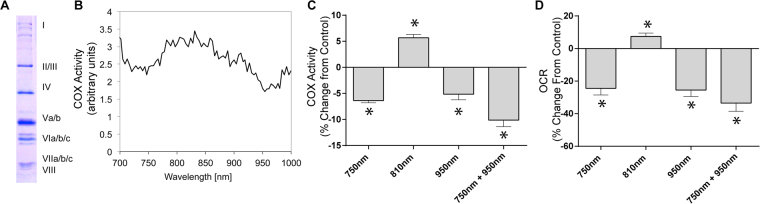
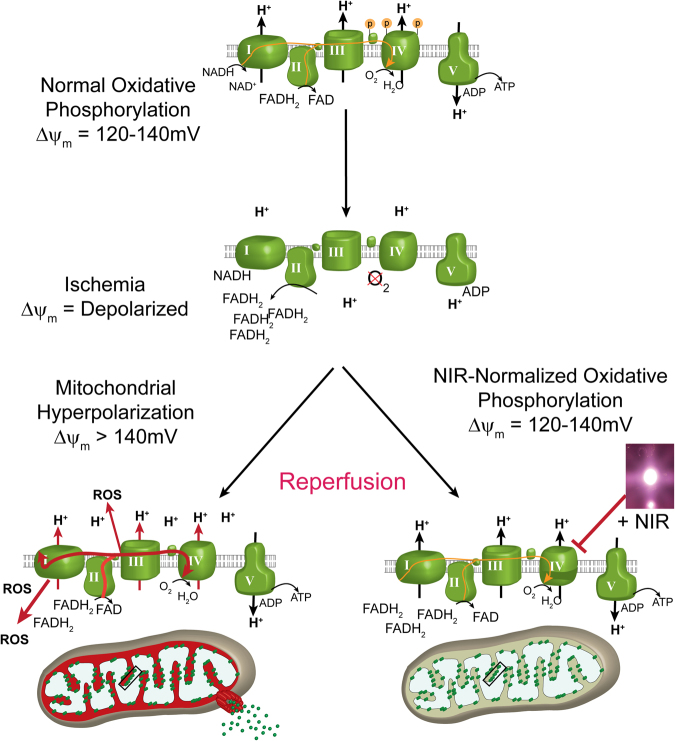
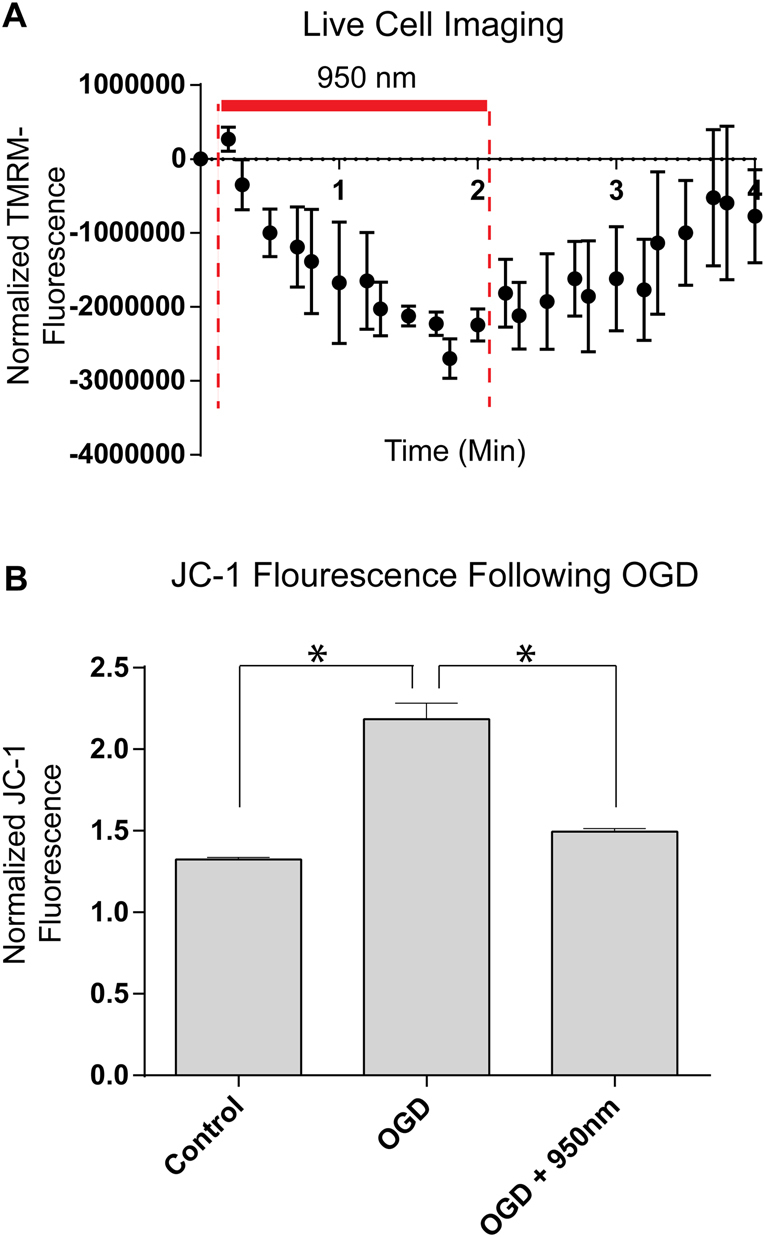
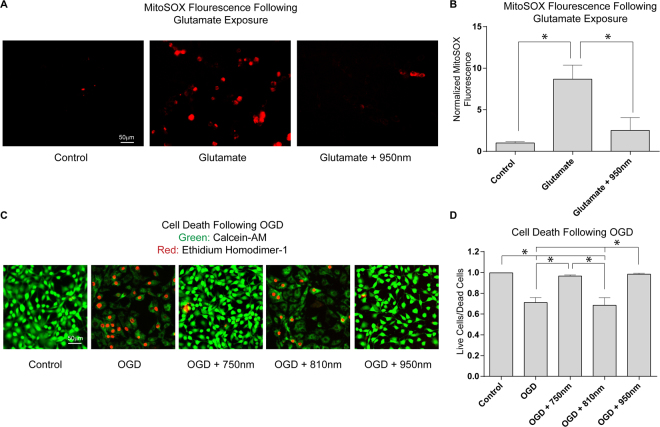
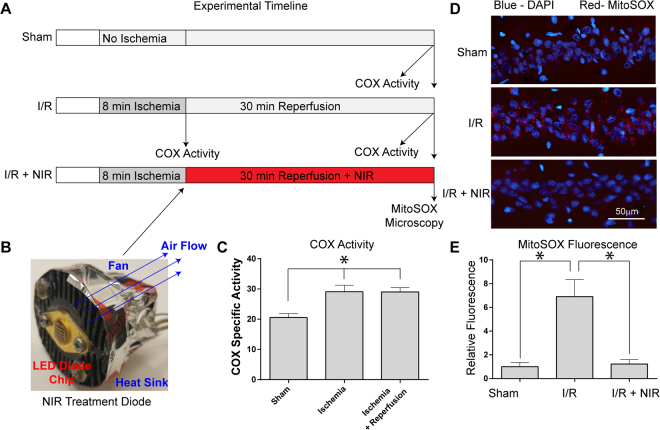
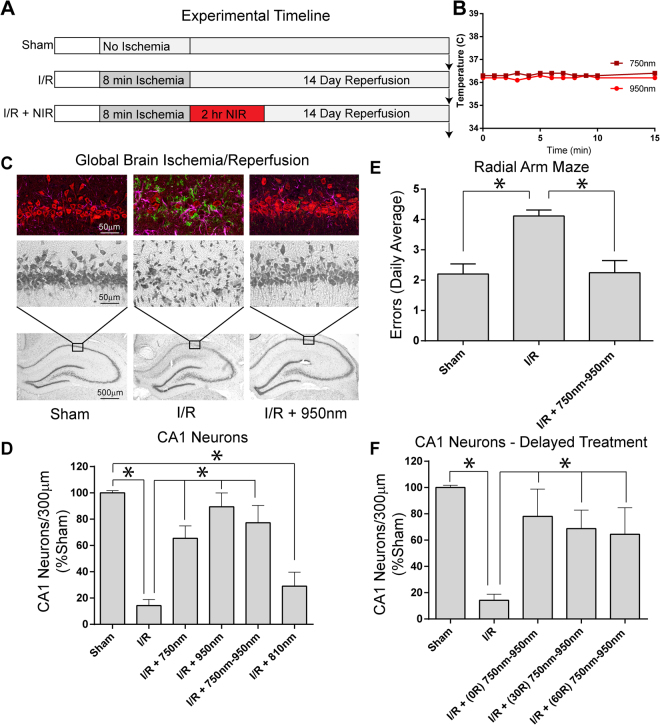
The interaction of light with biological tissue has been successfully utilized for multiple therapeutic purposes. Previous studies have suggested that near infrared light (NIR) enhances the activity of mitochondria by increasing cytochrome c oxidase (COX) activity, which we confirmed for 810 nm NIR. In contrast, scanning the NIR spectrum between 700 nm and 1000 nm revealed two NIR wavelengths (750 nm and 950 nm) that reduced the activity of isolated COX. COX-inhibitory wavelengths reduced mitochondrial respiration, reduced the mitochondrial membrane potential (ΔΨ), attenuated mitochondrial superoxide production, and attenuated neuronal death following oxygen glucose deprivation, whereas NIR that activates COX provided no benefit. We evaluated COX-inhibitory NIR as a potential therapy for cerebral reperfusion injury using a rat model of global brain ischemia. Untreated animals demonstrated an 86% loss of neurons in the CA1 hippocampus post-reperfusion whereas inhibitory NIR groups were robustly protected, with neuronal loss ranging from 11% to 35%. Moreover, neurologic function, assessed by radial arm maze performance, was preserved at control levels in rats treated with a combination of both COX-inhibitory NIR wavelengths. Taken together, our data suggest that COX-inhibitory NIR may be a viable non-pharmacologic and noninvasive therapy for the treatment of cerebral reperfusion injury.
光与生物组织的相互作用已成功地用于多种治疗目的。先前的研究表明,近红外光(NIR)通过增加细胞色素 c 氧化酶(COX)活性来增强线粒体的活性,我们已经证实了 810nm NIR 的这种作用。相比之下,扫描 700nm 至 1000nm 之间的 NIR 光谱发现了两个 NIR 波长(750nm 和 950nm),它们降低了分离的 COX 的活性。COX 抑制波长降低了线粒体呼吸,降低了线粒体膜电位(ΔΨ),减弱了线粒体超氧化物的产生,并减轻了氧葡萄糖剥夺后神经元的死亡,而激活 COX 的 NIR 则没有益处。我们使用全脑缺血大鼠模型评估了 COX 抑制性 NIR 作为脑再灌注损伤的潜在治疗方法。未经治疗的动物在再灌注后 CA1 海马区的神经元损失了 86%,而抑制性 NIR 组则得到了强有力的保护,神经元损失范围为 11%至 35%。此外,通过放射臂迷宫性能评估的神经功能在接受两种 COX 抑制性 NIR 波长联合治疗的大鼠中保持在对照水平。总之,我们的数据表明,COX 抑制性 NIR 可能是治疗脑再灌注损伤的一种可行的非药物和非侵入性治疗方法。