Jiménez-Alcázar Miguel, Limacher Andreas, Panda Rachita, Méan Marie, Bitterling Josephine, Peine Sven, Renné Thomas, Beer Jürg H, Aujesky Drahomir, Lämmle Bernhard, Fuchs Tobias A
Institute of Clinical Chemistry and Laboratory Medicine, University Medical Center Hamburg-Eppendorf, Hamburg, Germany.
CTU Bern, and Institute of Social and Preventive Medicine, University of Bern, Bern, Switzerland.
PLoS One. 2018 Feb 23;13(2):e0191150. doi: 10.1371/journal.pone.0191150. eCollection 2018.
Venous thromboembolism (VTE) is a major cause of morbidity and mortality in elderly patients. Extracellular DNA is a pro-inflammatory and pro-thrombotic mediator in vitro and in animal models. Levels of circulating extracellular DNA (ceDNA) are increased in VTE patients, but the association of ceDNA with VTE extent and clinical outcome is poorly understood.
We analyzed the association of ceDNA with the extent of VTE, categorized as distal and proximal deep vein thrombosis and pulmonary embolism, and with the clinical outcomes VTE recurrence and mortality.
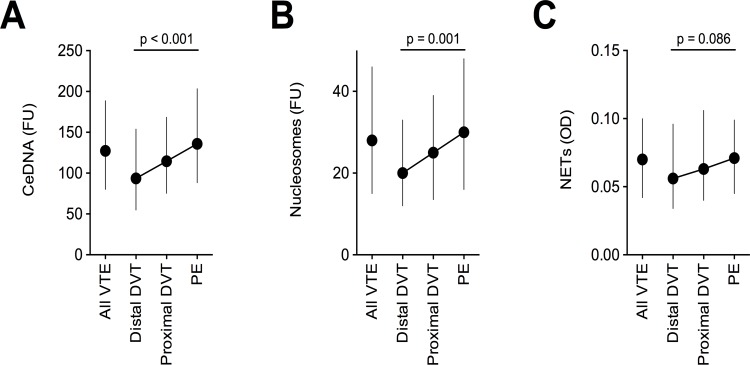
We quantified ceDNA by a fluorescent probe, as well as circulating nucleosomes and neutrophil extracellular traps (NETs) by ELISA in plasma from 611 patients aged ≥ 65 years with acute VTE of a prospective cohort study (SWITCO65+).
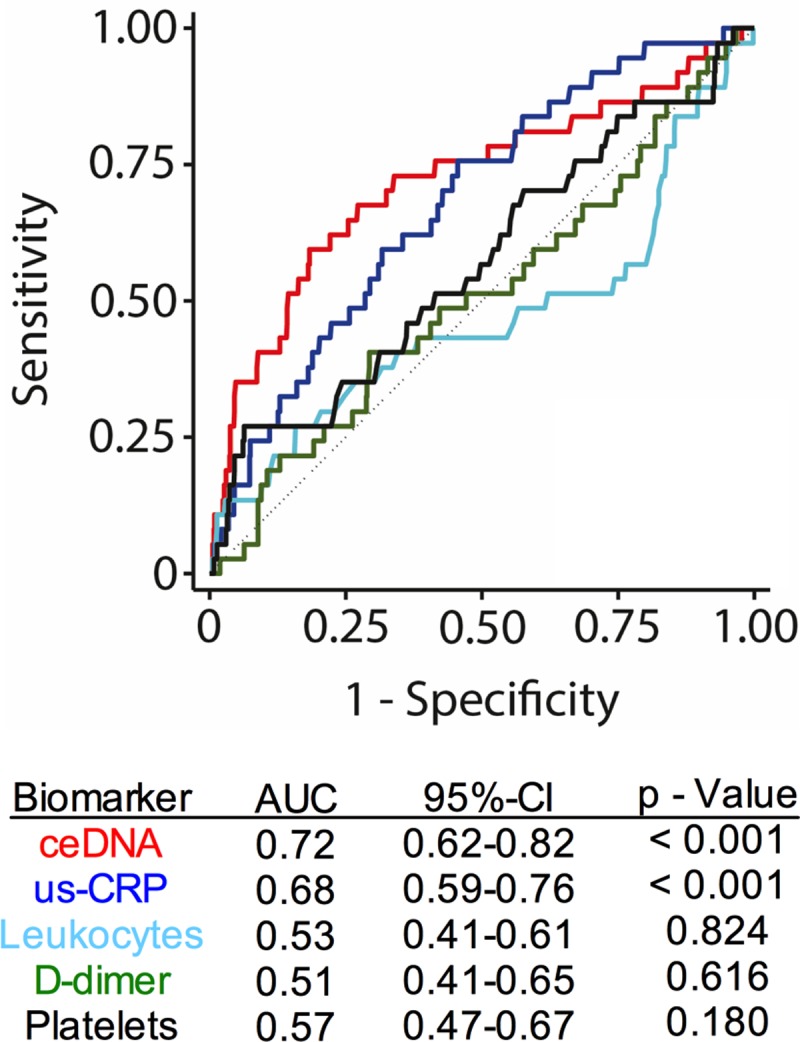
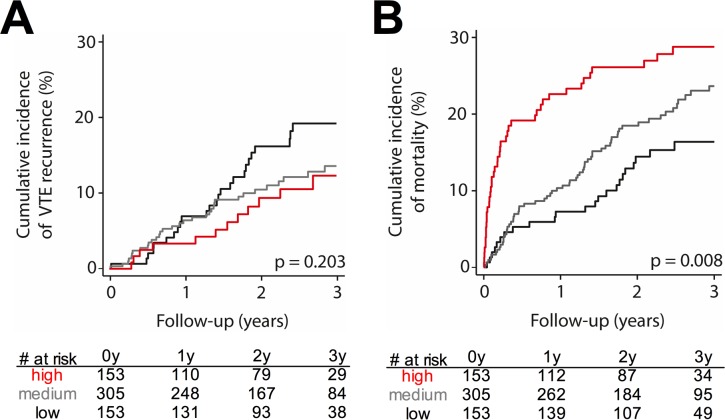
Levels of ceDNA and nucleosomes, but not NETs, correlated with VTE extent. Infectious comorbidities independently increased ceDNA levels in VTE. CeDNA strongly correlated with C-reactive protein and leukocytosis, suggesting an association of ceDNA with inflammation in VTE patients. CeDNA furthermore predicted PE-related and all-cause mortality, but not VTE recurrence, during a 3-year follow-up.
Our study suggests that ceDNA levels in VTE patients reflect the degree of inflammation and may serve as a biomarker to stratify VTE patients at risk for mortality.
静脉血栓栓塞症(VTE)是老年患者发病和死亡的主要原因。在体外和动物模型中,细胞外DNA是一种促炎和促血栓形成介质。VTE患者循环细胞外DNA(ceDNA)水平升高,但ceDNA与VTE范围和临床结局之间的关联尚不清楚。
我们分析了ceDNA与VTE范围(分为远端和近端深静脉血栓形成及肺栓塞)以及临床结局VTE复发和死亡率之间的关联。
在前瞻性队列研究(SWITCO65+)中,我们使用荧光探针定量ceDNA,并通过ELISA法检测611例年龄≥65岁的急性VTE患者血浆中的循环核小体和中性粒细胞胞外陷阱(NETs)。
ceDNA和核小体水平与VTE范围相关,但NETs水平与之无关。感染性合并症独立增加VTE患者的ceDNA水平。ceDNA与C反应蛋白和白细胞增多密切相关,提示ceDNA与VTE患者的炎症有关。此外,在3年随访期间,ceDNA可预测PE相关死亡率和全因死亡率,但不能预测VTE复发。
我们的研究表明,VTE患者的ceDNA水平反映炎症程度,可作为对有死亡风险的VTE患者进行分层的生物标志物。