Mitchell Center for Neurodegenerative Diseases, University of Texas Medical Branch, Galveston, Texas; Departments of Neurology, Neuroscience and Cell Biology, University of Texas Medical Branch, Galveston, Texas.
Mitchell Center for Neurodegenerative Diseases, University of Texas Medical Branch, Galveston, Texas; Departments of Neurology, Neuroscience and Cell Biology, University of Texas Medical Branch, Galveston, Texas.
Biol Psychiatry. 2018 Oct 1;84(7):499-508. doi: 10.1016/j.biopsych.2017.12.018. Epub 2018 Jan 17.
The coexistence of α-synuclein and tau aggregates in several neurodegenerative disorders, including Parkinson's disease and Alzheimer's disease, raises the possibility that a seeding mechanism is involved in disease progression.
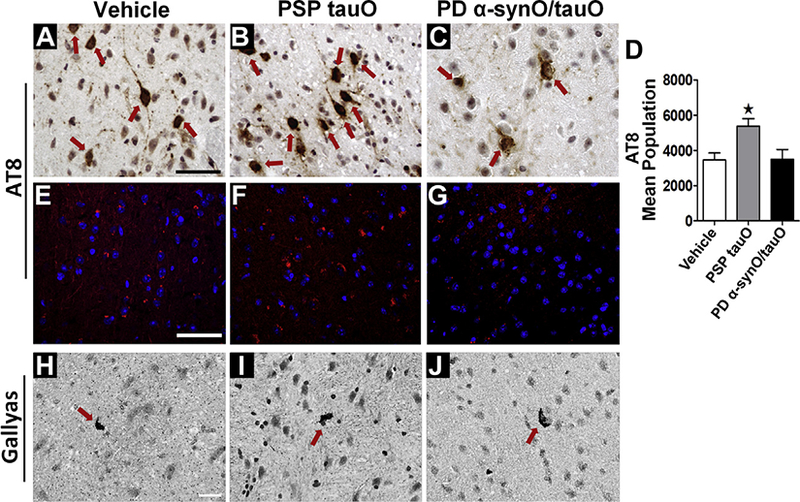
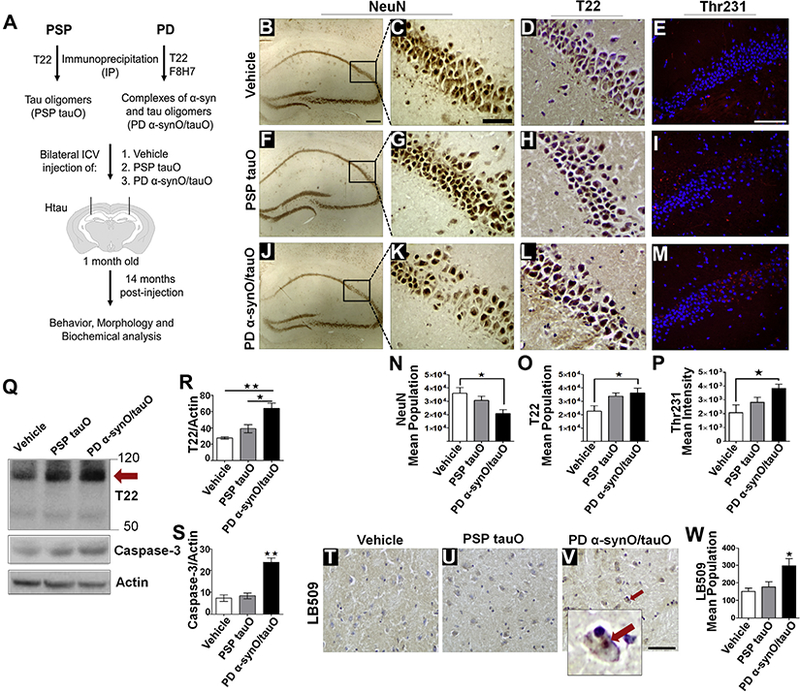
To further investigate the role of α-synuclein in the tau aggregation pathway, we performed a set of experiments using both recombinant and brain-derived tau and α-synuclein oligomers to seed monomeric tau aggregation in vitro and in vivo. Brain-derived tau oligomers were isolated from well-characterized cases of progressive supranuclear palsy (n = 4) and complexes of brain-derived α-synuclein/tau oligomers isolated from patients with Parkinson's disease (n = 4). The isolated structures were purified and characterized by standard biochemical methods, then injected into Htau mice (n = 24) to assess their toxicity and role in tau aggregation.
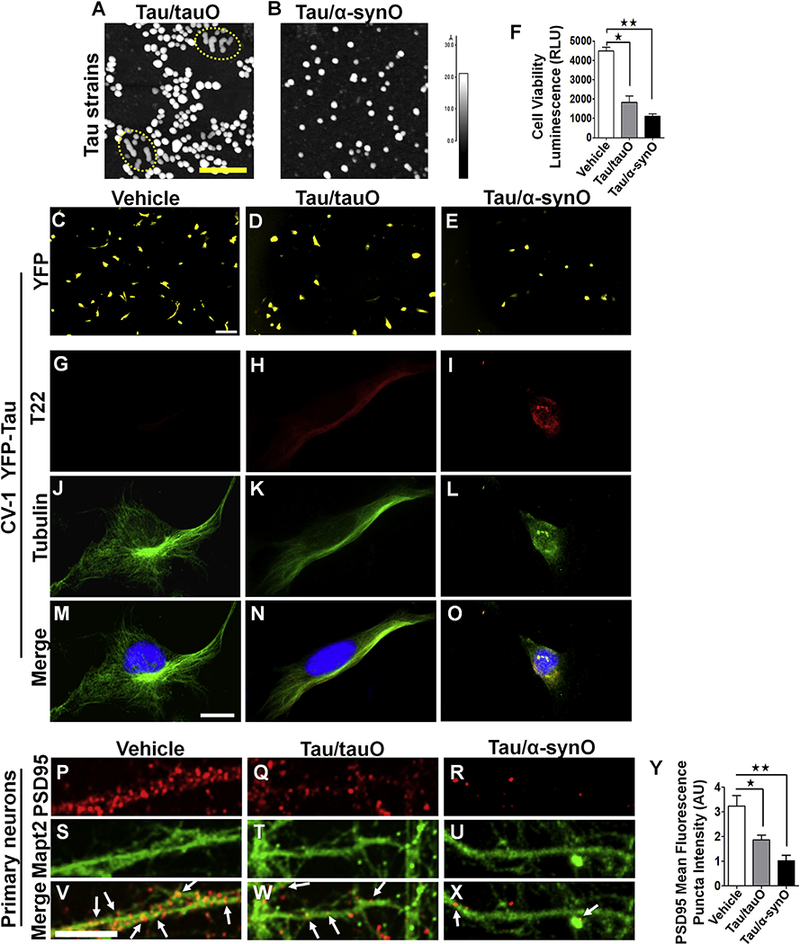
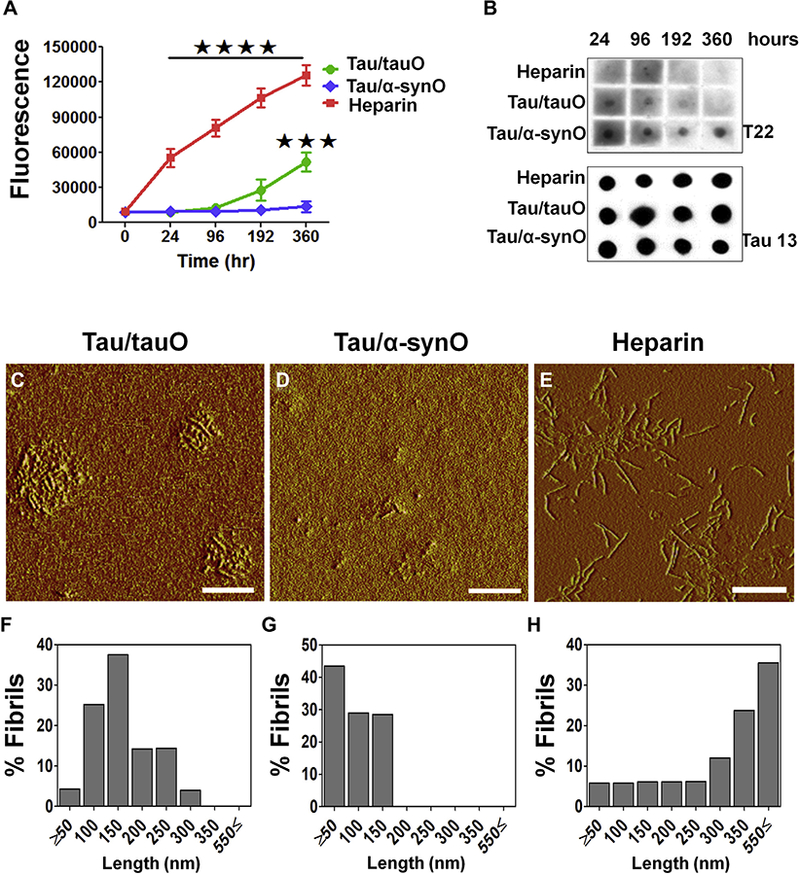
We found that α-synuclein induced a distinct toxic tau oligomeric strain that avoids fibril formation. In vivo, Parkinson's disease brain-derived α-synuclein/tau oligomers administered into Htau mouse brains accelerated endogenous tau oligomer formation concurrent with increasing cell loss.
Our findings provide evidence, for the first time, that α-synuclein enhances the harmful effects of tau, thus contributing to disease progression.
在包括帕金森病和阿尔茨海默病在内的几种神经退行性疾病中,α-突触核蛋白和 tau 聚集物共存,这使得人们认为存在一种引发机制与疾病进展有关。
为了进一步研究 α-突触核蛋白在 tau 聚集途径中的作用,我们使用重组和脑源性 tau 和 α-突触核蛋白寡聚体进行了一系列实验,以在体外和体内诱导单体 tau 聚集。脑源性 tau 寡聚体从明确诊断的进行性核上性麻痹(n=4)病例中分离,而脑源性 α-突触核蛋白/tau 寡聚体复合物则从帕金森病患者(n=4)中分离。使用标准生化方法对分离出的结构进行纯化和表征,然后将其注入 Htau 小鼠(n=24)中,以评估其毒性和在 tau 聚集中的作用。
我们发现 α-突触核蛋白诱导了一种独特的有毒 tau 寡聚体菌株,可避免纤维形成。在体内,帕金森病脑源性 α-突触核蛋白/tau 寡聚体注射到 Htau 小鼠脑中会加速内源性 tau 寡聚体的形成,同时伴随着细胞死亡的增加。
我们的研究结果首次提供了证据,表明 α-突触核蛋白增强了 tau 的有害影响,从而促进了疾病的进展。