Lukas Cédric, Cyteval Catherine, Dougados Maxime, Weber Ulrich
Department of Rheumatology, University Hospital Lapeyronie, Montpellier, France.
Montpellier University, Montpellier, France.
RMD Open. 2018 Jan 12;4(1):e000586. doi: 10.1136/rmdopen-2017-000586. eCollection 2018.
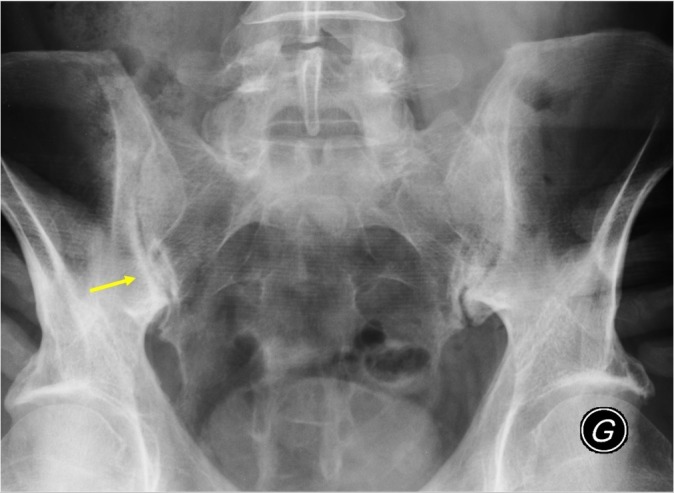
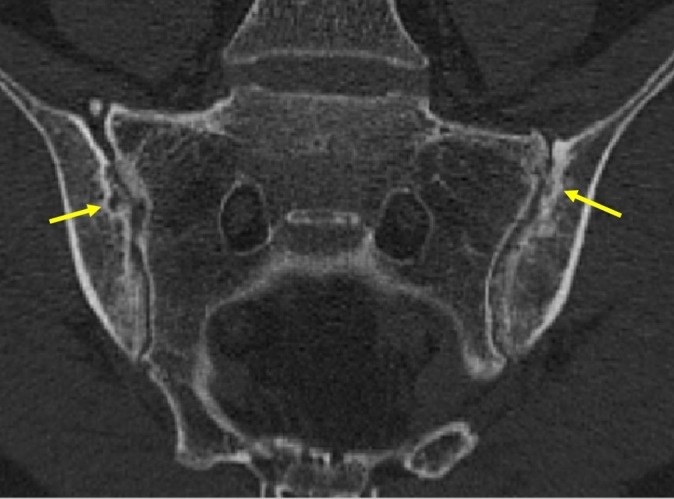
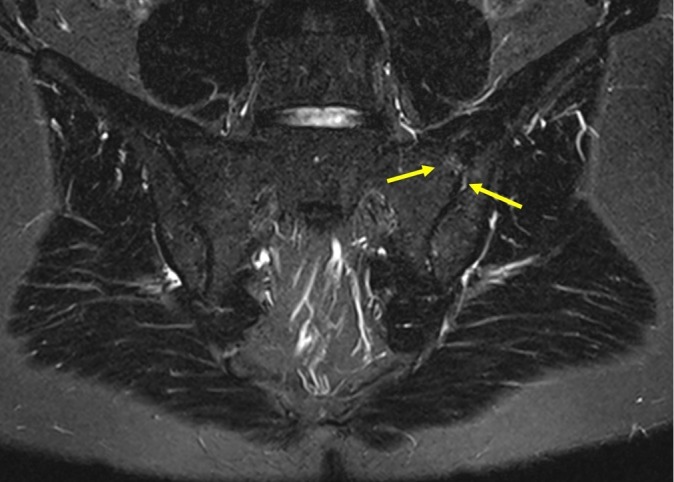
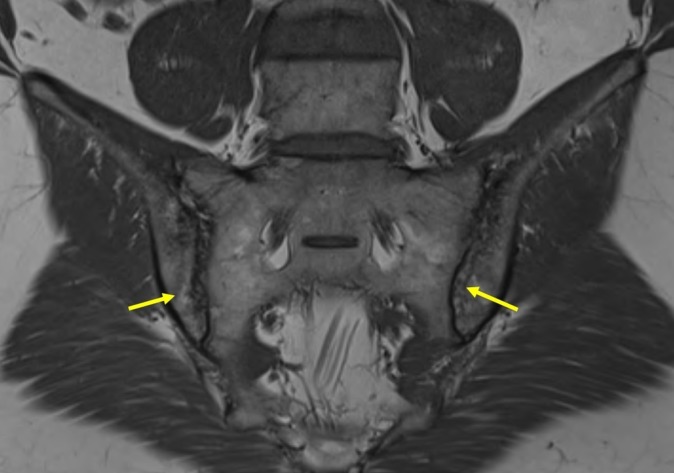
Recognition of axial spondyloarthritis (SpA) remains challenging, as no unique reference standard is available to ascertain diagnosis. Imaging procedures have been used for long in the field, in particular pelvic radiography, to capture structural changes evocative of sacroiliitis, the key feature in SpA. The introduction of MRI of the sacroiliac joints (SIJs) has led to a major shift in recognition of the disorder. MRI has been shown to detect the initial inflammatory processes, in particular osteitis depicted by bone marrow oedema, even in patients having not yet developed structural lesions. In addition, MRI has revealed a previously under-recognised very early clinical phase of the disease where patients have symptomatic axial involvement, but no structural changes. However, what constitutes a 'positive MRI' in SpA remains controversial, since both sensitivity and specificity show limitations, and interpretation of MRI lesions in daily practice is critically dependent on the clinical context. There is growing evidence that integration of the assessment of structural changes on dedicated T1 weighted-sequences on MRI may enhance diagnostic utility. The performance of MRI in detecting structural lesions in the SIJs may even be superior to traditional evaluation by pelvic radiography. These findings launched a debate on imaging in SpA, whether MRI, which is advancing early recognition of disease and shows superiority to detect structural changes, should replace traditional conventional radiography of the SIJs.
轴性脊柱关节炎(SpA)的诊断仍然具有挑战性,因为目前尚无确定诊断的独特参考标准。影像学检查在该领域已应用多年,尤其是骨盆X线摄影,用于捕捉提示骶髂关节炎的结构变化,而骶髂关节炎是SpA的关键特征。骶髂关节磁共振成像(MRI)的引入使该疾病的诊断发生了重大转变。MRI已被证明能够检测到初始炎症过程,特别是骨髓水肿所显示的骨炎,即使在尚未出现结构病变的患者中也是如此。此外,MRI还揭示了该疾病一个此前未被充分认识的非常早期的临床阶段,即患者有症状性的轴向受累,但无结构改变。然而,SpA中“MRI阳性”的标准仍存在争议,因为其敏感性和特异性都存在局限性,而且在日常实践中对MRI病变的解读严重依赖于临床背景。越来越多的证据表明,在MRI上结合专用T1加权序列对结构变化的评估可能会提高诊断效用。MRI检测骶髂关节结构病变的性能甚至可能优于传统的骨盆X线评估。这些发现引发了关于SpA影像学检查的争论,即能够促进疾病早期识别且在检测结构变化方面表现更优的MRI是否应取代传统的骶髂关节X线检查。