
肽-MHC I 四聚体可能无法检测到相关功能 T 细胞克隆型,并低估抗原反应性 T 细胞群体。
Peptide-MHC Class I Tetramers Can Fail To Detect Relevant Functional T Cell Clonotypes and Underestimate Antigen-Reactive T Cell Populations.
机构信息
Division of Infection and Immunity, Cardiff University School of Medicine, University Hospital Wales, Cardiff CF14 4XN, United Kingdom.
Department of Oncology and Ludwig Cancer Research, Lausanne University Hospital, Epalinges VD 1066, Switzerland.
出版信息
J Immunol. 2018 Apr 1;200(7):2263-2279. doi: 10.4049/jimmunol.1700242. Epub 2018 Feb 26.
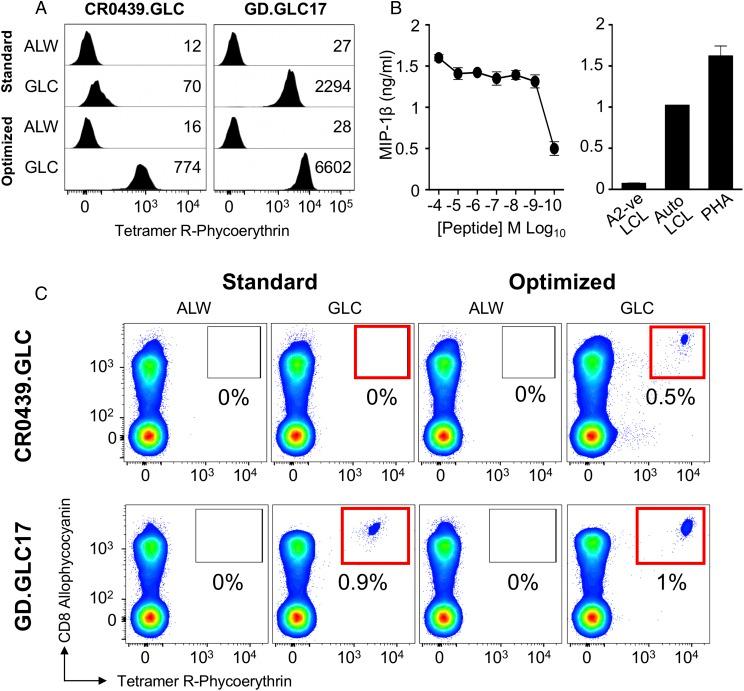
Peptide-MHC (pMHC) multimers, usually used as streptavidin-based tetramers, have transformed the study of Ag-specific T cells by allowing direct detection, phenotyping, and enumeration within polyclonal T cell populations. These reagents are now a standard part of the immunology toolkit and have been used in many thousands of published studies. Unfortunately, the TCR-affinity threshold required for staining with standard pMHC multimer protocols is higher than that required for efficient T cell activation. This discrepancy makes it possible for pMHC multimer staining to miss fully functional T cells, especially where low-affinity TCRs predominate, such as in MHC class II-restricted responses or those directed against self-antigens. Several recent, somewhat alarming, reports indicate that pMHC staining might fail to detect the majority of functional T cells and have prompted suggestions that T cell immunology has become biased toward the type of cells amenable to detection with multimeric pMHC. We use several viral- and tumor-specific pMHC reagents to compare populations of human T cells stained by standard pMHC protocols and optimized protocols that we have developed. Our results confirm that optimized protocols recover greater populations of T cells that include fully functional T cell clonotypes that cannot be stained by regular pMHC-staining protocols. These results highlight the importance of using optimized procedures that include the use of protein kinase inhibitor and Ab cross-linking during staining to maximize the recovery of Ag-specific T cells and serve to further highlight that many previous quantifications of T cell responses with pMHC reagents are likely to have considerably underestimated the size of the relevant populations.
肽-MHC (pMHC) 多聚体,通常用作基于链霉亲和素的四聚体,通过允许在多克隆 T 细胞群体中直接检测、表型分析和计数,改变了 Ag 特异性 T 细胞的研究。这些试剂现在是免疫工具箱的标准组成部分,已经在数千项已发表的研究中使用。不幸的是,用标准 pMHC 多聚体方案染色所需的 TCR 亲和力阈值高于有效 T 细胞激活所需的阈值。这种差异使得 pMHC 多聚体染色有可能错过完全功能性的 T 细胞,特别是在低亲和力 TCR 占主导地位的情况下,例如 MHC 类 II 限制的反应或针对自身抗原的反应。最近有几项令人担忧的报告表明,pMHC 染色可能无法检测到大多数功能性 T 细胞,并促使人们提出建议,即 T 细胞免疫学已经偏向于易于用多聚体 pMHC 检测的细胞类型。我们使用几种病毒和肿瘤特异性 pMHC 试剂来比较用标准 pMHC 方案和我们开发的优化方案染色的人类 T 细胞群体。我们的结果证实,优化方案可回收更多的 T 细胞群体,其中包括不能用常规 pMHC 染色方案染色的完全功能性 T 细胞克隆型。这些结果强调了使用优化程序的重要性,包括在染色过程中使用蛋白激酶抑制剂和 Ab 交联,以最大限度地回收 Ag 特异性 T 细胞,并进一步强调,许多以前使用 pMHC 试剂对 T 细胞反应的定量可能大大低估了相关群体的规模。




 Zotero 插件