Departamento de Farmacología and CIBERehd, Facultad de Medicina, Universidad de Valencia, Av. Blasco Ibáñez, 15, 46010, Valencia, Spain.
Departamento de Medicina and CIBERehd, Facultad de Medicina, Universidad de Valencia, Av. Blasco Ibáñez, 15, 46010, Valencia, Spain.
Sci Rep. 2018 Feb 26;8(1):3593. doi: 10.1038/s41598-018-21455-1.
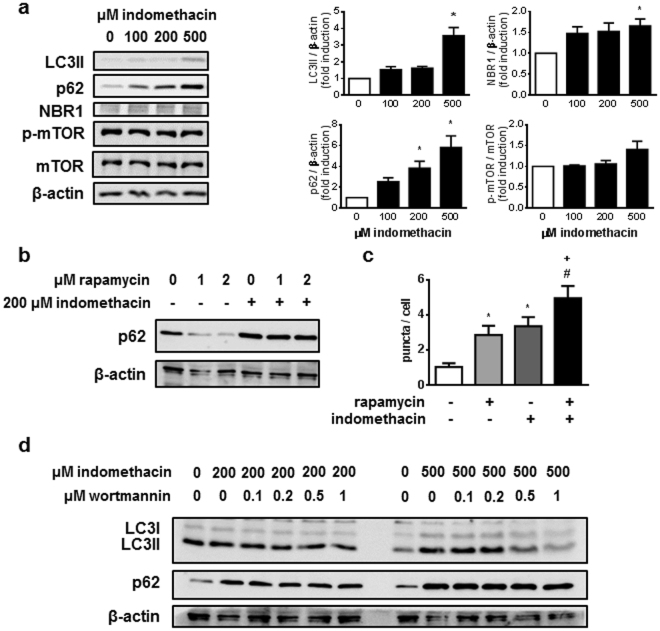
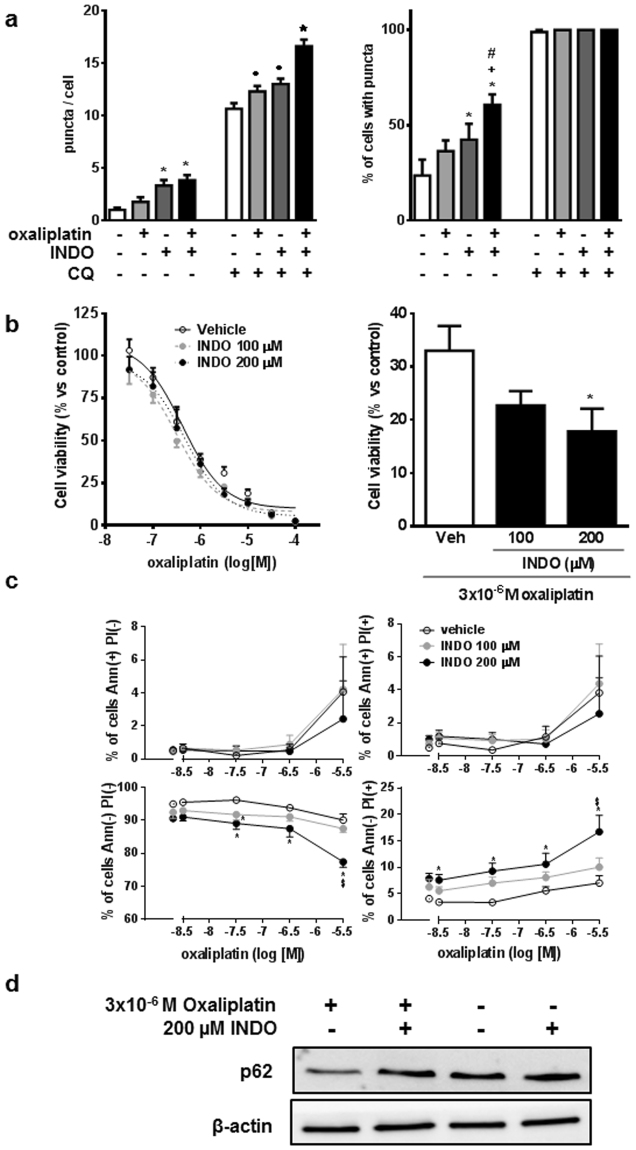
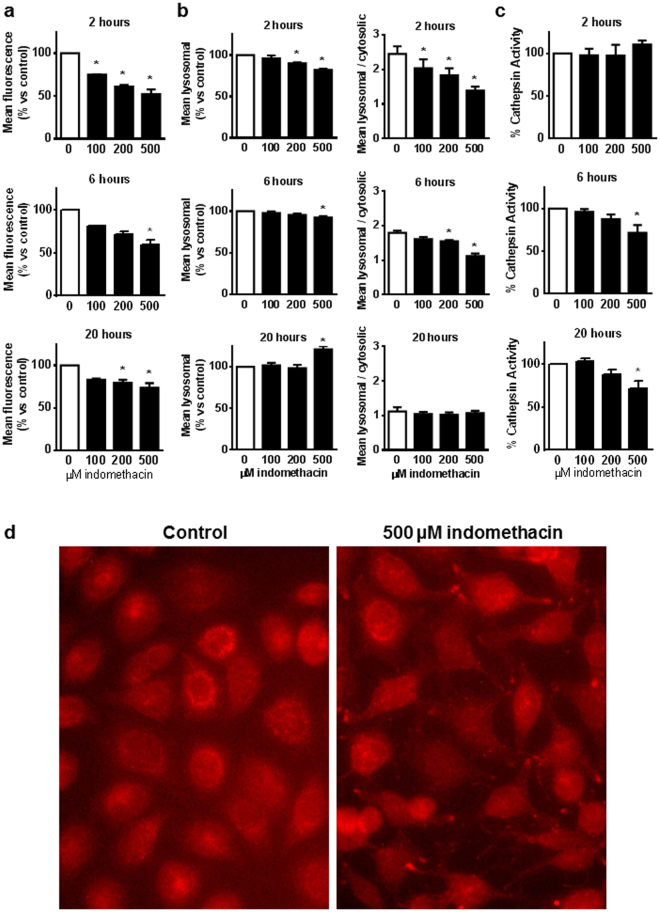
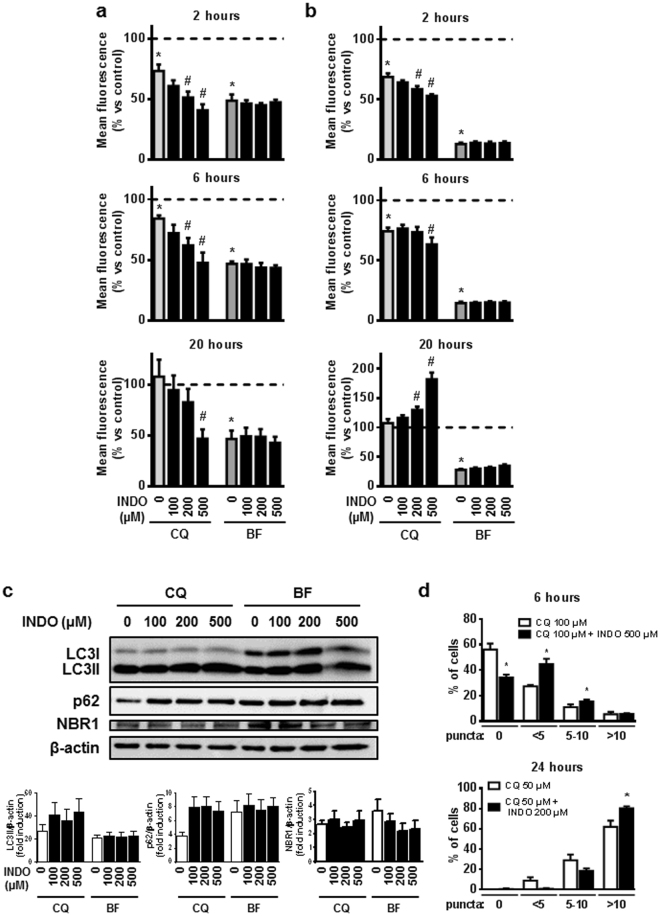
NSAIDs inhibit tumorigenesis in gastrointestinal tissues and have been proposed as coadjuvant agents to chemotherapy. The ability of cancer epithelial cells to adapt to the tumour environment and to resist cytotoxic agents seems to depend on rescue mechanisms such as autophagy. In the present study we aimed to determine whether an NSAID with sensitizing properties such as indomethacin modulates autophagy in gastric cancer epithelial cells. We observed that indomethacin causes lysosomal dysfunction in AGS cells and promotes the accumulation of autophagy substrates without altering mTOR activity. Indomethacin enhanced the inhibitory effects of the lysosomotropic agent chloroquine on lysosome activity and autophagy, but lacked any effect when both functions were maximally reduced with another lysosome inhibitor (bafilomycin B1). Indomethacin, alone and in combination with chloroquine, also hindered the autophagic flux stimulated by the antineoplastic drug oxaliplatin and enhanced its toxic effect, increasing the rate of apoptosis/necrosis and undermining cell viability. In summary, our results indicate that indomethacin disrupts autophagic flux by disturbing the normal functioning of lysosomes and, by doing so, increases the sensitivity of gastric cancer cells to cytotoxic agents, an effect that could be used to overcome cancer cell resistance to antineoplastic regimes.
非甾体抗炎药(NSAIDs)抑制胃肠道组织的肿瘤发生,并已被提议作为化疗的辅助剂。癌细胞上皮细胞适应肿瘤环境和抵抗细胞毒性药物的能力似乎取决于自噬等救援机制。在本研究中,我们旨在确定具有增敏特性的 NSAID(如吲哚美辛)是否会调节胃癌上皮细胞中的自噬。我们观察到吲哚美辛在 AGS 细胞中引起溶酶体功能障碍,并促进自噬底物的积累,而不会改变 mTOR 活性。吲哚美辛增强了溶酶体趋向性药物氯喹对溶酶体活性和自噬的抑制作用,但在用另一种溶酶体抑制剂(巴弗洛霉素 B1)最大程度地降低这两种功能时,它没有任何作用。吲哚美辛单独使用和与氯喹联合使用也阻碍了抗肿瘤药物奥沙利铂刺激的自噬流,并增强了其毒性作用,增加了细胞凋亡/坏死的速度,破坏了细胞活力。总之,我们的结果表明,吲哚美辛通过扰乱溶酶体的正常功能破坏自噬流,并因此增加胃癌细胞对细胞毒性药物的敏感性,这种作用可用于克服癌细胞对抗肿瘤方案的耐药性。