Plant Molecular Biology Laboratory, National Botanical Research Institute, Rana Pratap Marg, Lucknow, 226001, India.
Department of Biochemistry, University of Lucknow, Lucknow, 226007, India.
Sci Rep. 2018 Feb 26;8(1):3620. doi: 10.1038/s41598-018-21866-0.
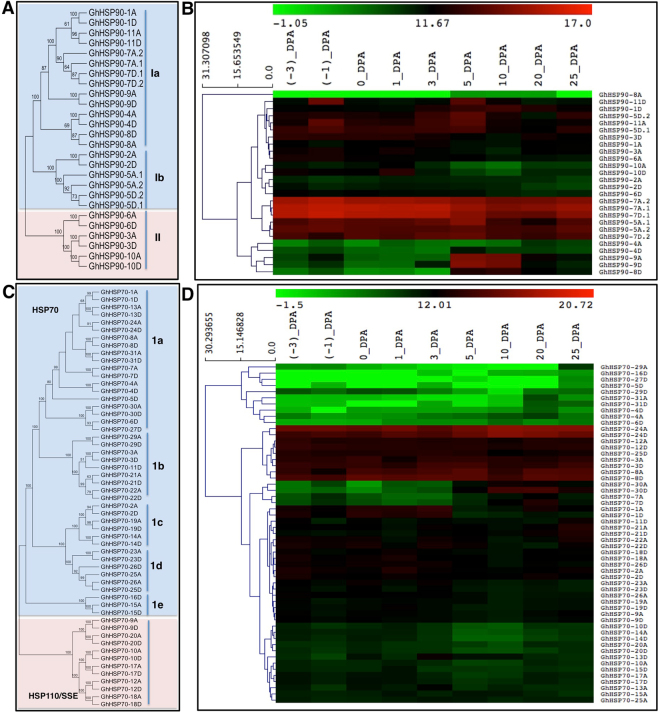
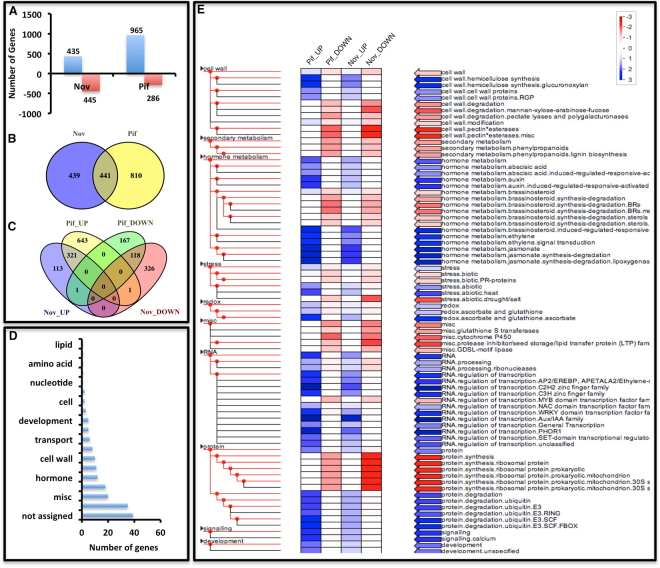
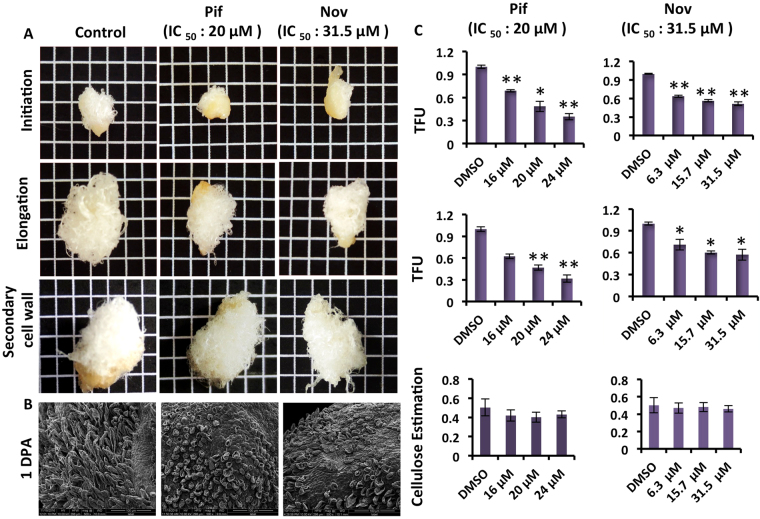
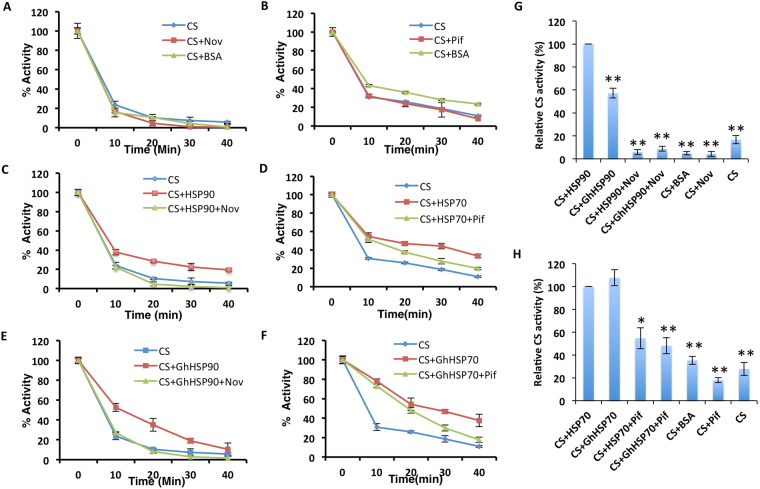
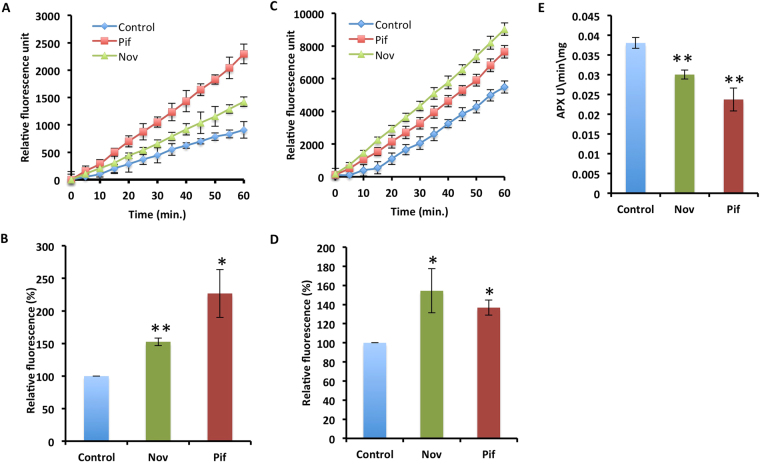
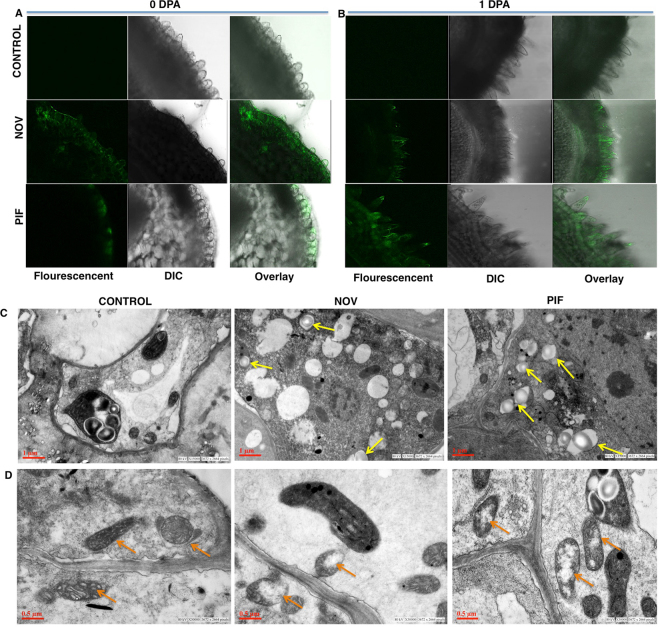
Cotton fiber is a specialized unicellular structure useful for the study of cellular differentiation and development. Heat shock proteins (HSPs) have been shown to be involved in various developmental processes. Microarray data analysis of five Gossypium hirsutum genotypes revealed high transcript levels of GhHSP90 and GhHSP70 genes at different stages of fiber development, indicating their importance in the process. Further, we identified 26 and 55 members of HSP90 and HSP70 gene families in G. hirsutum. The treatment of specific inhibitors novobiocin (Nov; HSP90) and pifithrin/2-phenylethynesulfonamide (Pif; HSP70) in in-vitro cultured ovules resulted in a fewer number of fiber initials and retardation in fiber elongation. The molecular chaperone assay using bacterially expressed recombinant GhHSP90-7 and GhHSP70-8 proteins further confirmed the specificity of inhibitors. HSP inhibition disturbs the HO balance that leads to the generation of oxidative stress, which consequently results in autophagy in the epidermal layer of the cotton ovule. Transmission electron microscopy (TEM) of inhibitor-treated ovule also corroborates autophagosome formation along with disrupted mitochondrial cristae. The perturbations in transcript profile of HSP inhibited ovules show differential regulation of different stress and fiber development-related genes and pathways. Altogether, our results indicate that HSP90 and HSP70 families play a crucial role in cotton fiber differentiation and development by maintaining cellular homeostasis.
棉纤维是一种专门的单细胞结构,对于研究细胞分化和发育非常有用。热休克蛋白(HSPs)已被证明参与了各种发育过程。对五个陆地棉基因型的微阵列数据分析显示,GhHSP90 和 GhHSP70 基因在纤维发育的不同阶段转录水平较高,表明它们在该过程中的重要性。此外,我们在陆地棉中鉴定出了 26 个和 55 个 HSP90 和 HSP70 基因家族成员。在体外培养的胚珠中用特异性抑制剂诺维苯(Nov;HSP90)和 Pifithrin/2-苯乙酮磺酰胺(Pif;HSP70)处理,导致纤维起始数量减少,纤维伸长延迟。使用细菌表达的重组 GhHSP90-7 和 GhHSP70-8 蛋白进行分子伴侣测定进一步证实了抑制剂的特异性。HSP 抑制会破坏 HO 平衡,导致氧化应激的产生,从而导致棉花胚珠表皮层发生自噬。抑制剂处理的胚珠的透射电子显微镜(TEM)也证实了自噬体的形成以及线粒体嵴的破坏。受 HSP 抑制的胚珠的转录谱变化表明,不同的应激和纤维发育相关基因和途径受到不同的调控。总的来说,我们的结果表明,HSP90 和 HSP70 家族通过维持细胞内稳态在棉花纤维分化和发育中发挥着关键作用。