Gastroenterology and Hepatology, Department of Internal Medicine, Faculty of Medicine and Health Sciences, Ghent University, C. Heymanslaan 10, 9000, Ghent, Belgium.
Laboratory of Food Analysis, Department of Bioanalysis, Faculty of Pharmaceutical Sciences, Ghent University, Ottergemsesteenweg 460, 9000, Ghent, Belgium.
Sci Rep. 2018 Feb 26;8(1):3659. doi: 10.1038/s41598-018-21851-7.
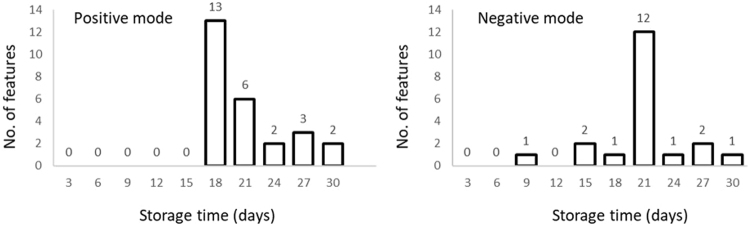
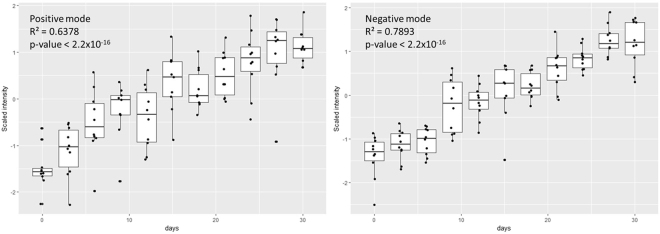
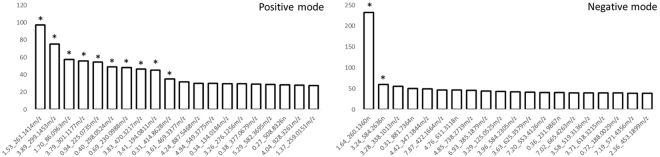
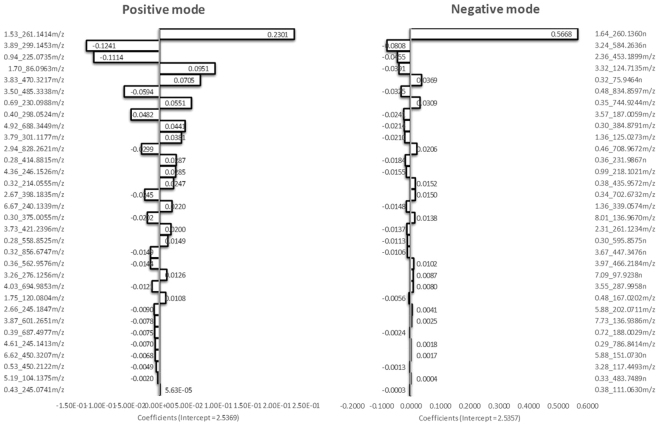
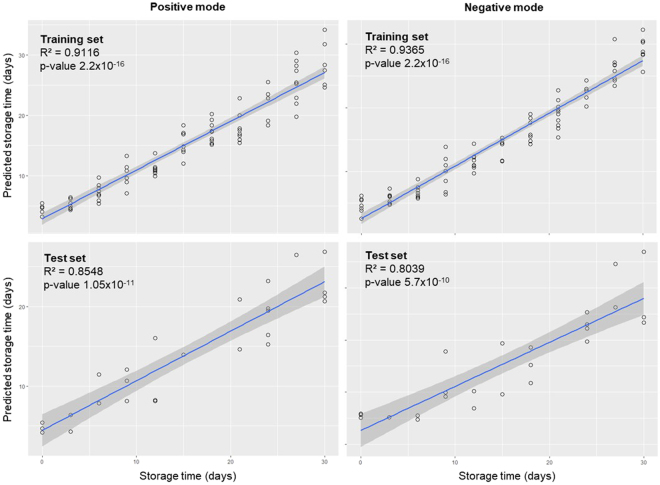
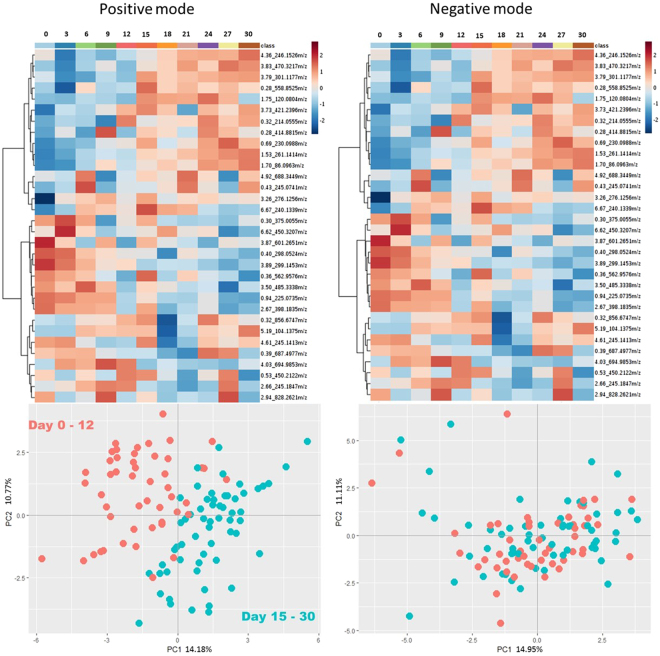
In this paper, the stability of the plasma metabolome at -20 °C for up to 30 days was evaluated using liquid chromatography-high resolution mass spectrometric metabolomics analysis. To follow the time-series deterioration of the plasma metabolome, the use of an elastic net regularized regression model for the prediction of storage time at -20 °C based on the plasma metabolomic profile, and the selection and ranking of metabolites with high temporal changes was demonstrated using the glmnet package in R. Out of 1229 (positive mode) and 1483 (negative mode) metabolite features, the elastic net model extracted 32 metabolites of interest in both positive and negative modes. L-gamma-glutamyl-L-(iso)leucine (tentative identification) was found to have the highest time-dependent change and significantly increased proportionally to the storage time of plasma at -20 °C (R = 0.6378 [positive mode], R = 0.7893 [negative mode], p-value < 0.00001). Based on the temporal profiles of the extracted metabolites by the model, results show only minimal deterioration of the plasma metabolome at -20 °C up to 1 month. However, majority of the changes appeared at around 12-15 days of storage. This allows scientists to better plan logistics and storage strategies for samples obtained from low-resource settings, where -80 °C storage is not guaranteed.
本研究采用液相色谱-高分辨质谱代谢组学分析方法,评估了 -20°C 条件下长达 30 天的血浆代谢组稳定性。为了跟踪血浆代谢组随时间的劣化,本研究使用弹性网络正则化回归模型,基于血浆代谢组图谱预测 -20°C 下的储存时间,并使用 R 中的 glmnet 包选择和排列具有高时间变化的代谢物。在 1229 个(正模式)和 1483 个(负模式)代谢物特征中,弹性网络模型分别在正、负模式下提取出 32 个有意义的代谢物。L-γ-谷氨酰-L-(异)亮氨酸(暂定鉴定)被发现具有最高的时间依赖性变化,并且与 -20°C 下血浆的储存时间呈比例显著增加(正模式 R=0.6378,负模式 R=0.7893,p 值<0.00001)。基于模型提取的代谢物的时间分布,结果表明,在 -20°C 下储存长达 1 个月的血浆代谢组几乎没有劣化。然而,大多数变化出现在储存 12-15 天左右。这使得科学家能够更好地规划从资源匮乏地区获得的样本的物流和储存策略,在这些地区无法保证 -80°C 的储存条件。