Franco Jackeline, Rajwa Bartek, Ferreira Christina R, Sundberg John P, HogenEsch Harm
Department of Comparative Pathobiology, Purdue University, West Lafayette, IN 47907, USA.
Bindley Bioscience Center, Purdue University, West Lafayette, IN 47907, USA.
Metabolites. 2020 Jul 21;10(7):299. doi: 10.3390/metabo10070299.
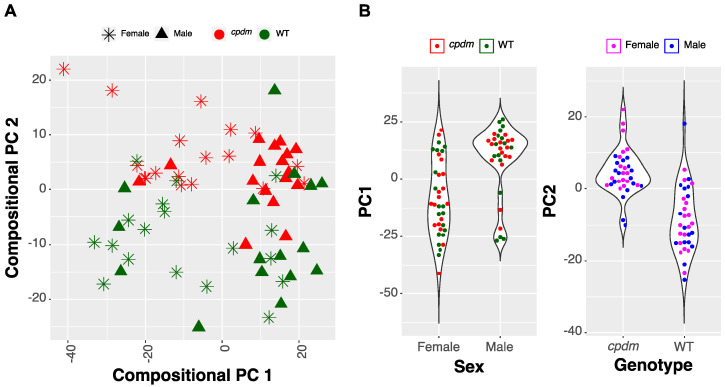
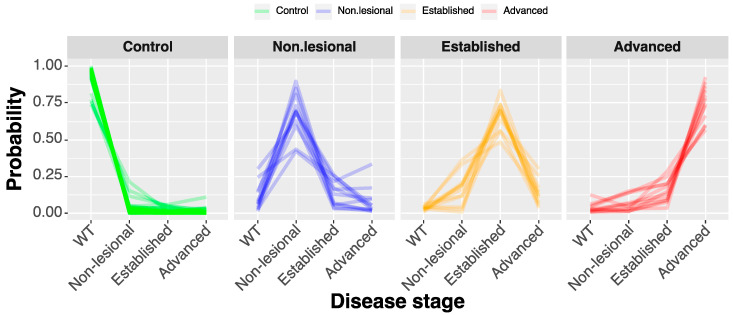
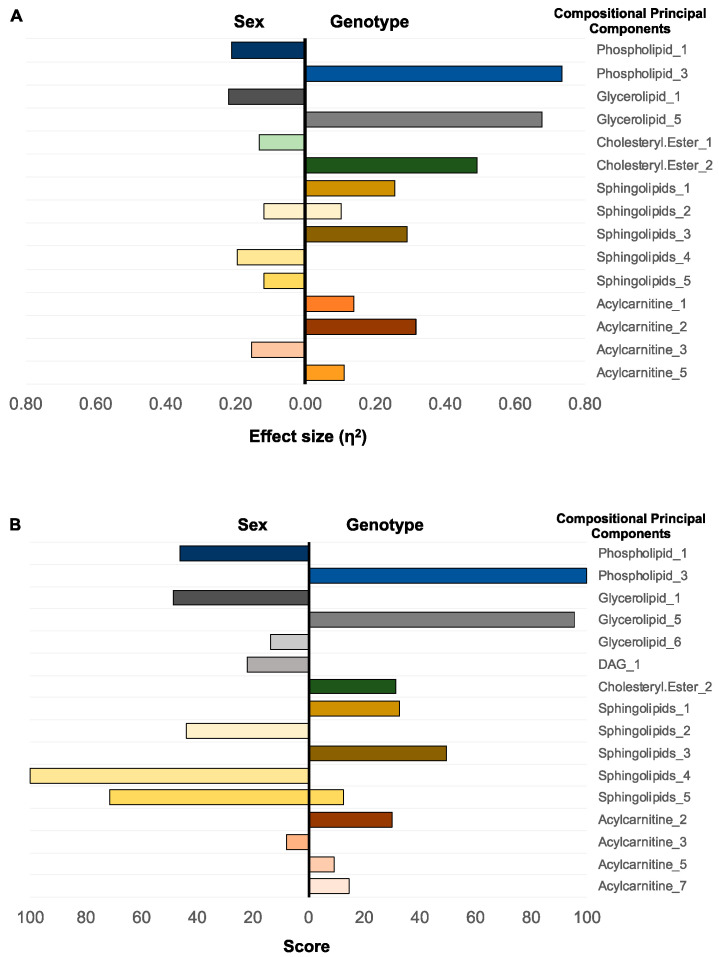
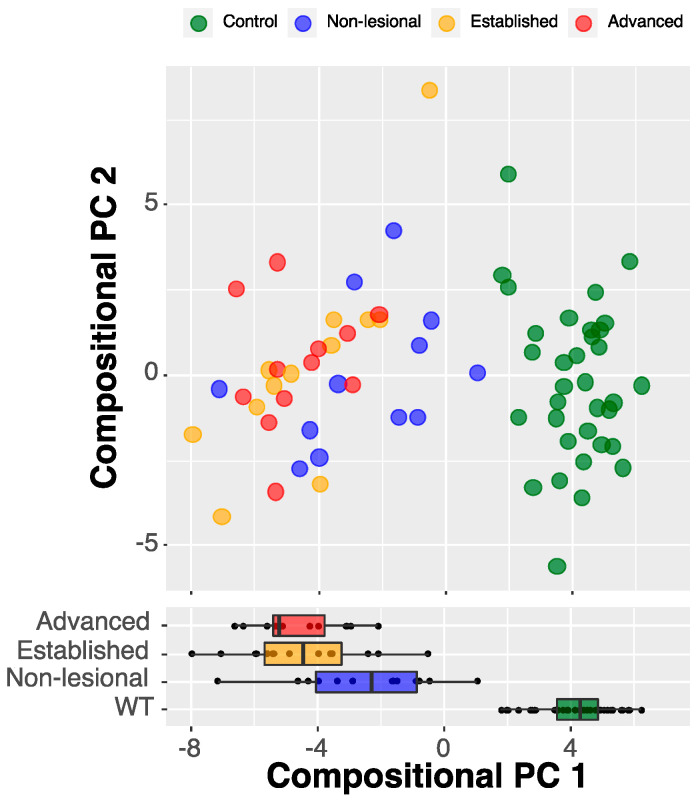
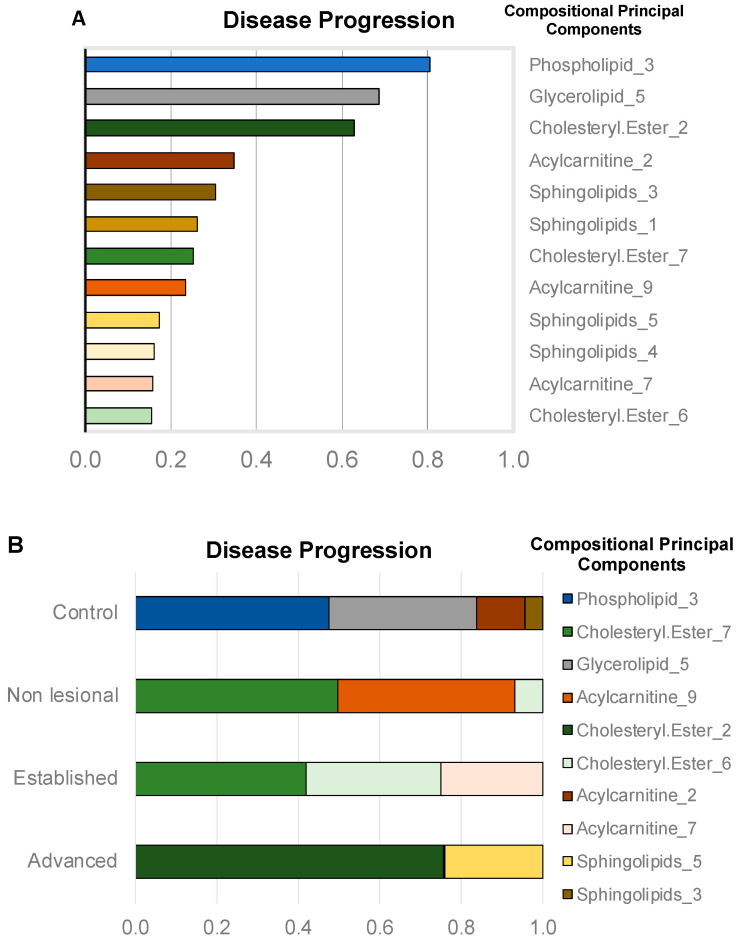
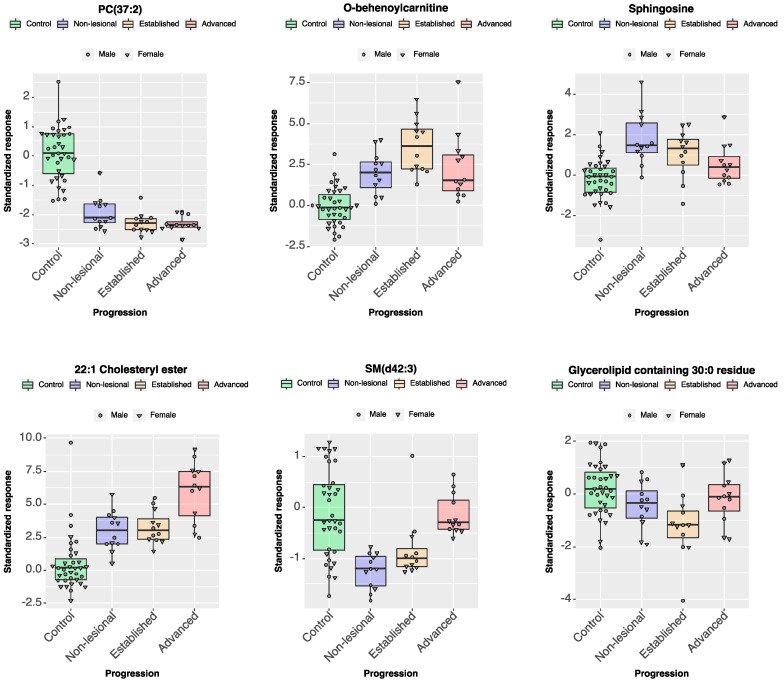
Atopic dermatitis (AD) is a multifactorial disease associated with alterations in lipid composition and organization in the epidermis. Multiple variants of AD exist with different outcomes in response to therapies. The evaluation of disease progression and response to treatment are observational assessments with poor inter-observer agreement highlighting the need for molecular markers. SHARPIN-deficient mice () spontaneously develop chronic proliferative dermatitis with features similar to AD in humans. To study the changes in the epidermal lipid-content during disease progression, we tested 72 epidermis samples from three groups (5-, 7-, and 10-weeks old) of mice and their WT littermates. An agnostic mass-spectrometry strategy for biomarker discovery termed multiple-reaction monitoring (MRM)-profiling was used to detect and monitor 1,030 lipid ions present in the epidermis samples. In order to select the most relevant ions, we utilized a two-tiered filter/wrapper feature-selection strategy. Lipid categories were compressed, and an elastic-net classifier was used to rank and identify the most predictive lipid categories for sex, phenotype, and disease stages of mice. The model accurately classified the samples based on phospholipids, cholesteryl esters, acylcarnitines, and sphingolipids, demonstrating that disease progression cannot be defined by one single lipid or lipid category.
特应性皮炎(AD)是一种多因素疾病,与表皮脂质组成和结构的改变有关。AD存在多种变体,对治疗的反应结果不同。疾病进展和治疗反应的评估是观察性评估,观察者间一致性较差,这凸显了对分子标志物的需求。缺乏SHARPIN的小鼠会自发发展出慢性增殖性皮炎,其特征与人类AD相似。为了研究疾病进展过程中表皮脂质含量的变化,我们检测了来自三组(5周龄、7周龄和10周龄)小鼠及其野生型同窝小鼠的72个表皮样本。一种用于生物标志物发现的无偏倚质谱策略,即多反应监测(MRM)-谱分析,被用于检测和监测表皮样本中存在的1030种脂质离子。为了选择最相关的离子,我们采用了两层过滤/包装特征选择策略。脂质类别被压缩,并且使用弹性网络分类器对小鼠的性别、表型和疾病阶段的最具预测性的脂质类别进行排名和识别。该模型基于磷脂、胆固醇酯、酰基肉碱和鞘脂对样本进行了准确分类,表明疾病进展不能由单一脂质或脂质类别来定义。