MGH/Martinos Center for Biomedical Imaging/ Harvard Medical School, Boston, USA.
Gillberg Neuropsychiatry Center, Gothenburg University, 41119, Gothenburg, Sweden.
Sci Rep. 2018 Feb 26;8(1):3602. doi: 10.1038/s41598-018-21958-x.
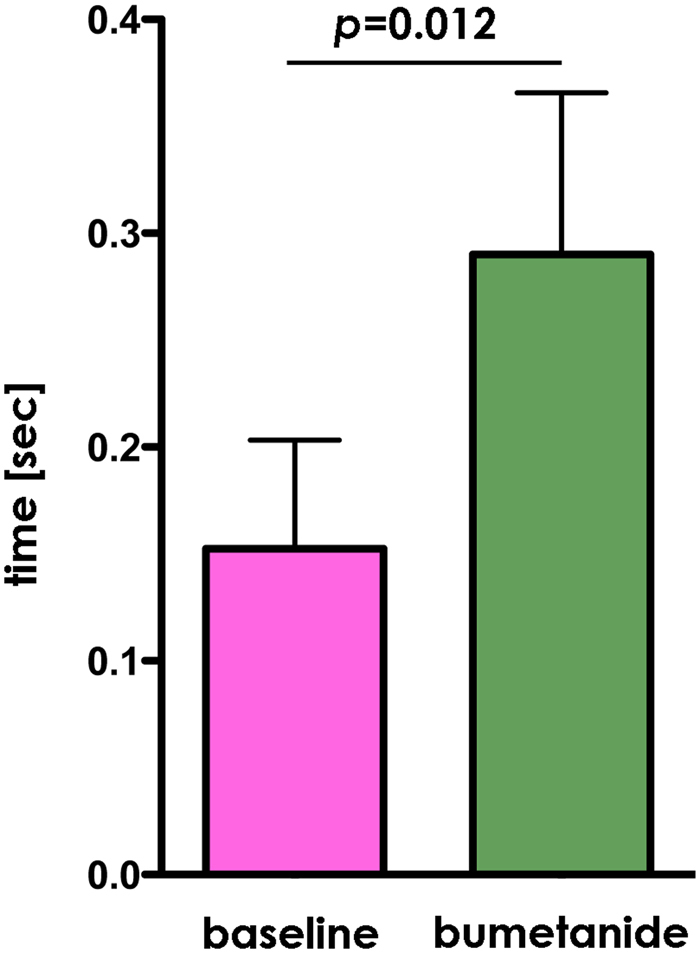
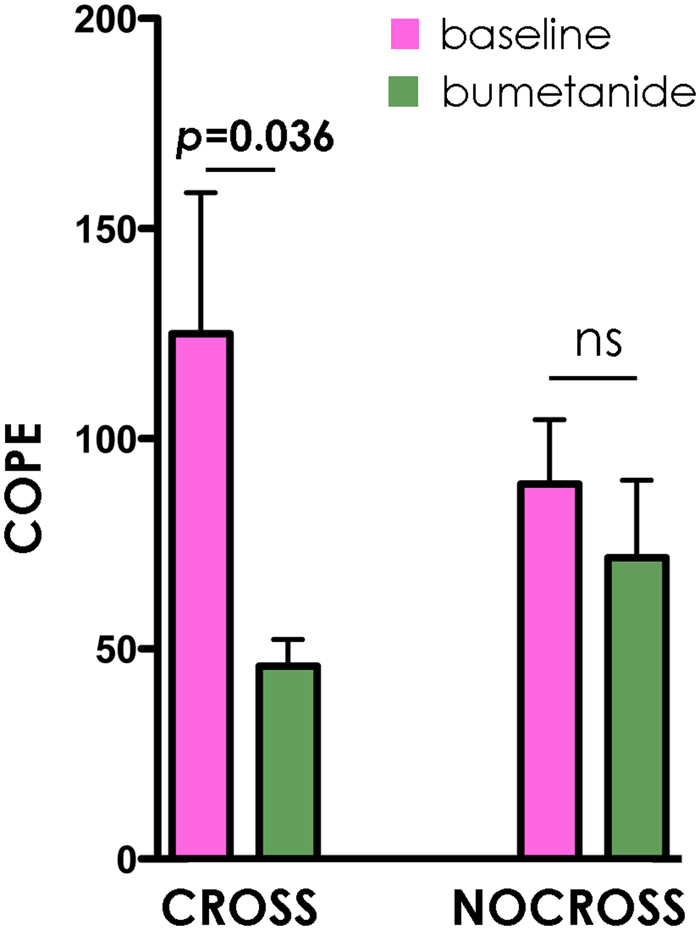
We recently showed that constraining eye contact leads to exaggerated increase of amygdala activation in autism. Here, in a proof of concept pilot study, we demonstrate that administration of bumetanide (a NKCC1 chloride importer antagonist that restores GABAergic inhibition) normalizes the level of amygdala activation during constrained eye contact with dynamic emotional face stimuli in autism. In addition, eye-tracking data reveal that bumetanide administration increases the time spent in spontaneous eye gaze during in a free-viewing mode of the same face stimuli. In keeping with clinical trials, our data support the Excitatory/Inhibitory dysfunction hypothesis in autism, and indicate that bumetanide may improve specific aspects of social processing in autism. Future double-blind placebo controlled studies with larger cohorts of participants will help clarify the mechanisms of bumetanide action in autism.
我们最近发现,限制眼神接触会导致自闭症患者杏仁核的活动过度增加。在这里,我们进行了一项概念验证性的初步研究,证明了布美他尼(一种 NKCC1 氯离子转运体抑制剂,可恢复 GABA 能抑制)的给药可使自闭症患者在面对动态情绪面孔刺激时,限制眼神接触时杏仁核的激活水平恢复正常。此外,眼动追踪数据显示,布美他尼给药可增加在观看相同面孔刺激的自由观看模式下自发注视的时间。与临床试验一致,我们的数据支持自闭症的兴奋性/抑制性功能障碍假说,并表明布美他尼可能改善自闭症的特定社交处理方面。未来将有更多参与者的双盲安慰剂对照研究将有助于阐明布美他尼在自闭症中的作用机制。