Binato Renata, Santos Everton Cruz, Boroni Mariana, Demachki Samia, Assumpção Paulo, Abdelhay Eliana
Laboratório de Célula tronco, Centro de Transplante de Medula Óssea (CEMO), Instituto Nacional de Câncer (INCA), Rio de Janeiro, RJ, Brazil.
Instituto Nacional de Ciência e Tecnologia Para o Controle do Câncer (INCT), Rio de Janeiro, RJ, Brazil.
Oncotarget. 2017 Dec 27;9(7):7359-7371. doi: 10.18632/oncotarget.23670. eCollection 2018 Jan 26.
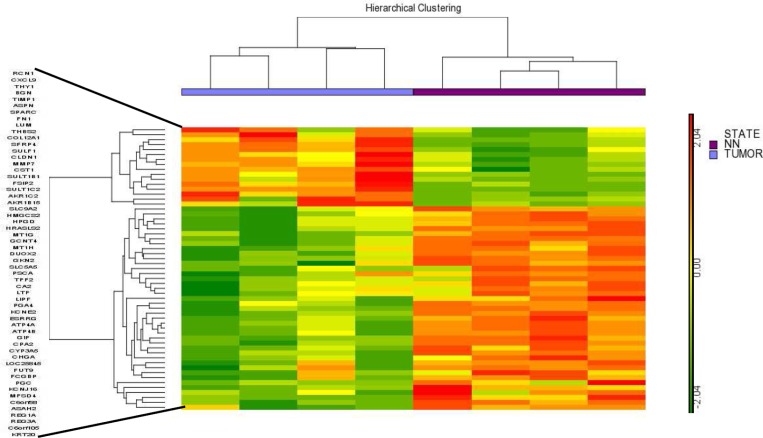
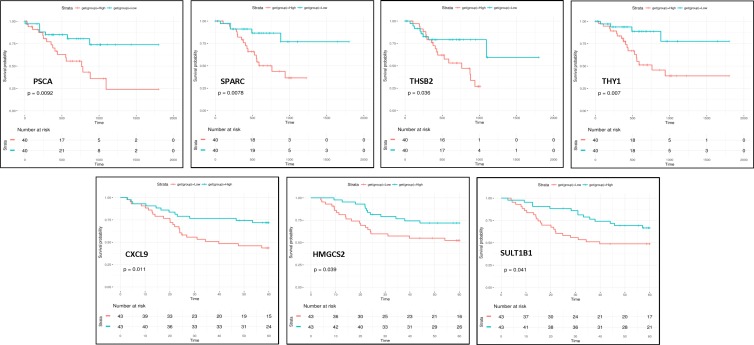
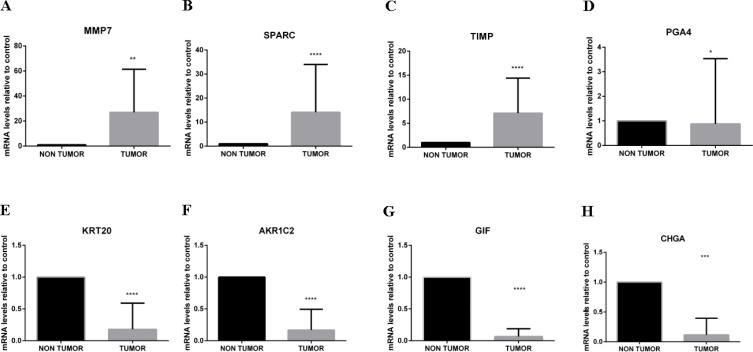
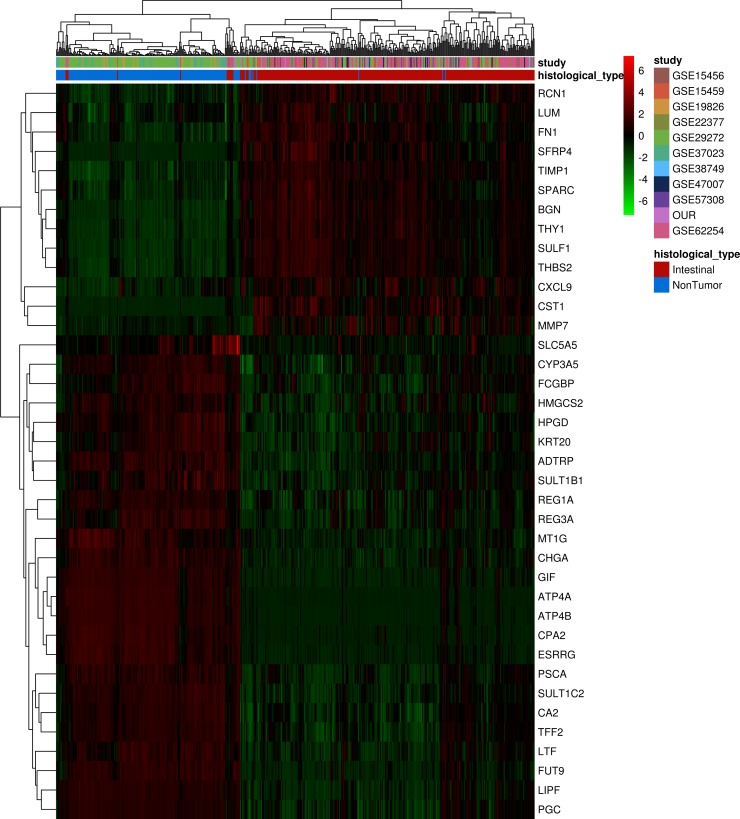
Gastric carcinoma (GC) is one of the most aggressive cancers and the second leading cause of cancer death in the world. According to the Lauren classification, this adenocarcinoma is divided into two subtypes, intestinal and diffuse, which differ in their clinical, epidemiological and molecular features. Several studies have attempted to delineate the molecular signature of gastric cancer to develop new and non-invasive screening tests that improve diagnosis and lead to new treatment strategies. However, a consensus signature has not yet been identified for each condition. Thus, this work aimed to analyze the gene expression profile of Brazilian intestinal-type GC tissues using microarrays and compare the results to those of non-tumor tissue samples. Moreover, we compared our intestinal-type gastric carcinoma profile with those obtained from populations worldwide to assess their similarity. The results identified a molecular signature for intestinal-type GC and revealed that 38 genes differentially expressed in Brazilian intestinal-type gastric carcinoma samples can successfully distinguish gastric tumors from non-tumor tissue in the global population. These differentially expressed genes participate in biological processes important to cell homeostasis. Furthermore, Kaplan-Meier analysis suggested that 7 of these genes could individually be able to predict overall survival in intestinal-type gastric cancer patients.
胃癌(GC)是最具侵袭性的癌症之一,也是全球癌症死亡的第二大主要原因。根据劳伦分类法,这种腺癌分为两种亚型,即肠型和弥漫型,它们在临床、流行病学和分子特征方面存在差异。多项研究试图描绘胃癌的分子特征,以开发新的非侵入性筛查测试,改善诊断并带来新的治疗策略。然而,尚未针对每种情况确定一致的特征。因此,这项工作旨在使用微阵列分析巴西肠型GC组织的基因表达谱,并将结果与非肿瘤组织样本的结果进行比较。此外,我们将我们的肠型胃癌谱与全球人群的谱进行比较,以评估它们的相似性。结果确定了肠型GC的分子特征,并表明在巴西肠型胃癌样本中差异表达的38个基因能够在全球人群中成功区分胃肿瘤和非肿瘤组织。这些差异表达的基因参与了对细胞稳态很重要的生物学过程。此外,卡普兰-迈耶分析表明,其中7个基因能够单独预测肠型胃癌患者总的生存率。