Jafari Narjes, Abediankenari Saeid, Hossein-Nataj Hadi
Immunogenetics Research Center, Faculty of Medicine, Mazandaran University of Medical Sciences, Sari, Iran.
Department of Immunology, Faculty of Medicine, Mazandaran University of Medical Science, Sari, Iran.
Cancer Cell Int. 2021 Mar 19;21(1):178. doi: 10.1186/s12935-021-01872-5.
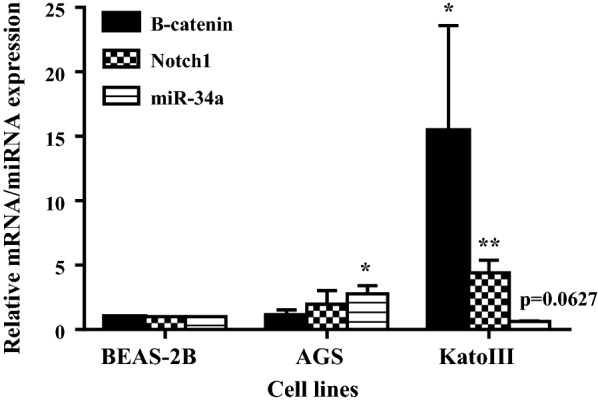
Aberrantly expressed microRNAs play important roles in gastric tumorigenesis. However, use of miRNAs as a therapeutic option in gastric cancer still remains as a challenging problem.
We performed transient transfection of miR-34a-5p mimic and stable transfection of pre-mir-34a into KatoIII cells. Then, we evaluated the effect of transfected miRNAs on numerous cellular and molecular processes.
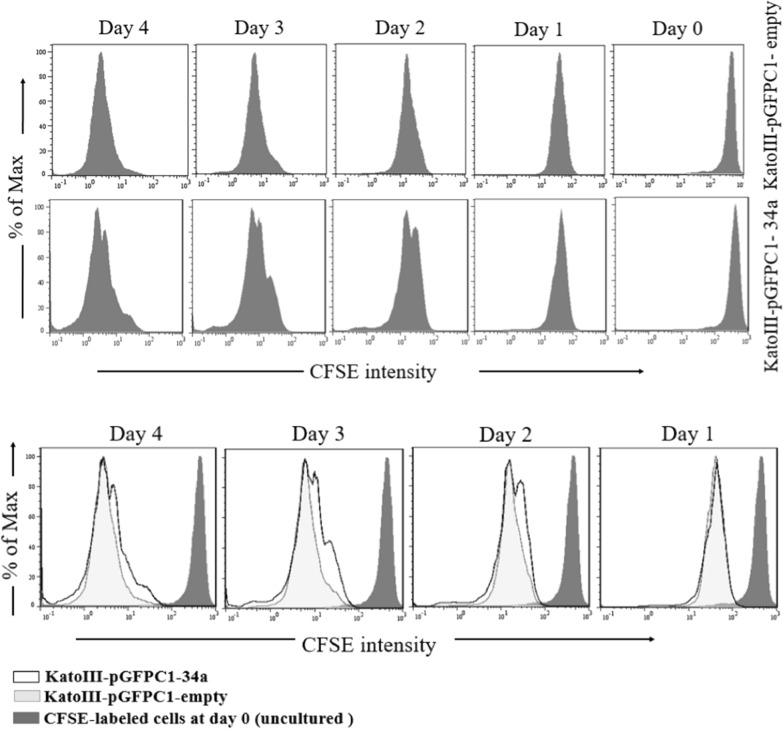
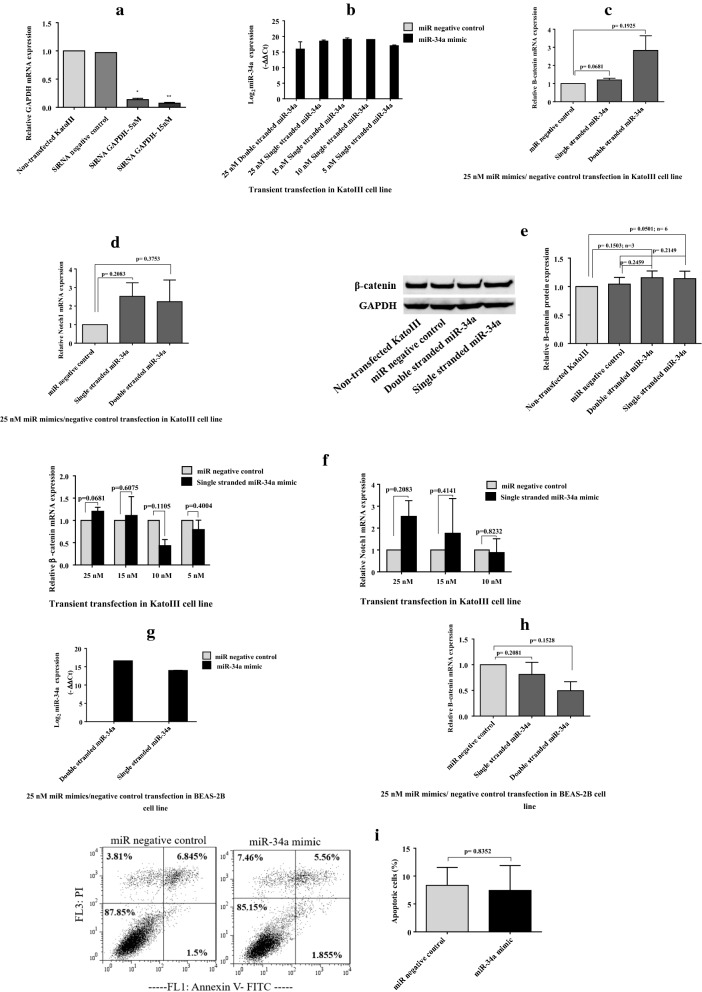
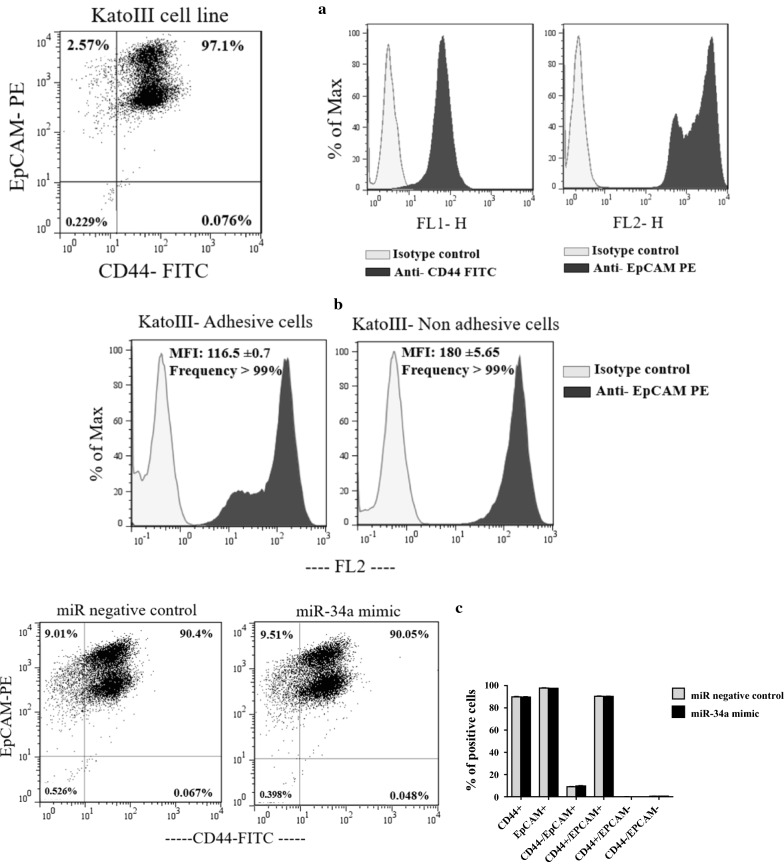
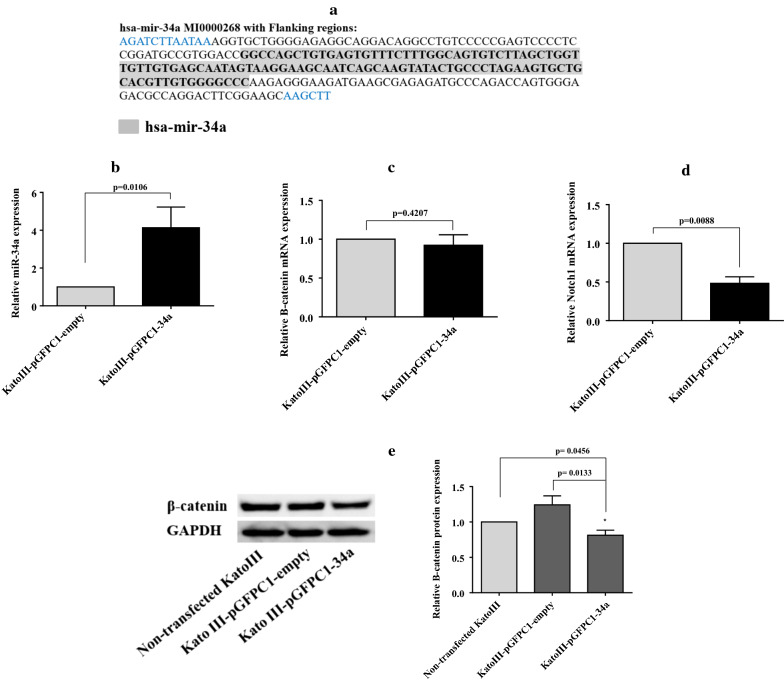
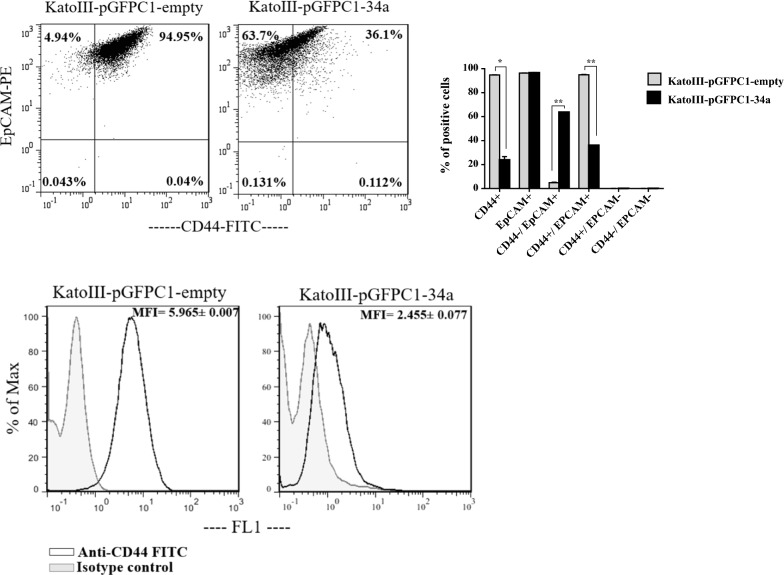
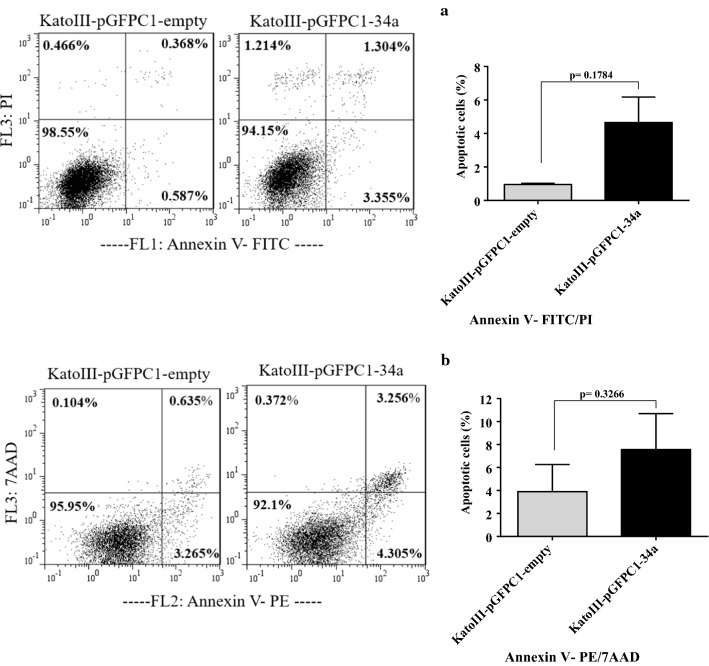
Following transient transfection of miR-34a-5p mimic at 25 nM-a commonly used concentration-into KatoIII cells, inhibition of two target genes expression, namely Notch1 and β-catenin, was not observed, but a non-significant marginal increase of these genes was detected. No changes were detected in the percentage of apoptotic cells as well as in CD44 + and EpCAM + cells after 25 nM miR-34a-5p mimic transfection. Interestingly, stable transfection of pre-mir-34a into KatoIII cells (named as KatoIII-pGFPC1-34a cells) caused a significant repression in β-catenin protein and Notch1 mRNA levels (p < 0.05 and p < 0.01, respectively) relative to equivalent control (KatoIII- pGFPC1-empty cells). The percentage of CD44 + cells in the KatoIII-pGFPC1-34a cells (< 40%) was significantly lower than that in control cells (~ 95%) (p < 0.05). An increase of ~ 3.5% in apoptotic cells and a slower proliferation rate were detected in KatoIII-pGFPC1-34a cells.
Our study revealed that the effect of miR mimic in target gene repression can be dependent to its concentration as well as to the cell type. Meanwhile, our findings further support a regulatory function for pre-miRNAs in target repression and will help to develop effective therapeutic strategies in cancer treatment.
异常表达的微小RNA在胃癌发生过程中发挥重要作用。然而,将微小RNA用作胃癌的治疗选择仍然是一个具有挑战性的问题。
我们对KatoIII细胞进行了miR-34a-5p模拟物的瞬时转染和pre-mir-34a的稳定转染。然后,我们评估了转染的微小RNA对众多细胞和分子过程的影响。
在以常用浓度25 nM将miR-34a-5p模拟物瞬时转染到KatoIII细胞后,未观察到两个靶基因Notch1和β-连环蛋白的表达受到抑制,但检测到这些基因有不显著的轻微增加。在转染25 nM miR-34a-5p模拟物后,凋亡细胞百分比以及CD44 +和EpCAM +细胞中均未检测到变化。有趣的是,将pre-mir-34a稳定转染到KatoIII细胞(命名为KatoIII-pGFPC1-34a细胞)中导致β-连环蛋白蛋白和Notch1 mRNA水平相对于等效对照(KatoIII- pGFPC1空细胞)有显著抑制(分别为p <0.05和p <0.01)。KatoIII-pGFPC1-34a细胞中CD44 +细胞的百分比(<40%)显著低于对照细胞(~95%)(p <0.05)。在KatoIII-pGFPC1-34a细胞中检测到凋亡细胞增加约3.5%,增殖速率较慢。
我们的研究表明,miR模拟物对靶基因的抑制作用可能取决于其浓度以及细胞类型。同时,我们的研究结果进一步支持了pre-miRNA在靶基因抑制中的调节功能,并将有助于开发有效的癌症治疗策略。