Division of STD Prevention, Centers for Disease Control and Prevention, Atlanta, Georgia, United States of America.
Global Health, Population and Nutrition, FHI 360, Durham, North Carolina, United States of America.
PLoS Med. 2018 Feb 27;15(2):e1002511. doi: 10.1371/journal.pmed.1002511. eCollection 2018 Feb.
Estimates of sexually transmitted infection (STI) prevalence are essential for efforts to prevent and control STIs. Few large STI prevalence studies exist, especially for low- and middle-income countries (LMICs). Our primary objective was to estimate the prevalence of chlamydia, gonorrhea, trichomoniasis, syphilis, herpes simplex virus type 2 (HSV-2), and bacterial vaginosis (BV) among women in sub-Saharan Africa by age, region, and population type.
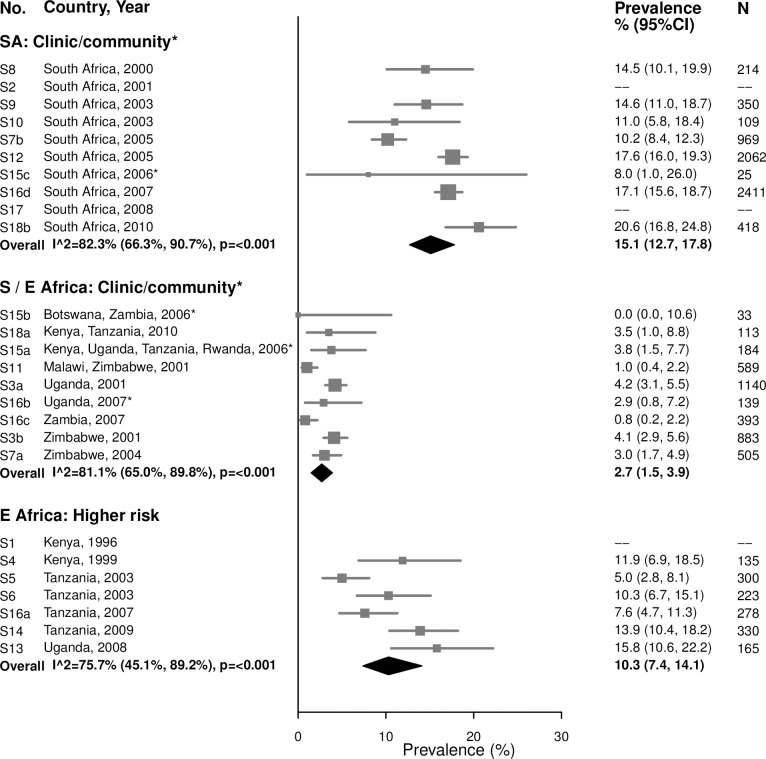
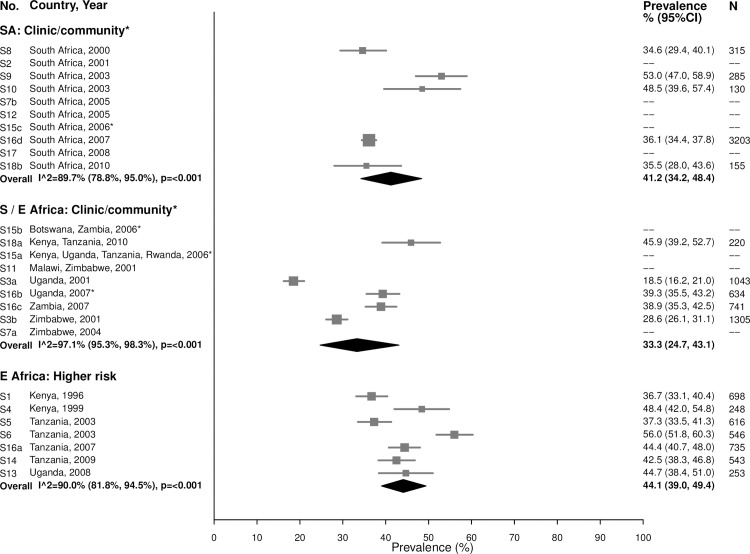
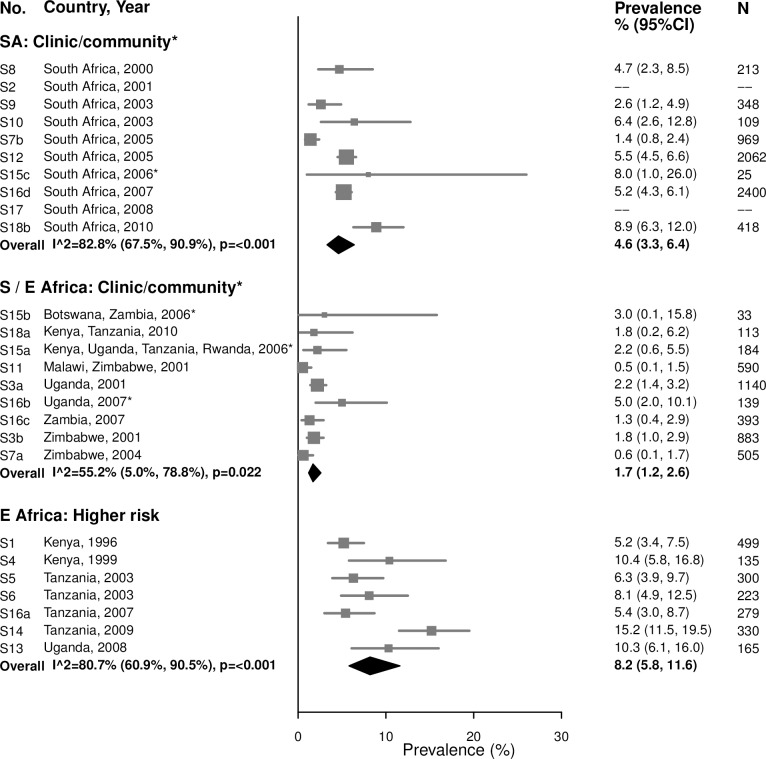
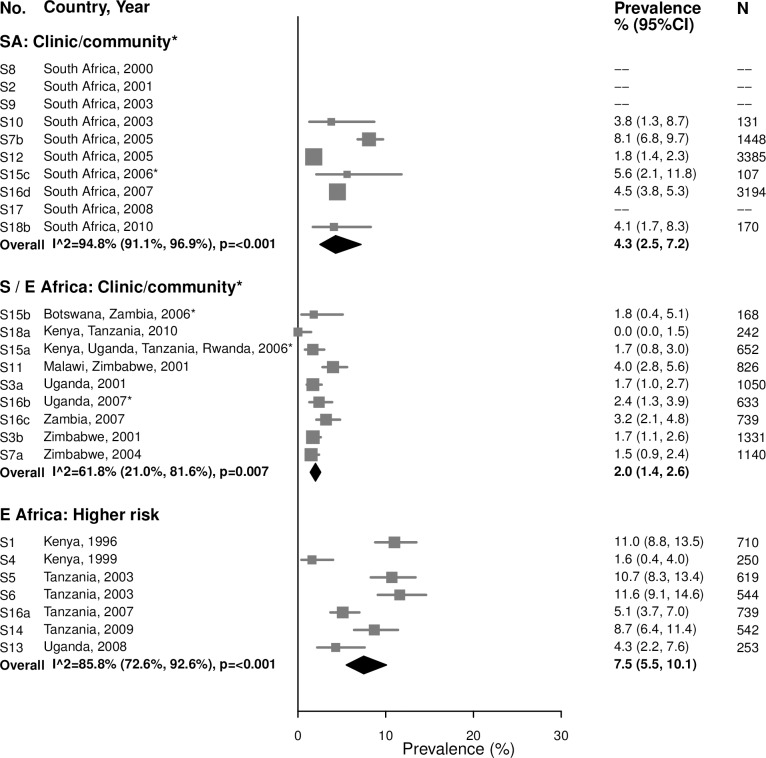
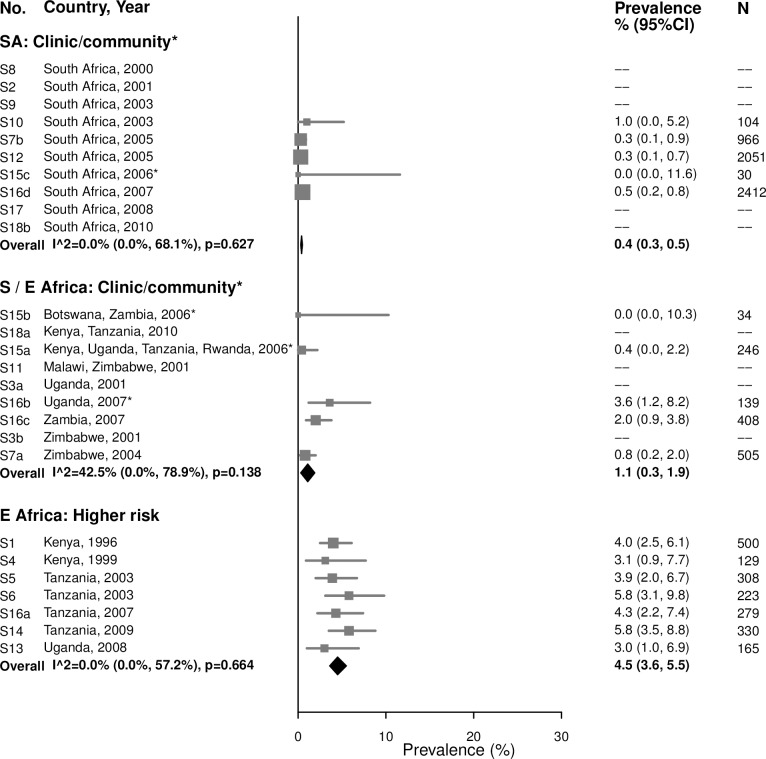
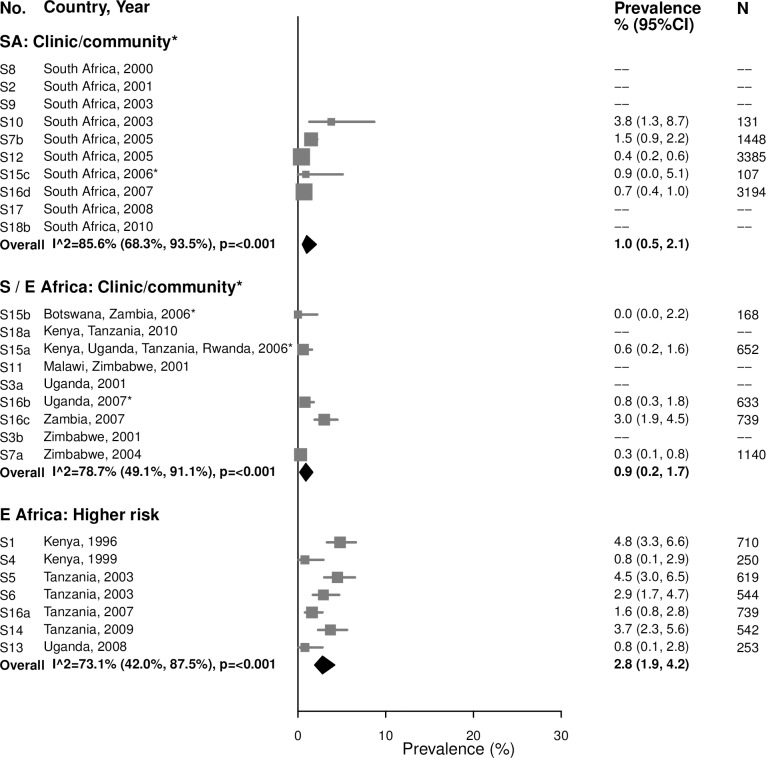
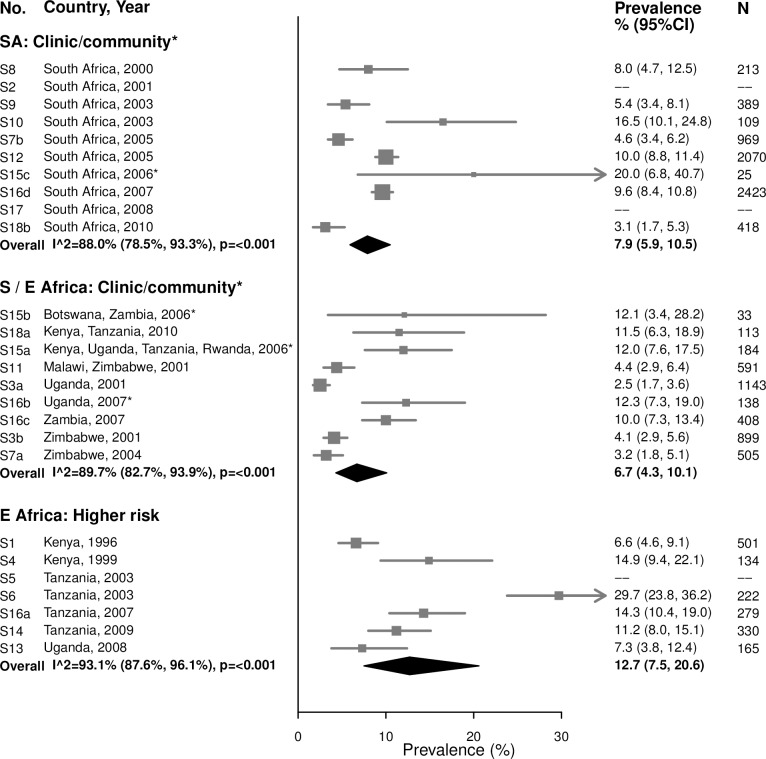
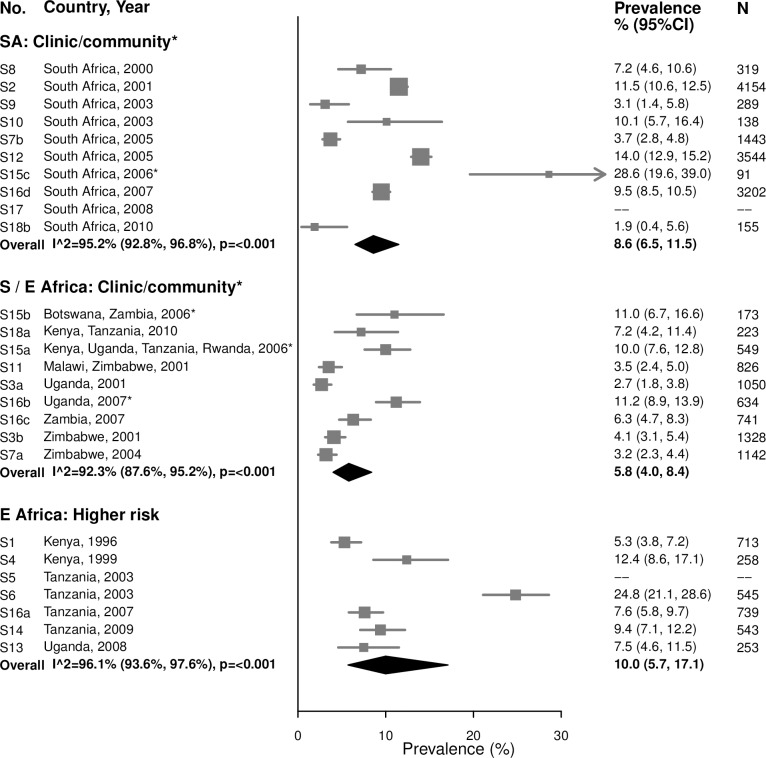
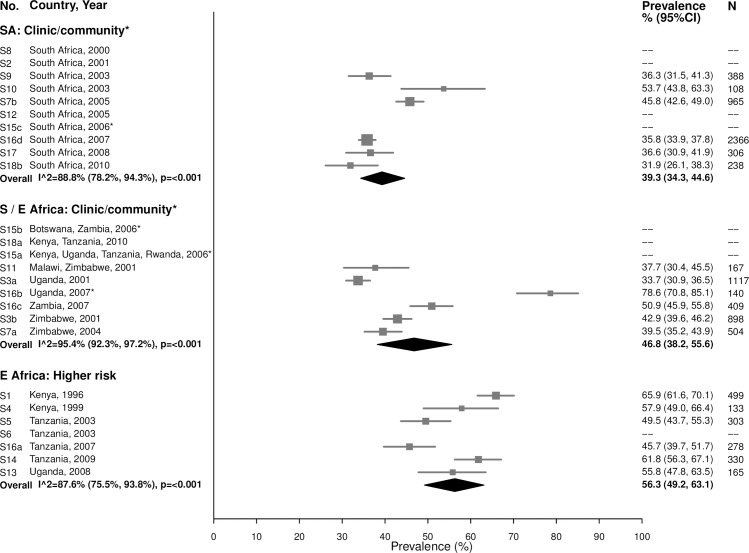
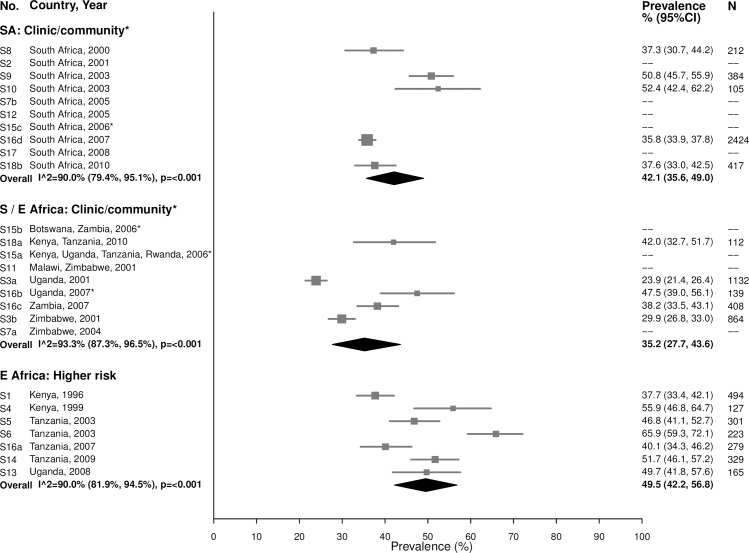
We analyzed individual-level data from 18 HIV prevention studies (cohort studies and randomized controlled trials; conducted during 1993-2011), representing >37,000 women, that tested participants for ≥1 selected STIs or BV at baseline. We used a 2-stage meta-analysis to combine data. After calculating the proportion of participants with each infection and standard error by study, we used a random-effects model to obtain a summary mean prevalence of each infection and 95% confidence interval (CI) across ages, regions, and population types. Despite substantial study heterogeneity for some STIs/populations, several patterns emerged. Across the three primary region/population groups (South Africa community-based, Southern/Eastern Africa community-based, and Eastern Africa higher-risk), prevalence was higher among 15-24-year-old than 25-49-year-old women for all STIs except HSV-2. In general, higher-risk populations had greater prevalence of gonorrhea and syphilis than clinic/community-based populations. For chlamydia, prevalence among 15-24-year-olds was 10.3% (95% CI: 7.4%, 14.1%; I2 = 75.7%) among women specifically recruited from higher-risk settings for HIV in Eastern Africa and was 15.1% (95% CI: 12.7%, 17.8%; I2 = 82.3%) in South African clinic/community-based populations. Among clinic/community-based populations, prevalence was generally greater in South Africa than in Southern/Eastern Africa for most STIs; for gonorrhea, prevalence among 15-24-year-olds was 4.6% (95% CI: 3.3%, 6.4%; I2 = 82.8%) in South Africa and was 1.7% (95% CI: 1.2%, 2.6%; I2 = 55.2%) in Southern/Eastern Africa. Across the three primary region/population groups, HSV-2 and BV prevalence was high among 25-49-year-olds (ranging from 70% to 83% and 33% to 44%, respectively). The main study limitation is that the data are not from random samples of the target populations.
Combining data from 18 HIV prevention studies, our findings highlight important features of STI/BV epidemiology among sub-Saharan African women. This methodology can be used where routine STI surveillance is limited and offers a new approach to obtaining critical information on STI and BV prevalence in LMICs.
性传播感染(STI)患病率的估计对于预防和控制 STI 至关重要。很少有大型 STI 患病率研究存在,特别是在低收入和中等收入国家(LMIC)。我们的主要目标是按年龄、地区和人群类型估计撒哈拉以南非洲妇女中衣原体、淋病、滴虫病、梅毒、单纯疱疹病毒 2 型(HSV-2)和细菌性阴道病(BV)的流行率。
我们分析了 18 项 HIV 预防研究(队列研究和随机对照试验;1993 年至 2011 年进行)的个体水平数据,代表了 >37,000 名女性,这些研究在基线时对参与者进行了至少一种选定的 STI 或 BV 检测。我们使用两阶段荟萃分析来合并数据。在按研究计算了每个感染的参与者比例和标准误差后,我们使用随机效应模型获得了每个感染的综合平均流行率以及在不同年龄、地区和人群类型中的 95%置信区间(CI)。尽管某些 STI/人群的研究异质性很大,但仍出现了一些模式。在三个主要地区/人群组(南非社区为基础、南部/东部非洲社区为基础和东部非洲高危人群)中,除 HSV-2 外,所有 STI 的 15-24 岁女性的患病率均高于 25-49 岁女性。一般来说,高危人群的淋病和梅毒患病率高于诊所/社区人群。对于衣原体,在东部非洲专门为艾滋病毒高危人群招募的女性中,15-24 岁的患病率为 10.3%(95%CI:7.4%,14.1%;I2=75.7%),而在南非诊所/社区人群中为 15.1%(95%CI:12.7%,17.8%;I2=82.3%)。在诊所/社区人群中,大多数 STI 的南非患病率普遍高于南部/东部非洲;对于淋病,15-24 岁女性的患病率在南非为 4.6%(95%CI:3.3%,6.4%;I2=82.8%),在南部/东部非洲为 1.7%(95%CI:1.2%,2.6%;I2=55.2%)。在三个主要地区/人群组中,25-49 岁女性的 HSV-2 和 BV 患病率较高(分别为 70%-83%和 33%-44%)。主要的研究限制是数据不是来自目标人群的随机样本。
综合 18 项 HIV 预防研究的数据,我们的研究结果突出了撒哈拉以南非洲妇女中 STI/BV 流行病学的重要特征。这种方法可用于常规 STI 监测有限的地方,并为获得 LMIC 中 STI 和 BV 流行率的关键信息提供了一种新方法。