Comtet-Marre Sophie, Chaucheyras-Durand Frédérique, Bouzid Ourdia, Mosoni Pascale, Bayat Ali R, Peyret Pierre, Forano Evelyne
UMR 454 MEDIS, INRA, Université Clermont Auvergne, Clermont-Ferrand, France.
R&D Animal Nutrition, Lallemand, Blagnac, France.
Front Microbiol. 2018 Feb 13;9:215. doi: 10.3389/fmicb.2018.00215. eCollection 2018.
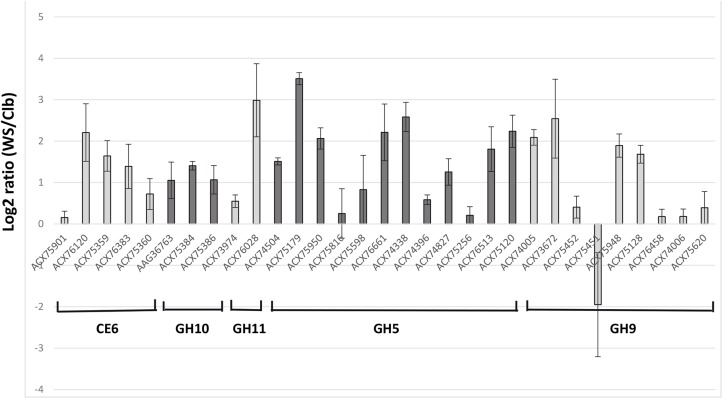
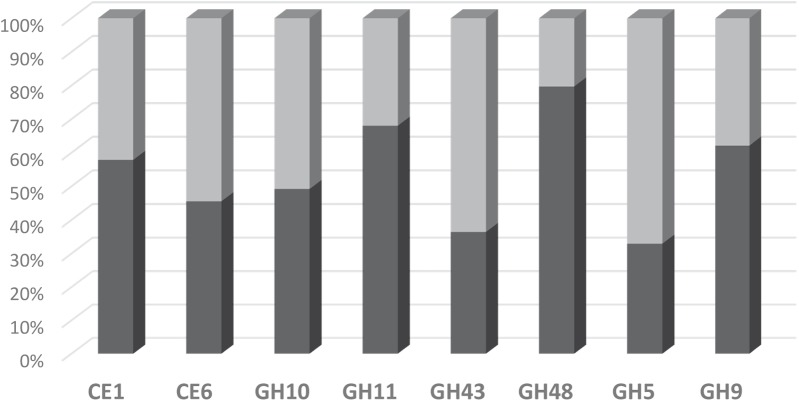
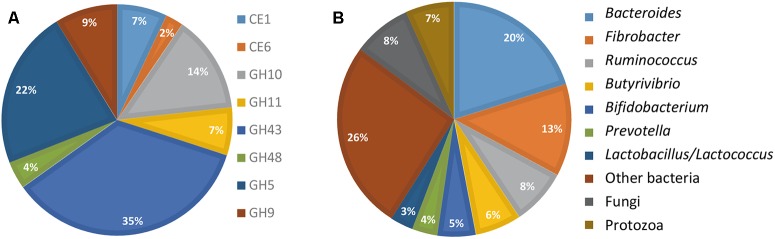
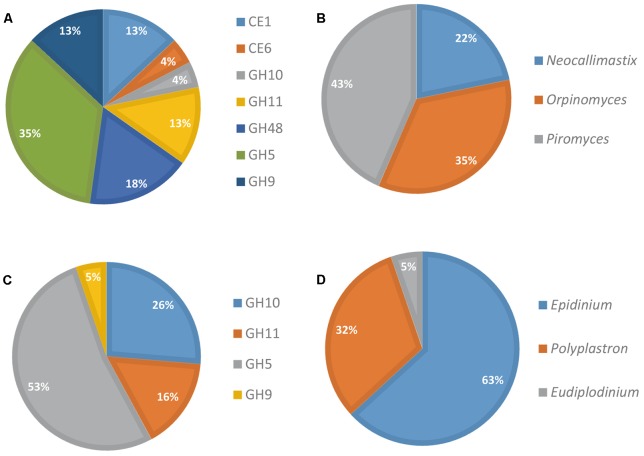
Ruminants fulfill their energy needs for growth primarily through microbial breakdown of plant biomass in the rumen. Several biotic and abiotic factors influence the efficiency of fiber degradation, which can ultimately impact animal productivity and health. To provide more insight into mechanisms involved in the modulation of fibrolytic activity, a functional DNA microarray targeting genes encoding key enzymes involved in cellulose and hemicellulose degradation by rumen microbiota was designed. Eight carbohydrate-active enzyme (CAZyme) families (GH5, GH9, GH10, GH11, GH43, GH48, CE1, and CE6) were selected which represented 392 genes from bacteria, protozoa, and fungi. The DNA microarray, designated as FibroChip, was validated using targets of increasing complexity and demonstrated sensitivity and specificity. In addition, FibroChip was evaluated for its explorative and semi-quantitative potential. Differential expression of CAZyme genes was evidenced in the rumen bacterium S85 grown on wheat straw or cellobiose. FibroChip was used to identify the expressed CAZyme genes from the targeted families in the rumen of a cow fed a mixed diet based on grass silage. Among expressed genes, those encoding GH43, GH5, and GH10 families were the most represented. Most of the genes detected by the FibroChip were also detected following RNA-seq analysis of RNA transcripts obtained from the rumen fluid sample. Use of the FibroChip also indicated that transcripts of fiber degrading enzymes derived from eukaryotes (protozoa and anaerobic fungi) represented a significant proportion of the total microbial mRNA pool. FibroChip represents a reliable and high-throughput tool that enables researchers to monitor active members of fiber degradation in the rumen.
反刍动物主要通过瘤胃中微生物对植物生物质的分解来满足其生长所需的能量。多种生物和非生物因素会影响纤维降解效率,这最终可能影响动物的生产力和健康。为了更深入了解参与调节纤维分解活性的机制,设计了一种功能性DNA微阵列,该微阵列靶向瘤胃微生物群中参与纤维素和半纤维素降解的关键酶的编码基因。选择了八个碳水化合物活性酶(CAZyme)家族(GH5、GH9、GH10、GH11、GH43、GH48、CE1和CE6),它们代表了来自细菌、原生动物和真菌的392个基因。这种被命名为FibroChip的DNA微阵列通过使用复杂度不断增加的靶标进行了验证,并证明了其灵敏度和特异性。此外,还评估了FibroChip 的探索性和半定量潜力。在以小麦秸秆或纤维二糖为生长底物的瘤胃细菌S85中,证实了CAZyme基因的差异表达。FibroChip被用于鉴定以青贮草为基础的混合日粮喂养的奶牛瘤胃中靶向家族中表达的CAZyme基因。在表达的基因中,编码GH43、GH5和GH10家族的基因占比最大。通过FibroChip检测到的大多数基因在对瘤胃液样本获得的RNA转录本进行RNA测序分析后也被检测到。FibroChip的使用还表明,来自真核生物(原生动物和厌氧真菌)的纤维降解酶转录本在总微生物mRNA库中占很大比例。FibroChip是一种可靠的高通量工具,使研究人员能够监测瘤胃中纤维降解的活跃成员。