Wunderlich Georgia, Bull Michelle, Ross Tom, Rose Michael, Chapman Belinda
Tasmanian Institute of Agriculture, University of Tasmania, Hobart, Australia.
Quantal Bioscience Pty Ltd, Castle Hill, Australia.
Anim Microbiome. 2023 Jan 12;5(1):3. doi: 10.1186/s42523-022-00224-6.
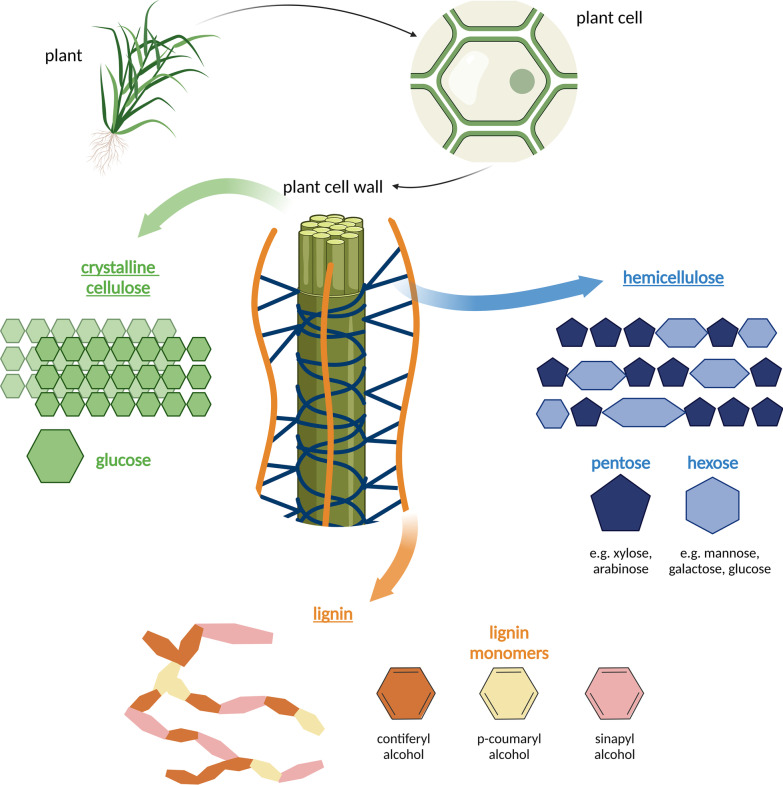
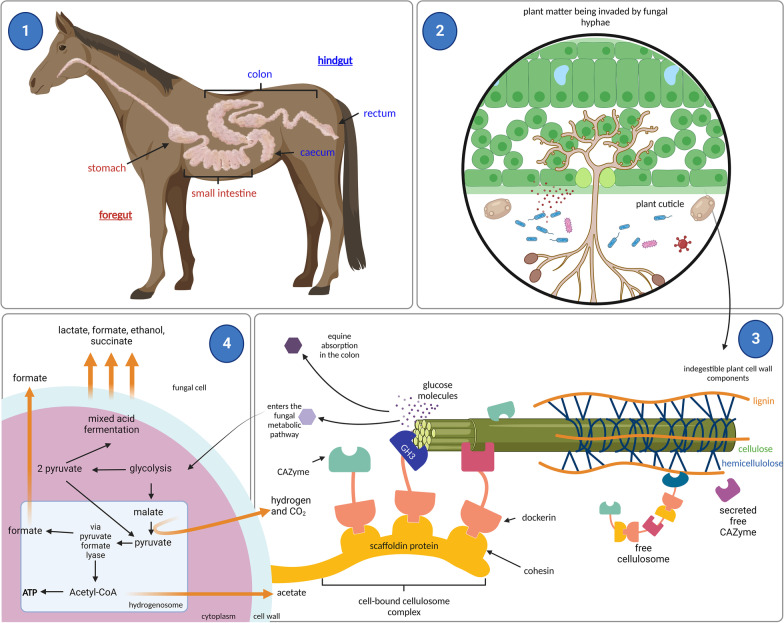
The equine gastrointestinal tract is a self-sufficient fermentation system, housing a complex microbial consortium that acts synergistically and independently to break down complex lignocellulolytic material that enters the equine gut. Despite being strict herbivores, equids such as horses and zebras lack the diversity of enzymes needed to completely break down plant tissue, instead relying on their resident microbes to carry out fibrolysis to yield vital energy sources such as short chain fatty acids. The bulk of equine digestion occurs in the large intestine, where digesta is fermented for 36-48 h through the synergistic activities of bacteria, fungi, and methanogenic archaea. Anaerobic gut dwelling bacteria and fungi break down complex plant polysaccharides through combined mechanical and enzymatic strategies, and notably possess some of the greatest diversity and repertoire of carbohydrate active enzymes among characterized microbes. In addition to the production of enzymes, some equid-isolated anaerobic fungi and bacteria have been shown to possess cellulosomes, powerful multi-enzyme complexes that further enhance break down. The activities of both anaerobic fungi and bacteria are further facilitated by facultatively aerobic yeasts and methanogenic archaea, who maintain an optimal environment for fibrolytic organisms, ultimately leading to increased fibrolytic microbial counts and heightened enzymatic activity. The unique interactions within the equine gut as well as the novel species and powerful mechanisms employed by these microbes makes the equine gut a valuable ecosystem to study fibrolytic functions within complex communities. This review outlines the primary taxa involved in fibre break down within the equine gut and further illuminates the enzymatic strategies and metabolic pathways used by these microbes. We discuss current methods used in analysing fibrolytic functions in complex microbial communities and propose a shift towards the development of functional assays to deepen our understanding of this unique ecosystem.
马的胃肠道是一个自给自足的发酵系统,容纳着一个复杂的微生物群落,这些微生物协同且独立地作用,以分解进入马肠道的复杂木质纤维素物质。尽管马和斑马等马科动物是严格的食草动物,但它们缺乏完全分解植物组织所需的酶的多样性,而是依靠其体内的微生物进行纤维分解,以产生重要的能量来源,如短链脂肪酸。马的大部分消化过程发生在大肠中,在这里,食糜通过细菌、真菌和产甲烷古菌的协同活动进行36至48小时的发酵。生活在肠道内的厌氧细菌和真菌通过机械和酶促相结合的策略分解复杂的植物多糖,并且在已鉴定的微生物中,它们拥有一些最丰富多样的碳水化合物活性酶。除了产生酶之外,一些从马体内分离出的厌氧真菌和细菌已被证明拥有纤维小体,这是一种强大的多酶复合物,可进一步增强分解作用。兼性需氧酵母和产甲烷古菌进一步促进了厌氧真菌和细菌的活动,它们为纤维分解生物维持了最佳环境,最终导致纤维分解微生物数量增加和酶活性增强。马肠道内独特的相互作用以及这些微生物所采用的新物种和强大机制,使马肠道成为研究复杂群落中纤维分解功能的宝贵生态系统。本综述概述了马肠道内参与纤维分解的主要分类群,并进一步阐明了这些微生物所采用的酶促策略和代谢途径。我们讨论了目前用于分析复杂微生物群落中纤维分解功能的方法,并建议转向开发功能测定法,以加深我们对这个独特生态系统的理解。