Department of Anesthesiology of The First Affiliated Hospital of Wenzhou University, Wenzhou, Zhejiang 325000, P.R. China.
Department of Anesthesiology of The First Affiliated Hospital of Soochow University, Suzhou, Jiangsu 215006, P.R. China.
Mol Med Rep. 2018 May;17(5):6497-6505. doi: 10.3892/mmr.2018.8642. Epub 2018 Feb 27.
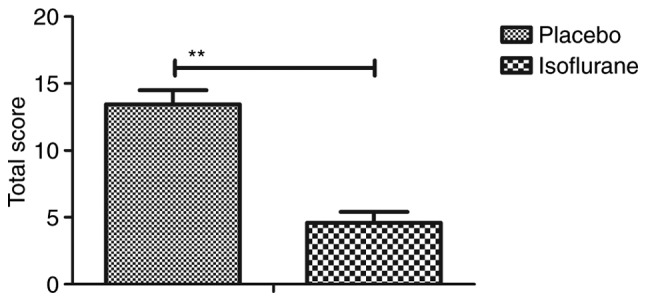
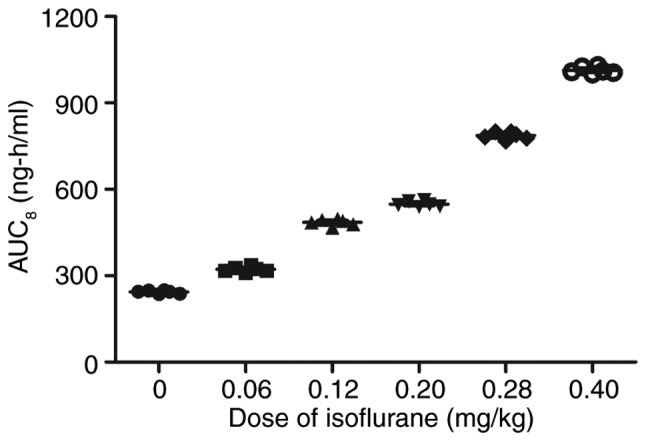
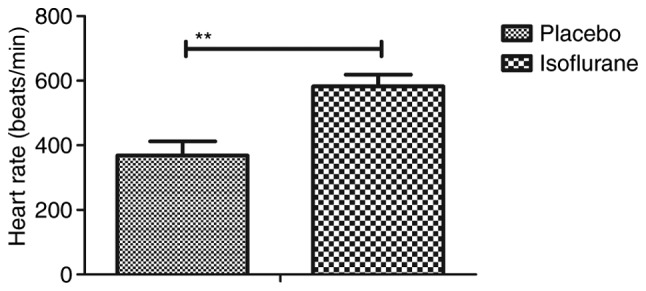
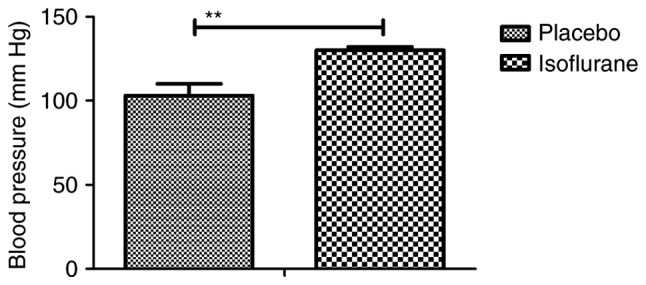
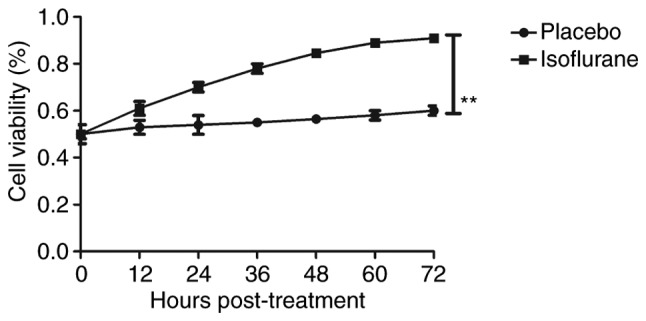
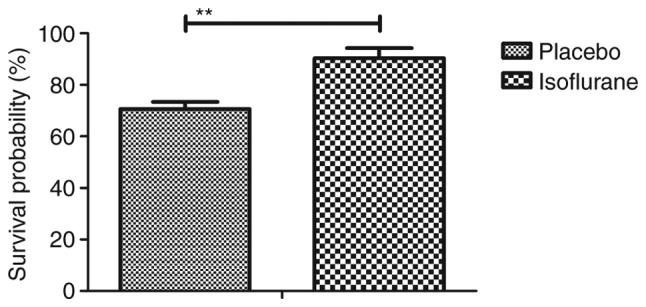
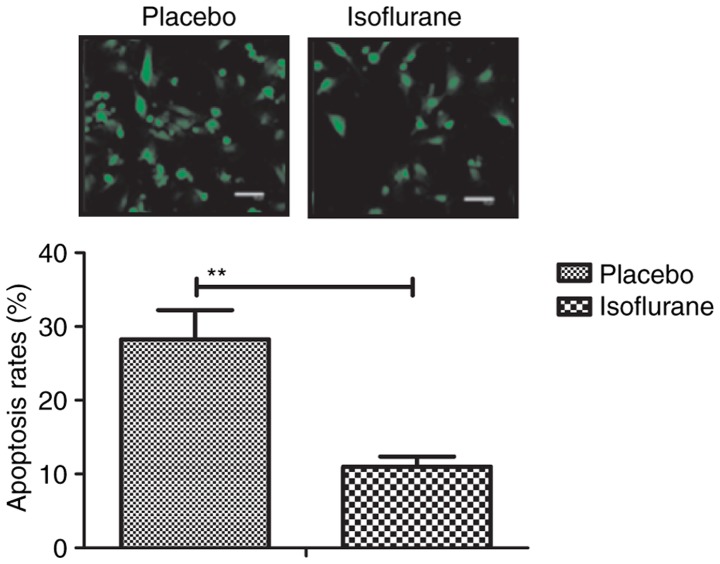
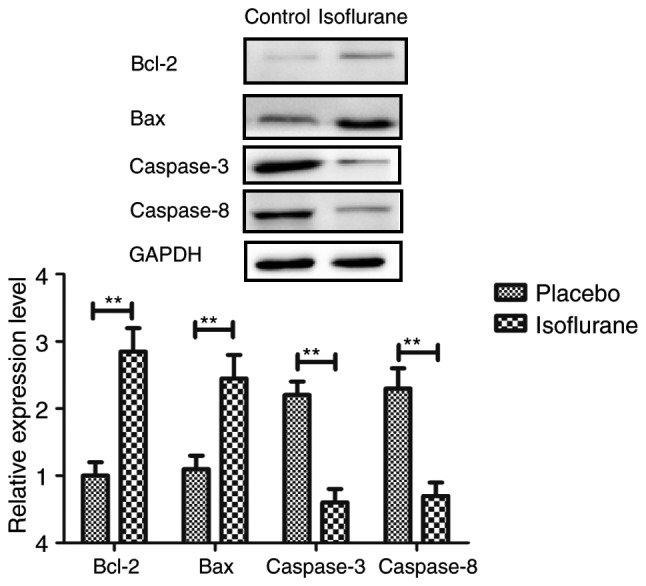
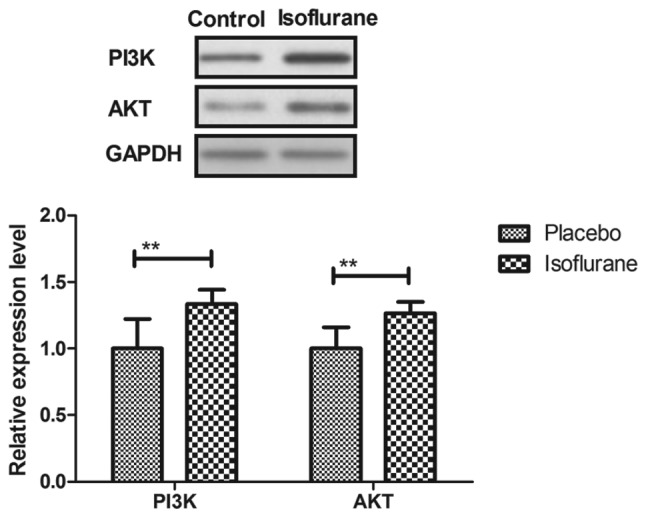
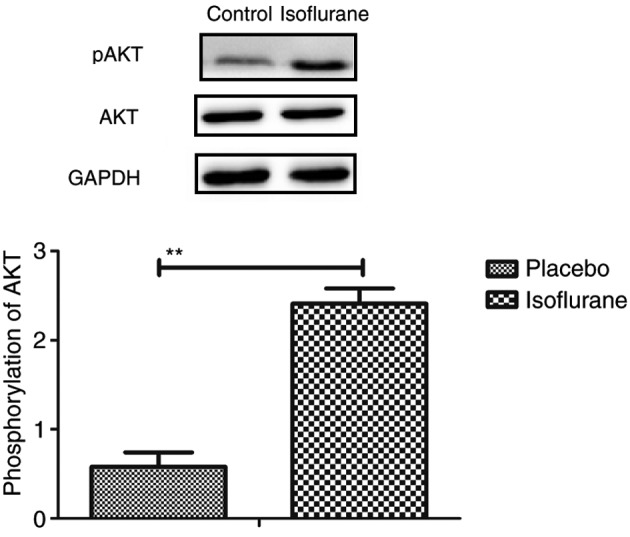
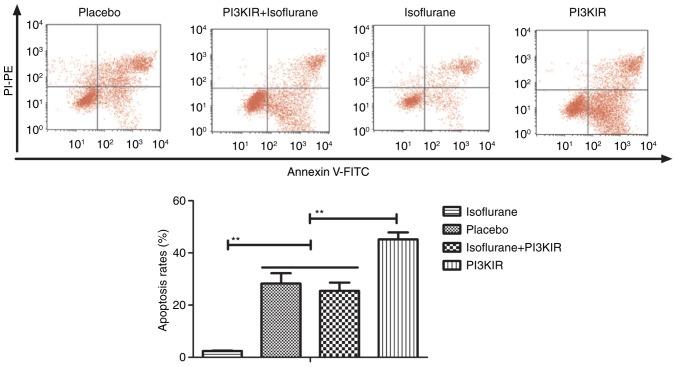
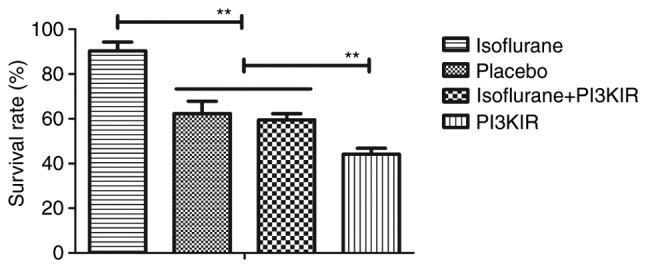
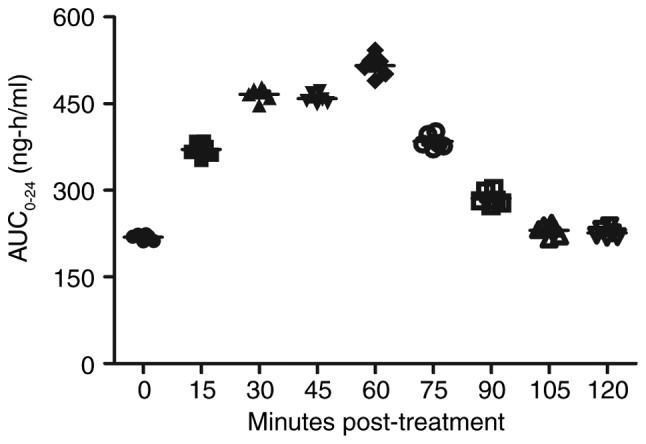
Heart bypass surgery is the most common treatment for myocardial ischemia. Clinical investigations have revealed that isoflurane anesthesia is efficient to alleviate pain during cardiac surgery, including heart bypass surgery. Previous studies have revealed the protective effects of isoflurane on myocardial cells of patients with myocardial ischemia during the perioperative period. The present study aimed to investigate the mechanism underlying the protective effects of isoflurane on myocardial cells in mice with myocardial ischemia. ELISA, flow cytometry, immunofluorescence and western blotting were used to analyze the effects of isoflurane anesthesia on myocardial cells. Briefly, myocardial cell apoptosis and viability, pain, phosphoinositide 3‑kinase/protein kinase B (PI3K/AKT) signaling pathway expression and the pharmacodynamics of isoflurane were studied in mice treated with isoflurane for heart bypass surgery. The results demonstrated that isoflurane anesthesia efficiently attenuated pain in mice during surgery. Viability and apoptosis of myocardial cells was also improved by isoflurane in vitro and in vivo. The PI3K/AKT pathway was upregulated in myocardial cells on day 3 post‑operation. Mechanistically, isoflurane promoted PI3K/AKT activation, upregulated B‑cell lymphoma 2 (Bcl‑2)‑associated X protein and Bcl‑2 expression levels, and reduced the expression levels of caspase‑3 and caspase‑8 in myocardial cells. In conclusion, the findings indicated that isoflurane is beneficial for pain attenuation and inhibits apoptosis of myocardial cells via the PI3K/AKT signaling pathway in mice during cardiac surgery.
心脏旁路手术是治疗心肌缺血最常见的方法。临床研究表明,异氟烷麻醉在心脏手术中(包括心脏旁路手术)可有效缓解疼痛。先前的研究表明,异氟烷在围手术期对心肌缺血患者的心肌细胞具有保护作用。本研究旨在探讨异氟烷对心肌缺血小鼠心肌细胞保护作用的机制。酶联免疫吸附试验、流式细胞术、免疫荧光和蛋白质印迹法用于分析异氟烷麻醉对心肌细胞的影响。简要地说,研究了异氟烷麻醉对行心脏旁路手术的小鼠心肌细胞凋亡和活力、疼痛、磷酸肌醇 3-激酶/蛋白激酶 B(PI3K/AKT)信号通路表达和异氟烷药效学的影响。结果表明,异氟烷麻醉可有效减轻小鼠手术期间的疼痛。体外和体内实验均表明异氟烷可改善心肌细胞的活力和凋亡。术后第 3 天,心肌细胞中 PI3K/AKT 通路被上调。机制上,异氟烷促进了 PI3K/AKT 的激活,上调了 B 细胞淋巴瘤 2(Bcl-2)相关 X 蛋白和 Bcl-2 的表达水平,降低了心肌细胞中 caspase-3 和 caspase-8 的表达水平。综上所述,这些发现表明,异氟烷通过 PI3K/AKT 信号通路有利于减轻疼痛和抑制心脏手术中小鼠心肌细胞的凋亡。