Cameron Michael F, Frost Kathryn J, Ver Hoef Jay M, Breed Greg A, Whiting Alex V, Goodwin John, Boveng Peter L
Marine Mammal Laboratory, Alaska Fisheries Science Center, NOAA, National Marine Fisheries Service, Seattle, Washington, United States of America.
School of Fisheries and Ocean Sciences, University of Alaska-Fairbanks, Fairbanks, Alaska, United States of America.
PLoS One. 2018 Feb 28;13(2):e0192743. doi: 10.1371/journal.pone.0192743. eCollection 2018.
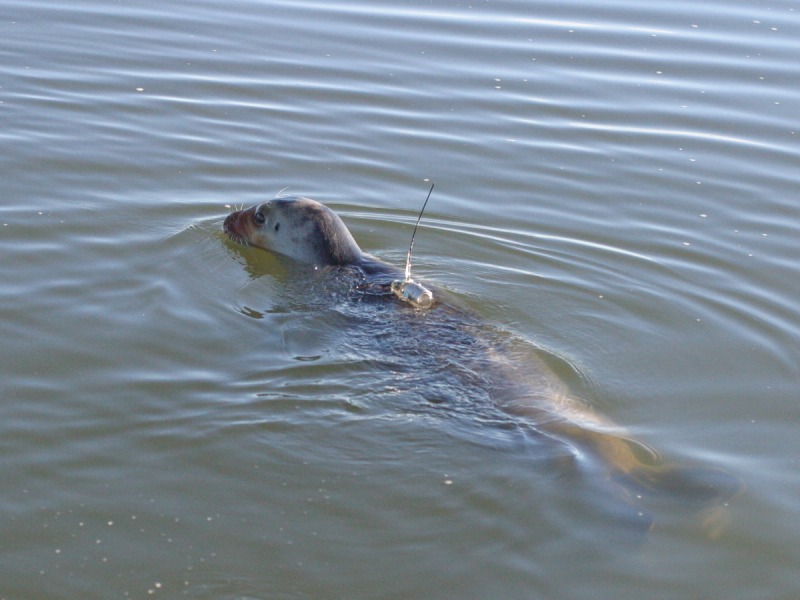
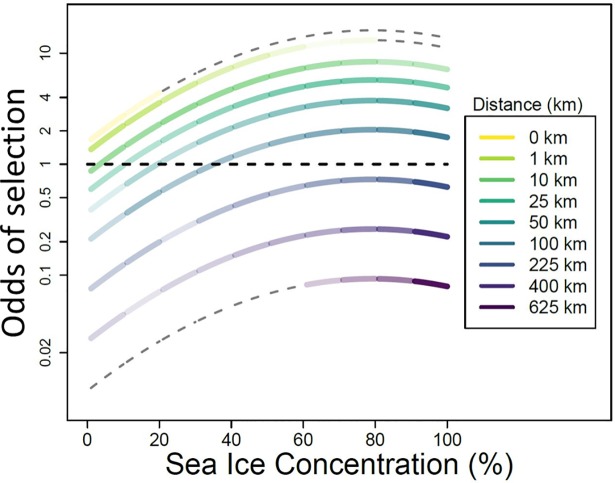
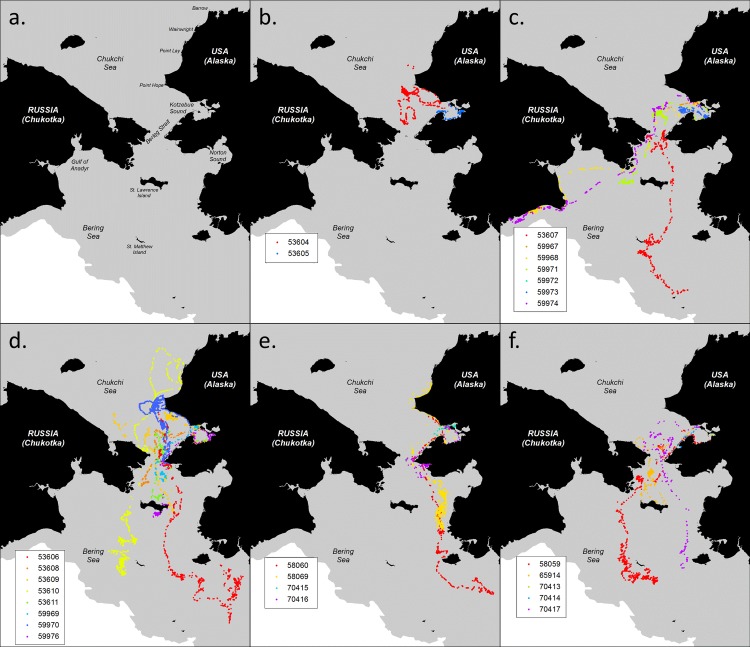
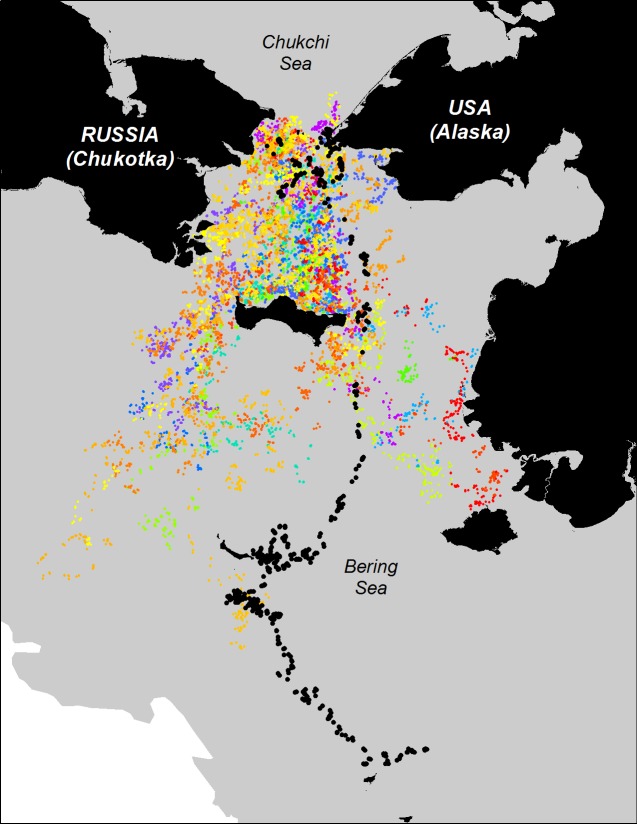
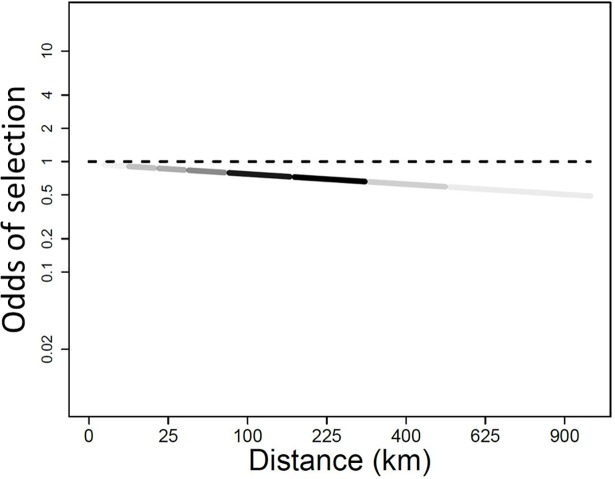
The first year of life is typically the most critical to a pinniped's survival, especially for Arctic phocids which are weaned at only a few weeks of age and left to locate and capture prey on their own. Their seasonal movements and habitat selection are therefore important factors in their survival. During a cooperative effort between scientists and subsistence hunters in October 2004, 2005, and 2006, 13 female and 13 male young (i.e., age <2) bearded seals (Erignathus barbatus) were tagged with satellite-linked dive recorders (SDRs) in Kotzebue Sound, Alaska. Shortly after being released, most seals moved south with the advancing sea-ice through the Bering Strait and into the Bering Sea where they spent the winter and early spring. The SDRs of 17 (8 female and 9 male) seals provided frequent high-quality positions in the Bering Sea; their data were used in our analysis. To investigate habitat selection, we simulated 20 tracks per seal by randomly selecting from the pooled distributions of the absolute bearings and swim speeds of the tagged seals. For each point in the observed and simulated tracks, we obtained the depth, sea-ice concentration, and the distances to sea-ice, open water, the shelf break and coastline. Using logistic regression with a stepwise model selection procedure, we compared the simulated tracks to those of the tagged seals and obtained a model for describing habitat selection. The regression coefficients indicated that the bearded seals in our study selected locations near the ice edge. In contrast, aerial surveys of the bearded seal population, predominantly composed of adults, indicated higher abundances in areas farther north and in heavier pack ice. We hypothesize that this discrepancy is the result of behavioral differences related to age. Ice concentration was also shown to be a statistically significant variable in our model. All else being equal, areas of higher ice concentration are selected for up to about 80%. The effects of sex and bathymetry were not statistically significant. The close association of young bearded seals to the ice edge in the Bering Sea is important given the likely effects of climate warming on the extent of sea-ice and subsequent changes in ice edge habitat.
生命的第一年对鳍足类动物的生存通常最为关键,对于北极海豹科动物而言尤其如此,它们在仅几周大时就断奶,之后要自行寻找并捕获猎物。因此,它们的季节性迁徙和栖息地选择是其生存的重要因素。在2004年10月、2005年和2006年科学家与自给性猎人的合作项目中,13只雌性和13只雄性幼年(即年龄<2岁)髯海豹(Erignathus barbatus)在阿拉斯加的科策布湾被装上了卫星连接式潜水记录器(SDR)。放生后不久,大多数海豹随着不断推进的海冰向南移动,穿过白令海峡进入白令海,在那里度过冬季和早春。17只(8只雌性和9只雄性)海豹的SDR在白令海提供了频繁的高质量定位数据;这些数据用于我们的分析。为了研究栖息地选择,我们从被标记海豹的绝对方位和游泳速度的汇总分布中随机选择,为每只海豹模拟20条轨迹。对于观测轨迹和模拟轨迹中的每个点,我们获取了深度、海冰浓度以及到海冰、开阔水域、陆架坡折和海岸线的距离。使用逐步模型选择程序的逻辑回归,我们将模拟轨迹与被标记海豹的轨迹进行比较,得到了一个描述栖息地选择的模型。回归系数表明,我们研究中的髯海豹选择了靠近冰缘的位置。相比之下,对主要由成年海豹组成的髯海豹种群的空中调查显示,在更靠北的区域和更厚的密集冰区,海豹数量更多。我们推测这种差异是与年龄相关的行为差异导致的。冰浓度在我们的模型中也被证明是一个具有统计学意义的变量。在其他条件相同的情况下,高达约80%的区域会选择冰浓度较高的区域。性别和水深的影响在统计学上不显著。考虑到气候变暖对海冰范围以及冰缘栖息地后续变化的可能影响,幼年髯海豹与白令海冰缘的紧密关联至关重要。