Departement of Fundamental and Applied Sciences, Universiti Teknologi PETRONAS, Bandar Seri Iskandar, Tronoh, Perak, Malaysia.
Departement of Chemical Engineering, Universiti Teknologi PETRONAS, Bandar Seri Iskandar, Tronoh, Perak, Malaysia.
PLoS One. 2018 Feb 28;13(2):e0193518. doi: 10.1371/journal.pone.0193518. eCollection 2018.
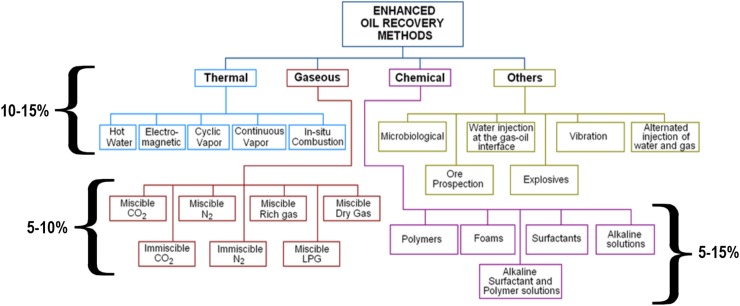
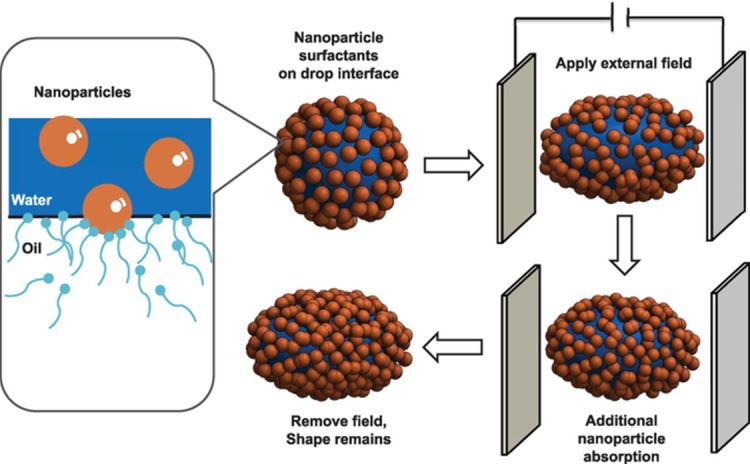
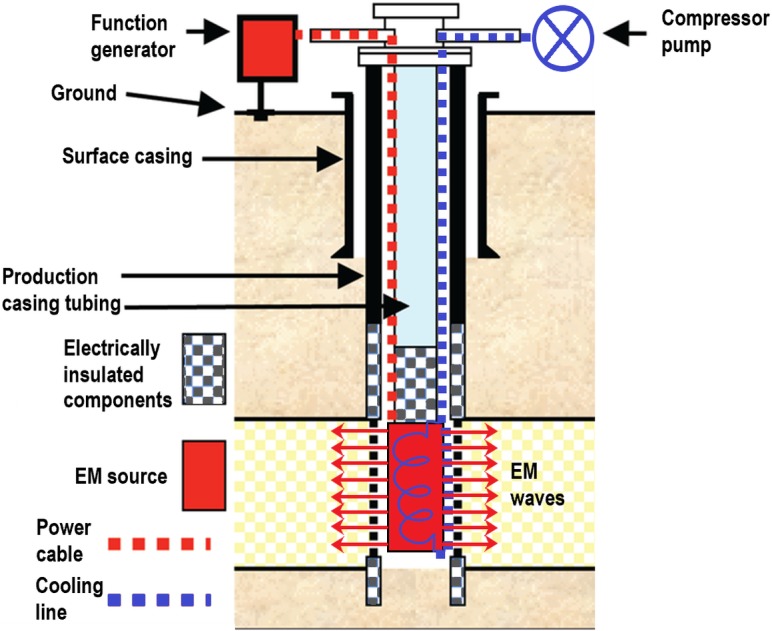
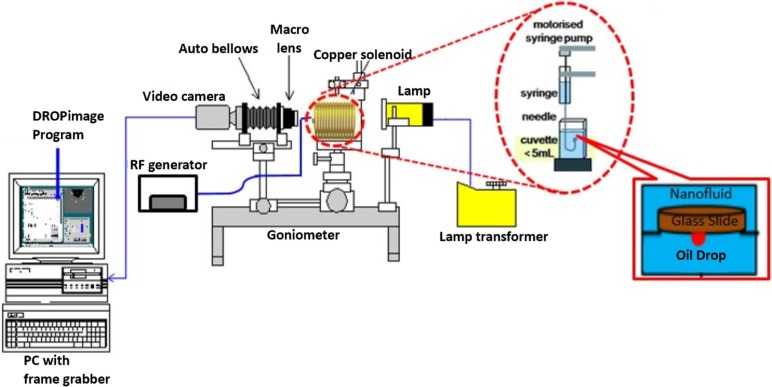
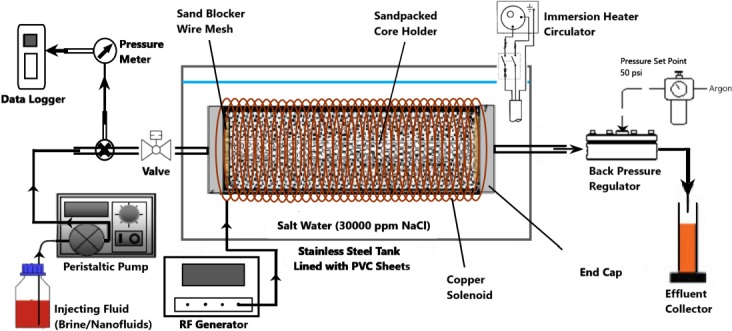
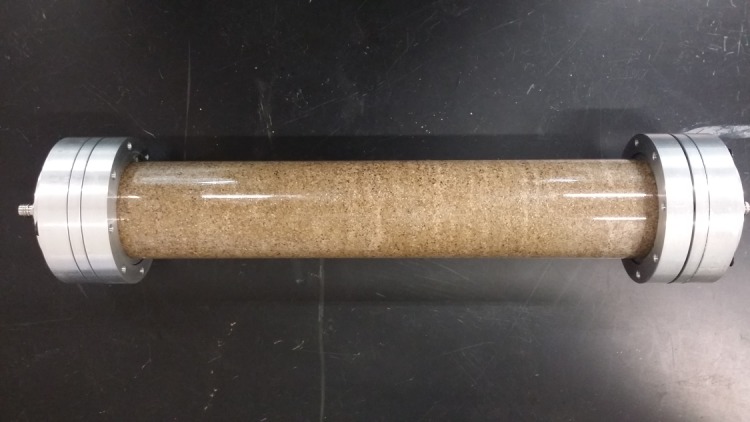
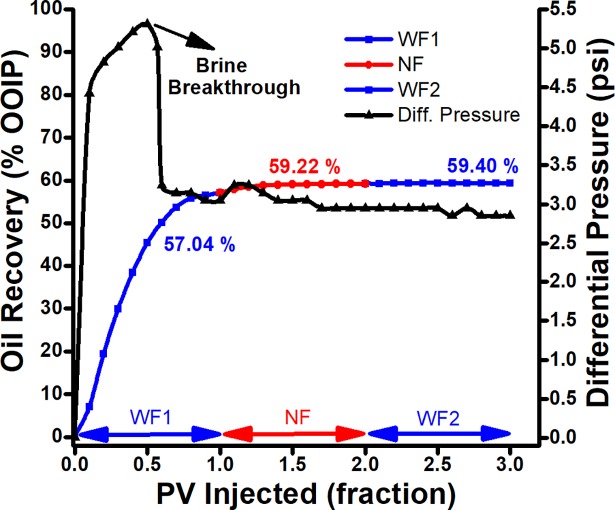
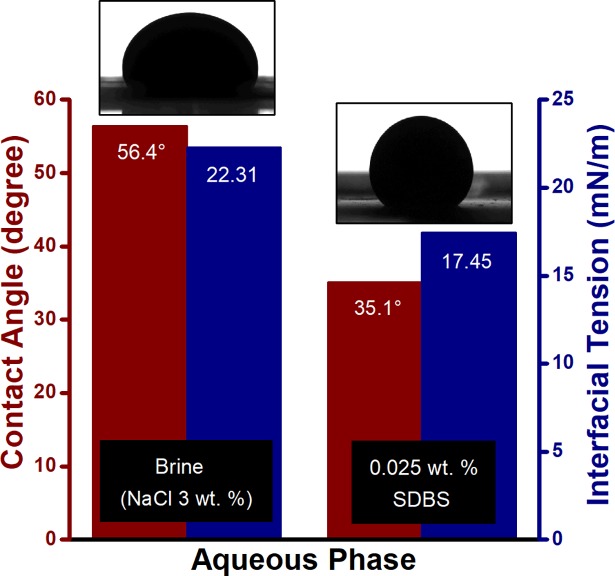
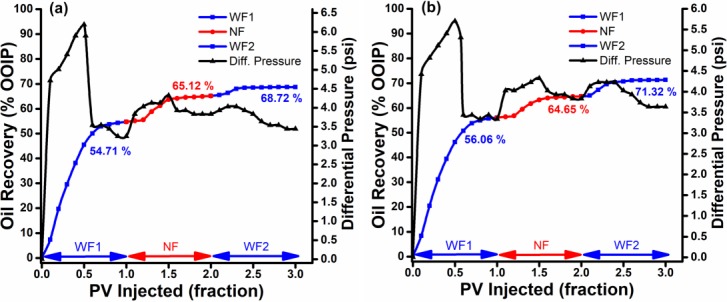
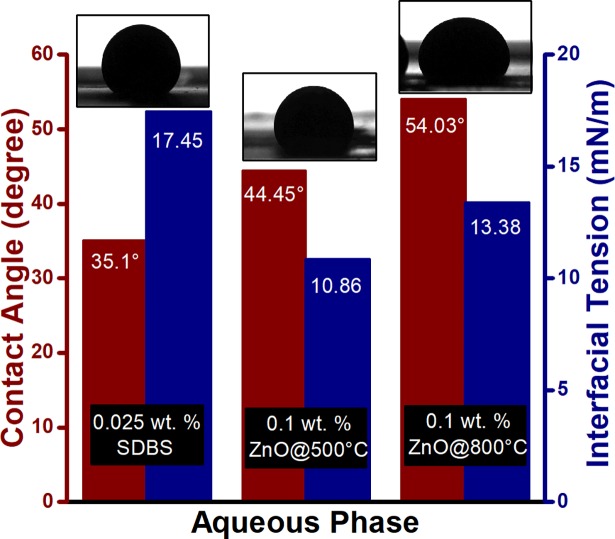
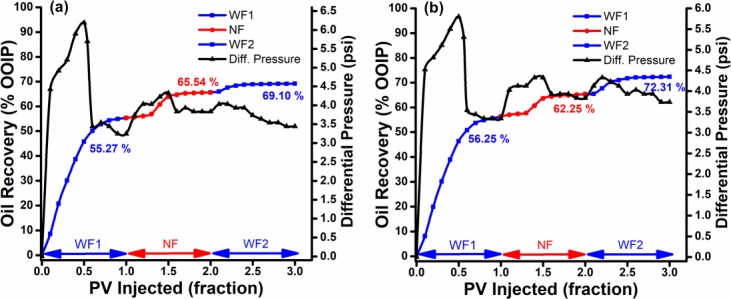
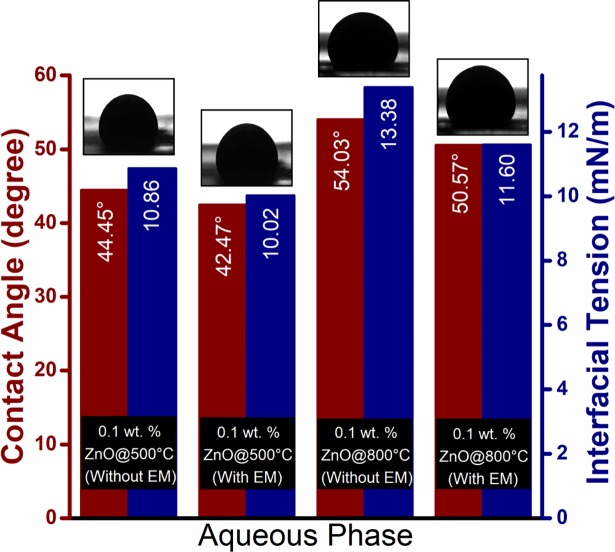
Recently, nano-EOR has emerged as a new frontier for improved and enhanced oil recovery (IOR & EOR). Despite their benefits, the nanoparticles tend to agglomerate at reservoir conditions which cause their detachment from the oil/water interface, and are consequently retained rather than transported through a porous medium. Dielectric nanoparticles including ZnO have been proposed to be a good replacement for EOR due to their high melting point and thermal properties. But more importantly, these particles can be polarized under electromagnetic (EM) irradiation, which provides an innovative smart Nano-EOR process denoted as EM-Assisted Nano-EOR. In this study, parameters involved in the oil recovery mechanism under EM waves, such as reducing mobility ratio, lowering interfacial tensions (IFT) and altering wettability were investigated. Two-phase displacement experiments were performed in sandpacks under the water-wet condition at 95°C, with permeability in the range of 265-300 mD. A crude oil from Tapis oil field was employed; while ZnO nanofluids of two different particle sizes (55.7 and 117.1 nm) were prepared using 0.1 wt. % nanoparticles that dispersed into brine (3 wt. % NaCl) along with SDBS as a dispersant. In each flooding scheme, three injection sequential scenarios have been conducted: (i) brine flooding as a secondary process, (ii) surfactant/nano/EM-assisted nano flooding, and (iii) second brine flooding to flush nanoparticles. Compare with surfactant flooding (2% original oil in place/OOIP) as tertiary recovery, nano flooding almost reaches 8.5-10.2% of OOIP. On the other hand, EM-assisted nano flooding provides an incremental oil recovery of approximately 9-10.4% of OOIP. By evaluating the contact angle and interfacial tension, it was established that the degree of IFT reduction plays a governing role in the oil displacement mechanism via nano-EOR, compare to mobility ratio. These results reveal a promising way to employ water-based ZnO nanofluid for enhanced oil recovery purposes at a relatively high reservoir temperature.
最近,纳米强化采油(EOR)已成为提高和强化采油(IOR 和 EOR)的新前沿。尽管纳米颗粒有很多好处,但它们在油藏条件下往往会团聚,从而脱离油水界面,因此被保留而不是通过多孔介质传输。由于具有较高的熔点和热性能,包括氧化锌在内的介电纳米颗粒已被提议作为 EOR 的替代品。但更重要的是,这些颗粒可以在电磁场(EM)辐射下极化,这为一种创新的智能纳米强化采油工艺提供了可能性,称为 EM 辅助纳米强化采油。在这项研究中,研究了 EM 波下的采油机制涉及的参数,例如降低流度比、降低界面张力(IFT)和改变润湿性。在 95°C 下,在水湿条件下,在渗透率为 265-300 mD 的岩心中进行了两相驱替实验。使用来自塔皮斯油田的原油;而氧化锌纳米流体的两种不同粒径(55.7nm 和 117.1nm)是使用 0.1wt%的纳米颗粒制备的,纳米颗粒分散在盐水中(3wt%的 NaCl),并使用 SDBS 作为分散剂。在每种驱替方案中,进行了三种注入顺序方案:(i)盐水驱替作为二次过程,(ii)表面活性剂/纳米/EM 辅助纳米驱替,以及(iii)第二次盐水驱替以冲洗纳米颗粒。与作为三次采油的表面活性剂驱替(2%原始油藏含油量/OOIP)相比,纳米驱替几乎达到了 8.5-10.2%的 OOIP。另一方面,EM 辅助纳米驱替提供了约 9-10.4%的 OOIP 的额外采油增量。通过评估接触角和界面张力,确定了在纳米强化采油过程中,IFT 降低程度在驱油机制中起着控制作用,而不是流度比。这些结果表明,在相对较高的油藏温度下,采用水基氧化锌纳米流体来提高采油效率是一种很有前景的方法。