Affiliated Hospital of Nanjing University of TCM, Nanjing, 210000, Jiangsu, China.
Department of Radiation Oncology, Jiangsu Hospital of Traditional Chinese Medicine, 155 Han Zhong Road, Nanjing, 210000, Jiangsu, China.
J Transl Med. 2018 Feb 28;16(1):46. doi: 10.1186/s12967-018-1418-6.
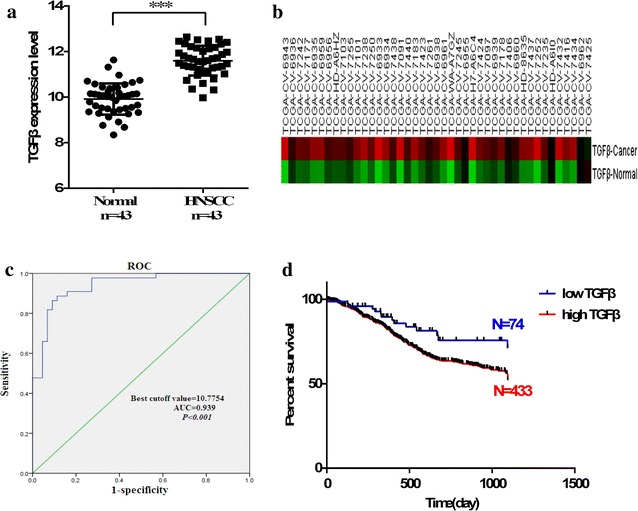
The role of transforming growth factorβ (TGF-β)-induced tumor progression in advanced malignancy is well established, but the involvement of long non-coding RNAs (lncRNAs) in TGF-β signaling remains unclear. This study aimed to identify TGF-β-associated lncRNAs in head and neck squamous cell carcinoma (HNSCC).
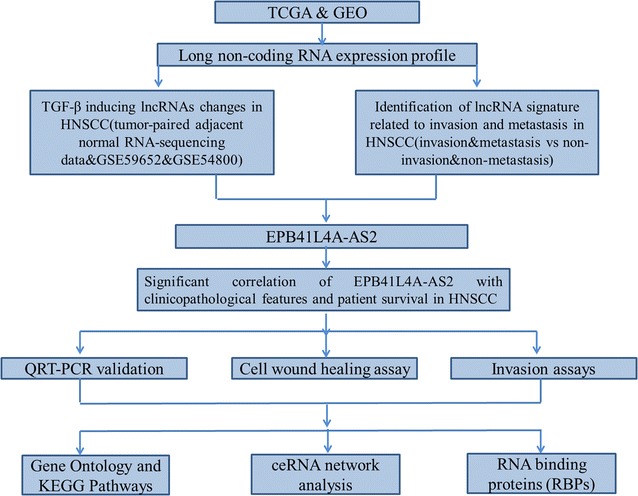
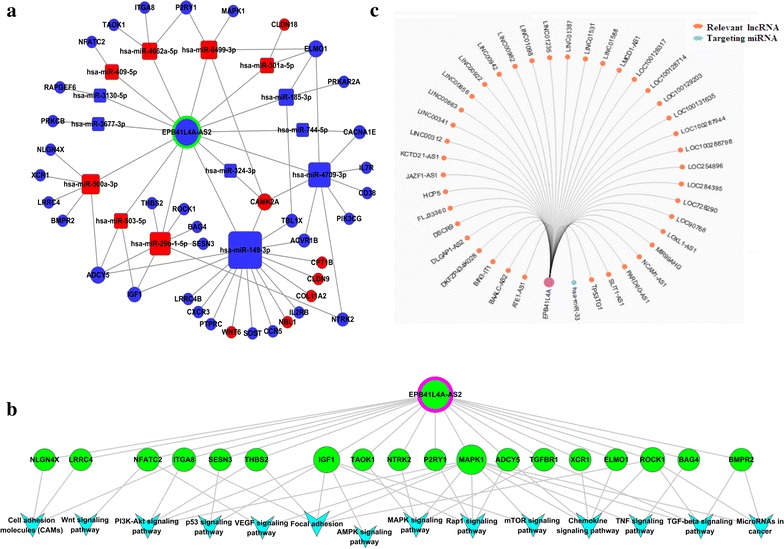
Expression profiling of lncRNAs was obtained using Gene Expression Omnibus and The Cancer Genome Atlas. Real-time quantitative PCR was used to analyze the expression of EPB41L4A-AS2 in HNSCC cell line. We used bioinformatics resources (DAvID) to conduct Gene Ontology biological processes and KEGG pathways at the significant level. Wound healing assay, cell migration and invasion assays, were used to examine the effects of EPB41L4A-AS2 on tumor cell metastasis in vivo. Protein levels of EPB41L4A-AS2 targets were determined by western blot.
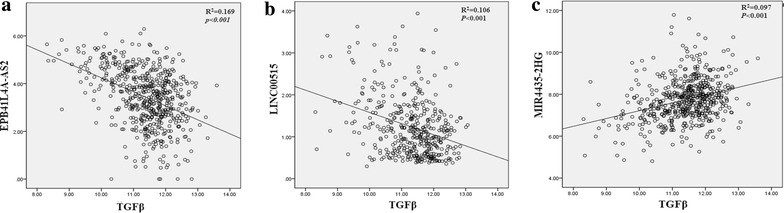
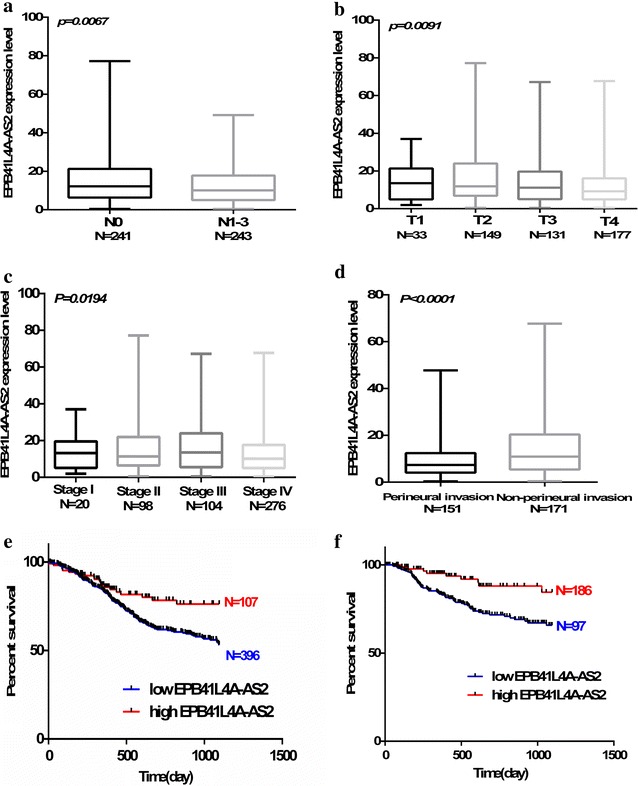
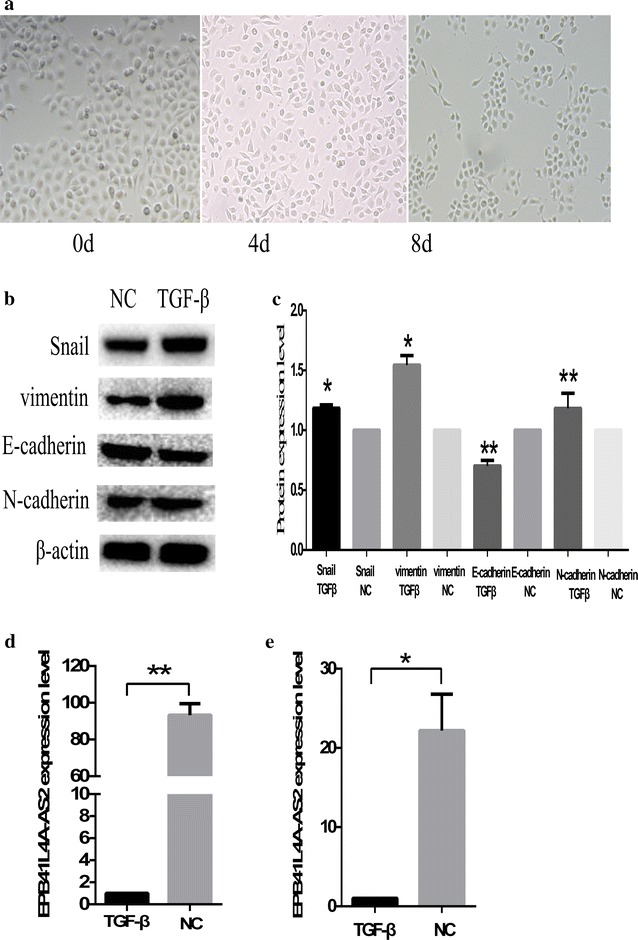
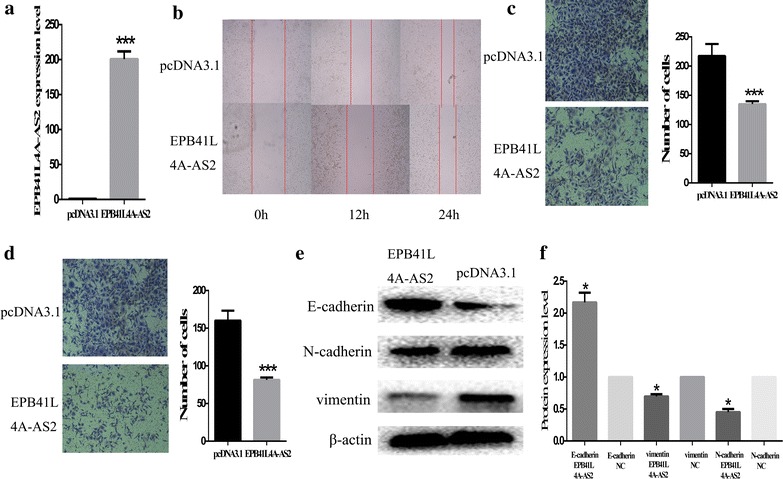
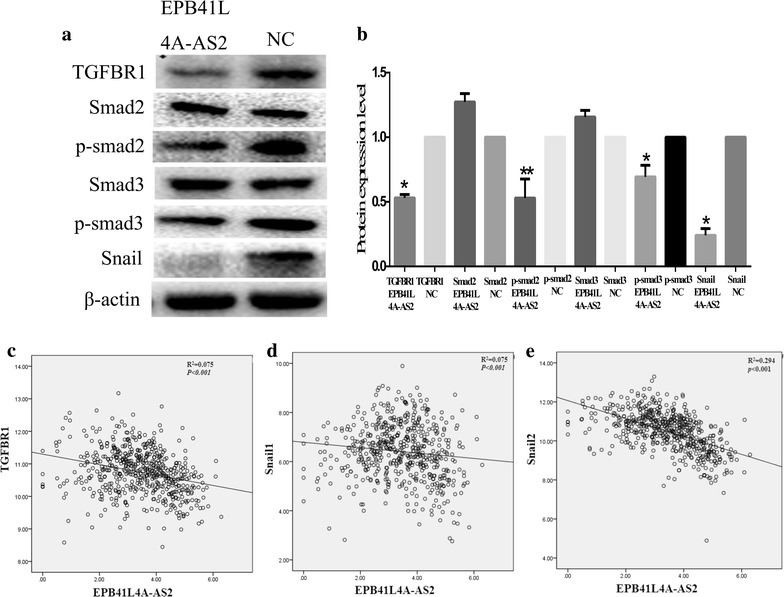
A novel TGF-β-associated lncRNA, EPB41L4A-AS2, was found downregulated by TGF-β and associated with invasion and metastasis. The relationship of EPB41L4A-AS2 with the clinicopathological features and prognosis of HNSCC patients was evaluated. Bioinformatic analyses revealed that EPB41L4A-AS2 may be involved in processes associated with the tumor-associated signaling pathway, especially the TGF-β signaling pathway. Furthermore, a TGF-β-induced epithelial-to-mesenchymal transition (EMT) model was established. Low EPB41L4A-AS2 expression was determined, and overexpression of this gene inhibited cell migration and invasion in the EMT model. Moreover, EPB41L4A-AS2 suppressed TGFBR1 expression.
EPB41L4A-AS2 might serve as a negative regulator of TGF-β signaling and as an effective prognostic biomarker and important target in anti-metastasis therapies of HNSCC patients.
转化生长因子β(TGF-β)诱导的肿瘤进展在晚期恶性肿瘤中作用明确,但长链非编码 RNA(lncRNA)在 TGF-β信号中的参与仍不清楚。本研究旨在鉴定头颈部鳞状细胞癌(HNSCC)中与 TGF-β相关的 lncRNA。
使用基因表达综合数据库和癌症基因组图谱获取 lncRNA 的表达谱。实时定量 PCR 分析 HNSCC 细胞系中 EPB41L4A-AS2 的表达。我们使用生物信息学资源(DAvID)进行有意义的基因本体论生物过程和 KEGG 通路分析。使用划痕愈合实验、细胞迁移和侵袭实验,检测 EPB41L4A-AS2 对体内肿瘤细胞转移的影响。通过 Western blot 确定 EPB41L4A-AS2 靶蛋白的水平。
发现一种新型 TGF-β相关 lncRNA,EPB41L4A-AS2,受 TGF-β下调,并与侵袭和转移相关。评估 EPB41L4A-AS2 与 HNSCC 患者临床病理特征和预后的关系。生物信息学分析表明,EPB41L4A-AS2 可能参与与肿瘤相关信号通路相关的过程,特别是 TGF-β信号通路。此外,建立了 TGF-β诱导的上皮间质转化(EMT)模型。确定 EPB41L4A-AS2 的低表达,并且该基因的过表达可抑制 EMT 模型中的细胞迁移和侵袭。此外,EPB41L4A-AS2 抑制 TGFBR1 的表达。
EPB41L4A-AS2 可能作为 TGF-β信号的负调节剂,并作为 HNSCC 患者抗转移治疗的有效预后标志物和重要靶标。