Institute for Health Metrics and Evaluation, University of Washington, Seattle, Washington 98121, USA.
Department of Infectious Disease Epidemiology, Imperial College London, London SW7 2AZ, UK.
Nature. 2018 Feb 28;555(7694):41-47. doi: 10.1038/nature25760.
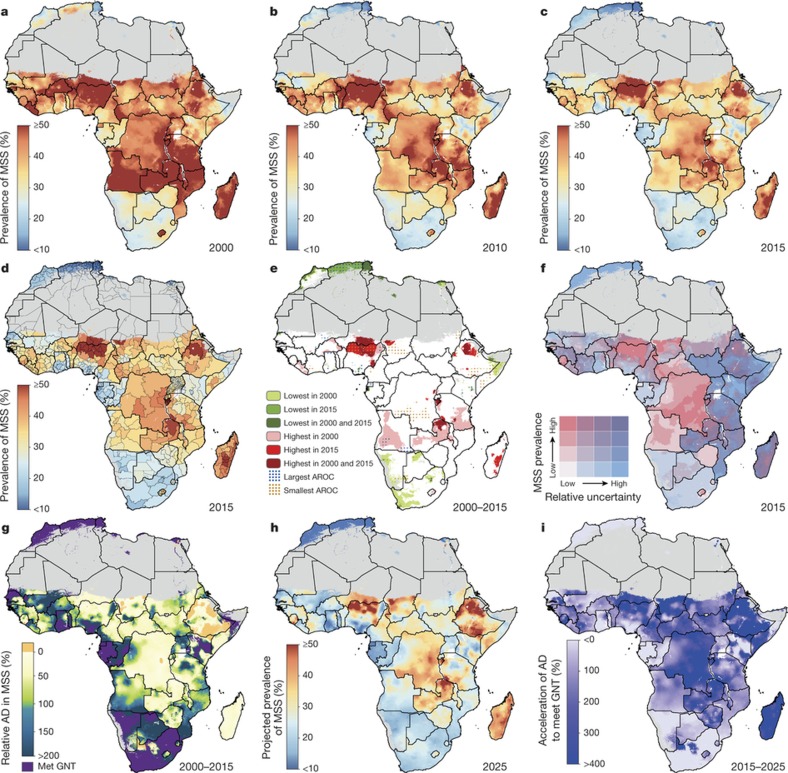
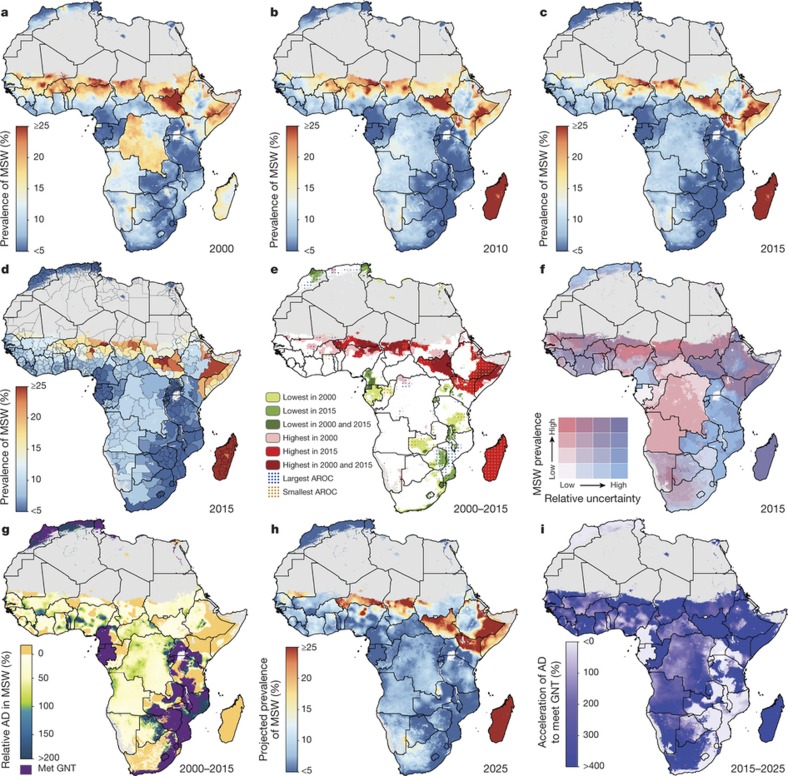
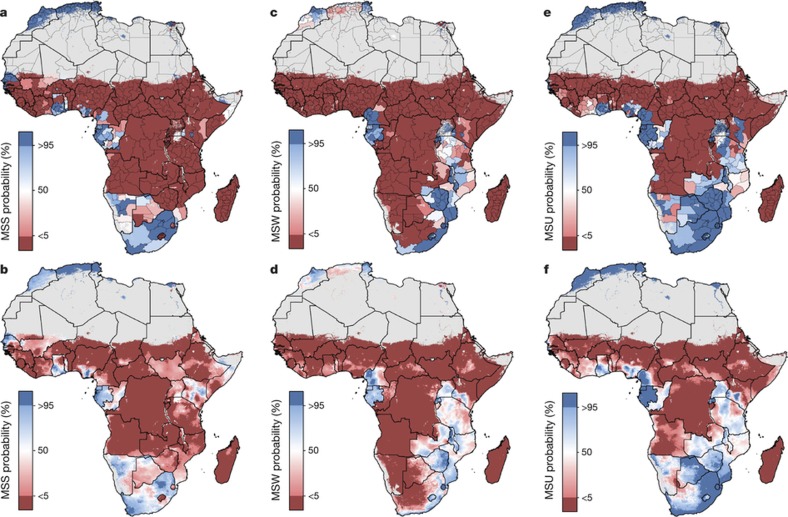
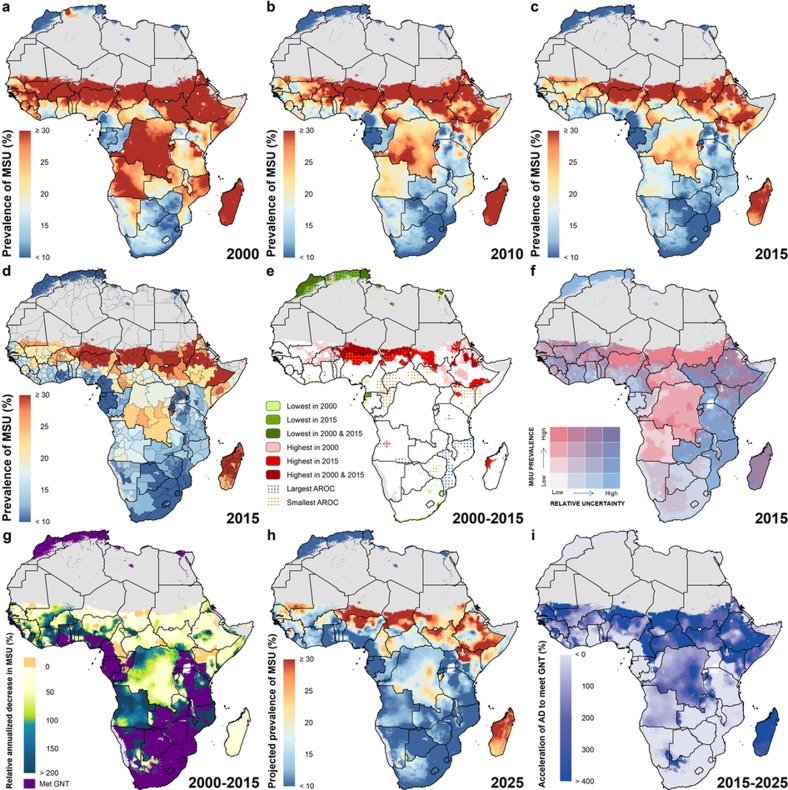
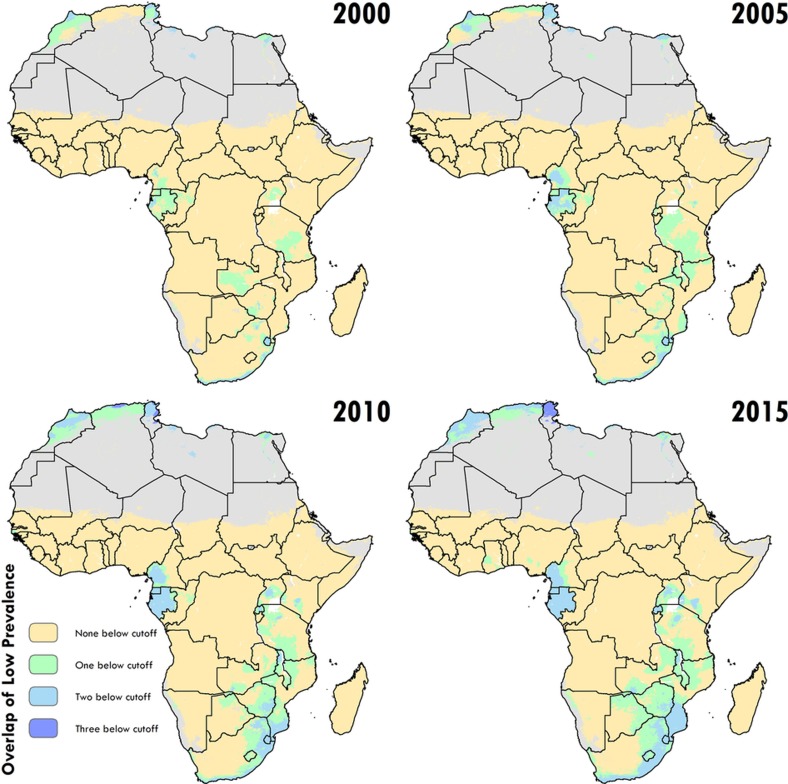
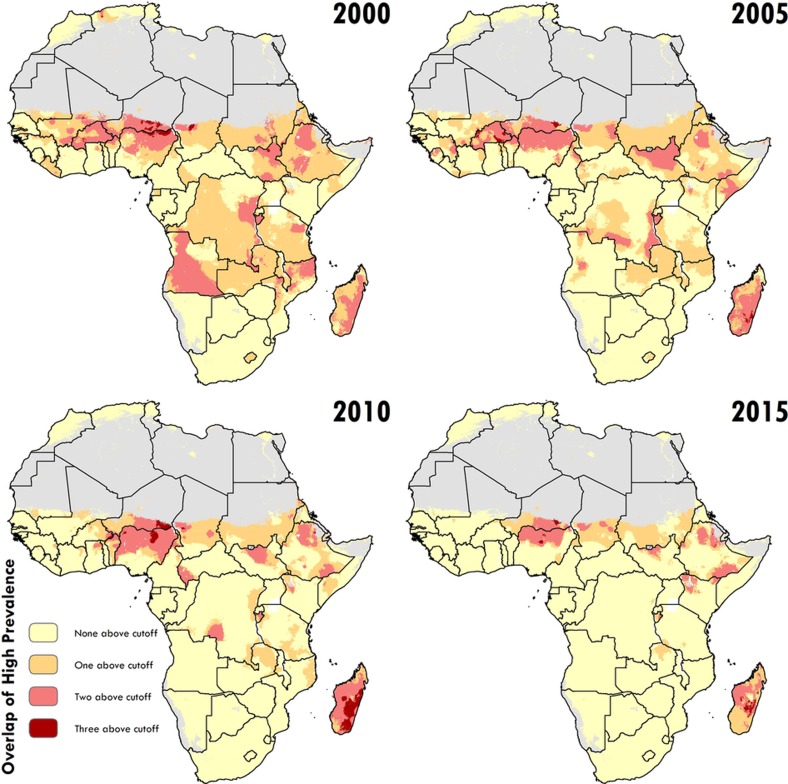
Insufficient growth during childhood is associated with poor health outcomes and an increased risk of death. Between 2000 and 2015, nearly all African countries demonstrated improvements for children under 5 years old for stunting, wasting, and underweight, the core components of child growth failure. Here we show that striking subnational heterogeneity in levels and trends of child growth remains. If current rates of progress are sustained, many areas of Africa will meet the World Health Organization Global Targets 2025 to improve maternal, infant and young child nutrition, but high levels of growth failure will persist across the Sahel. At these rates, much, if not all of the continent will fail to meet the Sustainable Development Goal target-to end malnutrition by 2030. Geospatial estimates of child growth failure provide a baseline for measuring progress as well as a precision public health platform to target interventions to those populations with the greatest need, in order to reduce health disparities and accelerate progress.
儿童期生长不足与健康状况不佳和死亡风险增加有关。在 2000 年至 2015 年期间,几乎所有非洲国家在五岁以下儿童发育迟缓、消瘦和体重不足方面都取得了改善,这些是儿童生长失败的核心组成部分。在这里,我们表明,儿童生长水平和趋势的显著国家以下一级的异质性依然存在。如果当前的进展速度持续下去,非洲的许多地区将达到世界卫生组织 2025 年改善孕产妇、婴幼儿和儿童营养的全球目标,但撒哈拉以南非洲的高比例生长失败仍将持续存在。按照这些速度,即便不是整个非洲大陆,也会有很大一部分无法实现到 2030 年消除营养不良的可持续发展目标。儿童生长失败的地理空间估计为衡量进展提供了基线,并为精准公共卫生平台提供了干预目标,以便为最有需要的人群减少健康差距并加速进展。