• 文献检索
  • 文档翻译
  • 深度研究
  • 学术资讯
  • Suppr Zotero 插件Zotero 插件
  • 邀请有礼
  • 套餐&价格
  • 历史记录
应用&插件
Suppr Zotero 插件Zotero 插件浏览器插件Mac 客户端Windows 客户端微信小程序
定价
高级版会员购买积分包购买API积分包
服务
文献检索文档翻译深度研究API 文档MCP 服务
关于我们
关于 Suppr公司介绍联系我们用户协议隐私条款
关注我们

Suppr 超能文献

核心技术专利:CN118964589B侵权必究
粤ICP备2023148730 号-1Suppr @ 2026

文献检索

告别复杂PubMed语法,用中文像聊天一样搜索,搜遍4000万医学文献。AI智能推荐,让科研检索更轻松。

立即免费搜索

文件翻译

保留排版,准确专业,支持PDF/Word/PPT等文件格式,支持 12+语言互译。

免费翻译文档

深度研究

AI帮你快速写综述,25分钟生成高质量综述,智能提取关键信息,辅助科研写作。

立即免费体验

光周期对蛋白质组的调控揭示了一种翻译偶联机制。

Photoperiodic control of the proteome reveals a translational coincidence mechanism.

机构信息

SynthSys and School of Biological Sciences, University of Edinburgh, Edinburgh, UK.

Department of Biology, Institute of Molecular Plant Biology, ETH Zurich, Zurich, Switzerland.

出版信息

Mol Syst Biol. 2018 Mar 1;14(3):e7962. doi: 10.15252/msb.20177962.

DOI:10.15252/msb.20177962
PMID:29496885
原文链接:https://pmc.ncbi.nlm.nih.gov/articles/PMC5830654/
Abstract

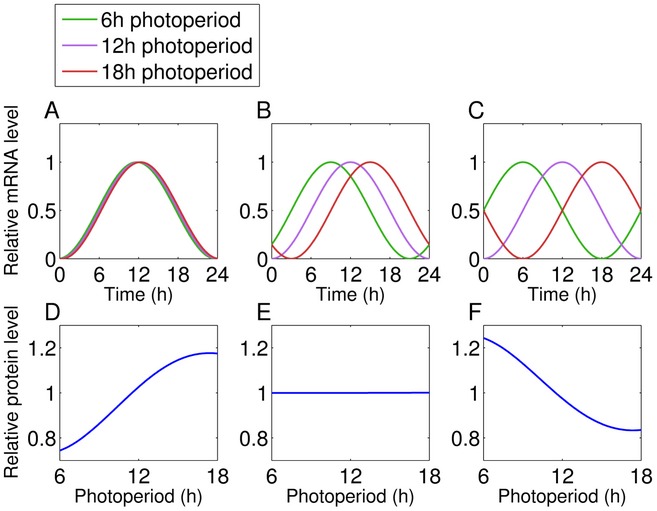
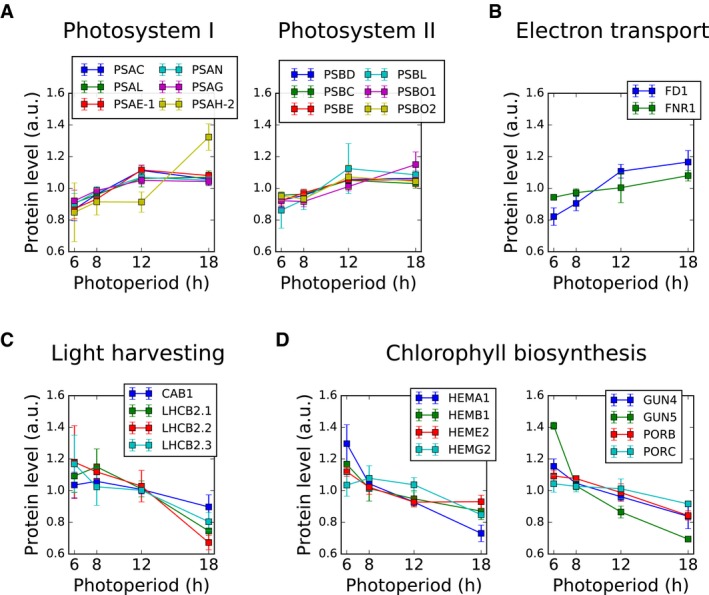
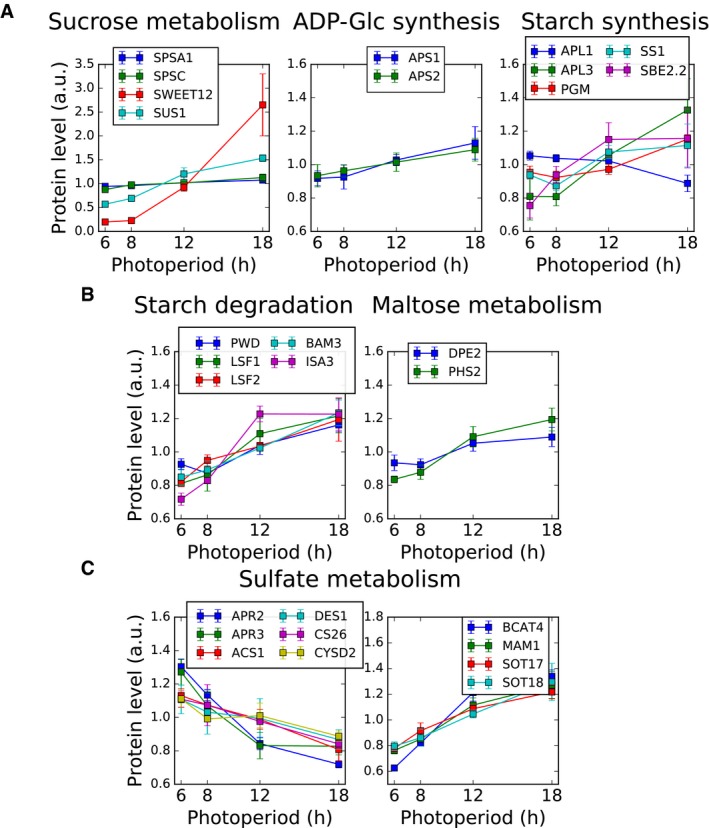
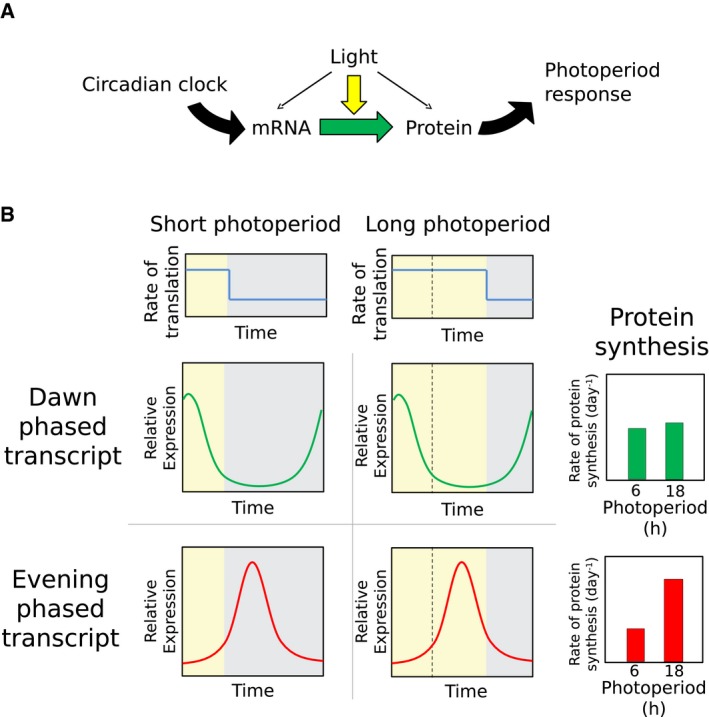
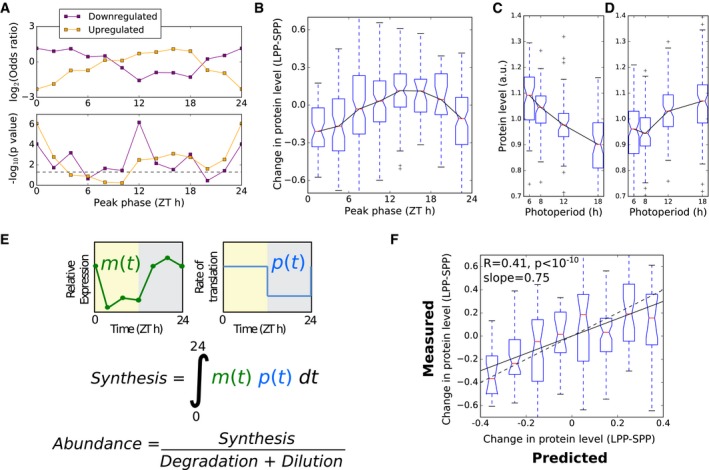
Plants respond to seasonal cues such as the photoperiod, to adapt to current conditions and to prepare for environmental changes in the season to come. To assess photoperiodic responses at the protein level, we quantified the proteome of the model plant by mass spectrometry across four photoperiods. This revealed coordinated changes of abundance in proteins of photosynthesis, primary and secondary metabolism, including pigment biosynthesis, consistent with higher metabolic activity in long photoperiods. Higher translation rates in the day than the night likely contribute to these changes, via an interaction with rhythmic changes in RNA abundance. Photoperiodic control of protein levels might be greatest only if high translation rates coincide with high transcript levels in some photoperiods. We term this proposed mechanism "translational coincidence", mathematically model its components, and demonstrate its effect on the proteome. Datasets from a green alga and a cyanobacterium suggest that translational coincidence contributes to seasonal control of the proteome in many phototrophic organisms. This may explain why many transcripts but not their cognate proteins exhibit diurnal rhythms.

摘要

植物会对光周期等季节性线索做出反应,以适应当前的环境条件,并为即将到来的季节环境变化做好准备。为了在蛋白质水平上评估光周期反应,我们通过质谱法在四个光周期内对模式植物的蛋白质组进行了定量分析。这揭示了光合作用、初级和次级代谢物(包括色素生物合成)中蛋白质丰度的协调变化,与长光周期下更高的代谢活性一致。由于与 RNA 丰度的节律变化相互作用,白天的翻译速率可能高于夜间,从而导致这些变化。只有在某些光周期中,高翻译速率与高转录水平同时发生时,蛋白质水平的光周期控制才可能最大。我们将这种拟议的机制称为“翻译偶联”,对其组成部分进行了数学建模,并证明了其对蛋白质组的影响。来自绿藻和蓝藻的数据集表明,翻译偶联有助于许多光养生物季节性控制蛋白质组。这可能解释了为什么许多转录物而不是其同源蛋白质表现出昼夜节律。
https://cdn.ncbi.nlm.nih.gov/pmc/blobs/b51b/5830654/173070e9c1bd/MSB-14-e7962-g015.jpg
https://cdn.ncbi.nlm.nih.gov/pmc/blobs/b51b/5830654/5c76cba70680/MSB-14-e7962-g002.jpg
https://cdn.ncbi.nlm.nih.gov/pmc/blobs/b51b/5830654/51b6bb9935d6/MSB-14-e7962-g004.jpg
https://cdn.ncbi.nlm.nih.gov/pmc/blobs/b51b/5830654/bc21f686accc/MSB-14-e7962-g006.jpg
https://cdn.ncbi.nlm.nih.gov/pmc/blobs/b51b/5830654/bac9a0ce8aa9/MSB-14-e7962-g008.jpg
https://cdn.ncbi.nlm.nih.gov/pmc/blobs/b51b/5830654/648c4e12ff03/MSB-14-e7962-g003.jpg
https://cdn.ncbi.nlm.nih.gov/pmc/blobs/b51b/5830654/a219c4ab57cd/MSB-14-e7962-g005.jpg
https://cdn.ncbi.nlm.nih.gov/pmc/blobs/b51b/5830654/c6d99879fabb/MSB-14-e7962-g010.jpg
https://cdn.ncbi.nlm.nih.gov/pmc/blobs/b51b/5830654/524687852eda/MSB-14-e7962-g012.jpg
https://cdn.ncbi.nlm.nih.gov/pmc/blobs/b51b/5830654/0fed0398d20d/MSB-14-e7962-g007.jpg
https://cdn.ncbi.nlm.nih.gov/pmc/blobs/b51b/5830654/8bc1556f469b/MSB-14-e7962-g009.jpg
https://cdn.ncbi.nlm.nih.gov/pmc/blobs/b51b/5830654/7a78dce71372/MSB-14-e7962-g011.jpg
https://cdn.ncbi.nlm.nih.gov/pmc/blobs/b51b/5830654/3c62ae83c805/MSB-14-e7962-g013.jpg
https://cdn.ncbi.nlm.nih.gov/pmc/blobs/b51b/5830654/f0bb541edc04/MSB-14-e7962-g014.jpg
https://cdn.ncbi.nlm.nih.gov/pmc/blobs/b51b/5830654/173070e9c1bd/MSB-14-e7962-g015.jpg
https://cdn.ncbi.nlm.nih.gov/pmc/blobs/b51b/5830654/5c76cba70680/MSB-14-e7962-g002.jpg
https://cdn.ncbi.nlm.nih.gov/pmc/blobs/b51b/5830654/51b6bb9935d6/MSB-14-e7962-g004.jpg
https://cdn.ncbi.nlm.nih.gov/pmc/blobs/b51b/5830654/bc21f686accc/MSB-14-e7962-g006.jpg
https://cdn.ncbi.nlm.nih.gov/pmc/blobs/b51b/5830654/bac9a0ce8aa9/MSB-14-e7962-g008.jpg
https://cdn.ncbi.nlm.nih.gov/pmc/blobs/b51b/5830654/648c4e12ff03/MSB-14-e7962-g003.jpg
https://cdn.ncbi.nlm.nih.gov/pmc/blobs/b51b/5830654/a219c4ab57cd/MSB-14-e7962-g005.jpg
https://cdn.ncbi.nlm.nih.gov/pmc/blobs/b51b/5830654/c6d99879fabb/MSB-14-e7962-g010.jpg
https://cdn.ncbi.nlm.nih.gov/pmc/blobs/b51b/5830654/524687852eda/MSB-14-e7962-g012.jpg
https://cdn.ncbi.nlm.nih.gov/pmc/blobs/b51b/5830654/0fed0398d20d/MSB-14-e7962-g007.jpg
https://cdn.ncbi.nlm.nih.gov/pmc/blobs/b51b/5830654/8bc1556f469b/MSB-14-e7962-g009.jpg
https://cdn.ncbi.nlm.nih.gov/pmc/blobs/b51b/5830654/7a78dce71372/MSB-14-e7962-g011.jpg
https://cdn.ncbi.nlm.nih.gov/pmc/blobs/b51b/5830654/3c62ae83c805/MSB-14-e7962-g013.jpg
https://cdn.ncbi.nlm.nih.gov/pmc/blobs/b51b/5830654/f0bb541edc04/MSB-14-e7962-g014.jpg
https://cdn.ncbi.nlm.nih.gov/pmc/blobs/b51b/5830654/173070e9c1bd/MSB-14-e7962-g015.jpg

相似文献

1
Photoperiodic control of the proteome reveals a translational coincidence mechanism.光周期对蛋白质组的调控揭示了一种翻译偶联机制。
Mol Syst Biol. 2018 Mar 1;14(3):e7962. doi: 10.15252/msb.20177962.
2
The circadian clock regulates the photoperiodic response of hypocotyl elongation through a coincidence mechanism in Arabidopsis thaliana.在拟南芥中,生物钟通过一种偶联机制调节下胚轴伸长的光周期反应。
Plant Cell Physiol. 2009 Apr;50(4):838-54. doi: 10.1093/pcp/pcp028. Epub 2009 Feb 20.
3
Circadian clock- and PIF4-controlled plant growth: a coincidence mechanism directly integrates a hormone signaling network into the photoperiodic control of plant architectures in Arabidopsis thaliana.生物钟和 PIF4 控制的植物生长:一个巧合机制,直接将激素信号网络整合到拟南芥光周期控制的植物结构中。
Plant Cell Physiol. 2012 Nov;53(11):1950-64. doi: 10.1093/pcp/pcs137. Epub 2012 Oct 4.
4
A circadian clock- and PIF4-mediated double coincidence mechanism is implicated in the thermosensitive photoperiodic control of plant architectures in Arabidopsis thaliana.一个生物钟和 PIF4 介导的双重巧合机制被认为参与了拟南芥中植物结构的热敏感光周期控制。
Plant Cell Physiol. 2012 Nov;53(11):1965-73. doi: 10.1093/pcp/pcs141. Epub 2012 Oct 4.
5
Phytochrome-interacting factor 4 and 5 (PIF4 and PIF5) activate the homeobox ATHB2 and auxin-inducible IAA29 genes in the coincidence mechanism underlying photoperiodic control of plant growth of Arabidopsis thaliana.光敏色素相互作用因子 4 和 5(PIF4 和 PIF5)在拟南芥光周期控制植物生长的符合机制中激活同源框 ATHB2 和生长素诱导的 IAA29 基因。
Plant Cell Physiol. 2011 Aug;52(8):1315-29. doi: 10.1093/pcp/pcr076. Epub 2011 Jun 11.
6
Verification at the protein level of the PIF4-mediated external coincidence model for the temperature-adaptive photoperiodic control of plant growth in Arabidopsis thaliana.在拟南芥中,PIF4 介导的外部偶合模型对植物生长的光周期温度适应性控制的蛋白质水平上的验证。
Plant Signal Behav. 2013 Mar;8(3):e23390. doi: 10.4161/psb.23390. Epub 2013 Jan 8.
7
Circadian clock and PIF4-mediated external coincidence mechanism coordinately integrates both of the cues from seasonal changes in photoperiod and temperature to regulate plant growth in Arabidopsis thaliana.生物钟和 PIF4 介导的外部偶联机制协同整合了光周期和温度季节性变化的两种信号,以调节拟南芥的植物生长。
Plant Signal Behav. 2013 Feb;8(2):e22863. doi: 10.4161/psb.22863. Epub 2012 Nov 15.
8
Transcription of ST2A encoding a sulfotransferase family protein that is involved in jasmonic acid metabolism is controlled according to the circadian clock- and PIF4/PIF5-mediated external coincidence mechanism in Arabidopsis thaliana.编码一种参与茉莉酸代谢的磺基转移酶家族蛋白的ST2A的转录,在拟南芥中是根据生物钟以及PIF4/PIF5介导的外部偶联机制进行调控的。
Biosci Biotechnol Biochem. 2013;77(12):2454-60. doi: 10.1271/bbb.130559. Epub 2013 Dec 7.
9
Time-resolved interaction proteomics of the GIGANTEA protein under diurnal cycles in Arabidopsis.拟南芥中日节律中 GIGANTEA 蛋白的时间分辨互作蛋白质组学。
FEBS Lett. 2019 Feb;593(3):319-338. doi: 10.1002/1873-3468.13311. Epub 2018 Dec 28.
10
Parallel analysis of circadian clock mutants reveals different scales of transcriptome and proteome regulation.生物钟突变体的平行分析揭示了转录组和蛋白质组调控的不同尺度。
Open Biol. 2017 Mar;7(3). doi: 10.1098/rsob.160333.

引用本文的文献

1
Metabolism in Sync: The Circadian Clock, a Central Hub for Light-Driven Chloroplastic and Mitochondrial Entrainment.同步代谢:生物钟,光驱动叶绿体和线粒体同步的核心枢纽。
Plants (Basel). 2025 Aug 8;14(16):2464. doi: 10.3390/plants14162464.
2
Light regulates the synthesis and accumulation of plant secondary metabolites.光照调节植物次生代谢产物的合成与积累。
Front Plant Sci. 2025 Aug 4;16:1644472. doi: 10.3389/fpls.2025.1644472. eCollection 2025.
3
Abundant clock proteins point to missing molecular regulation in the plant circadian clock.

本文引用的文献

1
Photosynthate partitioning to starch in Arabidopsis thaliana is insensitive to light intensity but sensitive to photoperiod due to a restriction on growth in the light in short photoperiods.在拟南芥中,光合作用产物向淀粉的分配对光强不敏感,但对光周期敏感,这是由于在短光周期下光照生长受到限制。
Plant Cell Environ. 2017 Nov;40(11):2608-2627. doi: 10.1111/pce.13000. Epub 2017 Aug 17.
2
African genomes illuminate the early history and transition to selfing in .非洲基因组揭示了 . 的早期历史和向自交的转变。
Proc Natl Acad Sci U S A. 2017 May 16;114(20):5213-5218. doi: 10.1073/pnas.1616736114. Epub 2017 May 4.
3
Protein Degradation Rate in Leaf Growth and Development.
大量的生物钟蛋白表明植物生物钟中存在缺失的分子调控。
Mol Syst Biol. 2025 Apr;21(4):361-389. doi: 10.1038/s44320-025-00086-5. Epub 2025 Feb 20.
4
Multiomics integration unveils photoperiodic plasticity in the molecular rhythms of marine phytoplankton.多组学整合揭示了海洋浮游植物分子节律中的光周期可塑性。
Plant Cell. 2025 Feb 13;37(2). doi: 10.1093/plcell/koaf033.
5
Light Changes Promote Distinct Responses of Plastid Protein Acetylation Marks.光照变化促进质体蛋白乙酰化标记的独特反应。
Mol Cell Proteomics. 2024 Nov;23(11):100845. doi: 10.1016/j.mcpro.2024.100845. Epub 2024 Sep 24.
6
Twilight length alters growth and flowering time in Arabidopsis via /.暮光长度通过 /. 改变拟南芥的生长和开花时间。
Sci Adv. 2024 Jun 28;10(26):eadl3199. doi: 10.1126/sciadv.adl3199.
7
Population-level exploration of alternative splicing and its unique role in controlling agronomic traits of rice.在人群中探索选择性剪接及其在控制水稻农艺性状中的独特作用。
Plant Cell. 2024 Oct 3;36(10):4372-4387. doi: 10.1093/plcell/koae181.
8
40S Ribosomal protein S6 kinase integrates daylength perception and growth regulation in Arabidopsis thaliana.40S 核糖体蛋白 S6 激酶整合拟南芥的光周期感知和生长调控。
Plant Physiol. 2024 Jul 31;195(4):3039-3052. doi: 10.1093/plphys/kiae254.
9
The Arabidopsis leaf quantitative atlas: a cellular and subcellular mapping through unified data integration.拟南芥叶片定量图谱:通过统一数据整合实现的细胞和亚细胞图谱绘制。
Quant Plant Biol. 2024 Feb 29;5:e2. doi: 10.1017/qpb.2024.1. eCollection 2024.
10
Genome-wide circadian gating of a cold temperature response in bread wheat.全基因组范围内生物钟调控小麦的冷响应。
PLoS Genet. 2023 Sep 18;19(9):e1010947. doi: 10.1371/journal.pgen.1010947. eCollection 2023 Sep.
叶片生长发育过程中的蛋白质降解速率
Plant Cell. 2017 Feb;29(2):207-228. doi: 10.1105/tpc.16.00768. Epub 2017 Jan 30.
4
Translation elicits a growth rate-dependent, genome-wide, differential protein production in Bacillus subtilis.翻译会在枯草芽孢杆菌中引发一种依赖于生长速率的、全基因组范围的差异蛋白质产生。
Mol Syst Biol. 2016 May 17;12(5):870. doi: 10.15252/msb.20156608.
5
On the Dependency of Cellular Protein Levels on mRNA Abundance.细胞蛋白质水平对mRNA丰度的依赖性
Cell. 2016 Apr 21;165(3):535-50. doi: 10.1016/j.cell.2016.03.014.
6
Photoperiod-dependent changes in the phase of core clock transcripts and global transcriptional outputs at dawn and dusk in Arabidopsis.拟南芥中核心生物钟转录本的相位以及黎明和黄昏时的全局转录输出的光周期依赖性变化。
Plant Cell Environ. 2016 Sep;39(9):1955-81. doi: 10.1111/pce.12754. Epub 2016 Jul 15.
7
Effect of Light Acclimation on the Organization of Photosystem II Super- and Sub-Complexes in Arabidopsis thaliana.光适应对拟南芥光系统II超复合物和亚复合物组织的影响
Front Plant Sci. 2016 Feb 17;7:105. doi: 10.3389/fpls.2016.00105. eCollection 2016.
8
The Intracellular Dynamics of Circadian Clocks Reach for the Light of Ecology and Evolution.生物钟的细胞内动力学追寻着生态与进化的光明。
Annu Rev Plant Biol. 2016 Apr 29;67:595-618. doi: 10.1146/annurev-arplant-043014-115619. Epub 2015 Nov 19.
9
Circadian and feeding rhythms differentially affect rhythmic mRNA transcription and translation in mouse liver.昼夜节律和进食节律对小鼠肝脏中节律性mRNA转录和翻译的影响不同。
Proc Natl Acad Sci U S A. 2015 Nov 24;112(47):E6579-88. doi: 10.1073/pnas.1515308112. Epub 2015 Nov 9.
10
KEGG as a reference resource for gene and protein annotation.KEGG作为基因和蛋白质注释的参考资源。
Nucleic Acids Res. 2016 Jan 4;44(D1):D457-62. doi: 10.1093/nar/gkv1070. Epub 2015 Oct 17.