Division of Cardiovascular Disease, Department of Medicine, The University of Alabama at Birmingham, AL, United States.
Division of Nephrology, Department of Medicine, The University of Alabama at Birmingham, AL, United States.
Biotechnol Adv. 2018 Jul-Aug;36(4):935-953. doi: 10.1016/j.biotechadv.2018.02.014. Epub 2018 Feb 28.
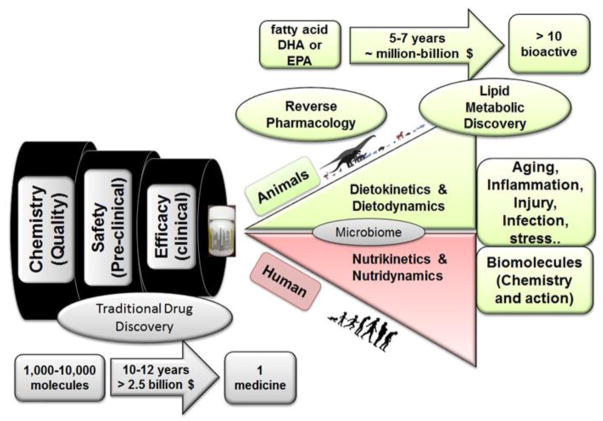
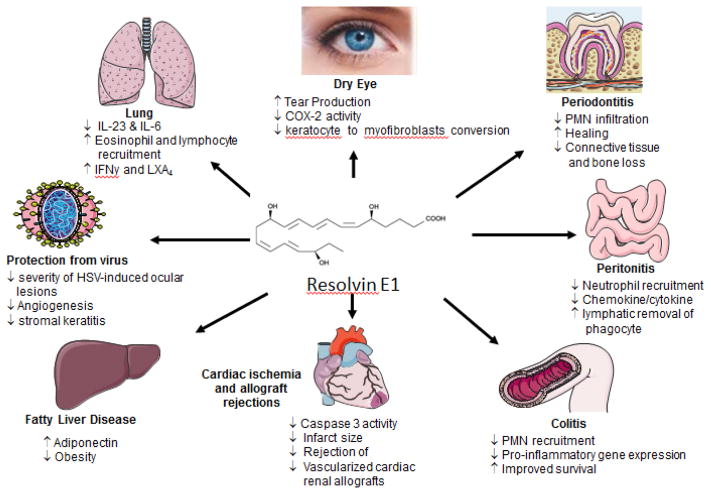
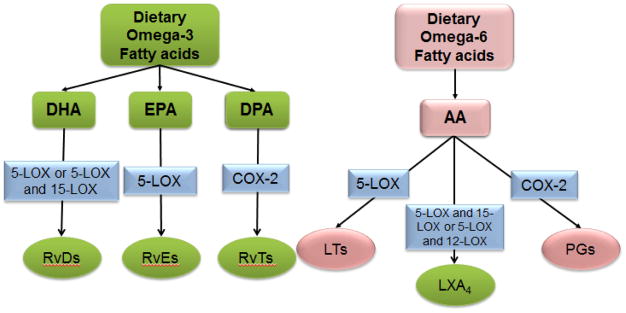
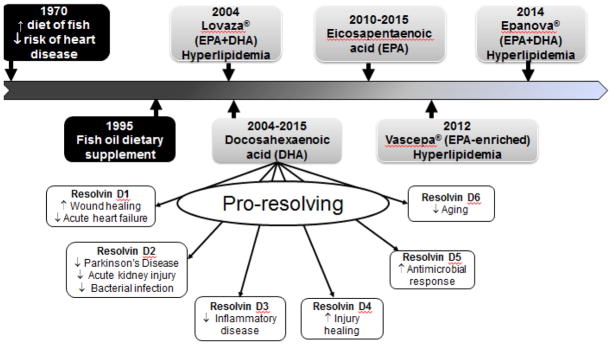
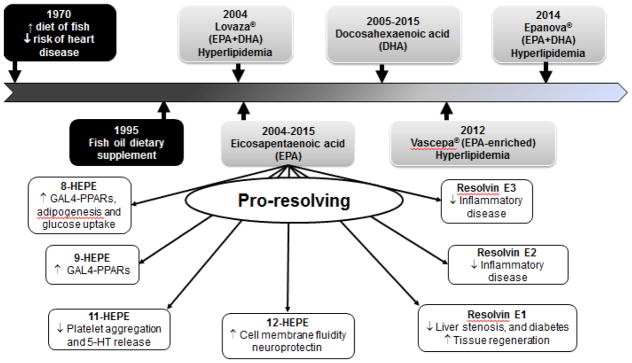
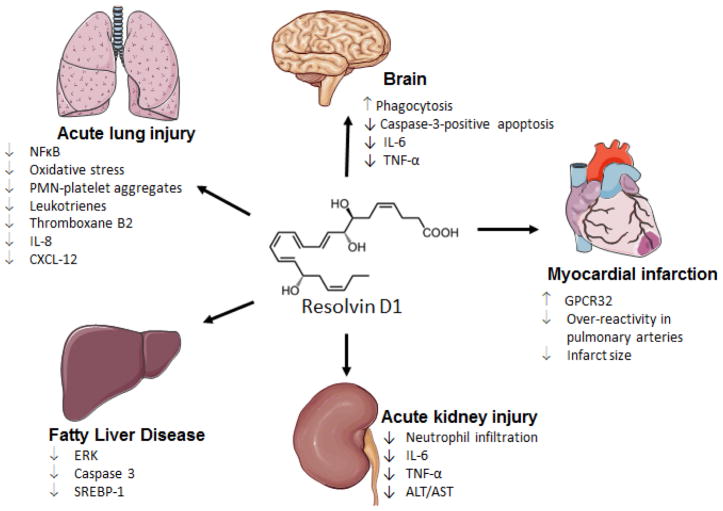
Fatty acid drug discovery (FADD) is defined as the identification of novel, specialized bioactive mediators that are derived from fatty acids and have precise pharmacological/therapeutic potential. A number of reports indicate that dietary intake of omega-3 fatty acids and limited intake of omega-6 promotes overall health benefits. In 1929, Burr and Burr indicated the significant role of essential fatty acids for survival and functional health of many organs. In reference to specific dietary benefits of differential omega-3 fatty acids, docosahexaenoic and eicosapentaenoic acids (DHA and EPA) are transformed to monohydroxy, dihydroxy, trihydroxy, and other complex mediators during infection, injury, and exercise to resolve inflammation. The presented FADD approach describes the metabolic transformation of DHA and EPA in response to injury, infection, and exercise to govern uncontrolled inflammation. Metabolic transformation of DHA and EPA into a number of pro-resolving molecules exemplifies a novel, inexpensive approach compared to traditional, expensive drug discovery. DHA and EPA have been recommended for prevention of cardiovascular disease since 1970. Therefore, the FADD approach is relevant to cardiovascular disease and resolution of inflammation in many injury models. Future research demands identification of novel action targets, receptors for biomolecules, mechanism(s), and drug-interactions with resolvins in order to maintain homeostasis.
脂肪酸药物发现(FADD)被定义为鉴定新型的、专门的生物活性介质,这些介质源自脂肪酸,具有精确的药理学/治疗潜力。许多报告表明,ω-3 脂肪酸的饮食摄入和有限的 ω-6 摄入促进了整体健康益处。1929 年,Burr 和 Burr 指出必需脂肪酸对许多器官的生存和功能健康具有重要作用。关于不同的 ω-3 脂肪酸的具体饮食益处,二十二碳六烯酸(DHA)和二十碳五烯酸(EPA)在感染、损伤和运动期间转化为单羟基、二羟基、三羟基和其他复杂介质,以解决炎症。所提出的 FADD 方法描述了 DHA 和 EPA 在应对损伤、感染和运动时的代谢转化,以控制不受控制的炎症。与传统的昂贵药物发现相比,DHA 和 EPA 转化为多种促解决分子的代谢转化是一种新颖、廉价的方法。自 1970 年以来,DHA 和 EPA 一直被推荐用于预防心血管疾病。因此,FADD 方法与心血管疾病和许多损伤模型中的炎症消退有关。未来的研究需要确定新的作用靶点、生物分子的受体、机制以及与 resolvins 的药物相互作用,以维持体内平衡。