• 文献检索
  • 文档翻译
  • 深度研究
  • 学术资讯
  • Suppr Zotero 插件Zotero 插件
  • 邀请有礼
  • 套餐&价格
  • 历史记录
应用&插件
Suppr Zotero 插件Zotero 插件浏览器插件Mac 客户端Windows 客户端微信小程序
定价
高级版会员购买积分包购买API积分包
服务
文献检索文档翻译深度研究API 文档MCP 服务
关于我们
关于 Suppr公司介绍联系我们用户协议隐私条款
关注我们

Suppr 超能文献

核心技术专利:CN118964589B侵权必究
粤ICP备2023148730 号-1Suppr @ 2026

文献检索

告别复杂PubMed语法,用中文像聊天一样搜索,搜遍4000万医学文献。AI智能推荐,让科研检索更轻松。

立即免费搜索

文件翻译

保留排版,准确专业,支持PDF/Word/PPT等文件格式,支持 12+语言互译。

免费翻译文档

深度研究

AI帮你快速写综述,25分钟生成高质量综述,智能提取关键信息,辅助科研写作。

立即免费体验

SpringWear 手臂康复用弹簧驱动可穿戴增强器的初步测试。

Pilot testing of the spring operated wearable enhancer for arm rehabilitation (SpringWear).

机构信息

Department of Biomedical Engineering, Catholic University of America, Washington, DC, 20064, USA.

Center for Applied Biomechanics and Rehabilitation Research MedStar National Rehabilitation Hospital, Washington, DC, 20010, USA.

出版信息

J Neuroeng Rehabil. 2018 Mar 2;15(1):13. doi: 10.1186/s12984-018-0352-4.

DOI:10.1186/s12984-018-0352-4
PMID:29499712
原文链接:https://pmc.ncbi.nlm.nih.gov/articles/PMC5833152/
Abstract

BACKGROUND

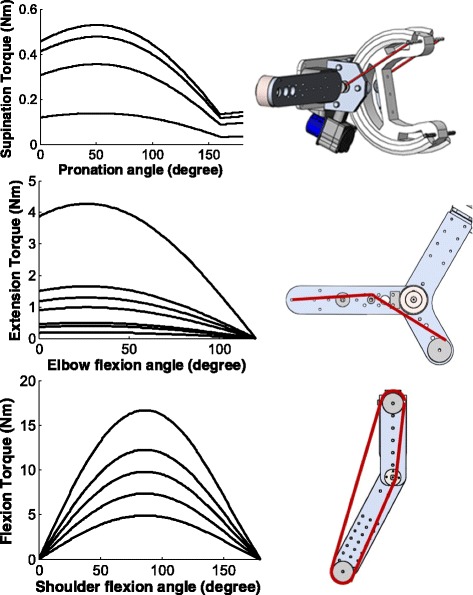
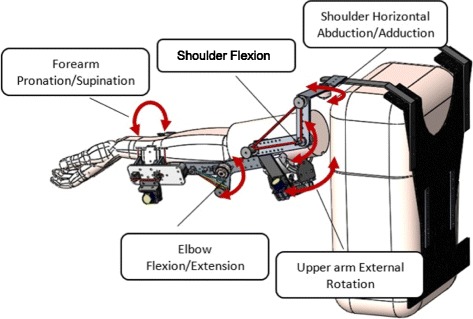
Robotic devices for neurorehabilitation of movement impairments in persons with stroke have been studied extensively. However, the vast majority of these devices only allow practice of stereotyped components of simulated functional tasks in the clinic. Previously we developed SpringWear, a wearable, spring operated, upper extremity exoskeleton capable of assisting movements during real-life functional activities, potentially in the home. SpringWear assists shoulder flexion, elbow extension and forearm supination/pronation. The assistance profiles were designed to approximate the torque required to move the joint passively through its range. These three assisted DOF are combined with two passive shoulder DOF, allowing complex multi-joint movement patterns.

METHODS

We performed a cross-sectional study to assess changes in movement patterns when assisted by SpringWear. Thirteen persons with chronic stroke performed range of motion (ROM) and functional tasks, including pick and place tasks with various objects. Sensors on the device measured rotation at all 5 DOF and a kinematic model calculated position of the wrist relative to the shoulder. Within subject t-tests were used to determine changes with assistance from SpringWear.

RESULTS

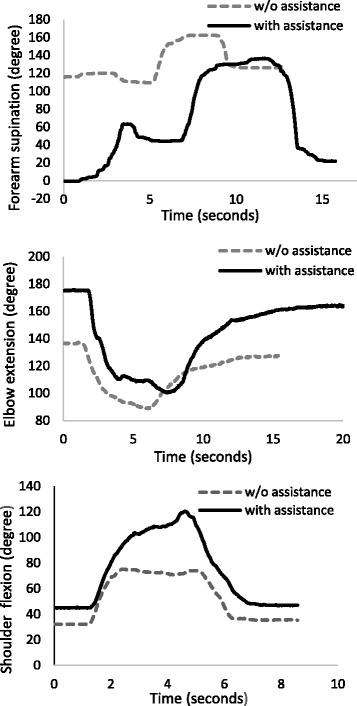
Maximum shoulder flexion, elbow extension and forearm pronation/supination angles increased significantly during both ROM and functional tasks (p < 0.002). Elbow flexion/extension ROM also increased significantly (p < 0.001). When the subjects volitionally held up the arm against gravity, extension at the index finger proximal interphalangeal joint increased significantly (p = 0.033) when assisted by SpringWear. The forward reach workspace increased 19% (p = 0.002). Nine subjects could not complete the functional tasks unassisted and only one showed improvement on task completion with SpringWear.

CONCLUSIONS

SpringWear increased the usable workspace during reaching movements, but there was no consistent improvement in the ability to complete functional tasks. Assistance levels at the shoulder were increased only until the shoulder could be voluntarily held at 90 degrees of flexion. A higher level of assistance may have yielded better results. Also combining SpringWear with HandSOME, an exoskeleton for assisting hand opening, may yield the most dramatic improvements in functional task performance. These low-cost devices can potentially reduce effort and improve performance during task practice, increasing adherence to home training programs for rehabilitation.

摘要

背景

用于脑卒中患者运动功能障碍神经康复的机器人设备已得到广泛研究。然而,这些设备绝大多数仅能在临床环境中模拟功能任务的刻板组件进行练习。此前,我们开发了 SpringWear,这是一种可穿戴的、由弹簧驱动的上肢外骨骼,可以在日常生活活动中辅助运动,可能是在家里。SpringWear 辅助肩部弯曲、肘部伸展和前臂旋前/旋后。辅助轮廓旨在近似被动地通过关节的范围所需的扭矩。这三个辅助自由度与两个被动肩部自由度相结合,允许复杂的多关节运动模式。

方法

我们进行了一项横断面研究,以评估 SpringWear 辅助时运动模式的变化。13 名慢性脑卒中患者进行了运动范围 (ROM) 和功能任务,包括用各种物体进行的拾取和放置任务。设备上的传感器测量所有 5 个自由度的旋转,运动学模型计算手腕相对于肩部的位置。采用受试者内 t 检验确定 SpringWear 辅助时的变化。

结果

ROM 和功能任务时,最大肩部弯曲、肘部伸展和前臂旋前/旋后角度显著增加 (p<0.002)。肘部弯曲/伸展 ROM 也显著增加 (p<0.001)。当受试者主动将手臂举过头顶对抗重力时,SpringWear 辅助时食指近节指间关节伸展角度显著增加 (p=0.033)。向前伸展工作空间增加了 19% (p=0.002)。9 名患者无法独立完成功能任务,只有 1 名患者在使用 SpringWear 时完成任务的能力有所提高。

结论

SpringWear 增加了伸手运动时的可用工作空间,但在完成功能任务的能力方面没有一致的改善。肩部的辅助水平仅增加到肩部可以主动保持在 90 度弯曲的程度。更高的辅助水平可能会产生更好的结果。另外,将 SpringWear 与 HandSOME(一种用于辅助手部张开的外骨骼)结合使用,可能会使功能任务表现的改善更加显著。这些低成本设备有可能在任务练习期间减少努力并提高性能,增加对康复家庭训练计划的坚持。
https://cdn.ncbi.nlm.nih.gov/pmc/blobs/80a0/5833152/ba46b3de085e/12984_2018_352_Fig4_HTML.jpg
https://cdn.ncbi.nlm.nih.gov/pmc/blobs/80a0/5833152/3d15f974da2e/12984_2018_352_Fig1_HTML.jpg
https://cdn.ncbi.nlm.nih.gov/pmc/blobs/80a0/5833152/d626475350d2/12984_2018_352_Fig2_HTML.jpg
https://cdn.ncbi.nlm.nih.gov/pmc/blobs/80a0/5833152/cae62f6876bc/12984_2018_352_Fig3_HTML.jpg
https://cdn.ncbi.nlm.nih.gov/pmc/blobs/80a0/5833152/ba46b3de085e/12984_2018_352_Fig4_HTML.jpg
https://cdn.ncbi.nlm.nih.gov/pmc/blobs/80a0/5833152/3d15f974da2e/12984_2018_352_Fig1_HTML.jpg
https://cdn.ncbi.nlm.nih.gov/pmc/blobs/80a0/5833152/d626475350d2/12984_2018_352_Fig2_HTML.jpg
https://cdn.ncbi.nlm.nih.gov/pmc/blobs/80a0/5833152/cae62f6876bc/12984_2018_352_Fig3_HTML.jpg
https://cdn.ncbi.nlm.nih.gov/pmc/blobs/80a0/5833152/ba46b3de085e/12984_2018_352_Fig4_HTML.jpg

相似文献

1
Pilot testing of the spring operated wearable enhancer for arm rehabilitation (SpringWear).SpringWear 手臂康复用弹簧驱动可穿戴增强器的初步测试。
J Neuroeng Rehabil. 2018 Mar 2;15(1):13. doi: 10.1186/s12984-018-0352-4.
2
Spring operated wearable enhancer for arm rehabilitation (SpringWear) after stroke.用于中风后手臂康复的弹簧驱动可穿戴增强器(SpringWear)
Annu Int Conf IEEE Eng Med Biol Soc. 2016 Aug;2016:4893-4896. doi: 10.1109/EMBC.2016.7591824.
3
Clinical Test of a Wearable, High DOF, Spring Powered Hand Exoskeleton (HandSOME II).可穿戴、高自由度、弹簧动力手部外骨骼(HandSOME II)的临床测试。
IEEE Trans Neural Syst Rehabil Eng. 2021;29:1877-1885. doi: 10.1109/TNSRE.2021.3110201. Epub 2021 Sep 16.
4
Pilot Study of a Powered Exoskeleton for Upper Limb Rehabilitation Based on the Wheelchair.基于轮椅的上肢康复动力外骨骼的初步研究
Biomed Res Int. 2019 Dec 17;2019:9627438. doi: 10.1155/2019/9627438. eCollection 2019.
5
Inertial Measurement Unit Based Upper Extremity Motion Characterization for Action Research Arm Test and Activities of Daily Living.基于惯性测量单元的上肢运动特征分析用于动作研究臂测试和日常生活活动。
Sensors (Basel). 2019 Apr 14;19(8):1782. doi: 10.3390/s19081782.
6
Performance adaptive training control strategy for recovering wrist movements in stroke patients: a preliminary, feasibility study.用于恢复中风患者腕部运动的性能自适应训练控制策略:初步可行性研究。
J Neuroeng Rehabil. 2009 Dec 7;6:44. doi: 10.1186/1743-0003-6-44.
7
Optimizing shoulder elevation assist rate in exoskeletal rehabilitation based on muscular activity indices: a clinical feasibility study.基于肌肉活动指数优化外骨骼康复中的肩部提升辅助率:一项临床可行性研究。
BMC Neurol. 2024 May 9;24(1):144. doi: 10.1186/s12883-024-03651-x.
8
Effects of trunk restraint combined with intensive task practice on poststroke upper extremity reach and function: a pilot study.躯干约束联合强化任务练习对脑卒中后上肢伸展及功能的影响:一项初步研究。
Neurorehabil Neural Repair. 2009 Jan;23(1):78-91. doi: 10.1177/1545968308318836. Epub 2008 Sep 23.
9
Home-Based Therapy After Stroke Using the Hand Spring Operated Movement Enhancer (HandSOME).脑卒中后使用手部助力运动增强器(HandSOME)进行家庭康复治疗。
IEEE Trans Neural Syst Rehabil Eng. 2017 Dec;25(12):2305-2312. doi: 10.1109/TNSRE.2017.2695379. Epub 2017 Apr 18.
10
Characterization of stroke-related upper limb motor impairments across various upper limb activities by use of kinematic core set measures.运用运动学核心集测量指标对各种上肢活动中的脑卒中相关上肢运动功能障碍进行特征描述。
J Neuroeng Rehabil. 2022 Jan 12;19(1):2. doi: 10.1186/s12984-021-00979-0.

引用本文的文献

1
Case Report: Design of a University of the District of Columbia (UDC) intrepid dynamic exoskeletal orthosis.病例报告:哥伦比亚特区大学(UDC)无畏动态外骨骼矫形器的设计
Front Rehabil Sci. 2025 Jul 16;6:1597923. doi: 10.3389/fresc.2025.1597923. eCollection 2025.
2
Gravity support from a robotic exoskeleton increases spontaneous use of the nondominant upper extremity during a choice reaching task.机器人外骨骼的重力支撑在选择伸手任务中增加了非优势上肢的自发性使用。
J Neurophysiol. 2024 Dec 1;132(6):1693-1703. doi: 10.1152/jn.00261.2024. Epub 2024 Oct 30.
3
Research trends and hotspots of post-stroke upper limb dysfunction: a bibliometric and visualization analysis.

本文引用的文献

1
TWO-DIMENSIONAL VIDEO ANALYSIS IS COMPARABLE TO 3D MOTION CAPTURE IN LOWER EXTREMITY MOVEMENT ASSESSMENT.在下肢运动评估中,二维视频分析与三维运动捕捉效果相当。
Int J Sports Phys Ther. 2017 Apr;12(2):163-172.
2
Home-Based Therapy After Stroke Using the Hand Spring Operated Movement Enhancer (HandSOME).脑卒中后使用手部助力运动增强器(HandSOME)进行家庭康复治疗。
IEEE Trans Neural Syst Rehabil Eng. 2017 Dec;25(12):2305-2312. doi: 10.1109/TNSRE.2017.2695379. Epub 2017 Apr 18.
3
Spring operated wearable enhancer for arm rehabilitation (SpringWear) after stroke.
脑卒中后上肢功能障碍的研究趋势与热点:文献计量学与可视化分析
Front Neurol. 2024 Oct 2;15:1449729. doi: 10.3389/fneur.2024.1449729. eCollection 2024.
4
Design of Spiral-Cable Forearm Exoskeleton to Assist Supination for Hemiparetic Stroke Subjects.螺旋线式前臂康复外骨骼设计以辅助偏瘫中风患者的旋后运动。
IEEE Int Conf Rehabil Robot. 2022 Jul;2022:1-6. doi: 10.1109/ICORR55369.2022.9896608.
5
Clinical Test of a Wearable, High DOF, Spring Powered Hand Exoskeleton (HandSOME II).可穿戴、高自由度、弹簧动力手部外骨骼(HandSOME II)的临床测试。
IEEE Trans Neural Syst Rehabil Eng. 2021;29:1877-1885. doi: 10.1109/TNSRE.2021.3110201. Epub 2021 Sep 16.
6
Robotic Home-Based Rehabilitation Systems Design: From a Literature Review to a Conceptual Framework for Community-Based Remote Therapy During COVID-19 Pandemic.基于机器人的家庭康复系统设计:从文献综述到 COVID-19 大流行期间基于社区的远程治疗概念框架
Front Robot AI. 2021 Jun 22;8:612331. doi: 10.3389/frobt.2021.612331. eCollection 2021.
7
Inertial Measurement Unit Based Upper Extremity Motion Characterization for Action Research Arm Test and Activities of Daily Living.基于惯性测量单元的上肢运动特征分析用于动作研究臂测试和日常生活活动。
Sensors (Basel). 2019 Apr 14;19(8):1782. doi: 10.3390/s19081782.
8
Usability Study of Mainstream Wearable Fitness Devices: Feature Analysis and System Usability Scale Evaluation.主流可穿戴健身设备的可用性研究:功能分析与系统可用性量表评估
JMIR Mhealth Uhealth. 2018 Nov 8;6(11):e11066. doi: 10.2196/11066.
用于中风后手臂康复的弹簧驱动可穿戴增强器(SpringWear)
Annu Int Conf IEEE Eng Med Biol Soc. 2016 Aug;2016:4893-4896. doi: 10.1109/EMBC.2016.7591824.
4
Dose response of task-specific upper limb training in people at least 6 months poststroke: A phase II, single-blind, randomized, controlled trial.中风后至少6个月的人群中特定任务上肢训练的剂量反应:一项II期、单盲、随机对照试验。
Ann Neurol. 2016 Sep;80(3):342-54. doi: 10.1002/ana.24734. Epub 2016 Aug 16.
5
Efficacy of robot-assisted rehabilitation for the functional recovery of the upper limb in post-stroke patients: a randomized controlled study.机器人辅助康复对脑卒中后患者上肢功能恢复的疗效:一项随机对照研究。
Eur J Phys Rehabil Med. 2016 Dec;52(6):767-773. Epub 2016 Jul 13.
6
Effect of a Task-Oriented Rehabilitation Program on Upper Extremity Recovery Following Motor Stroke: The ICARE Randomized Clinical Trial.一项以任务为导向的康复计划对运动性卒中后上肢恢复的影响:ICARE随机临床试验
JAMA. 2016 Feb 9;315(6):571-81. doi: 10.1001/jama.2016.0276.
7
Electromechanical and robot-assisted arm training for improving activities of daily living, arm function, and arm muscle strength after stroke.用于改善中风后日常生活活动、手臂功能和手臂肌肉力量的机电和机器人辅助手臂训练。
Cochrane Database Syst Rev. 2015 Nov 7;2015(11):CD006876. doi: 10.1002/14651858.CD006876.pub4.
8
The accuracy of conventional 2D video for quantifying upper limb kinematics in repetitive motion occupational tasks.传统二维视频在重复运动职业任务中量化上肢运动学的准确性。
Ergonomics. 2015;58(12):2057-66. doi: 10.1080/00140139.2015.1051594. Epub 2015 Jun 18.
9
Arm weight support training improves functional motor outcome and movement smoothness after stroke.手臂负重训练可改善中风后的功能性运动结果和运动流畅性。
Funct Neurol. 2014 Jan-Mar;29(1):15-21.
10
Accuracy and repeatability of joint angles measured using a single camera markerless motion capture system.使用单目无标记运动捕捉系统测量关节角度的准确性和可重复性。
J Biomech. 2014 Jan 22;47(2):587-91. doi: 10.1016/j.jbiomech.2013.11.031. Epub 2013 Nov 25.