Londo Jason P, Kovaleski Alisson P, Lillis Jacquelyn A
1United States Department of Agriculture, Agricultural Research Service, Grape Genetics Research Unit, 630 W. North Street, Geneva, NY USA.
2School of Integrative Plant Science, Horticulture section, Cornell University-New York State Agricultural Experiment Station, 630 W. North Street, Geneva, NY USA.
Hortic Res. 2018 Mar 1;5:10. doi: 10.1038/s41438-018-0020-7. eCollection 2018.
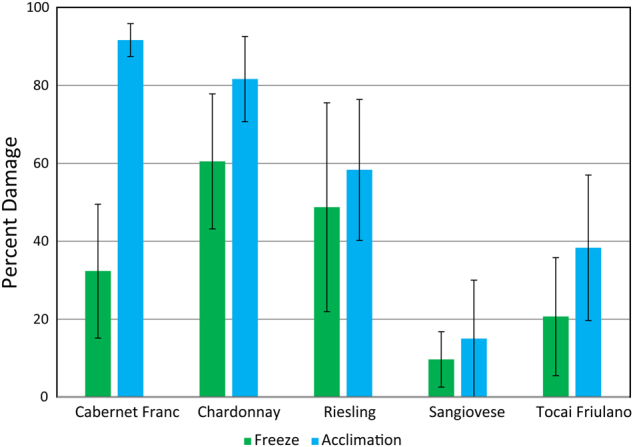
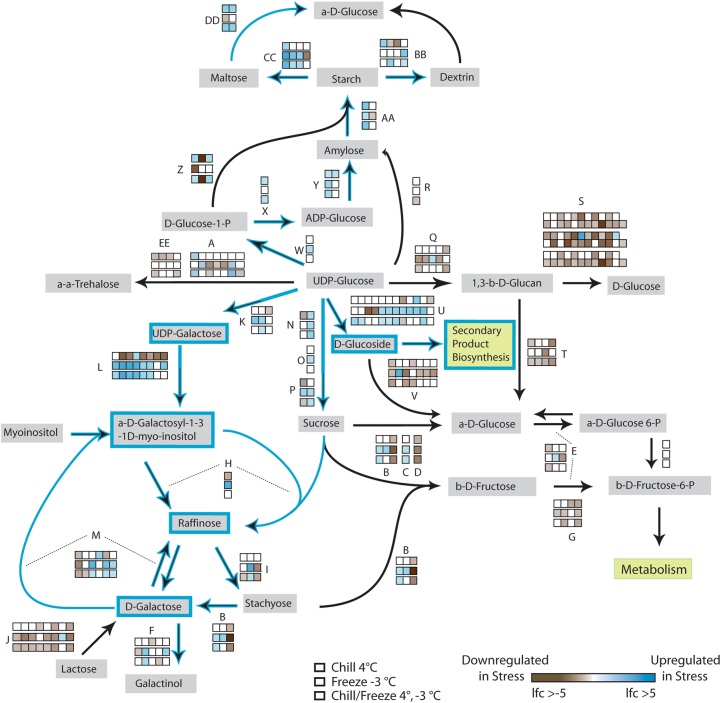
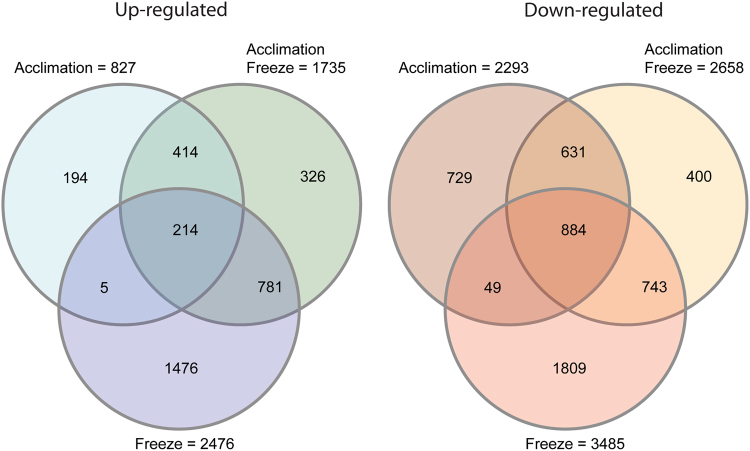
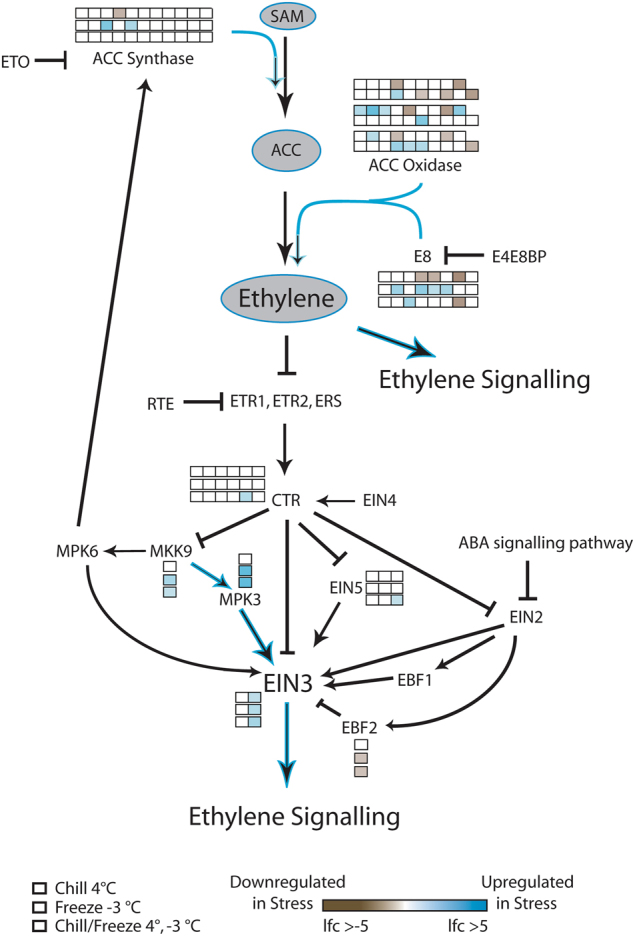
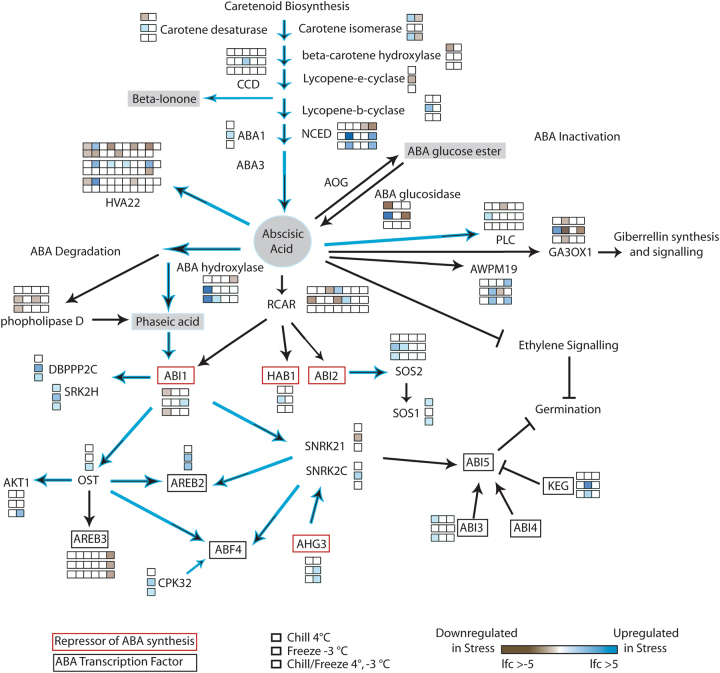
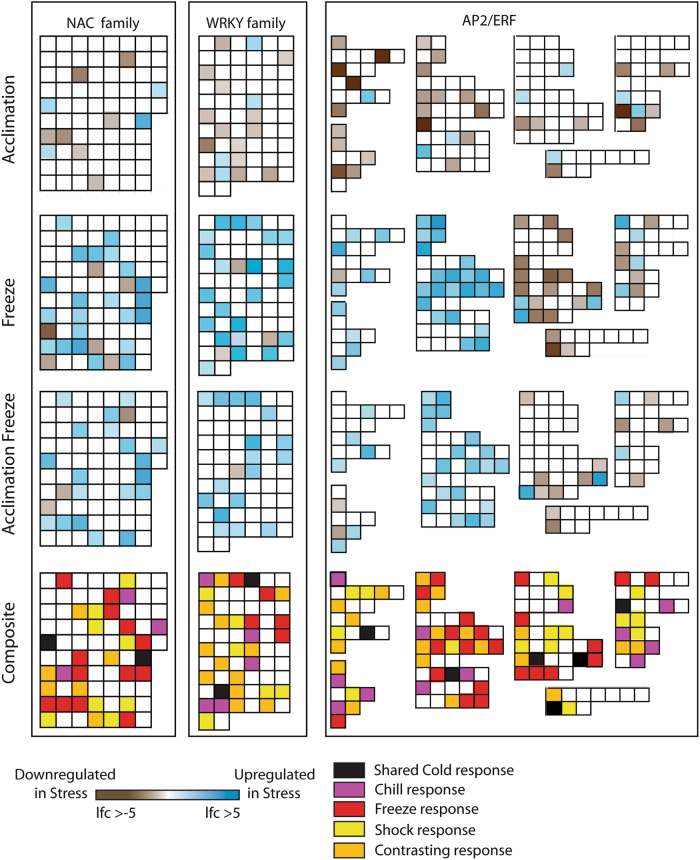
Low-temperature stresses limit the sustainability and productivity of grapevines when early spring frosts damage young grapevine leaves. Spring conditions often expose grapevines to low, but not damaging, chilling temperatures and these temperatures have been shown to increase freeze resistance in other model systems. In this study, we examined whole-transcriptome gene expression patterns of young leaf tissue from cuttings of five different grapevine cultivars, exposed to chill and freeze shock, in order to understand the underlying transcriptional landscape associated with cold stress response. No visible damage was observed when grapevine leaves were exposed to chilling temperatures while freeze temperatures resulted in variable damage in all cultivars. Significant differences in gene expression were observed between warm control conditions and all types of cold stress. Exposure to chill stress (4 °C) versus freezing stress (-3 °C) resulted in very different patterns of gene expression and enriched pathway responses. Genes from the ethylene signaling, ABA signaling, the AP2/ERF, WRKY, and NAC transcription factor families, and starch/sucrose/galactose pathways were among the most commonly observed to be differentially regulated. Preconditioning leaves to chill temperatures prior to freezing temperatures resulted in slight buffering of gene expression responses, suggesting that differences between chill and freeze shock perception complicates identification of candidate genes for cold resistance in grapevine. Overall, the transcriptional landscape contrasts observed between low temperature and freezing stresses demonstrate very different activation of candidate pathways impacting grapevine cold response.
当早春霜冻损害葡萄幼叶时,低温胁迫会限制葡萄的可持续性和生产力。春季的环境常常使葡萄遭受低温但不至于造成损害的寒冷温度,并且这些温度已被证明能提高其他模式系统中的抗冻性。在本研究中,我们检测了五个不同葡萄品种插条幼叶组织在遭受冷害和冻害冲击时的全转录组基因表达模式,以了解与冷应激反应相关的潜在转录图谱。当葡萄叶暴露于寒冷温度时未观察到明显损伤,而冷冻温度在所有品种中均导致了不同程度的损伤。在温暖对照条件与所有类型的冷应激之间观察到了基因表达的显著差异。暴露于冷应激(4°C)与冷冻应激(-3°C)导致了非常不同的基因表达模式和富集的通路反应。来自乙烯信号传导、脱落酸信号传导、AP2/ERF、WRKY和NAC转录因子家族以及淀粉/蔗糖/半乳糖途径的基因是最常被观察到差异调节的基因。在冷冻温度之前先将叶片置于寒冷温度下预处理,会导致基因表达反应略有缓冲,这表明冷害和冻害感知之间的差异使葡萄抗寒候选基因的鉴定变得复杂。总体而言,在低温和冷冻胁迫之间观察到的转录图谱差异表明,影响葡萄冷反应的候选途径的激活方式非常不同。