Department of Otorhinolaryngology, Rehabilitation Hospital, School of Medicine, University of Medicine and Pharmacy "Grigore T. Popa", Iasi, Romania.
Department of Pharmacology, School of Medicine, University of Medicine and Pharmacy "Grigore T. Popa", Iasi, Romania.
PLoS One. 2018 Mar 6;13(3):e0193963. doi: 10.1371/journal.pone.0193963. eCollection 2018.
The vestibular acute stress induces reversible alert-like reactions that involve the sympathetic adrenal-medullar system and hypothalamic-pituitary-adrenal axis responses. The present study aimed to evaluate salivary α-amylase and salivary cortisol production in relation with cardiovascular reactivity induced by acute stress in healthy subjects.
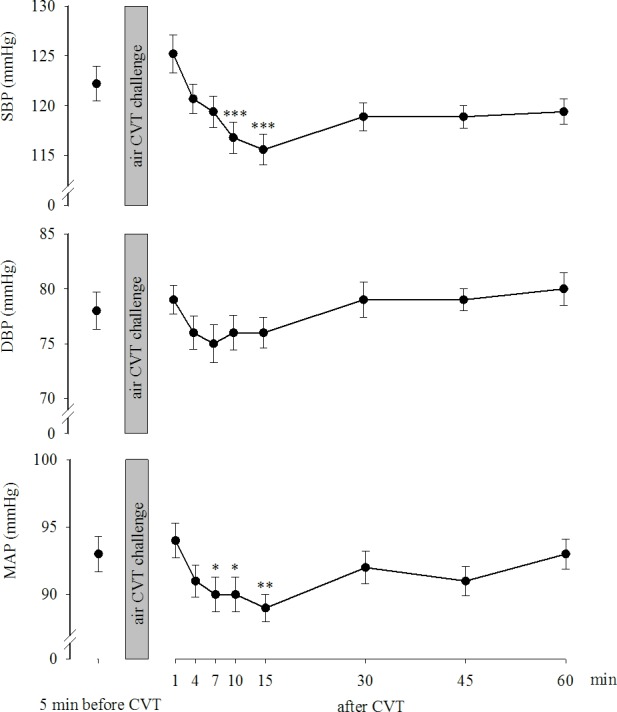
Forty-eight young healthy male volunteers were examined under basal conditions and at various times after reaching the maximal nystagmic reaction following air caloric vestibular test. Heart rate, systolic blood pressure, diastolic blood pressure and mean arterial pressure were recorded at the same time as measurement of the salivary α-amylase and salivary cortisol. At the end of the caloric vestibular test session, perceived stress scale questionnaires were administered to measure the self-perceived stress impact induced by the task, and individual scores were compared with those measured on the enrollment day.
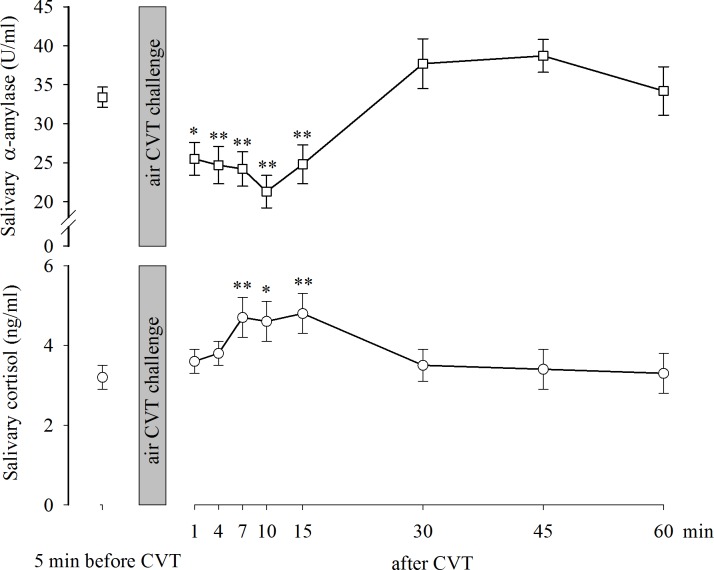
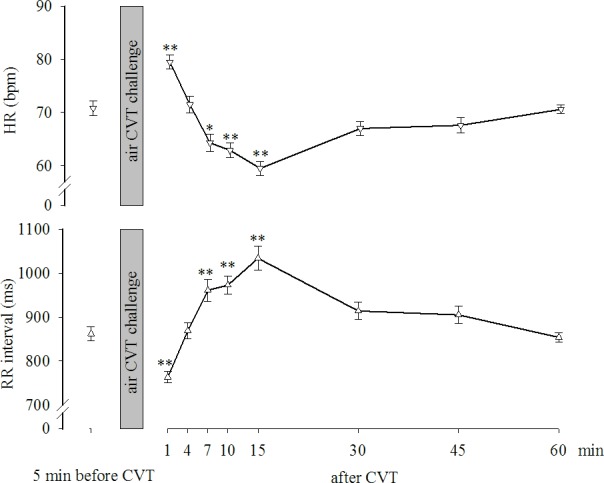
Following caloric vestibular test-evoked vertigo, salivary α-amylase and cortisol showed distinct trends in their production after acute stress: Student's t-test was used to compare the α-amylase vs cortisol slopes of the respective interpolated regression lines, and the difference was significant (t = -3.283; p<0.001); an increase in salivary cortisol production corresponded with a decrease in the salivary α-amylase concentration. In addition, salivary biomarker modifications were associated with consistent changes in the heart rate, systolic blood pressure and mean arterial pressure.
Using the air caloric vestibular test task as a stressor, the present study demonstrated a connection between the acute hormonal stress response to vestibular stimulation and cardiovascular output. However, further research is needed before we can define the potential importance of the consistent cardiovascular activity changes evoked by vestibular stimulation and the possible functional consequences for cardiovascular regulation and orthostatic tolerance in humans.
前庭急性应激会引起可逆的警觉样反应,涉及交感肾上腺髓质系统和下丘脑-垂体-肾上腺轴的反应。本研究旨在评估健康受试者急性应激时唾液α-淀粉酶和唾液皮质醇的产生与心血管反应的关系。
48 名年轻健康男性志愿者在基础状态下和到达空气冷热前庭测试后最大眼球震颤反应后的不同时间接受检查。在测量唾液α-淀粉酶和唾液皮质醇的同时记录心率、收缩压、舒张压和平均动脉压。在冷热前庭测试结束时,进行感知压力量表问卷调查,以测量任务引起的自我感知压力影响,并将个体得分与入组日的测量值进行比较。
冷热前庭测试诱发眩晕后,唾液α-淀粉酶和皮质醇在急性应激后的产生呈现出明显的趋势:使用学生 t 检验比较各自内插回归线的α-淀粉酶与皮质醇斜率,差异具有统计学意义(t = -3.283;p<0.001);皮质醇产量的增加对应于唾液α-淀粉酶浓度的降低。此外,唾液生物标志物的改变与心率、收缩压和平均动脉压的一致变化相关。
本研究使用冷热前庭测试作为应激源,证明了前庭刺激的急性激素应激反应与心血管输出之间存在联系。然而,在我们能够定义前庭刺激引起的一致心血管活动变化的潜在重要性以及对人类心血管调节和直立耐受力的可能功能后果之前,还需要进一步的研究。