Paul F. Glenn Center for the Biological Mechanisms of Aging, Department of Genetics, Harvard Medical School, Boston, MA 02115, USA.
Paul F. Glenn Center for the Biological Mechanisms of Aging, Department of Genetics, Harvard Medical School, Boston, MA 02115, USA; Laboratory for Ageing Research, Department of Pharmacology, School of Medical Sciences, The University of New South Wales, Sydney, NSW 2052, Australia.
Cell Metab. 2018 Mar 6;27(3):529-547. doi: 10.1016/j.cmet.2018.02.011.
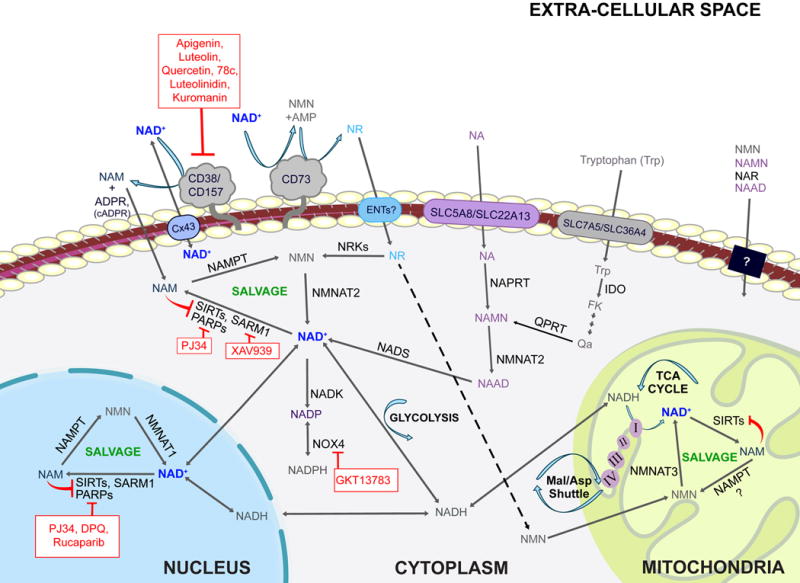
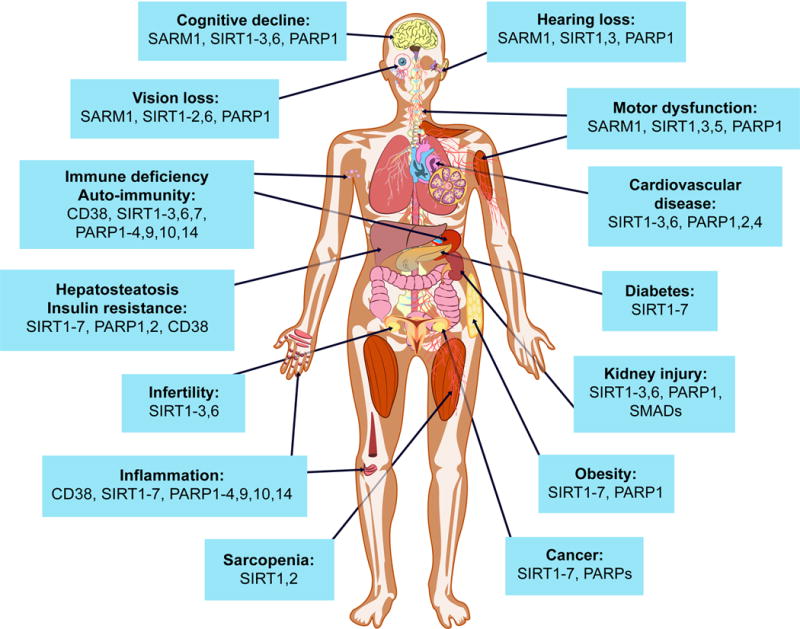
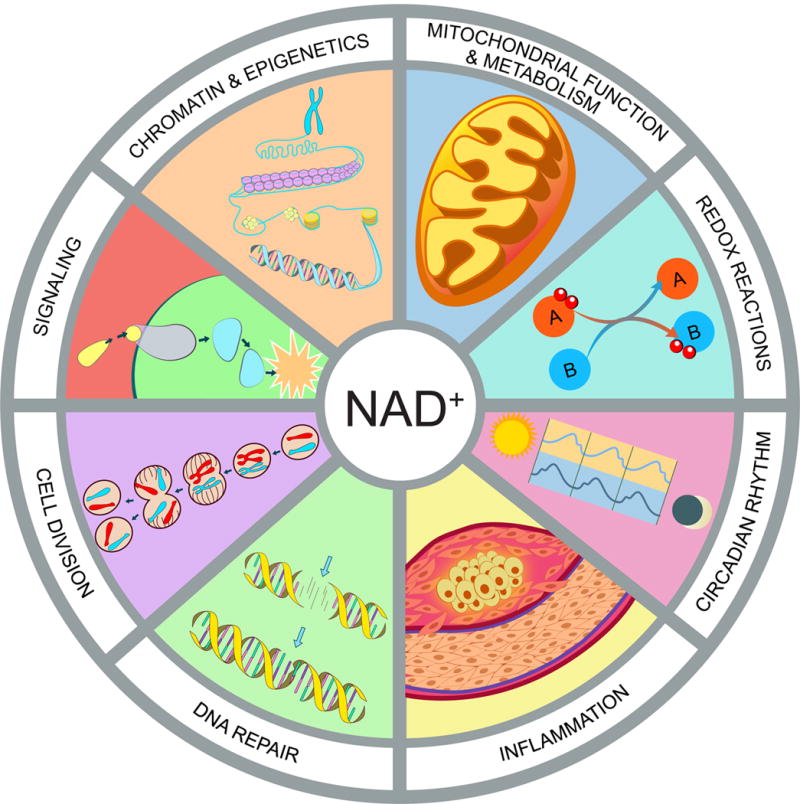
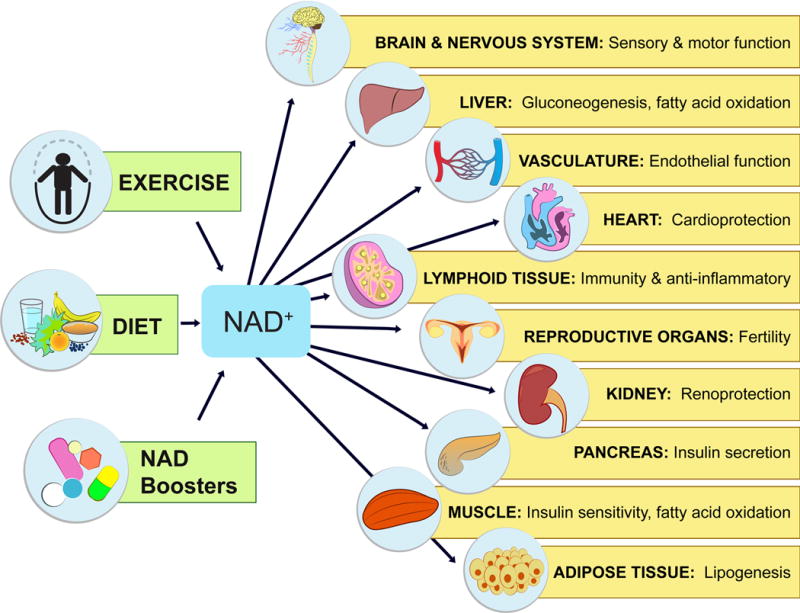
Nicotinamide adenine dinucleotide (NAD), the cell's hydrogen carrier for redox enzymes, is well known for its role in redox reactions. More recently, it has emerged as a signaling molecule. By modulating NAD-sensing enzymes, NAD controls hundreds of key processes from energy metabolism to cell survival, rising and falling depending on food intake, exercise, and the time of day. NAD levels steadily decline with age, resulting in altered metabolism and increased disease susceptibility. Restoration of NAD levels in old or diseased animals can promote health and extend lifespan, prompting a search for safe and efficacious NAD-boosting molecules that hold the promise of increasing the body's resilience, not just to one disease, but to many, thereby extending healthy human lifespan.
烟酰胺腺嘌呤二核苷酸(NAD)是细胞中氧化还原酶的氢载体,其在氧化还原反应中的作用是众所周知的。最近,它已成为一种信号分子。通过调节 NAD 感应酶,NAD 控制着从能量代谢到细胞存活的数百种关键过程,其水平根据食物摄入、运动和一天中的时间而上下波动。随着年龄的增长,NAD 水平稳步下降,导致代谢改变和疾病易感性增加。在年老或患病的动物中恢复 NAD 水平可以促进健康并延长寿命,这促使人们寻找安全有效的 NAD 增强分子,这些分子有望提高身体的适应能力,不仅针对一种疾病,而且针对多种疾病,从而延长健康人类的寿命。