Dong Meng, Yang Zongtao, Cheng Guangyuan, Peng Lei, Xu Qian, Xu Jingsheng
Key Laboratory of Sugarcane Biology and Genetic Breeding, Ministry of Agriculture, Fujian Agriculture and Forestry University, Fuzhou, China.
Key Laboratory of Ministry of Education for Genetics, Breeding and Multiple Utilization of Crops, College of Crop Science, Fujian Agriculture and Forestry University, Fuzhou, China.
Front Microbiol. 2018 Feb 21;9:267. doi: 10.3389/fmicb.2018.00267. eCollection 2018.
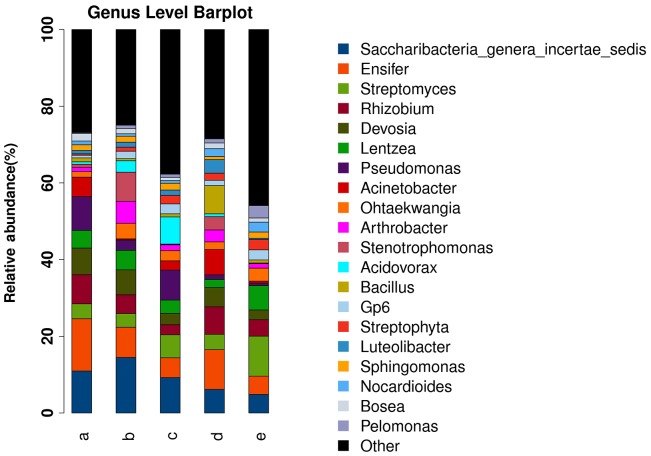
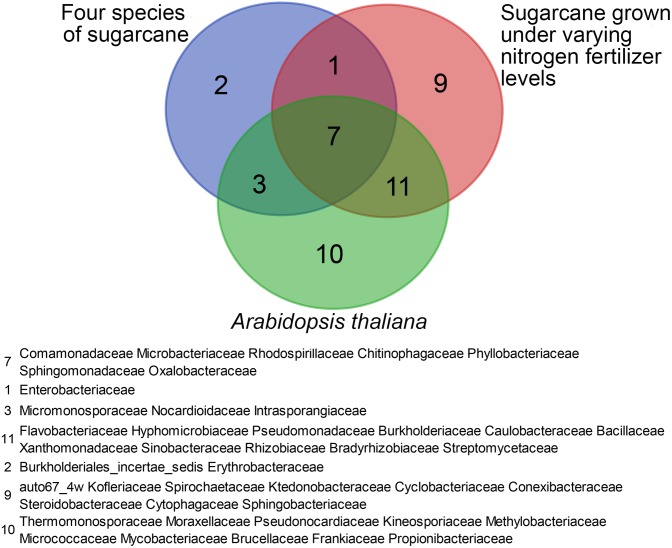
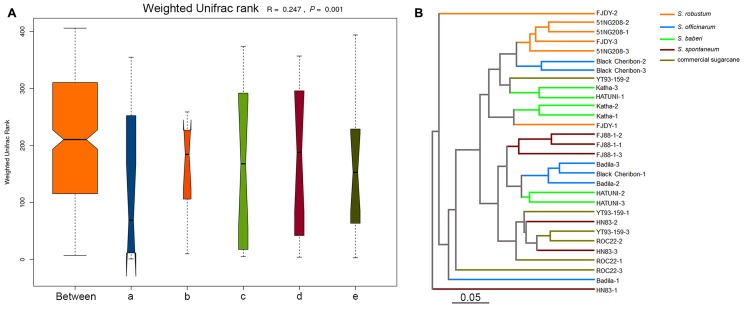
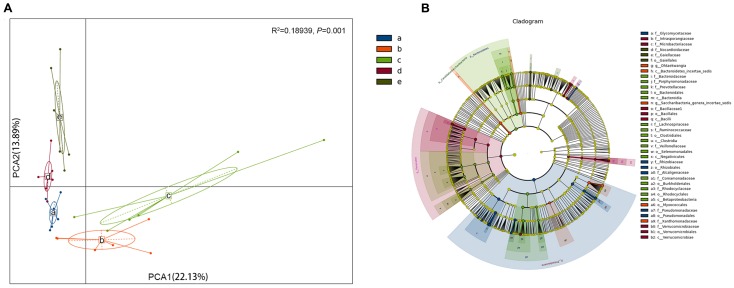
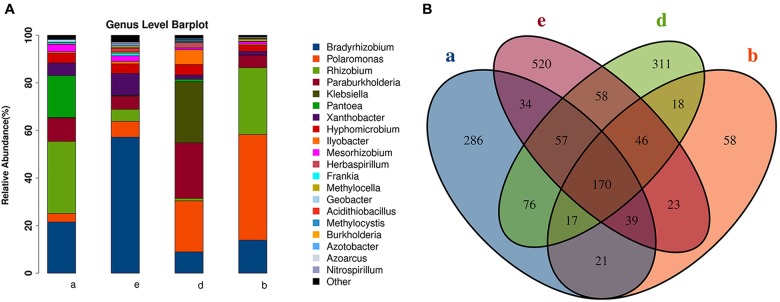
Endophytic bacteria are nearly ubiquitously present in the internal tissues of plants, and some endophytes can promote plant growth. In this study, we sampled the roots of four ancestral species of sugarcane (two genotypes per species) and two sugarcane cultivars, and used 16S rRNA and gene sequencing to characterize the root endophytic bacterial communities and diazotroph diversity. A total of 7,198 operational taxonomic units (OTUs) were detected for the endophytic bacteria community. The endophytic bacterial communities exhibited significantly different α- and β-diversities. From the 202 detected families in the sugarcane roots, a core microbiome containing 13 families was identified. The gene was successfully detected in 9 of 30 samples from the four sugarcane species assayed, and 1,734 OTUs were merged for endophytic diazotrophs. In the tested samples, 43 families of endophytic diazotrophs were detected, and six families showed differences across samples. Among the 20 most abundant detected genera, 10 have been reported to be involved in nitrogen fixation in sugarcane. These findings demonstrate the diversity of the microbial communities in different sugarcane germplasms and shed light on the mechanism of biological nitrogen fixation in sugarcane.
内生细菌几乎普遍存在于植物的内部组织中,一些内生菌可以促进植物生长。在本研究中,我们采集了四种甘蔗原始种(每个种两个基因型)和两个甘蔗栽培品种的根系样本,并使用16S rRNA和基因测序来表征根系内生细菌群落和固氮菌多样性。内生细菌群落共检测到7198个可操作分类单元(OTU)。内生细菌群落表现出显著不同的α-和β-多样性。在甘蔗根系检测到的202个科中,鉴定出一个包含13个科的核心微生物群。在所检测的四个甘蔗种的30个样本中,有9个成功检测到了该基因,并且合并了1734个内生固氮菌的OTU。在测试样本中,检测到43个内生固氮菌科,其中六个科在不同样本间存在差异。在所检测到的20个最丰富的属中,有10个已被报道参与甘蔗的固氮作用。这些发现揭示了不同甘蔗种质中微生物群落的多样性,并为甘蔗生物固氮机制提供了线索。