Patel Janaki, Madan Arina, Gammon Amanda, Sossenheimer Michael, Samadder Niloy Jewel
Division of Gastroenterology, University of Utah, Salt Lake City, Utah, USA.
University of Birmingham Medical School, Edgbaston, Birmingham, B15 2TT, UK.
Pan Afr Med J. 2017 Oct 4;28:110. doi: 10.11604/pamj.2017.28.110.13854. eCollection 2017.
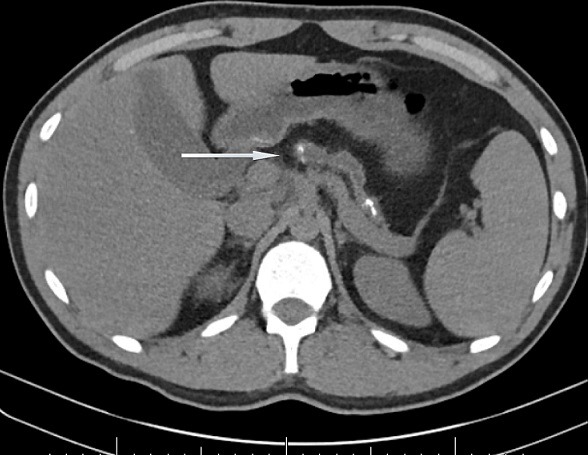
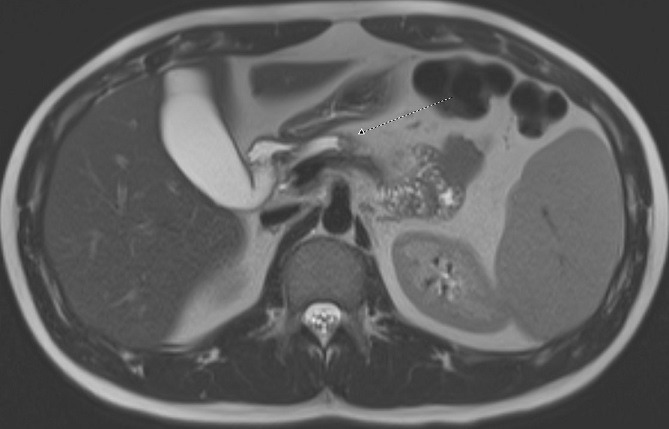
Hereditary chronic pancreatitis associated with a mutation in the serine protease inhibitor, Kazal Type-1 (SPINK-1 gene) is extremely rare. The SPINK1 mutation results in trypsinogen activation which predisposes to chronic pancreatitis predominately when combined with CFTR gene mutations. It presents as either chronic or recurrent acute pancreatitis. Symptom control and management of complications is important. Active surveillance with cross-sectional imaging for pancreatic malignancy in individuals with hereditary pancreatitis is advocated due to individuals being high risk. We present an unusual case of a young male who initially presented with renal colic and was incidentally diagnosed with severe chronic pancreatitis on abdominal imaging, with genetic testing confirming a homozygous SPINK1 mutation.
与丝氨酸蛋白酶抑制剂Kazal 1型(SPINK-1基因)突变相关的遗传性慢性胰腺炎极为罕见。SPINK1突变导致胰蛋白酶原激活,当与CFTR基因突变同时存在时,主要易引发慢性胰腺炎。其表现为慢性或复发性急性胰腺炎。症状控制和并发症管理很重要。由于遗传性胰腺炎患者属于高危人群,因此提倡对其进行横断面成像的主动监测以筛查胰腺恶性肿瘤。我们报告了一例不寻常的年轻男性病例,该患者最初因肾绞痛就诊,腹部成像偶然诊断为严重慢性胰腺炎,基因检测证实存在纯合SPINK1突变。