BioFrontiers Institute, Department of Molecular, Cellular, and Developmental Biology, University of Colorado Boulder, Boulder, CO, United States of America.
Department of Microbiology and Immunology, Albert Einstein College of Medicine, Bronx, NY, United States of America.
PLoS Pathog. 2018 Mar 8;14(3):e1006906. doi: 10.1371/journal.ppat.1006906. eCollection 2018 Mar.
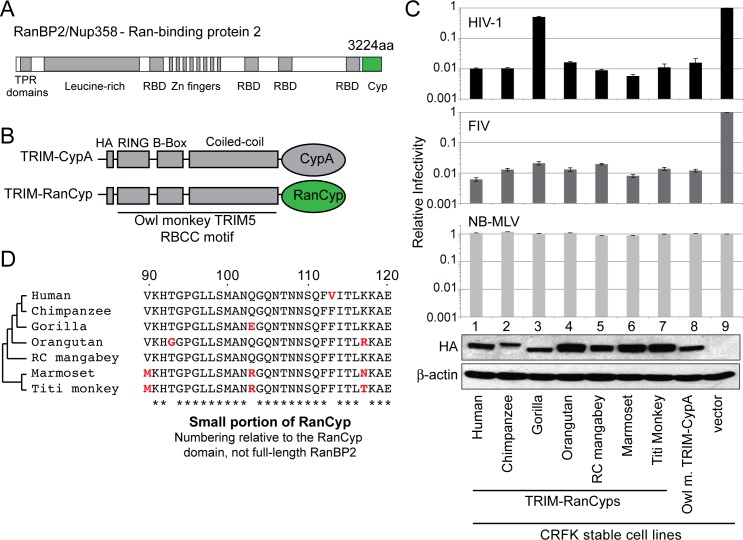
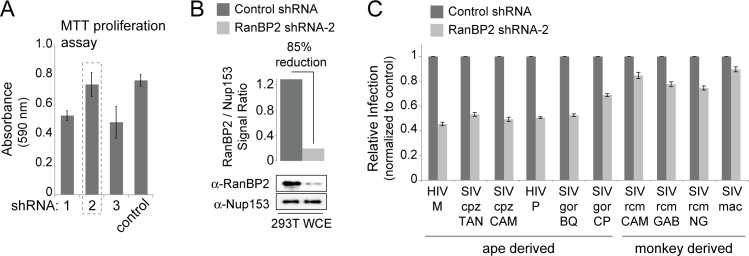
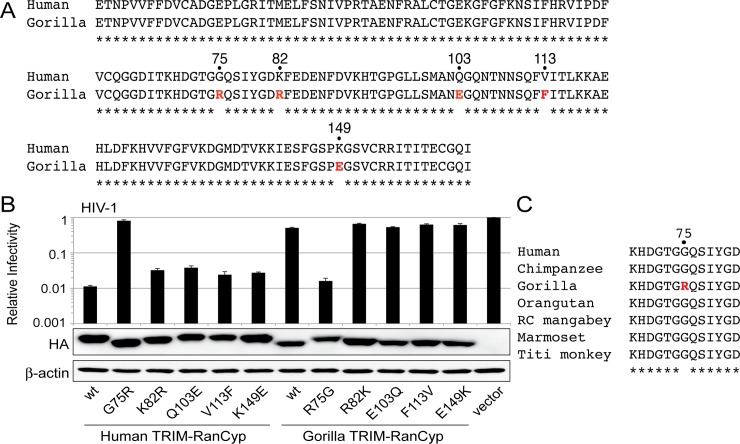
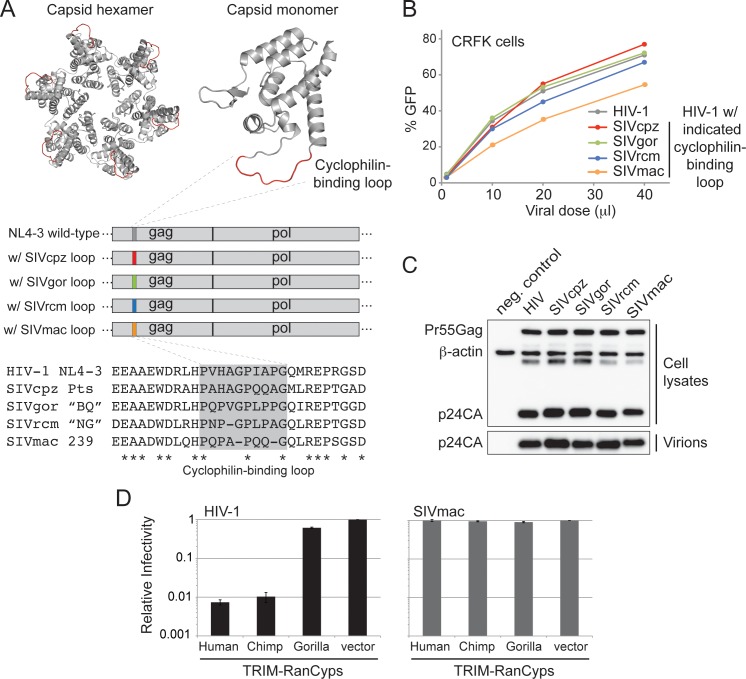
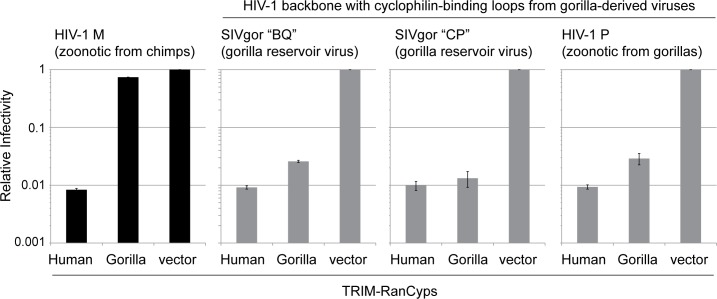
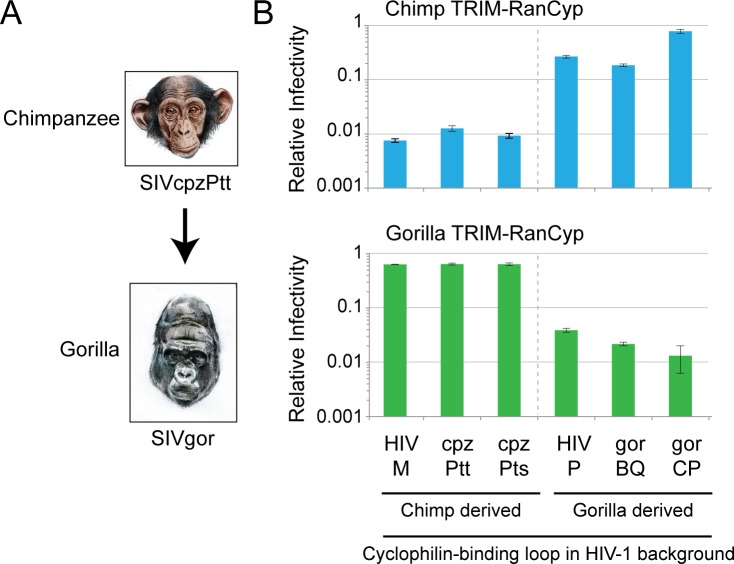
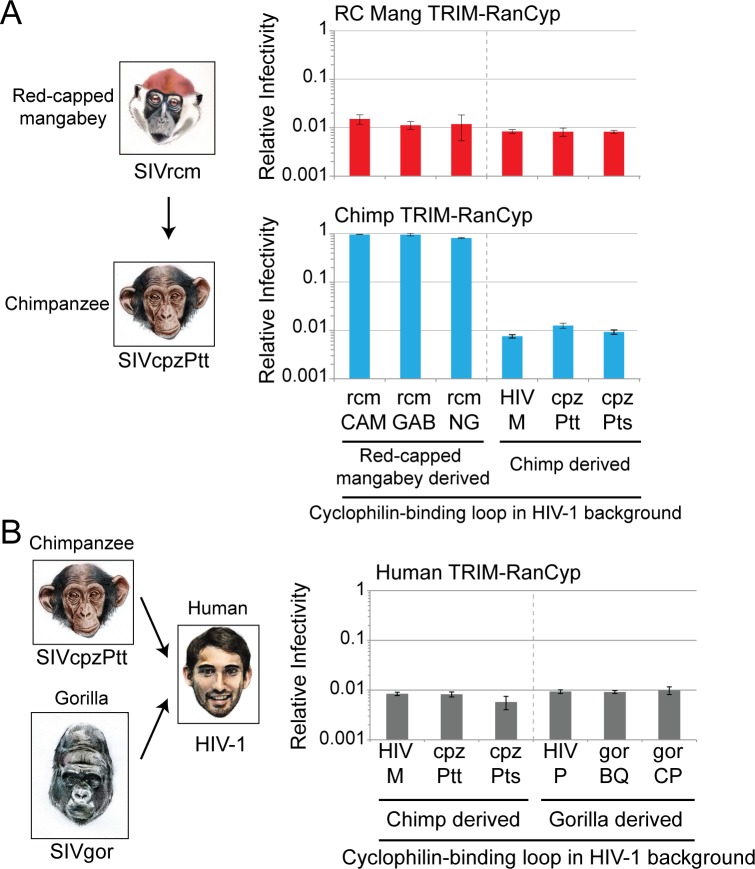
HIV-1 arose as the result of spillover of simian immunodeficiency viruses (SIVs) from great apes in Africa, namely from chimpanzees and gorillas. Chimpanzees and gorillas were, themselves, infected with SIV after virus spillover from African monkeys. During spillover events, SIV is thought to require adaptation to the new host species. The host barriers that drive viral adaptation have predominantly been attributed to restriction factors, rather than cofactors (host proteins exploited to promote viral replication). Here, we consider the role of one cofactor, RanBP2, in providing a barrier that drove viral genome evolution during SIV spillover events. RanBP2 (also known as Nup358) is a component of the nuclear pore complex known to facilitate nuclear entry of HIV-1. Our data suggest that transmission of SIV from monkeys to chimpanzees, and then from chimpanzees to gorillas, both coincided with changes in the viral capsid that allowed interaction with RanBP2 of the new host species. However, human RanBP2 subsequently provided no barrier to the zoonotic transmission of SIV from chimpanzees or gorillas, indicating that chimpanzee- and gorilla-adapted SIVs are pre-adapted to humans in this regard. Our observations are in agreement with RanBP2 driving virus evolution during cross-species transmissions of SIV, particularly in the transmissions to and between great ape species.
HIV-1 是由非洲大猿(即黑猩猩和大猩猩)体内的猿猴免疫缺陷病毒(SIV)溢出引起的。黑猩猩和大猩猩在 SIV 从非洲猴溢出后感染了 SIV。在溢出事件中,SIV 被认为需要适应新的宿主物种。驱动病毒适应的宿主障碍主要归因于限制因素,而不是辅助因子(宿主蛋白被利用来促进病毒复制)。在这里,我们考虑了一种辅助因子 RanBP2 在 SIV 溢出事件中驱动病毒基因组进化中的作用。RanBP2(也称为 Nup358)是核孔复合物的一个组成部分,已知有助于 HIV-1 的核内进入。我们的数据表明,SIV 从猴子传播到黑猩猩,然后从黑猩猩传播到大猩猩,这两种情况都伴随着病毒衣壳的变化,使病毒能够与新宿主物种的 RanBP2 相互作用。然而,人类 RanBP2 随后并没有阻止 SIV 从黑猩猩或大猩猩向人类的人畜共患病传播,这表明黑猩猩和大猩猩适应的 SIV 在这方面已经预先适应了人类。我们的观察结果与 RanBP2 在 SIV 的跨物种传播中驱动病毒进化是一致的,特别是在向大猿物种和大猿物种之间的传播中。