Andreote Ana P D, Dini-Andreote Francisco, Rigonato Janaina, Machineski Gabriela Silva, Souza Bruno C E, Barbiero Laurent, Rezende-Filho Ary T, Fiore Marli F
Center for Nuclear Energy in Agriculture, University of São Paulo, Piracicaba, Brazil.
Microbial Ecology Cluster, Genomics Research in Ecology and Evolution in Nature, Groningen Institute for Evolutionary Life Sciences, University of Groningen, Groningen, Netherlands.
Front Microbiol. 2018 Feb 22;9:244. doi: 10.3389/fmicb.2018.00244. eCollection 2018.
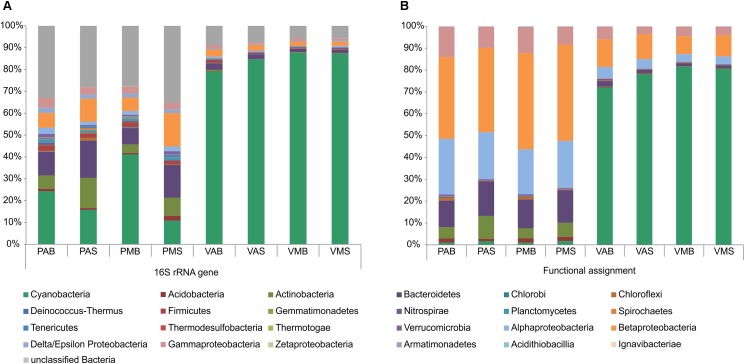
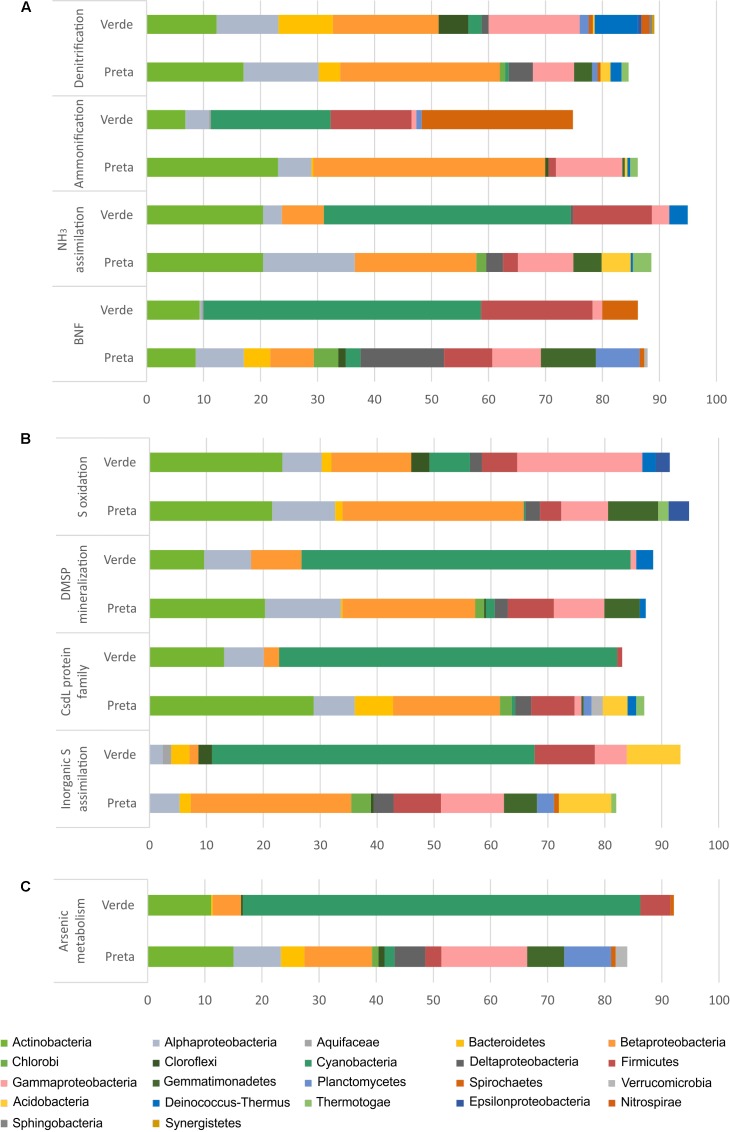
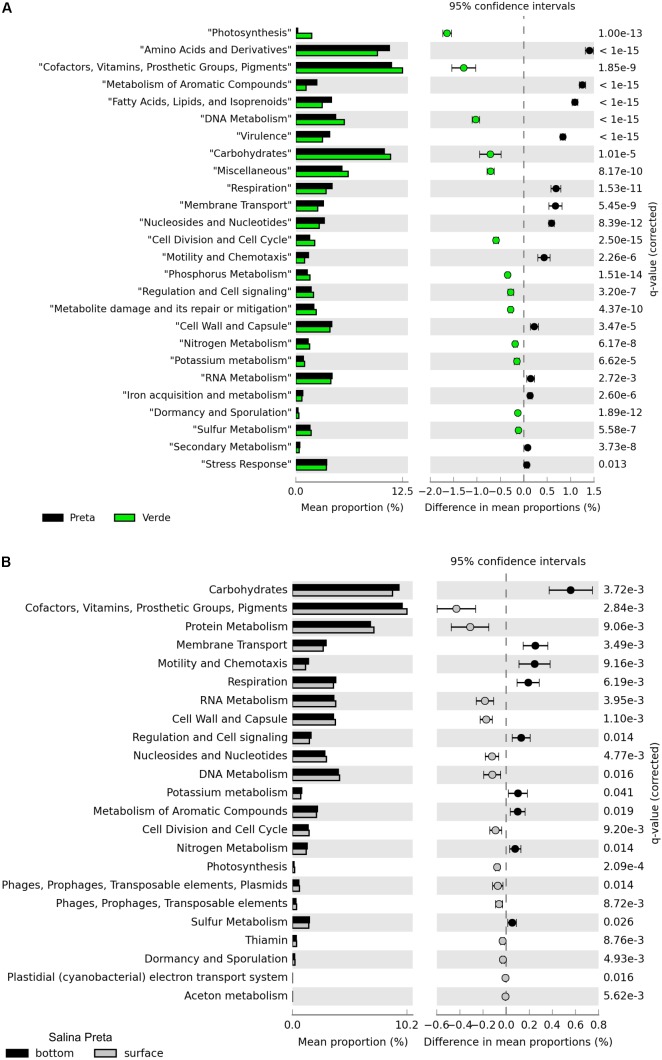
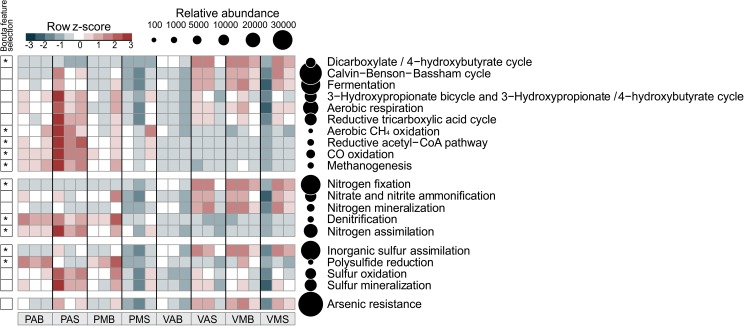
Soda lakes have high levels of sodium carbonates and are characterized by salinity and elevated pH. These ecosystems are found across Africa, Europe, Asia, Australia, North, Central, and South America. Particularly in Brazil, the Pantanal region has a series of hundreds of shallow soda lakes (ca. 600) potentially colonized by a diverse haloalkaliphilic microbial community. Biological information of these systems is still elusive, in particular data on the description of the main taxa involved in the biogeochemical cycling of life-important elements. Here, we used metagenomic sequencing to contrast the composition and functional patterns of the microbial communities of two distinct soda lakes from the sub-region Nhecolândia, state of Mato Grosso do Sul, Brazil. These two lakes differ by permanent cyanobacterial blooms (Salina Verde, green-water lake) and by no record of cyanobacterial blooms (Salina Preta, black-water lake). The dominant bacterial species in the Salina Verde bloom was . This cyanobacterium altered local abiotic parameters such as pH, turbidity, and dissolved oxygen and consequently the overall structure of the microbial community. In Salina Preta, the microbial community had a more structured taxonomic profile. Therefore, the distribution of metabolic functions in Salina Preta community encompassed a large number of taxa, whereas, in Salina Verde, the functional potential was restrained across a specific set of taxa. Distinct signatures in the abundance of genes associated with the cycling of carbon, nitrogen, and sulfur were found. Interestingly, genes linked to arsenic resistance metabolism were present at higher abundance in Salina Verde and they were associated with the cyanobacterial bloom. Collectively, this study advances fundamental knowledge on the composition and genetic potential of microbial communities inhabiting tropical soda lakes.
苏打湖含有高浓度的碳酸钠,其特点是盐度高且pH值升高。这些生态系统分布在非洲、欧洲、亚洲、澳大利亚、北美洲、中美洲和南美洲。特别是在巴西,潘塔纳尔地区有一系列数百个浅苏打湖(约600个),可能被多样的嗜盐碱微生物群落所占据。这些系统的生物学信息仍然难以捉摸,尤其是关于参与生命重要元素生物地球化学循环的主要分类群描述的数据。在这里,我们使用宏基因组测序来对比巴西南马托格罗索州Nhecolândia次区域两个不同苏打湖微生物群落的组成和功能模式。这两个湖的区别在于,一个有永久性蓝藻水华(绿湖,绿水湖),另一个没有蓝藻水华记录(黑湖,黑水湖)。绿湖中有水华时占主导地位的细菌物种是 。这种蓝藻改变了当地的非生物参数,如pH值、浊度和溶解氧,从而改变了微生物群落的整体结构。在黑湖中,微生物群落具有更结构化的分类特征。因此,黑湖群落中代谢功能的分布涵盖了大量分类群,而在绿湖中,功能潜力则局限于一组特定的分类群。我们发现了与碳、氮和硫循环相关基因丰度的明显特征。有趣的是,与抗砷代谢相关的基因在绿湖中丰度更高,并且它们与蓝藻水华有关。总体而言,这项研究推进了关于热带苏打湖微生物群落组成和遗传潜力的基础知识。