Chen Qiuju, Meng Dong, Gu Zhaoyu, Li Wei, Yuan Hui, Duan Xuwei, Yang Qing, Li Yang, Li Tianzhong
Laboratory of Fruit Cell and Molecular Breeding, College of Horticulture, China Agricultural University, Beijing, China.
Front Plant Sci. 2018 Feb 22;9:227. doi: 10.3389/fpls.2018.00227. eCollection 2018.
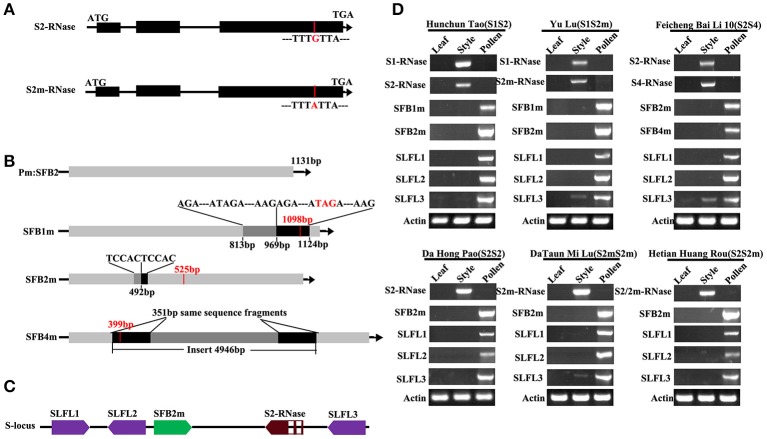
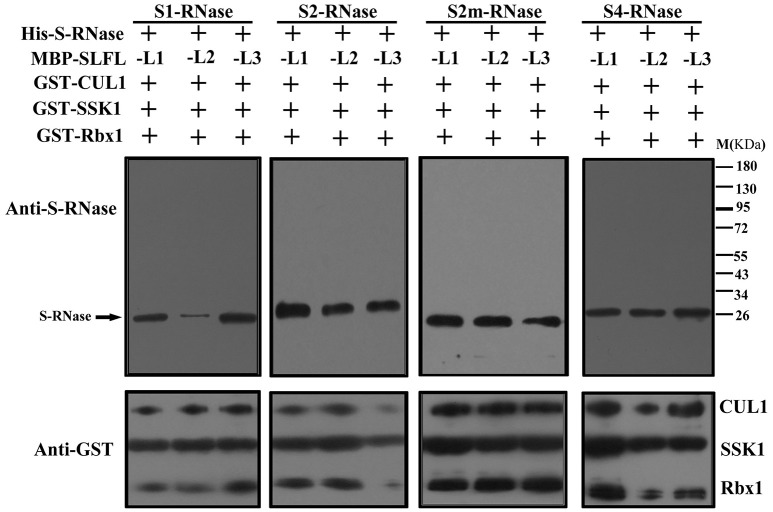
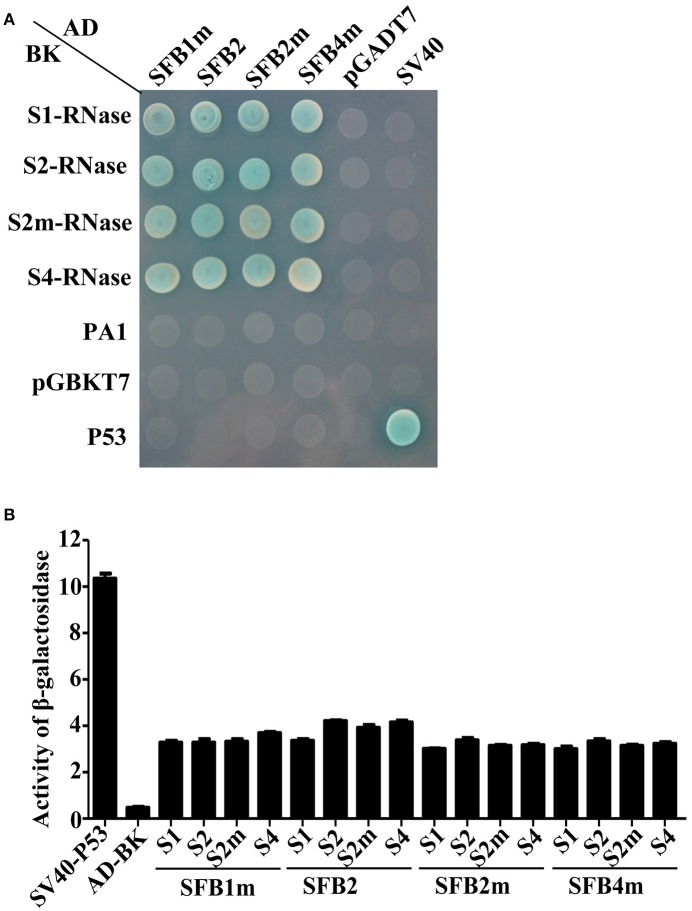
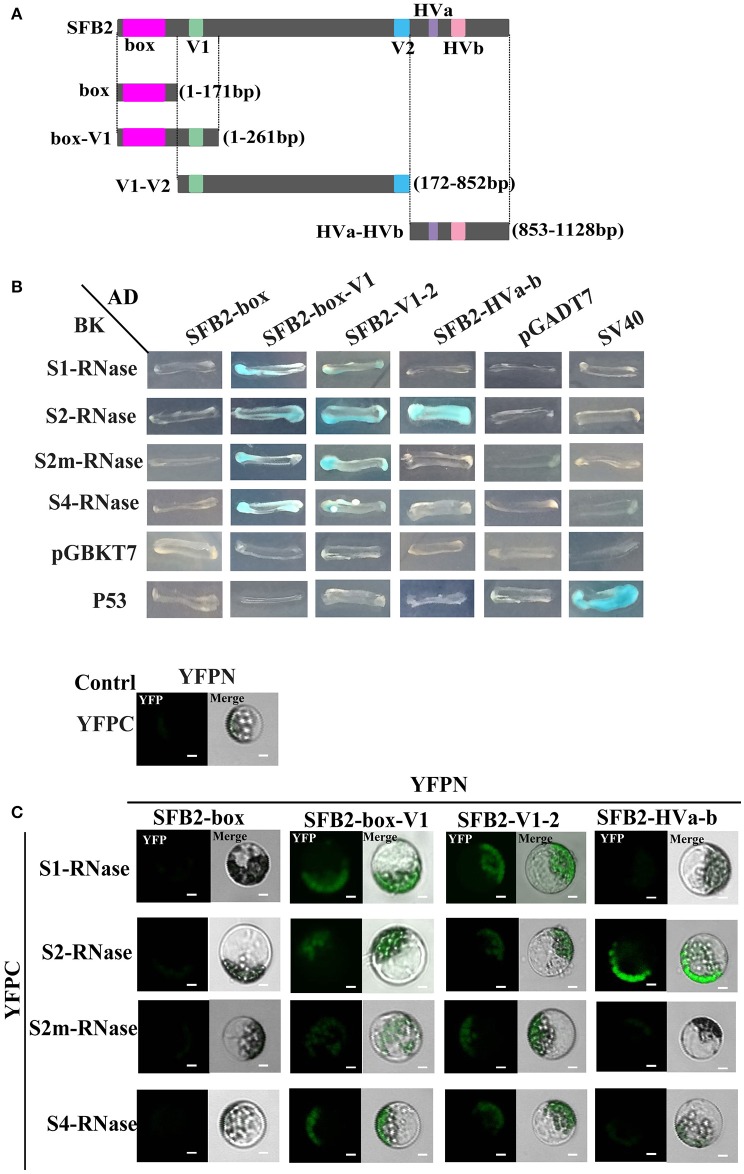
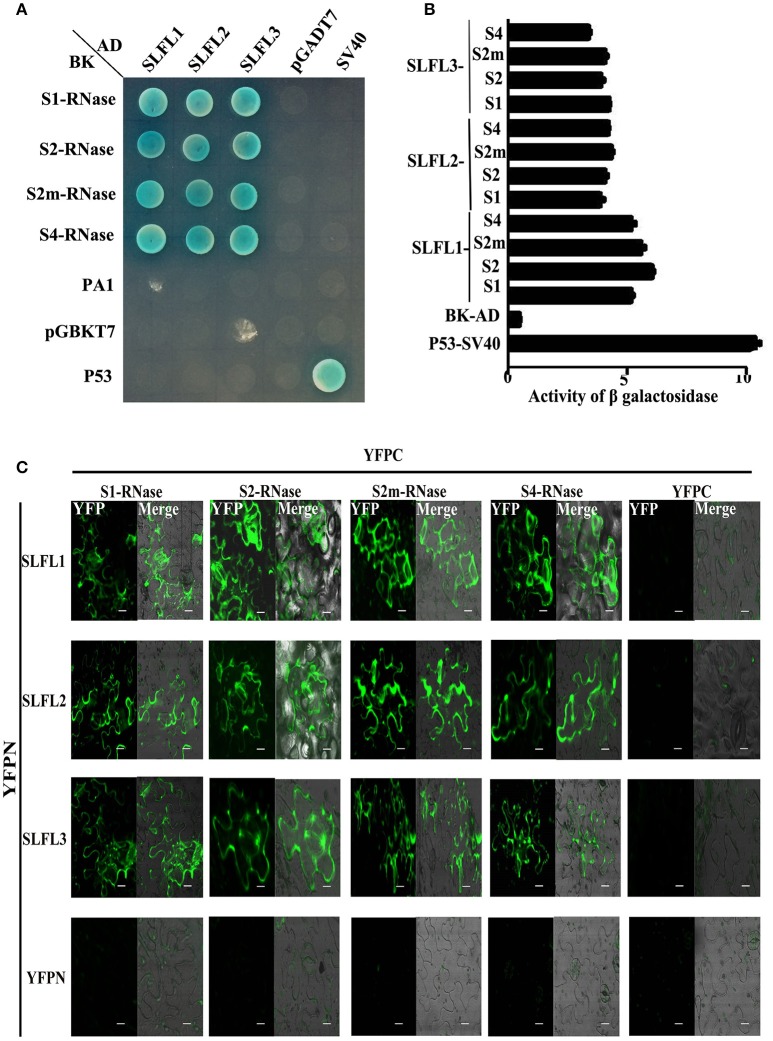
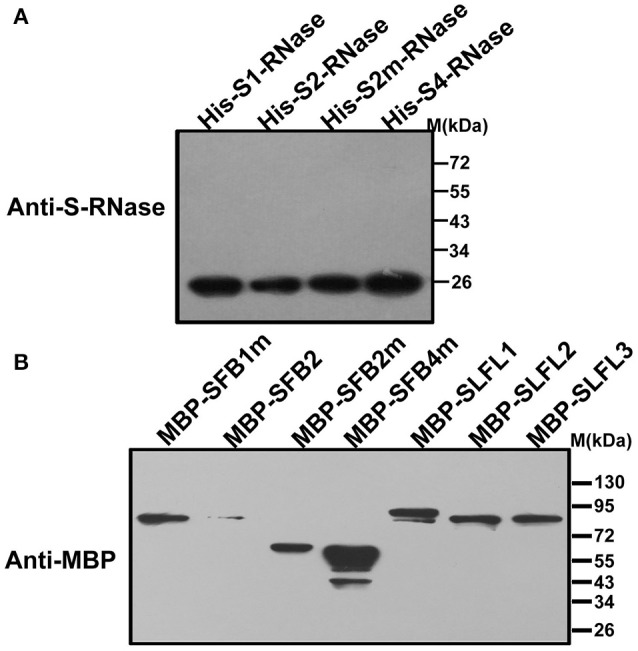
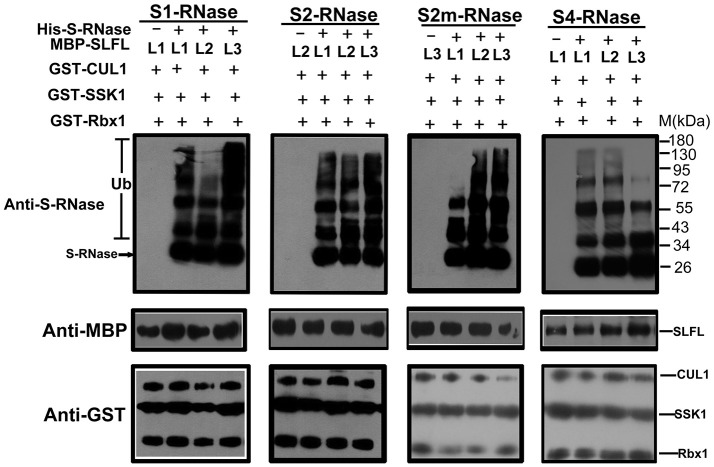
It has been proved that the gametophytic self-incompatibility (GSI), mainly exists in Rosaceae and Solanaceae, is controlled by genes, which are two tightly linked genes located at highly polymorphic -locus: the for pistil specificity and the F-box gene () for pollen specificity, respectively. However, the roles of those genes in SI of peach are still a subject of extensive debate. In our study, we selected 37 representative varieties according to the evolution route of peach and identified their genotypes. We cloned pollen determinant genes mutated , and normal , and style determinant genes , and . The mutated encode truncated SFB proteins due to a fragment insertion. The truncated PperSFBs and normal PperSFB2 interacted with PperS-RNases demonstrated by Y2H. Normal was divided into four parts: box, box-V1, V1-V2, and HVa-HVb. The box domain of PperSFB2 did not interact with PperS-RNases, both of the box-V1 and V1-V2 had interactions with PperS-RNases, while the hypervariable region of HVa-HVb only interacted with PperS2-RNase showed by Y2H and BiFC assay. Bioinformatics analysis of peach genome revealed that there were other F-box genes located at S-locus, and of which three F-box genes were specifically expressed in pollen, named as , and , respectively. In phylogenetic analysis clustered with Maloideae genes, and genes were clustered into the other group with other genes of . Protein interaction analysis revealed that the three PperSLFLs interacted with PperSSK1 and PperS-RNases with no allelic specificity. ubiquitination assay showed that PperSLFLs could tag ubiquitin molecules onto PperS-RNases. The above results suggest that three PperSLFLs are the appropriate candidates for the "general inhibitor," which would inactivate the S-RNases in pollen tubes, involved in the self-incompatibility of peach.
已经证明,配子体自交不亲和性(GSI)主要存在于蔷薇科和茄科,由基因控制,这两个紧密连锁的基因位于高度多态的位点:分别是雌蕊特异性基因和花粉特异性F-box基因()。然而,这些基因在桃自交不亲和中的作用仍是广泛争论的主题。在我们的研究中,我们根据桃的进化路线选择了37个代表性品种,并鉴定了它们的基因型。我们克隆了花粉决定基因(突变型和正常型)以及花柱决定基因和。由于片段插入,突变型编码截短的SFB蛋白。通过酵母双杂交(Y2H)证明,截短的PperSFBs和正常的PperSFB2与PperS-RNases相互作用。正常的被分为四个部分:框、框-V1、V1-V2和HVa-HVb。PperSFB2的框结构域不与PperS-RNases相互作用,框-V1和V1-V2都与PperS-RNases有相互作用,而通过Y2H和双分子荧光互补(BiFC)分析表明,HVa-HVb的高变区仅与PperS2-RNase相互作用。桃基因组的生物信息学分析表明,在S位点还有其他F-box基因,其中三个F-box基因在花粉中特异性表达,分别命名为、和。在系统发育分析中,与苹果亚科基因聚类,基因与的其他基因聚类到另一组。蛋白质相互作用分析表明,三个PperSLFLs与PperSSK1和PperS-RNases相互作用,没有等位基因特异性。泛素化分析表明,PperSLFLs可以将泛素分子标记到PperS-RNases上。上述结果表明,三个PperSLFLs是“通用抑制剂”的合适候选者,其将使花粉管中的S-RNases失活,参与桃的自交不亲和。