• 文献检索
  • 文档翻译
  • 深度研究
  • 学术资讯
  • Suppr Zotero 插件Zotero 插件
  • 邀请有礼
  • 套餐&价格
  • 历史记录
应用&插件
Suppr Zotero 插件Zotero 插件浏览器插件Mac 客户端Windows 客户端微信小程序
定价
高级版会员购买积分包购买API积分包
服务
文献检索文档翻译深度研究API 文档MCP 服务
关于我们
关于 Suppr公司介绍联系我们用户协议隐私条款
关注我们

Suppr 超能文献

核心技术专利:CN118964589B侵权必究
粤ICP备2023148730 号-1Suppr @ 2026

文献检索

告别复杂PubMed语法,用中文像聊天一样搜索,搜遍4000万医学文献。AI智能推荐,让科研检索更轻松。

立即免费搜索

文件翻译

保留排版,准确专业,支持PDF/Word/PPT等文件格式,支持 12+语言互译。

免费翻译文档

深度研究

AI帮你快速写综述,25分钟生成高质量综述,智能提取关键信息,辅助科研写作。

立即免费体验

苹果属和李属配子体自交不亲和系统中的趋同进化。

Convergent evolution at the gametophytic self-incompatibility system in Malus and Prunus.

作者信息

Aguiar Bruno, Vieira Jorge, Cunha Ana E, Fonseca Nuno A, Iezzoni Amy, van Nocker Steve, Vieira Cristina P

机构信息

Instituto de Investigação e Inovação em Saúde, Universidade do Porto, Porto, Portugal; Instituto de Biologia Molecular e Celular (IBMC), Universidade do Porto, Porto, Portugal.

CRACS-INESC Porto, Rua do Campo Alegre 1021/1055, 4169-007, Porto, Portugal; European Bioinformatics Institute (EMBL-EBI), Welcome Trust Genome Campus, CB10 1SD, Cambridge, United Kingdom.

出版信息

PLoS One. 2015 May 19;10(5):e0126138. doi: 10.1371/journal.pone.0126138. eCollection 2015.

DOI:10.1371/journal.pone.0126138
PMID:25993016
原文链接:https://pmc.ncbi.nlm.nih.gov/articles/PMC4438004/
Abstract

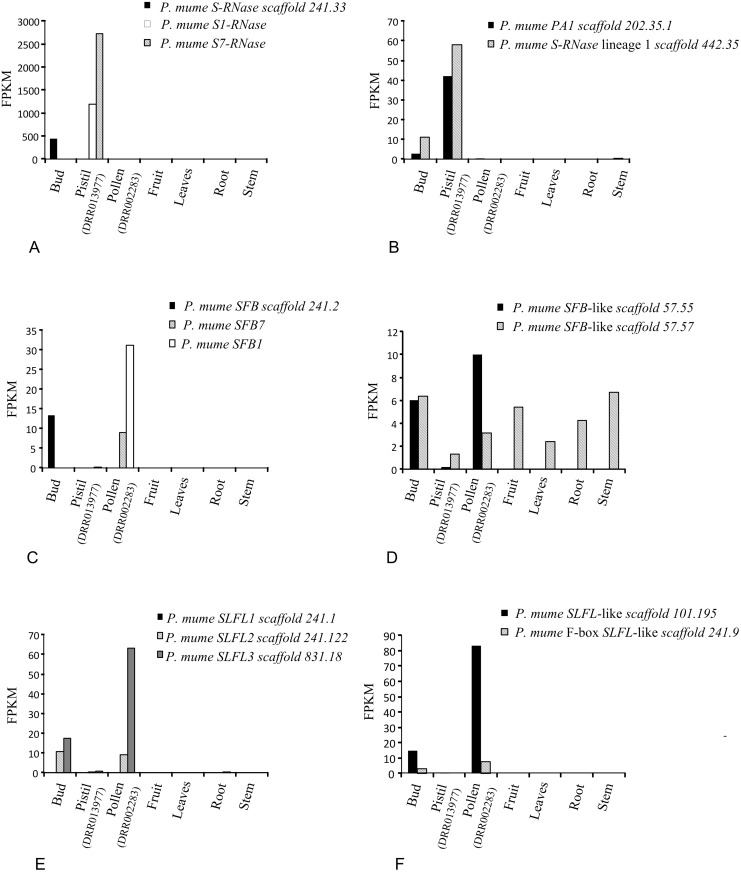
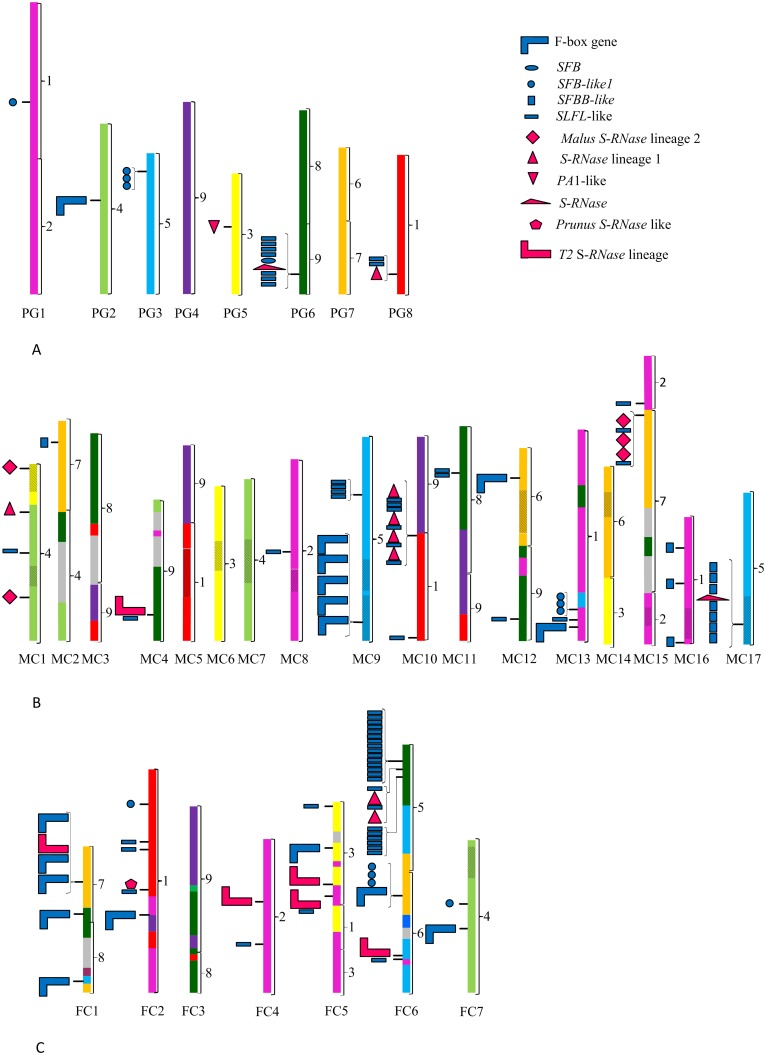
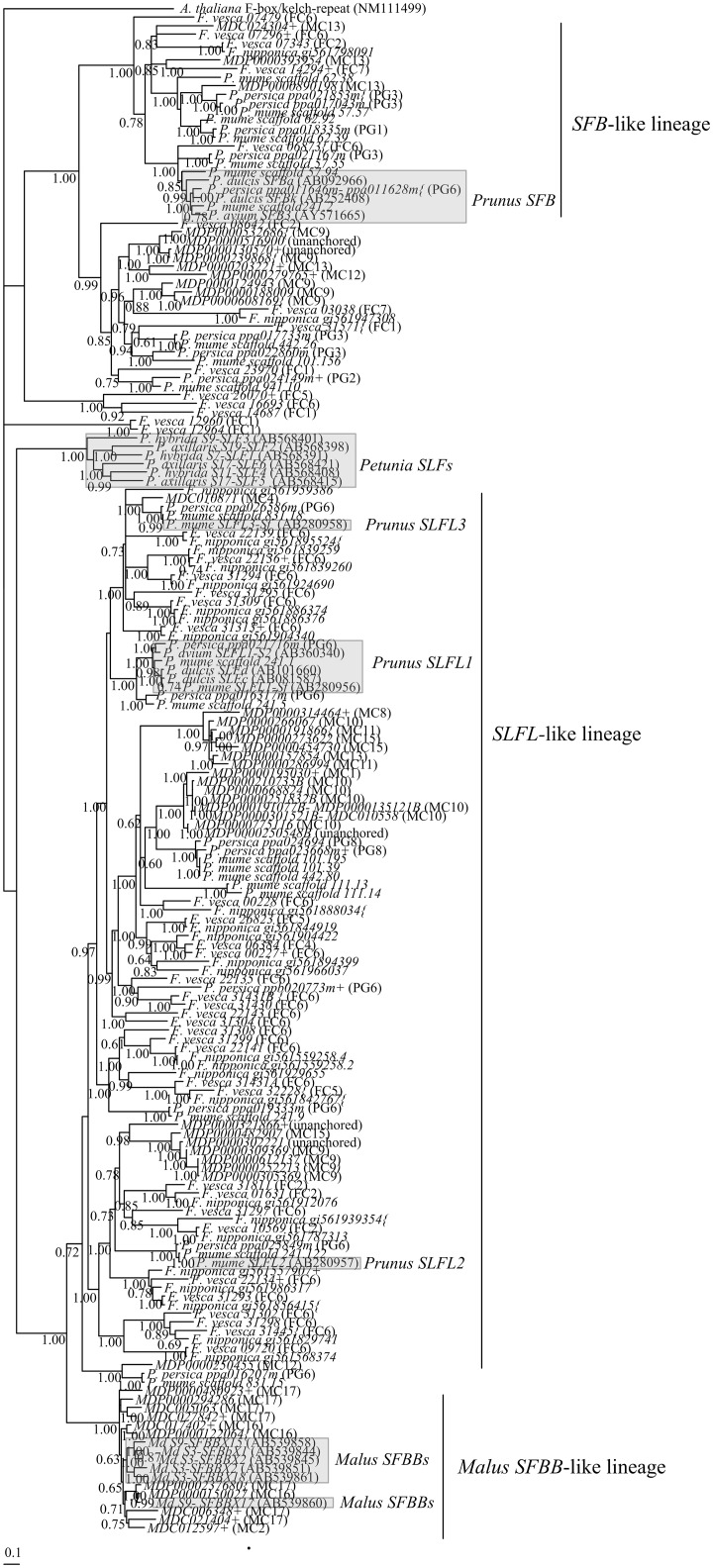
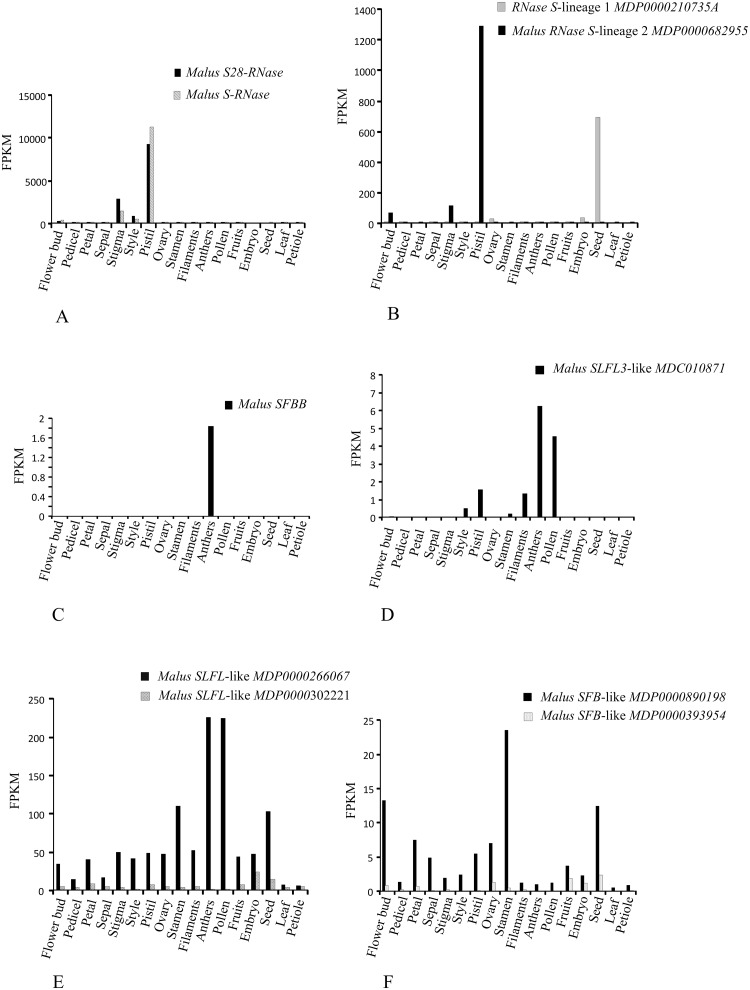
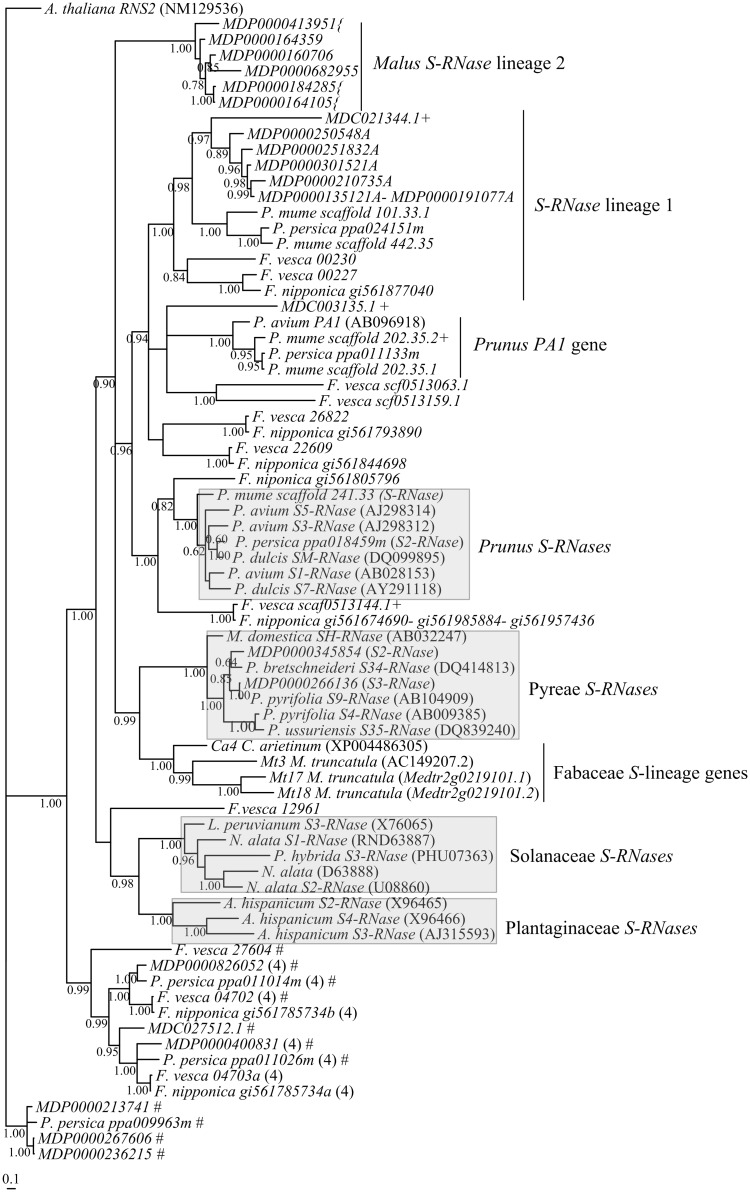
S-RNase-based gametophytic self-incompatibility (GSI) has evolved once before the split of the Asteridae and Rosidae. This conclusion is based on the phylogenetic history of the S-RNase that determines pistil specificity. In Rosaceae, molecular characterizations of Prunus species, and species from the tribe Pyreae (i.e., Malus, Pyrus, Sorbus) revealed different numbers of genes determining S-pollen specificity. In Prunus only one pistil and pollen gene determine GSI, while in Pyreae there is one pistil but multiple pollen genes, implying different specificity recognition mechanisms. It is thus conceivable that within Rosaceae the genes involved in GSI in the two lineages are not orthologous but possibly paralogous. To address this hypothesis we characterised the S-RNase lineage and S-pollen lineage genes present in the genomes of five Rosaceae species from three genera: M. × domestica (apple, self-incompatible (SI); tribe Pyreae), P. persica (peach, self-compatible (SC); Amygdaleae), P. mume (mei, SI; Amygdaleae), Fragaria vesca (strawberry, SC; Potentilleae), and F. nipponica (mori-ichigo, SI; Potentilleae). Phylogenetic analyses revealed that the Malus and Prunus S-RNase and S-pollen genes belong to distinct gene lineages, and that only Prunus S-RNase and SFB-lineage genes are present in Fragaria. Thus, S-RNase based GSI system of Malus evolved independently from the ancestral system of Rosaceae. Using expression patterns based on RNA-seq data, the ancestral S-RNase lineage gene is inferred to be expressed in pistils only, while the ancestral S-pollen lineage gene is inferred to be expressed in tissues other than pollen.

摘要

基于S-核酸酶的配子体自交不亲和性(GSI)在菊亚纲和蔷薇亚纲分化之前就已经进化出现过一次。这一结论是基于决定雌蕊特异性的S-核酸酶的系统发育史得出的。在蔷薇科中,李属物种以及梨亚族(即苹果属、梨属、花楸属)物种的分子特征表明,决定S-花粉特异性的基因数量不同。在李属中,只有一个雌蕊基因和一个花粉基因决定GSI,而在梨亚族中,有一个雌蕊基因但有多个花粉基因,这意味着存在不同的特异性识别机制。因此,可以推测在蔷薇科中,这两个谱系中参与GSI的基因并非直系同源,而可能是旁系同源。为了验证这一假设,我们对来自三个属的五个蔷薇科物种基因组中存在的S-核酸酶谱系基因和S-花粉谱系基因进行了特征分析,这五个物种分别是:苹果(苹果,自交不亲和(SI);梨亚族)、桃(桃,自交亲和(SC);桃亚族)、梅(梅,SI;桃亚族)、野草莓(草莓,SC;委陵菜族)和日本草莓(森草莓,SI;委陵菜族)。系统发育分析表明,苹果属和李属的S-核酸酶基因和S-花粉基因属于不同的基因谱系,并且草莓属中仅存在李属的S-核酸酶基因和SFB谱系基因。因此,苹果基于S-核酸酶的GSI系统是从蔷薇科的祖先系统独立进化而来的。根据RNA测序数据的表达模式推断,祖先S-核酸酶谱系基因仅在雌蕊中表达,而祖先S-花粉谱系基因则在除花粉之外的其他组织中表达。
https://cdn.ncbi.nlm.nih.gov/pmc/blobs/84f6/4438004/868d8c8e7528/pone.0126138.g005.jpg
https://cdn.ncbi.nlm.nih.gov/pmc/blobs/84f6/4438004/e39165c4a221/pone.0126138.g001.jpg
https://cdn.ncbi.nlm.nih.gov/pmc/blobs/84f6/4438004/70ff3be8ee0d/pone.0126138.g002.jpg
https://cdn.ncbi.nlm.nih.gov/pmc/blobs/84f6/4438004/c8f1606cf2cc/pone.0126138.g003.jpg
https://cdn.ncbi.nlm.nih.gov/pmc/blobs/84f6/4438004/7eeffa0e5a6e/pone.0126138.g004.jpg
https://cdn.ncbi.nlm.nih.gov/pmc/blobs/84f6/4438004/868d8c8e7528/pone.0126138.g005.jpg
https://cdn.ncbi.nlm.nih.gov/pmc/blobs/84f6/4438004/e39165c4a221/pone.0126138.g001.jpg
https://cdn.ncbi.nlm.nih.gov/pmc/blobs/84f6/4438004/70ff3be8ee0d/pone.0126138.g002.jpg
https://cdn.ncbi.nlm.nih.gov/pmc/blobs/84f6/4438004/c8f1606cf2cc/pone.0126138.g003.jpg
https://cdn.ncbi.nlm.nih.gov/pmc/blobs/84f6/4438004/7eeffa0e5a6e/pone.0126138.g004.jpg
https://cdn.ncbi.nlm.nih.gov/pmc/blobs/84f6/4438004/868d8c8e7528/pone.0126138.g005.jpg

相似文献

1
Convergent evolution at the gametophytic self-incompatibility system in Malus and Prunus.苹果属和李属配子体自交不亲和系统中的趋同进化。
PLoS One. 2015 May 19;10(5):e0126138. doi: 10.1371/journal.pone.0126138. eCollection 2015.
2
Insights into the Prunus-Specific S-RNase-Based Self-Incompatibility System from a Genome-Wide Analysis of the Evolutionary Radiation of S Locus-Related F-box Genes.基于S位点相关F-box基因进化辐射的全基因组分析对李属特异性基于S-RNase的自交不亲和系统的见解。
Plant Cell Physiol. 2016 Jun;57(6):1281-94. doi: 10.1093/pcp/pcw077. Epub 2016 Apr 14.
3
Patterns of evolution at the gametophytic self-incompatibility Sorbus aucuparia (Pyrinae) S pollen genes support the non-self recognition by multiple factors model.苹果属(梨亚科)S 组配子体自交不亲和性 Sorbus aucuparia (Pyrinae) S 花粉基因的进化模式支持多种因子非自我识别模型。
J Exp Bot. 2013 May;64(8):2423-34. doi: 10.1093/jxb/ert098. Epub 2013 Apr 19.
4
The identification of the Rosa S-locus and implications on the evolution of the Rosaceae gametophytic self-incompatibility systems.鉴定 Rosa S 座位及其对蔷薇科配子体自交不亲和系统进化的影响。
Sci Rep. 2021 Feb 12;11(1):3710. doi: 10.1038/s41598-021-83243-8.
5
Molecular mechanism of the S-RNase-based gametophytic self-incompatibility in fruit trees of Rosaceae.蔷薇科果树中基于S-核酸酶的配子体自交不亲和的分子机制
Breed Sci. 2016 Jan;66(1):116-21. doi: 10.1270/jsbbs.66.116. Epub 2016 Jan 1.
6
No evidence for Fabaceae Gametophytic self-incompatibility being determined by Rosaceae, Solanaceae, and Plantaginaceae S-RNase lineage genes.没有证据表明豆科植物的配子体自交不亲和性是由蔷薇科、茄科和车前科的S-RNase谱系基因所决定的。
BMC Plant Biol. 2015 Jun 2;15:129. doi: 10.1186/s12870-015-0497-2.
7
Physical mapping of a pollen modifier locus controlling self-incompatibility in apricot and synteny analysis within the Rosaceae.控制李花粉不亲和性的花粉修饰基因座的物理作图及蔷薇科内的同线性分析
Plant Mol Biol. 2012 Jun;79(3):229-42. doi: 10.1007/s11103-012-9908-z. Epub 2012 Apr 6.
8
Sequence divergence and loss-of-function phenotypes of S locus F-box brothers genes are consistent with non-self recognition by multiple pollen determinants in self-incompatibility of Japanese pear (Pyrus pyrifolia).S 座位 F-box 兄弟基因的序列分歧和功能丧失表型与日本梨(Pyrus pyrifolia)自交不亲和中的多种花粉决定因子的非自我识别一致。
Plant J. 2011 Dec;68(6):1028-38. doi: 10.1111/j.1365-313X.2011.04752.x. Epub 2011 Oct 4.
9
Genome Re-Sequencing of Diverse Sweet Cherry (Prunus avium) Individuals Reveals a Modifier Gene Mutation Conferring Pollen-Part Self-Compatibility.不同甜樱桃(Prunus avium)个体的全基因组重测序揭示了一个花粉部分自交亲和性的修饰基因突变。
Plant Cell Physiol. 2018 Jun 1;59(6):1265-1275. doi: 10.1093/pcp/pcy068.
10
Identification of a canonical SCF(SLF) complex involved in S-RNase-based self-incompatibility of Pyrus (Rosaceae).鉴定与梨属(蔷薇科)S-RNase 基自交不亲和性相关的经典 SCF(SLF)复合体。
Plant Mol Biol. 2013 Feb;81(3):245-57. doi: 10.1007/s11103-012-9995-x. Epub 2012 Dec 20.

引用本文的文献

1
Characterisation of the Gillenia S-locus provides insight into evolution of the nonself-recognition self-incompatibility system in apple.吉列尼花S位点的特征分析为苹果非自我识别自交不亲和系统的进化提供了见解。
Sci Rep. 2025 Apr 26;15(1):14630. doi: 10.1038/s41598-025-99335-8.
2
Rapid detection of RNase-based self-incompatibility in Lysimachia monelli (Primulaceae).报春花科聚花过路黄中基于核糖核酸酶的自交不亲和性的快速检测
Am J Bot. 2025 Jan;112(1):e16449. doi: 10.1002/ajb2.16449. Epub 2025 Jan 13.
3
Self-(in)compatibility in Tunisian apple accessions [Malus domestica. Borkh]: S-genotypes identification and pollen tube growth analysis.

本文引用的文献

1
Dissection of the octoploid strawberry genome by deep sequencing of the genomes of Fragaria species.通过对草莓属物种基因组进行深度测序解析八倍体草莓基因组
DNA Res. 2014;21(2):169-81. doi: 10.1093/dnares/dst049. Epub 2013 Nov 26.
2
Genome-wide DNA polymorphisms in two cultivars of mei (Prunus mume sieb. et zucc.).两个梅花品种(Prunus mume sieb. et zucc.)的全基因组 DNA 多态性。
BMC Genet. 2013 Oct 6;14:98. doi: 10.1186/1471-2156-14-98.
3
NnSR1, a class III non-S-RNase constitutively expressed in styles, is induced in roots and stems under phosphate deficiency in Nicotiana alata.
突尼斯苹果品种[Malus domestica. Borkh]自交不亲和性:S 基因型鉴定和花粉管生长分析。
Planta. 2024 Apr 29;259(6):137. doi: 10.1007/s00425-024-04418-x.
4
Molecular insights into self-incompatibility systems: From evolution to breeding.分子水平上的自交不亲和系统研究进展:从进化到育种。
Plant Commun. 2024 Feb 12;5(2):100719. doi: 10.1016/j.xplc.2023.100719. Epub 2023 Sep 16.
5
The identification of the -locus provides new insights into the breeding and wild origins of continuous-flowering roses.该基因座的鉴定为连续开花玫瑰的育种和野生起源提供了新的见解。
Hortic Res. 2022 Feb 28;9:uhac155. doi: 10.1093/hr/uhac155. eCollection 2022.
6
Combined transcriptomic and proteomic analysis reveals multiple pathways involved in self-pollen tube development and the potential roles of FviYABBY1 in self-incompatibility in .转录组和蛋白质组联合分析揭示了自花花粉管发育涉及的多种途径以及FviYABBY1在自交不亲和中的潜在作用。
Front Plant Sci. 2022 Sep 14;13:927001. doi: 10.3389/fpls.2022.927001. eCollection 2022.
7
The Origin and Evolution of RNase T2 Family and Gametophytic Self-incompatibility System in Plants.RNase T2 家族和植物配子体自交不亲和系统的起源和进化。
Genome Biol Evol. 2022 Jul 2;14(7). doi: 10.1093/gbe/evac093.
8
Molecular characteristics of S-RNase alleles as the determinant of self-incompatibility in the style of Fragaria viridis.作为绿色草莓花柱中自交不亲和性决定因素的S-RNase等位基因的分子特征
Hortic Res. 2021 Aug 1;8(1):185. doi: 10.1038/s41438-021-00623-x.
9
Association of T2/S-RNase With Self-Incompatibility of Japanese Citrus Accessions Examined by Transcriptomic, Phylogenetic, and Genetic Approaches.通过转录组学、系统发育学和遗传学方法研究T2/S-RNase与日本柑橘品种自交不亲和性的关系
Front Plant Sci. 2021 Feb 12;12:638321. doi: 10.3389/fpls.2021.638321. eCollection 2021.
10
The identification of the Rosa S-locus and implications on the evolution of the Rosaceae gametophytic self-incompatibility systems.鉴定 Rosa S 座位及其对蔷薇科配子体自交不亲和系统进化的影响。
Sci Rep. 2021 Feb 12;11(1):3710. doi: 10.1038/s41598-021-83243-8.
在磷缺乏条件下,NnSR1 作为一个 III 类非 S-RNase 持续在烟草花柱中表达,并在根和茎中被诱导。
Ann Bot. 2013 Nov;112(7):1351-60. doi: 10.1093/aob/mct207. Epub 2013 Sep 18.
4
De novo transcript sequence reconstruction from RNA-seq using the Trinity platform for reference generation and analysis.利用 Trinity 平台从 RNA-seq 进行从头转录序列重建,用于参考生成和分析。
Nat Protoc. 2013 Aug;8(8):1494-512. doi: 10.1038/nprot.2013.084. Epub 2013 Jul 11.
5
Secondary evolution of a self-incompatibility locus in the Brassicaceae genus Leavenworthia.芸薹属植物 Leavenworthia 自交不亲和位点的次生进化。
PLoS Biol. 2013;11(5):e1001560. doi: 10.1371/journal.pbio.1001560. Epub 2013 May 14.
6
Patterns of evolution at the gametophytic self-incompatibility Sorbus aucuparia (Pyrinae) S pollen genes support the non-self recognition by multiple factors model.苹果属(梨亚科)S 组配子体自交不亲和性 Sorbus aucuparia (Pyrinae) S 花粉基因的进化模式支持多种因子非自我识别模型。
J Exp Bot. 2013 May;64(8):2423-34. doi: 10.1093/jxb/ert098. Epub 2013 Apr 19.
7
The high-quality draft genome of peach (Prunus persica) identifies unique patterns of genetic diversity, domestication and genome evolution.桃(Prunus persica)高质量基因组草图揭示了独特的遗传多样性、驯化和基因组进化模式。
Nat Genet. 2013 May;45(5):487-94. doi: 10.1038/ng.2586. Epub 2013 Mar 24.
8
Is self-fertilization an evolutionary dead end?自交是进化的死胡同吗?
New Phytol. 2013 Apr;198(2):386-397. doi: 10.1111/nph.12182. Epub 2013 Feb 20.
9
An S-locus independent pollen factor confers self-compatibility in 'Katy' apricot.S 座位独立花粉因子赋予‘凯蒂’李自交亲和性。
PLoS One. 2013;8(1):e53947. doi: 10.1371/journal.pone.0053947. Epub 2013 Jan 14.
10
The genome of Prunus mume.李属梅花基因组。
Nat Commun. 2012;3:1318. doi: 10.1038/ncomms2290.