Department of Life Sciences, Presidency University, Kolkata, India.
Division of Plant Biology, Bose Institute, Kolkata, India.
BMC Genomics. 2018 Mar 10;19(1):190. doi: 10.1186/s12864-018-4571-7.
Bamboo is an important member of the family Poaceae and has many inflorescence and flowering features rarely observed in other plant groups. It retains an unusual form of perennialism by having a long vegetative phase that can extend up to 120 years, followed by flowering and death of the plants. In contrast to a large number of studies conducted on the annual, reference plants Arabidopsis thaliana and rice, molecular studies to characterize flowering pathways in perennial bamboo are lacking. Since photoperiod plays a crucial role in flower induction in most plants, important genes involved in this pathway have been studied in the field grown Bambusa tulda, which flowers after 40-50 years.
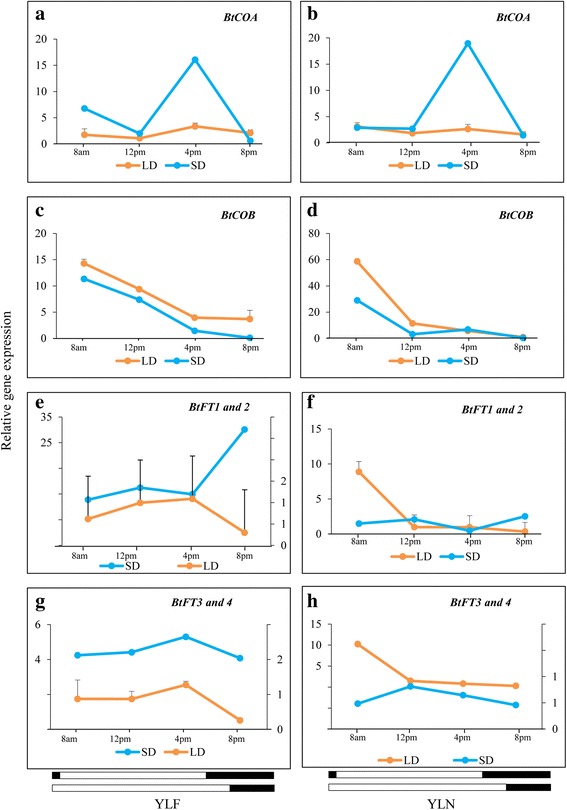
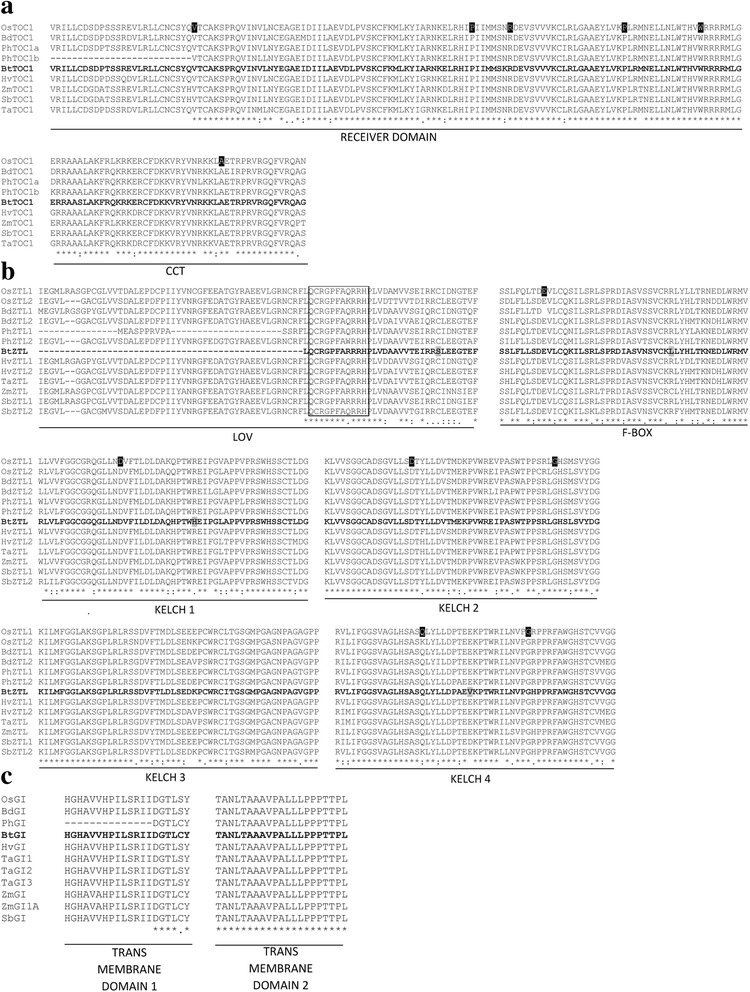
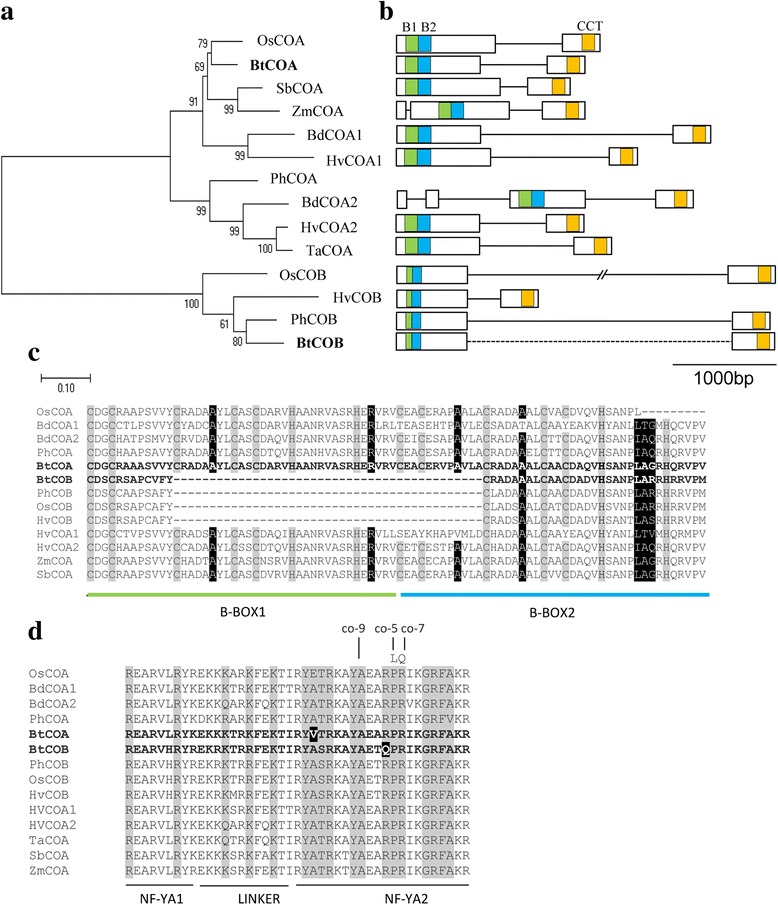
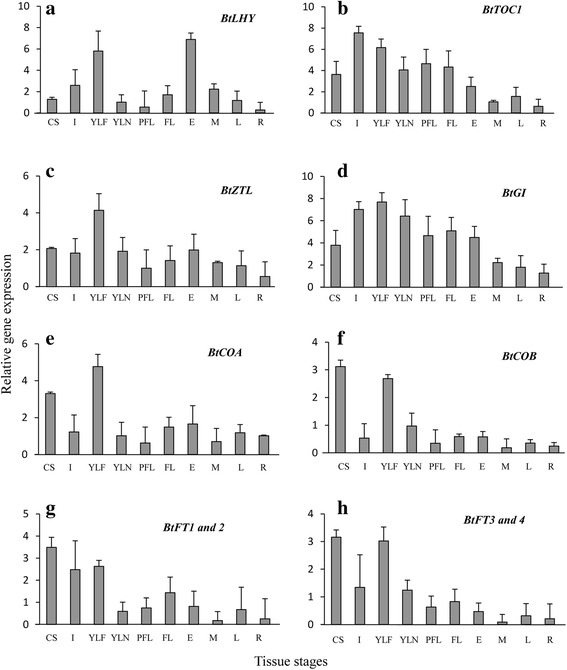
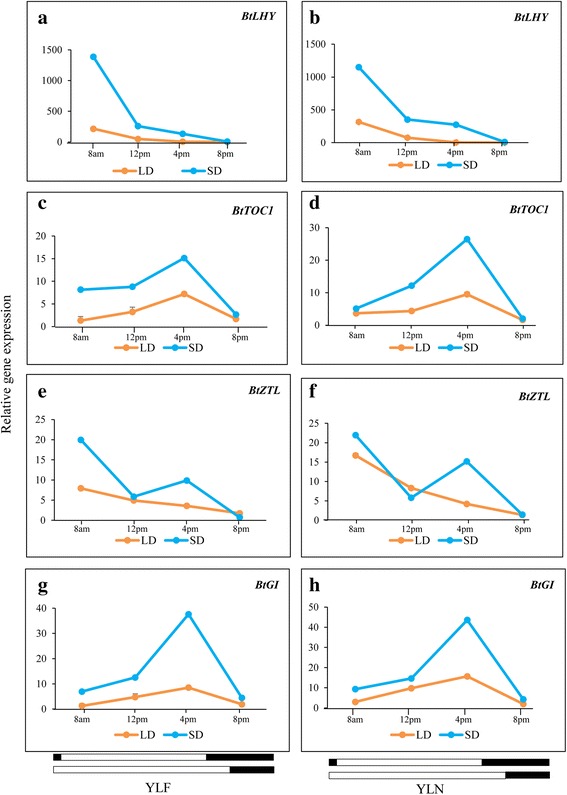
We identified several genes from B. tulda, including four related to the circadian clock [LATE ELONGATED HYPOCOTYL (LHY), TIMING OF CAB EXPRESSION1 (TOC1), ZEITLUPE (ZTL) and GIGANTEA (GI)], two circadian clock response integrators [CONSTANS A (COA), CONSTANS B (COB)] and four floral pathway integrators [FLOWERING LOCUS T1, 2, 3, 4 (FT1, 2, 3, 4)]. These genes were amplified from either gDNA and/or cDNA using degenerate as well as gene specific primers based on homologous sequences obtained from related monocot species. The sequence identity and phylogenetic comparisons revealed their close relationships to homologs identified in the temperate bamboo Phyllostachys edulis. While the four BtFT homologs were highly similar to each other, BtCOA possessed a full-length B-box domain that was truncated in BtCOB. Analysis of the spatial expression of these genes in selected flowering and non-flowering tissue stages indicated their possible involvement in flowering. The diurnal expression patterns of the clock genes were comparable to their homologs in rice, except for BtZTL. Among multiple BtCO and BtFT homologs, the diurnal pattern of only BtCOA and BtFT3, 4 were synchronized in the flower inductive tissue, but not in the non-flowering tissues.
This study elucidates the photoperiodic regulation of bamboo homologs of important flowering genes. The finding also identifies copy number expansion and gene expression divergence of CO and FT in bamboo. Further studies are required to understand their functional role in bamboo flowering.
竹子是禾本科的重要成员,其花序和开花特征在其他植物群中很少见。它通过具有可长达 120 年的长营养期来保留一种不寻常的多年生形式,然后是植物的开花和死亡。与对一年生参考植物拟南芥和水稻进行的大量研究相比,缺乏对多年生竹子开花途径进行分子研究。由于光周期在大多数植物的花诱导中起着至关重要的作用,因此已经在田间种植的 40-50 年后开花的毛竹中研究了参与该途径的重要基因。
我们从毛竹中鉴定出了几个基因,包括四个与生物钟相关的基因[晚伸长 hypocotyl(LHY),TOC1 表达时间 1(TOC1),ZEITLUPE(ZTL)和 GI)],两个生物钟反应整合因子[CONSTANS A(COA),CONSTANS B(COB)]和四个花途径整合因子[FLOWERING LOCUS T1、2、3、4(FT1、2、3、4)]。这些基因是使用基于从相关单子叶植物获得的同源序列的简并和基因特异性引物从 gDNA 和/或 cDNA 中扩增的。序列同一性和系统发育比较表明,它们与在温带竹子刚竹中鉴定的同源物密切相关。虽然四个 BtFT 同源物彼此非常相似,但 BtCOA 具有完整的 B-box 结构域,而 BtCOB 则被截断。在选定的开花和非开花组织阶段分析这些基因的空间表达表明它们可能参与开花。时钟基因的昼夜表达模式与水稻中的同源物相似,除了 BtZTL 之外。在多个 BtCO 和 BtFT 同源物中,只有 BtCOA 和 BtFT3、4 的昼夜模式在诱导组织中同步,但在非开花组织中则不同步。
本研究阐明了竹子重要开花基因的光周期调控。该发现还确定了竹子中 CO 和 FT 的拷贝数扩增和基因表达差异。需要进一步的研究来了解它们在竹子开花中的功能作用。