German Cancer Research Center (DKFZ), F100, Pathogenesis of Virus Associated Tumors, Im Neuenheimer Feld 242, 69120 Heidelberg, Germany.
Inserm unit U1074, DKFZ, 69120 Heidelberg, Germany.
Nucleic Acids Res. 2018 Apr 6;46(6):2802-2819. doi: 10.1093/nar/gky129.
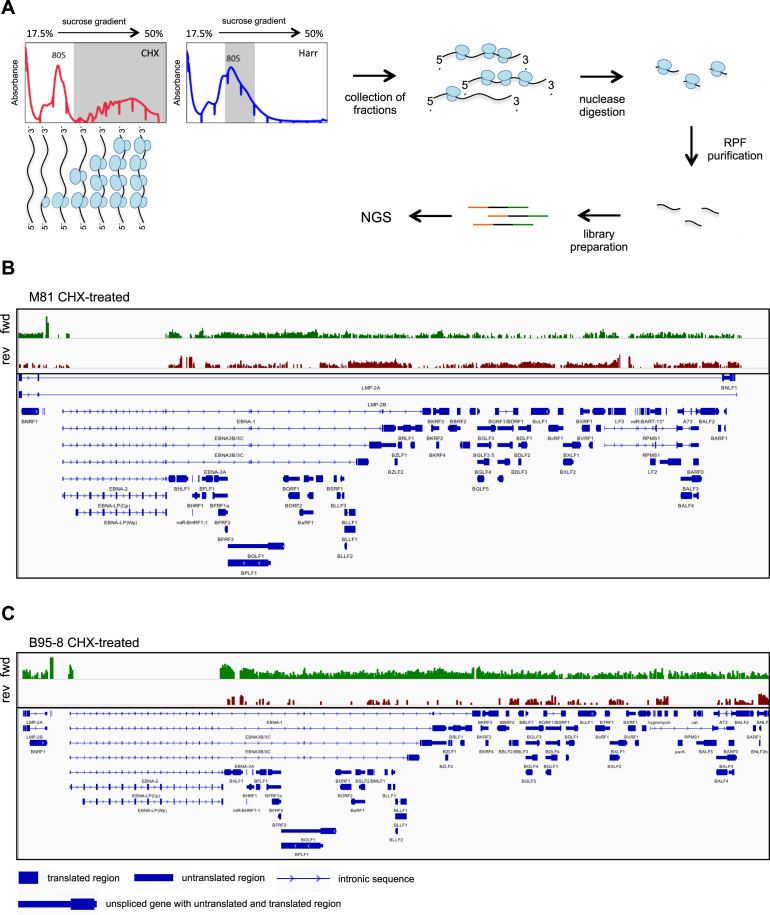
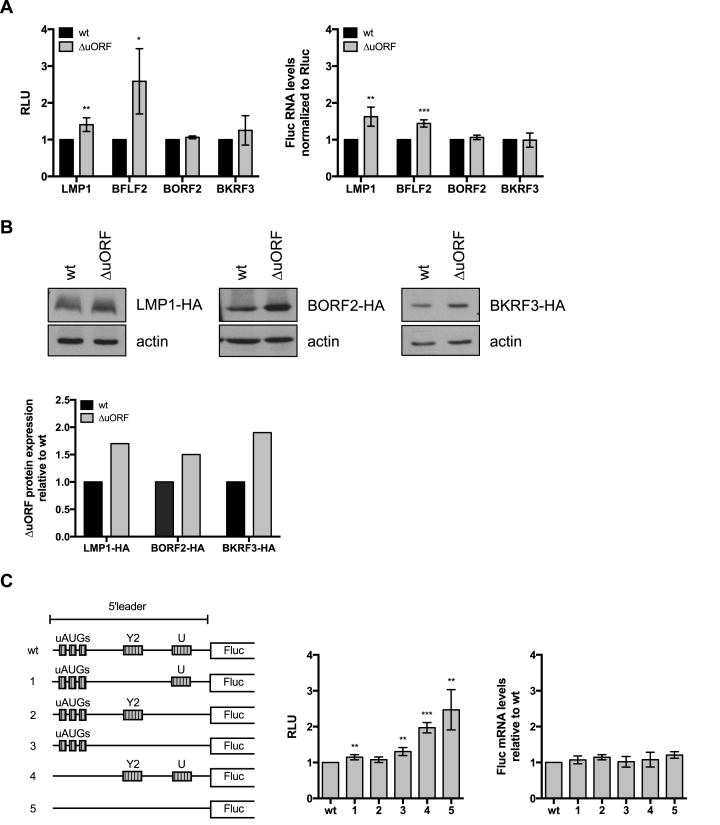
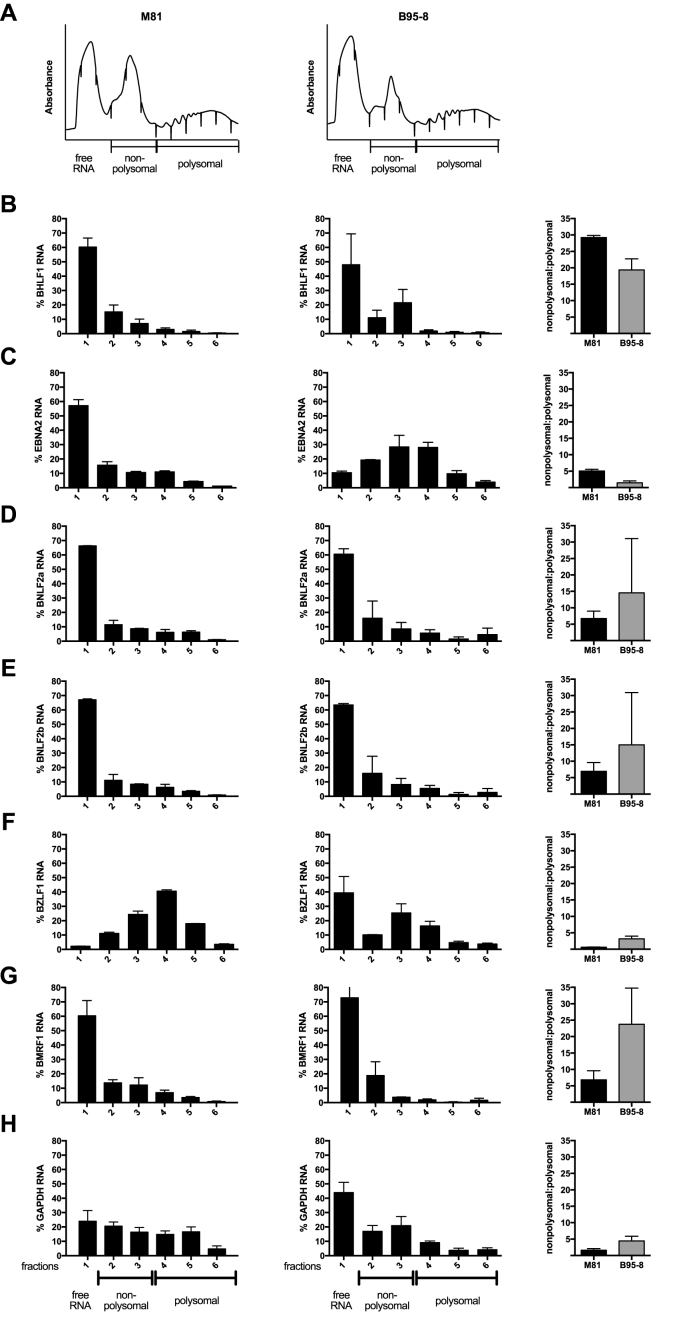
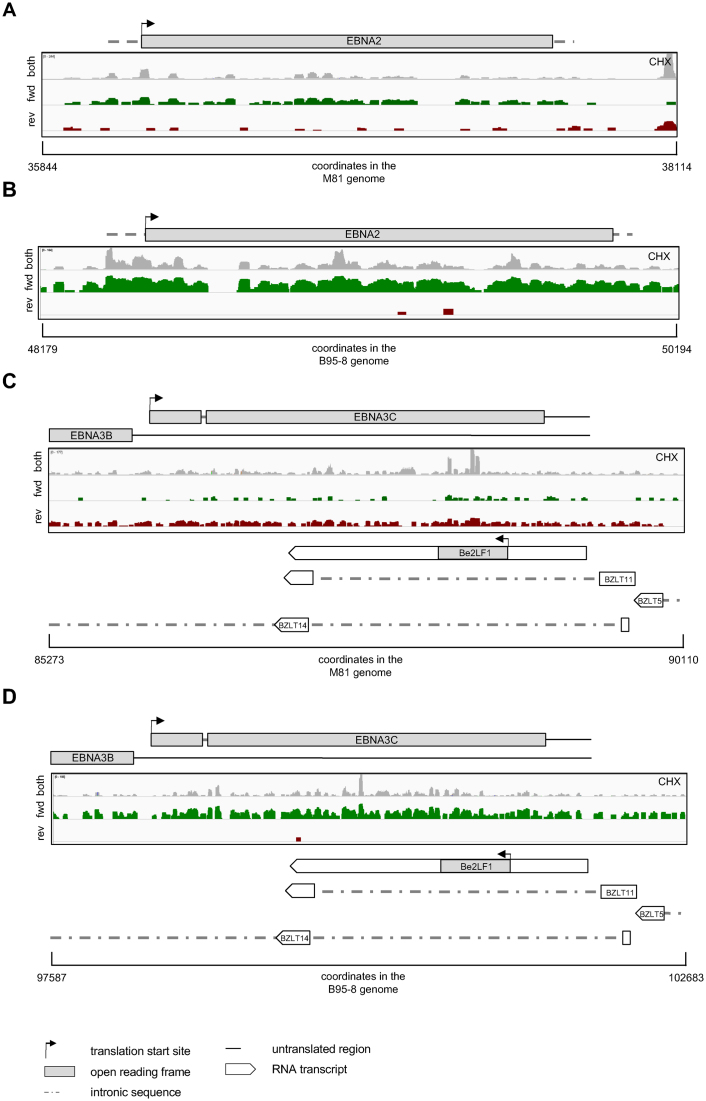
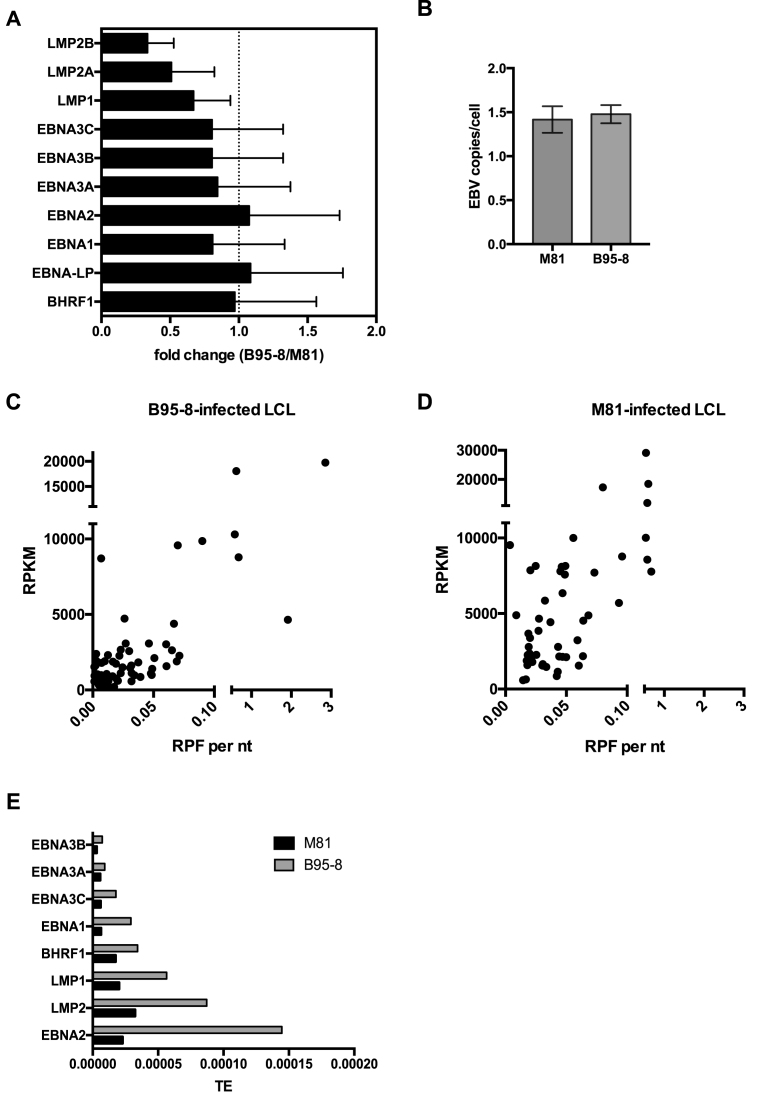
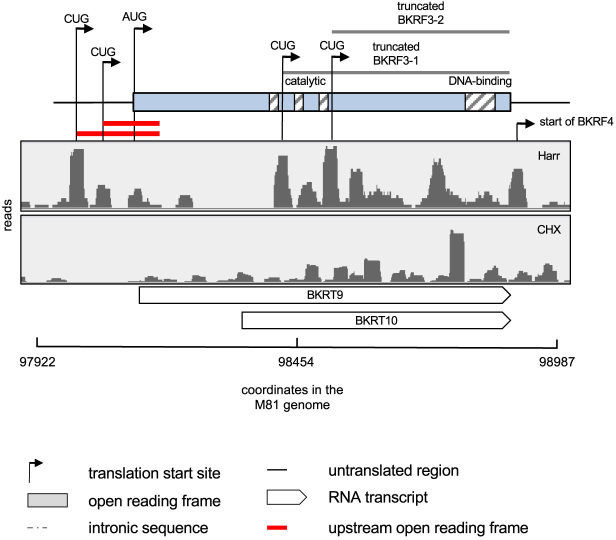
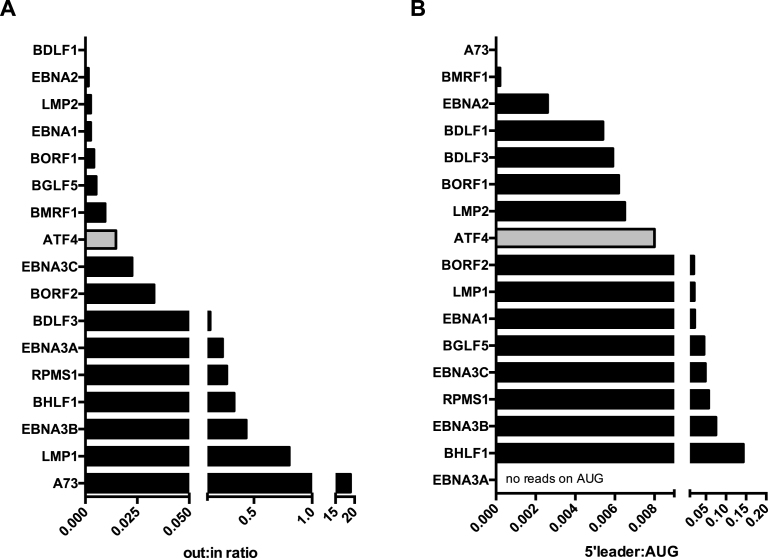
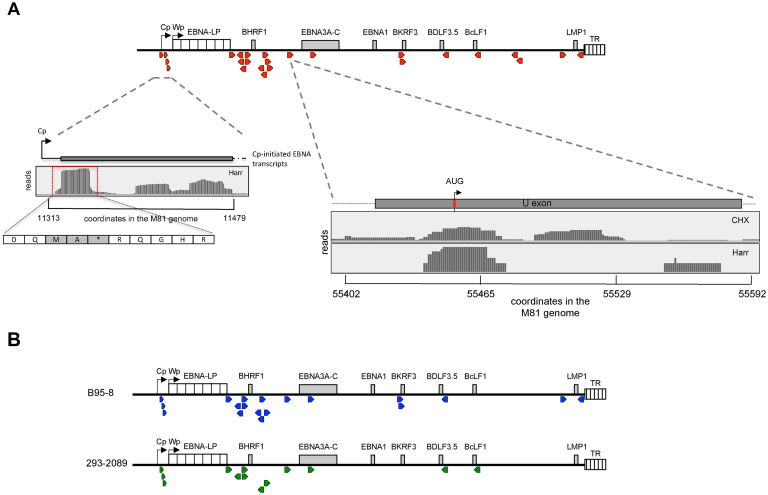
The Epstein-Barr virus (EBV) genome encodes several hundred transcripts. We have used ribosome profiling to characterize viral translation in infected cells and map new translation initiation sites. We show here that EBV transcripts are translated with highly variable efficiency, owing to variable transcription and translation rates, variable ribosome recruitment to the leader region and coverage by monosomes versus polysomes. Some transcripts were hardly translated, others mainly carried monosomes, showed ribosome accumulation in leader regions and most likely represent non-coding RNAs. A similar process was visible for a subset of lytic genes including the key transactivators BZLF1 and BRLF1 in cells infected with weakly replicating EBV strains. This suggests that ribosome trapping, particularly in the leader region, represents a new checkpoint for the repression of lytic replication. We could identify 25 upstream open reading frames (uORFs) located upstream of coding transcripts that displayed 5' leader ribosome trapping, six of which were located in the leader region shared by many latent transcripts. These uORFs repressed viral translation and are likely to play an important role in the regulation of EBV translation.
爱泼斯坦-巴尔病毒(EBV)基因组编码数百个转录本。我们使用核糖体图谱分析来描述感染细胞中的病毒翻译,并绘制新的翻译起始位点。在这里,我们表明 EBV 转录本的翻译效率具有高度可变性,这归因于转录和翻译速率的变化、核糖体在先导区的募集情况以及单核糖体与多核糖体的覆盖情况。一些转录本几乎不被翻译,另一些主要携带单核糖体,在先导区积累核糖体,很可能代表非编码 RNA。在感染弱复制 EBV 株的细胞中,一些裂解基因也存在类似的过程,包括关键的转录激活子 BZLF1 和 BRLF1。这表明核糖体捕获,特别是在先导区,代表了抑制裂解复制的一个新的检查点。我们可以鉴定出 25 个位于编码转录本上游的上游开放阅读框(uORF),这些转录本显示 5' 先导核糖体捕获,其中 6 个位于许多潜伏转录本共享的先导区。这些 uORF 抑制病毒翻译,可能在 EBV 翻译调控中发挥重要作用。