Department of Experimental Radiation Oncology, University of Texas MD Anderson Cancer Center, Houston, TX 77030, USA.
Center for Cardiovascular Regeneration, Houston Methodist Hospital Research Institute, Houston, TX, USA; Department of Cardiothoracic Surgery, Weill Cornell Medical College, Cornell University, New York, NY, USA.
Dev Cell. 2018 Mar 12;44(5):582-596.e4. doi: 10.1016/j.devcel.2018.02.010.
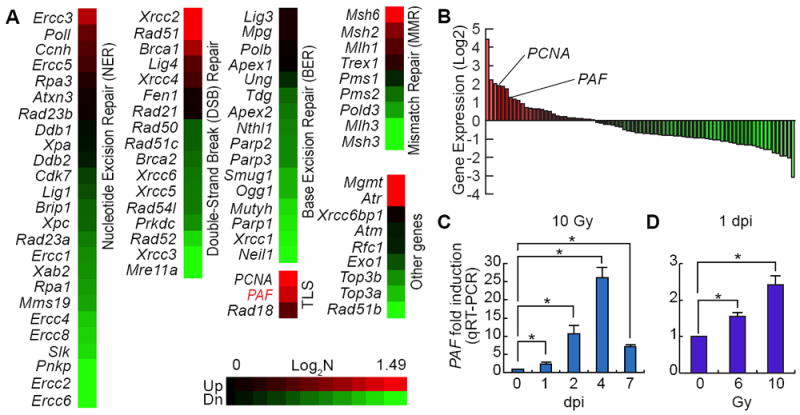
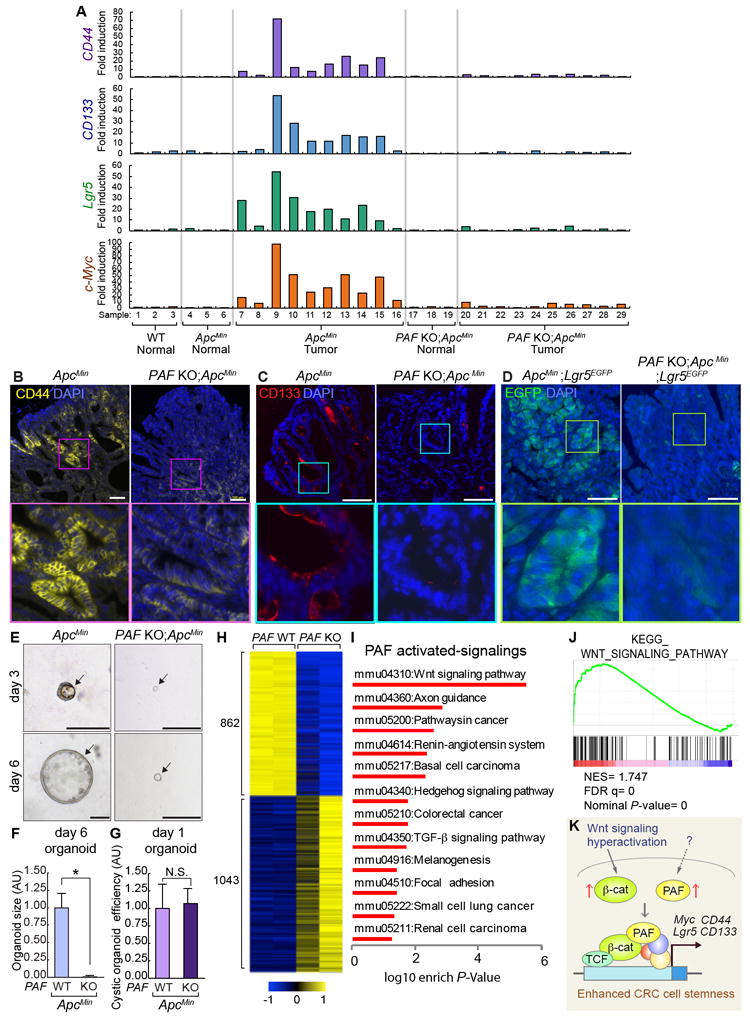
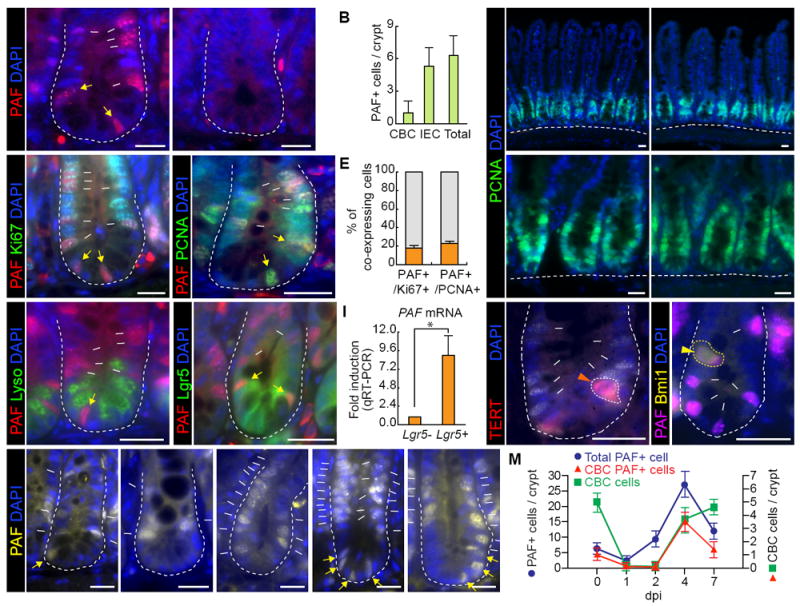
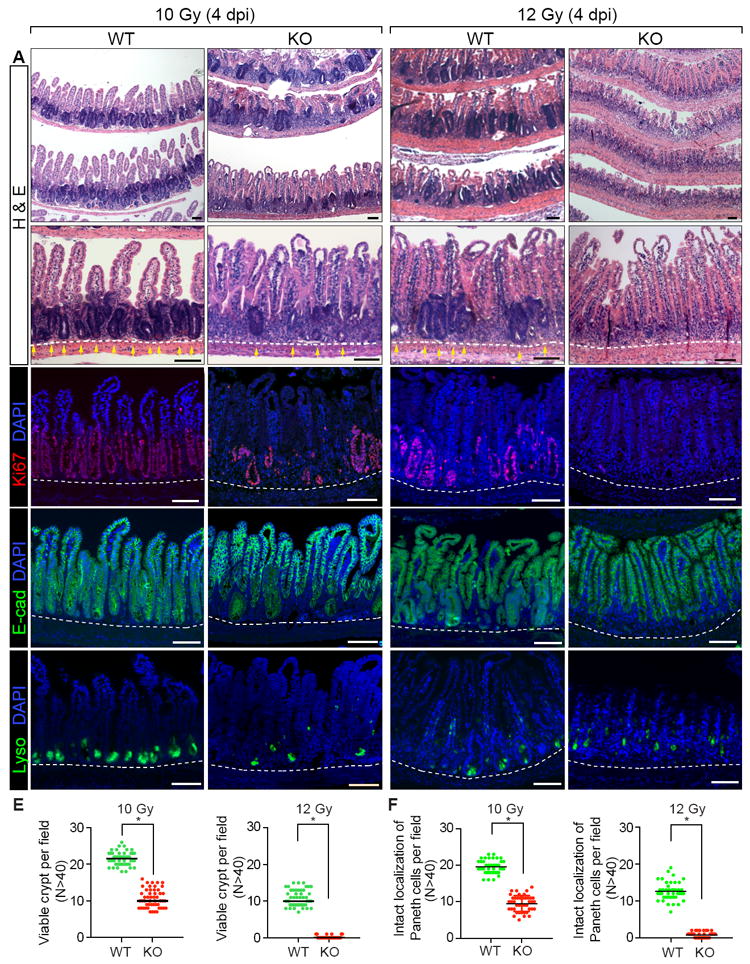
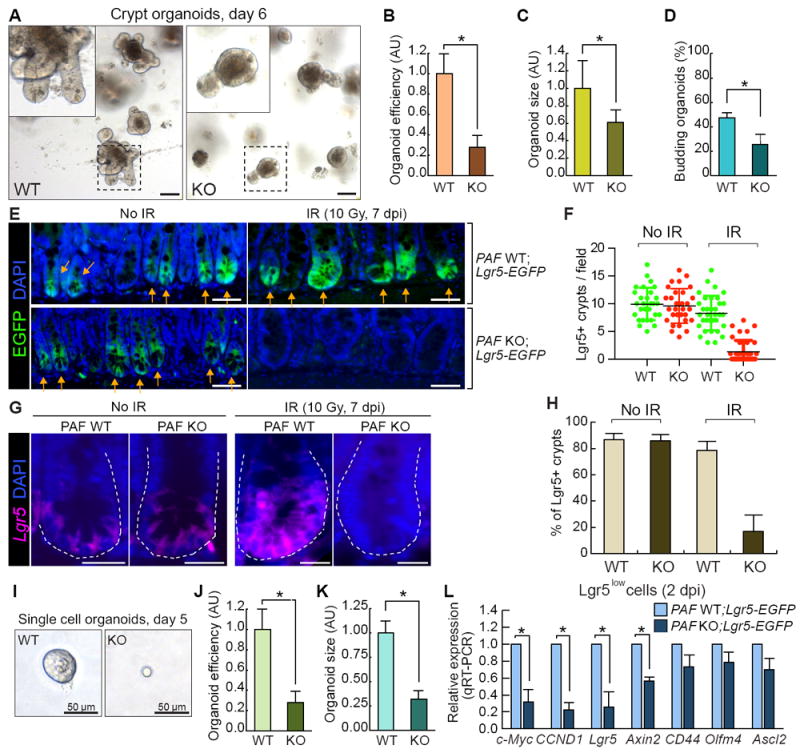
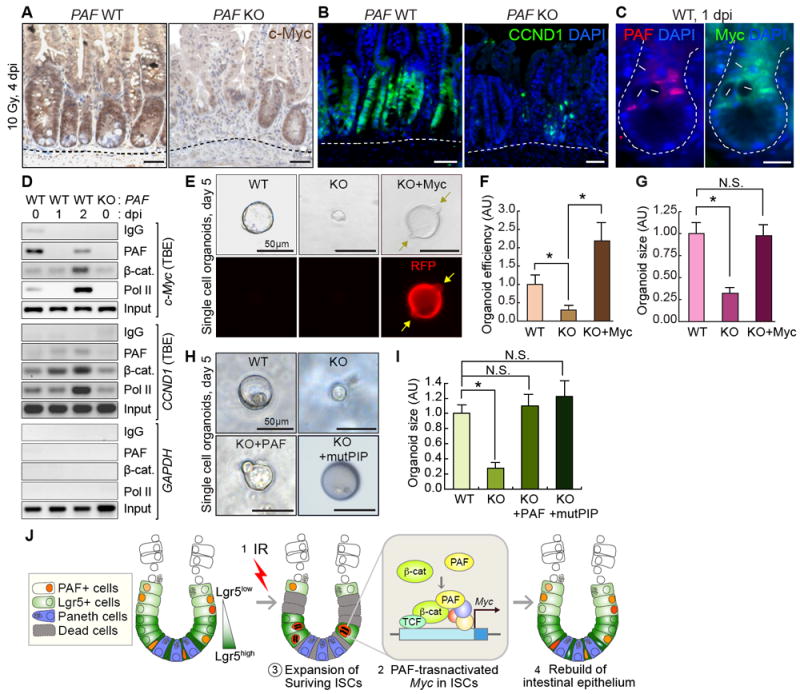
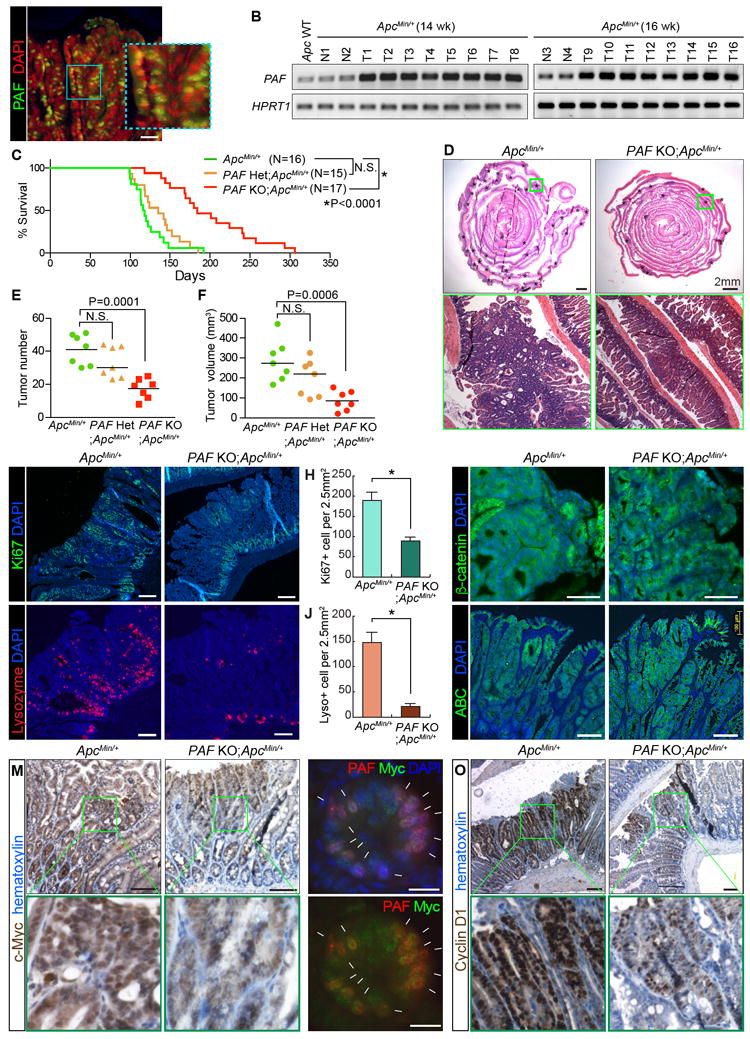
The underlying mechanisms of how self-renewing cells are controlled in regenerating tissues and cancer remain ambiguous. PCNA-associated factor (PAF) modulates DNA repair via PCNA. Also, PAF hyperactivates Wnt/β-catenin signaling independently of PCNA interaction. We found that PAF is expressed in intestinal stem and progenitor cells (ISCs and IPCs) and markedly upregulated during intestinal regeneration and tumorigenesis. Whereas PAF is dispensable for intestinal homeostasis, upon radiation injury, genetic ablation of PAF impairs intestinal regeneration along with the severe loss of ISCs and Myc expression. Mechanistically, PAF conditionally occupies and transactivates the c-Myc promoter, which induces the expansion of ISCs/IPCs during intestinal regeneration. In mouse models, PAF knockout inhibits Apc inactivation-driven intestinal tumorigenesis with reduced tumor cell stemness and suppressed Wnt/β-catenin signaling activity, supported by transcriptome profiling. Collectively, our results unveil that the PAF-Myc signaling axis is indispensable for intestinal regeneration and tumorigenesis by positively regulating self-renewing cells.
自我更新细胞在再生组织和癌症中是如何被控制的,其潜在机制仍不清楚。PCNA 相关因子(PAF)通过 PCNA 调节 DNA 修复。此外,PAF 独立于 PCNA 相互作用而过度激活 Wnt/β-catenin 信号通路。我们发现 PAF 在肠干细胞和祖细胞(ISCs 和 IPCs)中表达,并在肠再生和肿瘤发生过程中显著上调。虽然 PAF 对肠稳态是可有可无的,但在辐射损伤后,PAF 的基因缺失会损害肠再生,同时导致 ISCs 和 Myc 表达的严重丢失。在机制上,PAF 有条件地占据并反式激活 c-Myc 启动子,从而在肠再生过程中诱导 ISCs/IPCs 的扩增。在小鼠模型中,PAF 敲除抑制 APC 失活驱动的肠肿瘤发生,肿瘤细胞干性降低,Wnt/β-catenin 信号活性受到抑制,这一结果得到了转录组分析的支持。总之,我们的研究结果揭示了 PAF-Myc 信号轴通过正向调节自我更新细胞对肠再生和肿瘤发生是不可或缺的。