Wang Xin, Jung Youn-Sang, Jun Sohee, Lee Sunhye, Wang Wenqi, Schneider Andrea, Sun Oh Young, Lin Steven H, Park Bum-Joon, Chen Junjie, Keyomarsi Khandan, Park Jae-Il
Department of Experimental Radiation Oncology, University of Texas MD Anderson Cancer Center, 6565 MD Anderson Boulevard, Z6.6034, Unit 1052, Houston, Texas 77030, USA.
Department of Molecular Biology, Pusan National University, Busan 609-735, Korea.
Nat Commun. 2016 Feb 4;7:10633. doi: 10.1038/ncomms10633.
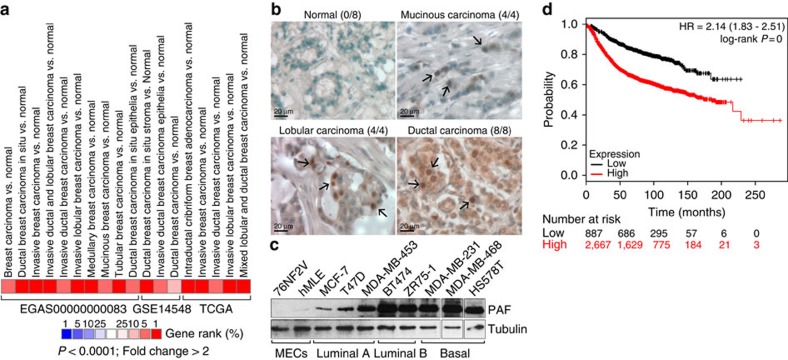
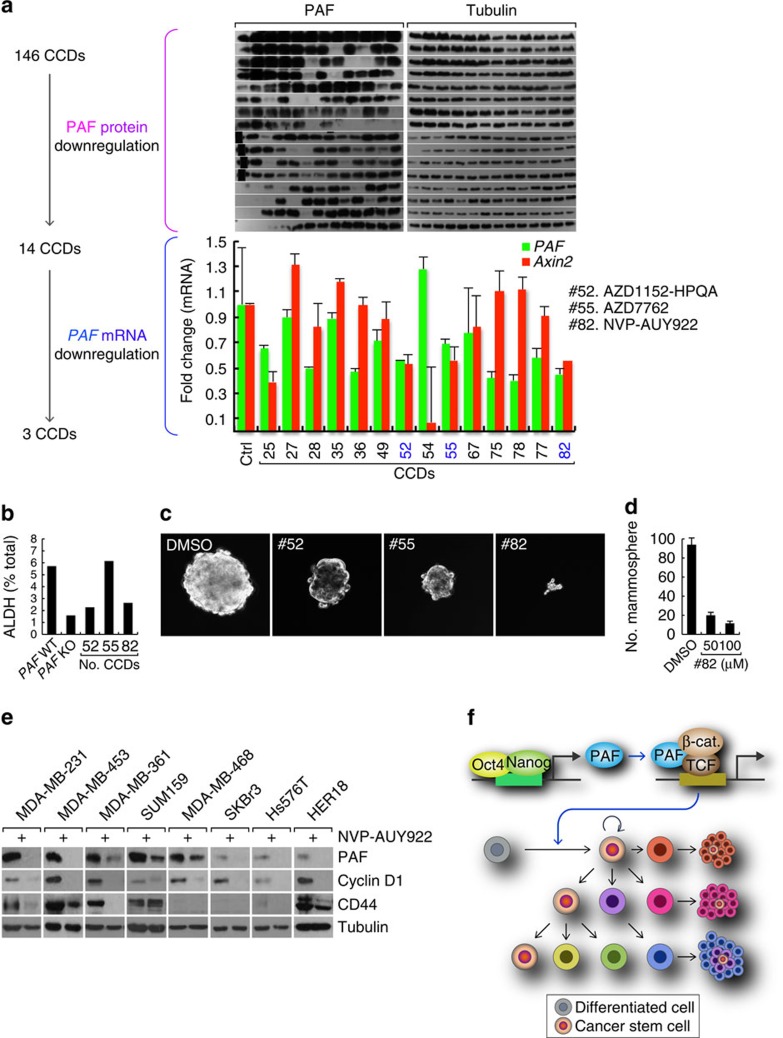
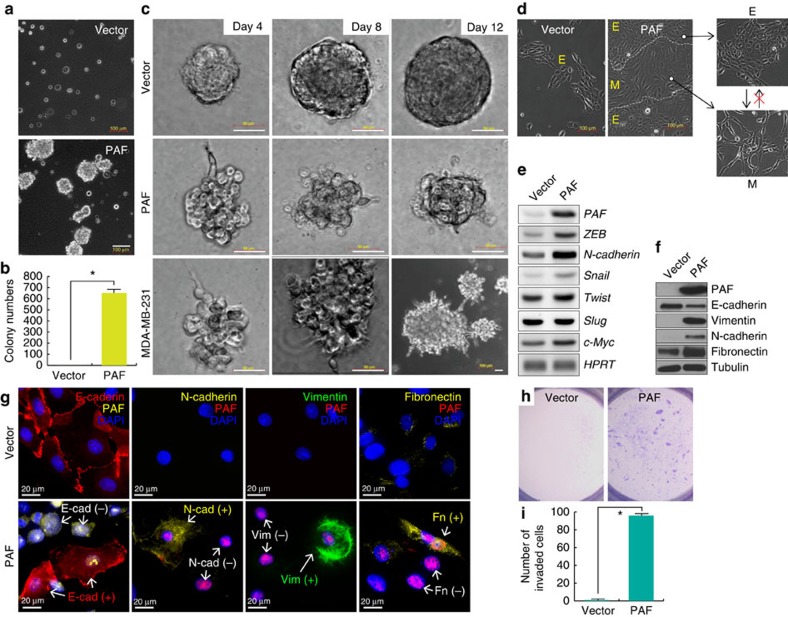
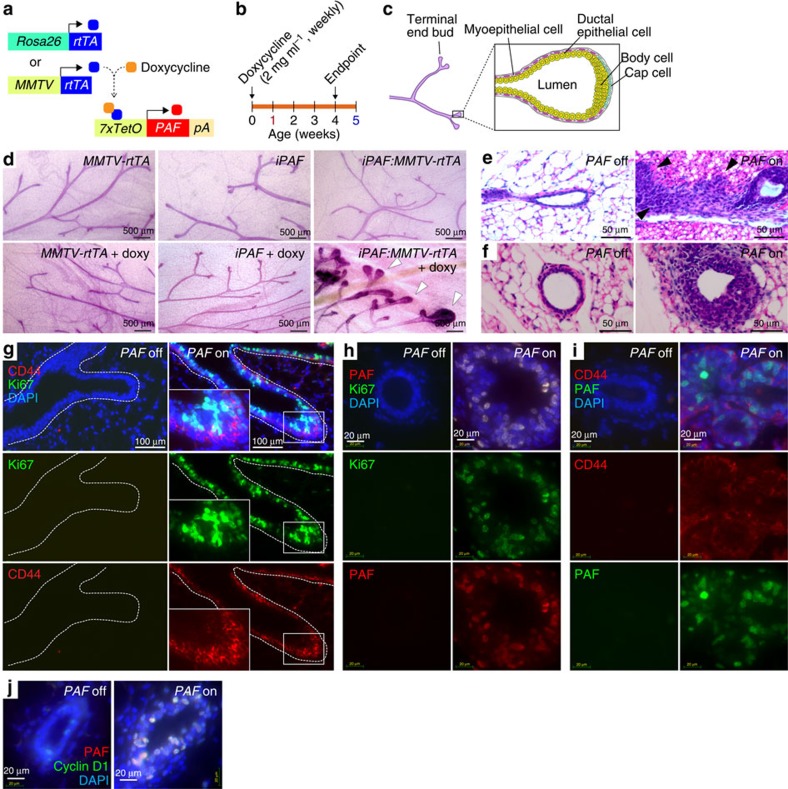
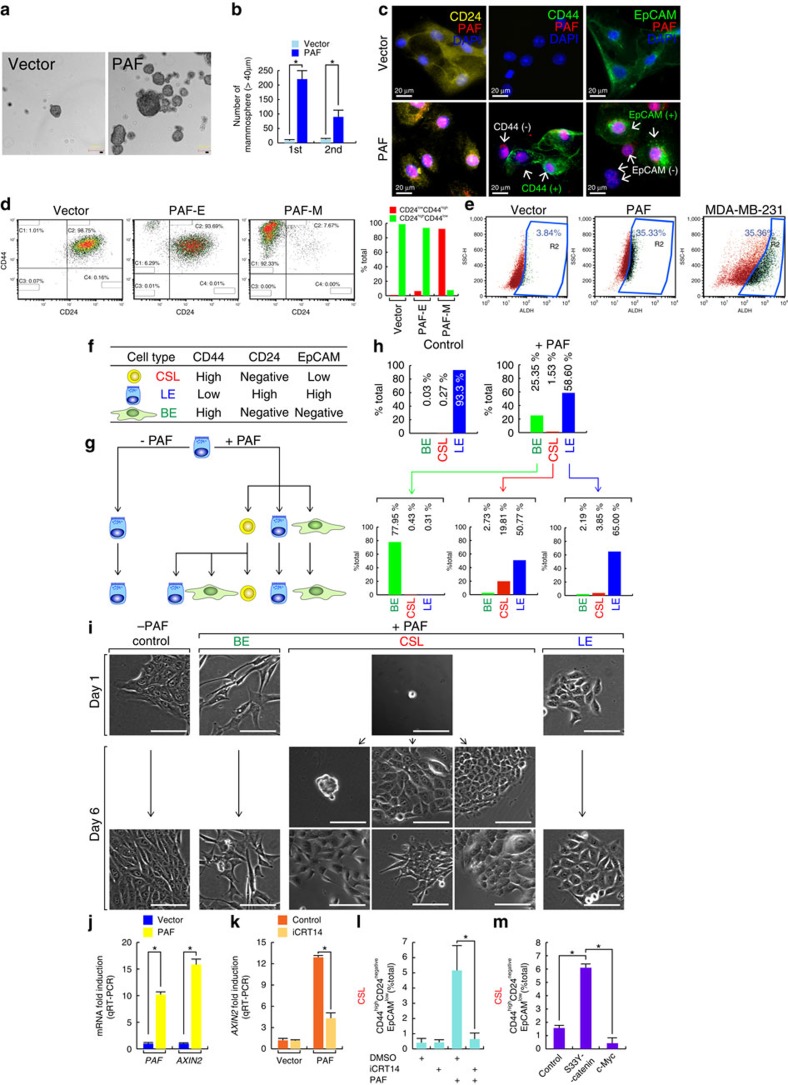
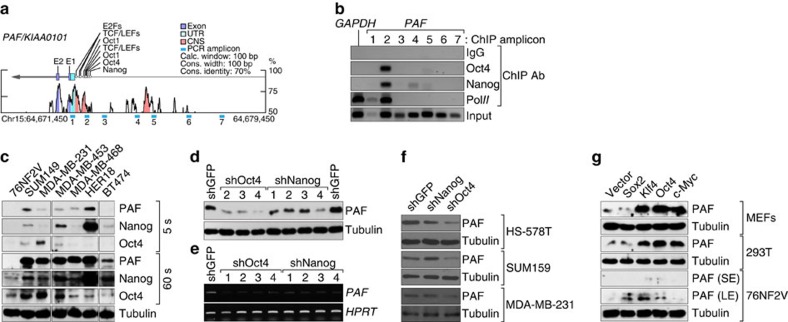
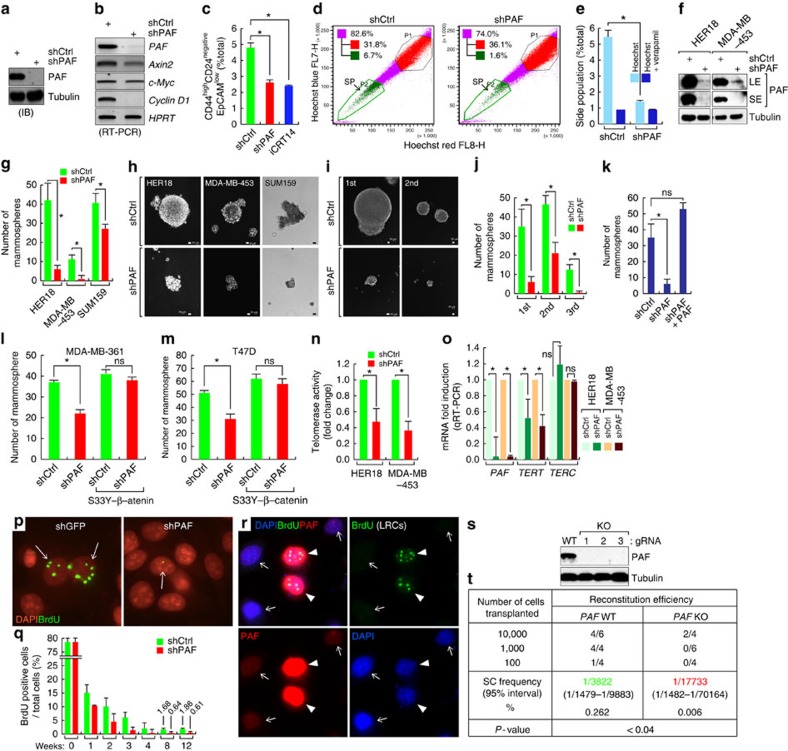
Cancer stem cells (CSCs) contribute to tumour heterogeneity, therapy resistance and metastasis. However, the regulatory mechanisms of cancer cell stemness remain elusive. Here we identify PCNA-associated factor (PAF) as a key molecule that controls cancer cell stemness. PAF is highly expressed in breast cancer cells but not in mammary epithelial cells (MECs). In MECs, ectopic expression of PAF induces anchorage-independent cell growth and breast CSC marker expression. In mouse models, conditional PAF expression induces mammary ductal hyperplasia. Moreover, PAF expression endows MECs with a self-renewing capacity and cell heterogeneity generation via Wnt signalling. Conversely, ablation of endogenous PAF induces the loss of breast cancer cell stemness. Further cancer drug repurposing approaches reveal that NVP-AUY922 downregulates PAF and decreases breast cancer cell stemness. Our results unveil an unsuspected role of the PAF-Wnt signalling axis in modulating cell plasticity, which is required for the maintenance of breast cancer cell stemness.
癌症干细胞(CSCs)导致肿瘤异质性、治疗抗性和转移。然而,癌细胞干性的调控机制仍不清楚。在此,我们确定增殖细胞核抗原相关因子(PAF)是控制癌细胞干性的关键分子。PAF在乳腺癌细胞中高表达,但在乳腺上皮细胞(MECs)中不表达。在MECs中,PAF的异位表达诱导不依赖贴壁的细胞生长和乳腺癌干细胞标志物表达。在小鼠模型中,条件性PAF表达诱导乳腺导管增生。此外,PAF表达通过Wnt信号赋予MECs自我更新能力和细胞异质性产生。相反,内源性PAF的缺失导致乳腺癌细胞干性丧失。进一步的癌症药物重新利用方法表明,NVP-AUY922下调PAF并降低乳腺癌细胞干性。我们的结果揭示了PAF-Wnt信号轴在调节细胞可塑性中的意想不到的作用,这是维持乳腺癌细胞干性所必需的。