Beijing Institute of Radiation Medicine, Beijing, 100850, China.
College of Life Sciences, Hebei University, Baoding City, Hebei Province, 071002, China.
Commun Biol. 2023 Dec 9;6(1):1248. doi: 10.1038/s42003-023-05645-w.
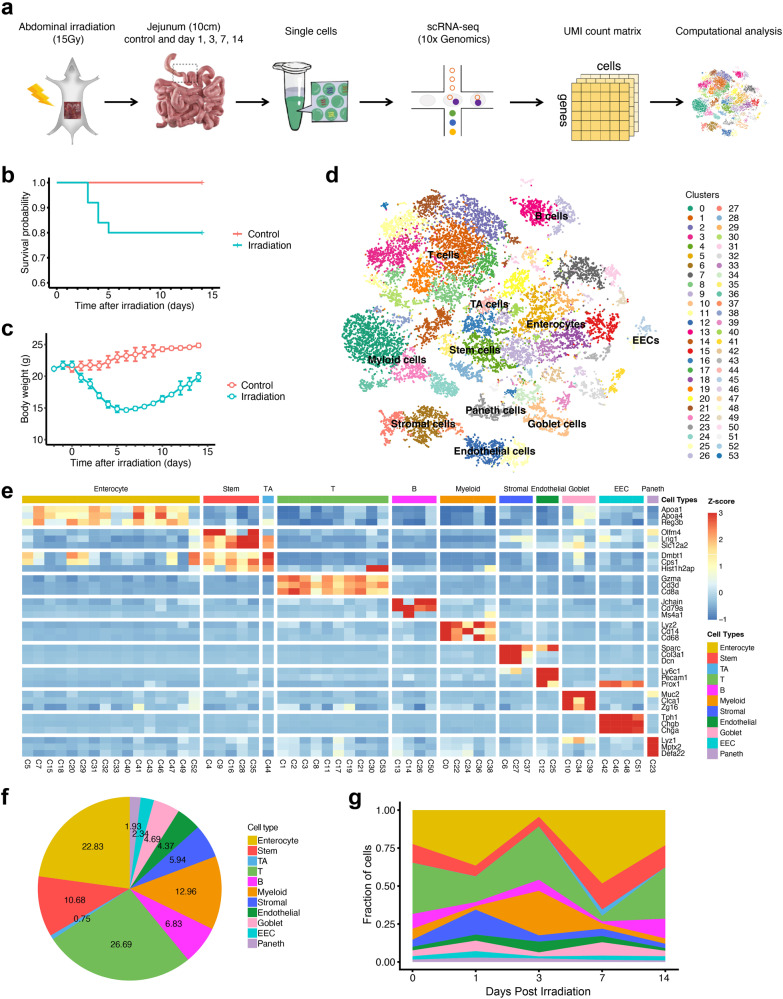
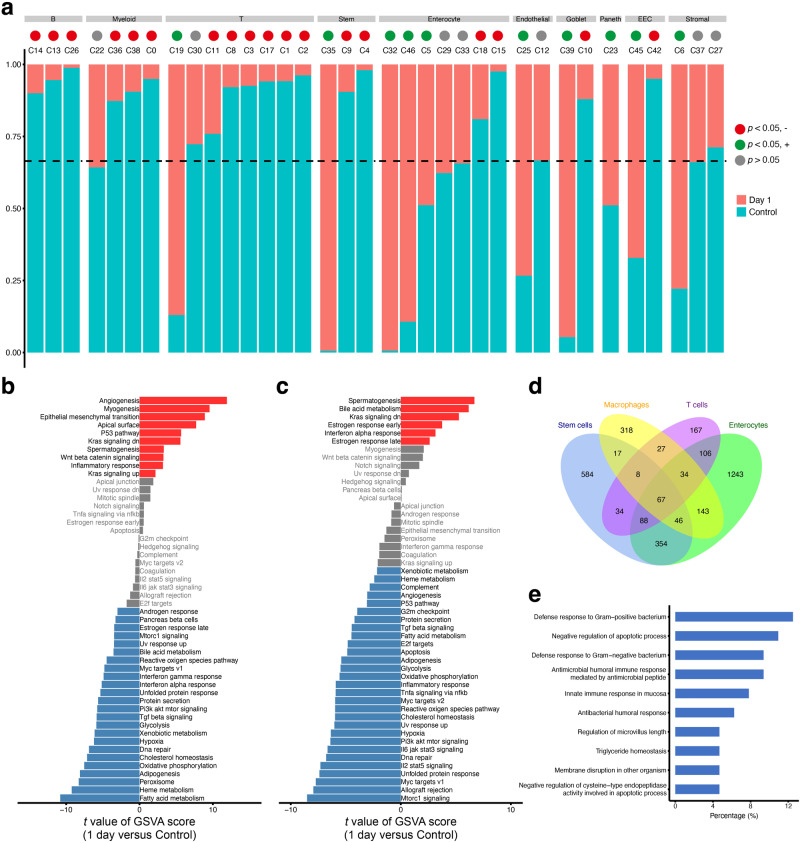
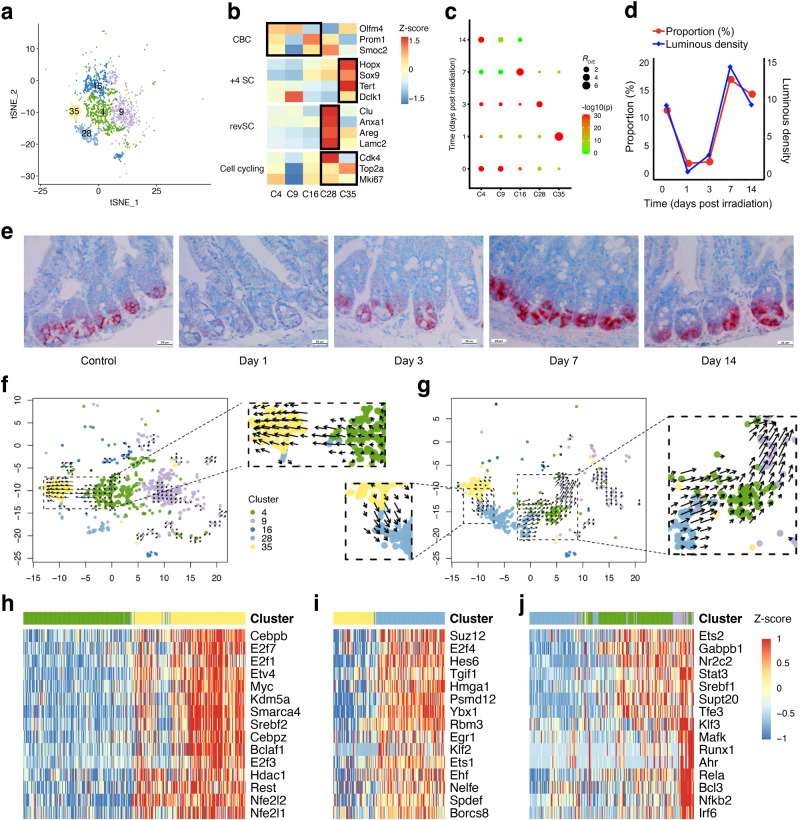
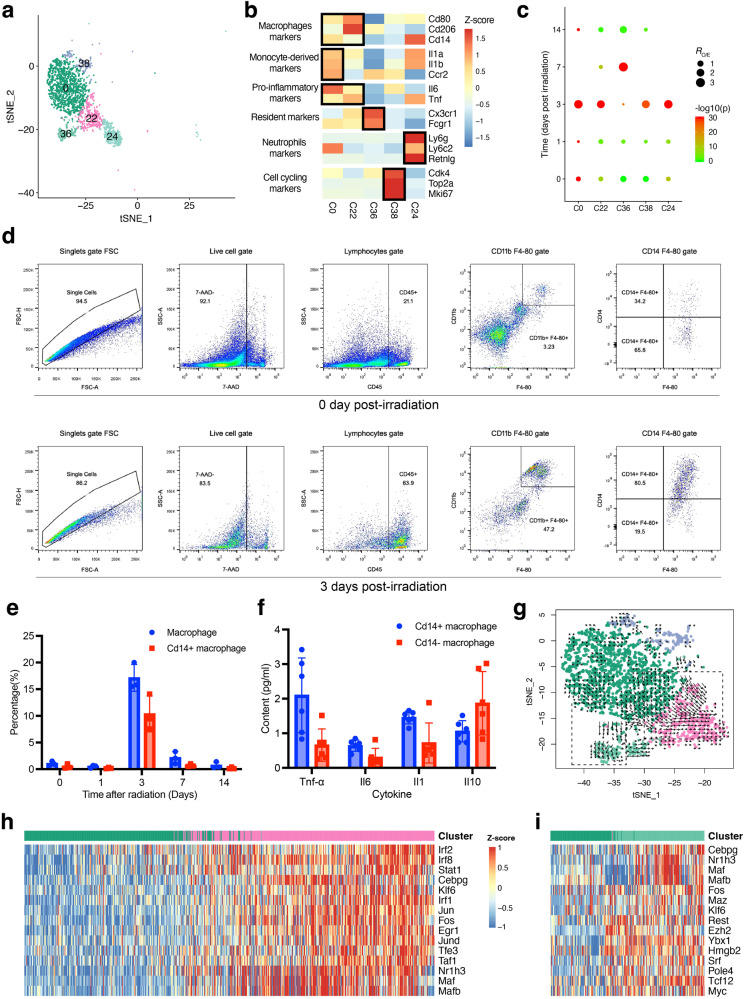
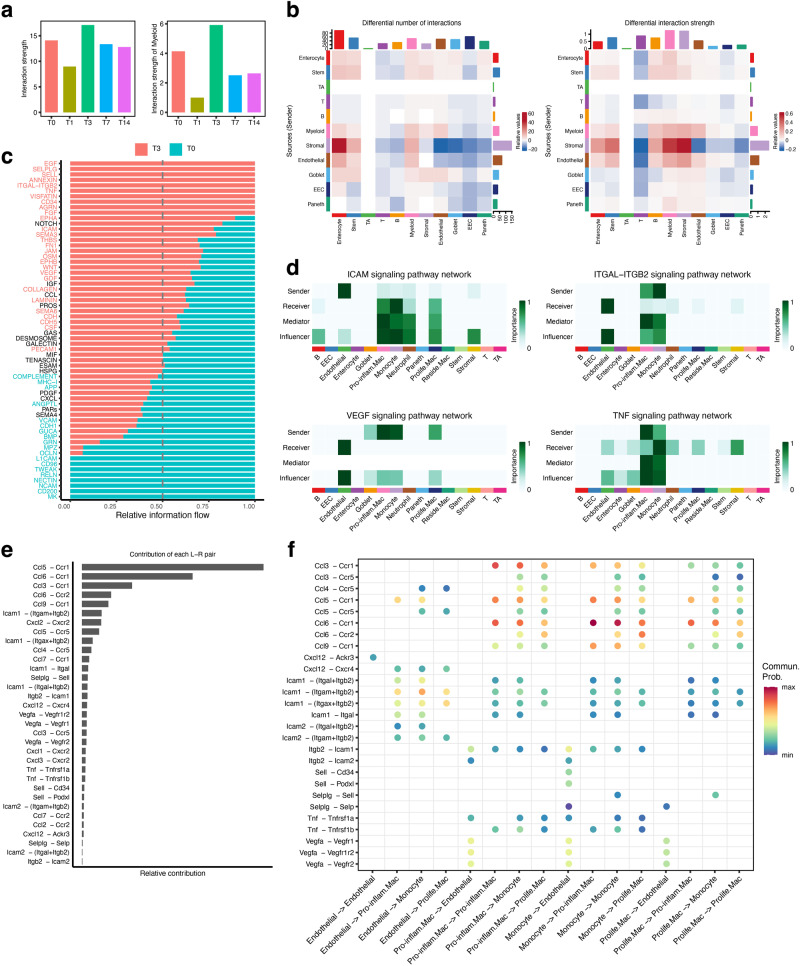
Intestine is a highly radiation-sensitive organ that could be injured during the radiotherapy for pelvic, abdominal, and retroperitoneal tumors. However, the dynamic change of the intestinal microenvironment related to radiation-induced intestine injury (RIII) is still unclear. Using single-cell RNA sequencing, we pictured a dynamic landscape of the intestinal microenvironment during RIII and regeneration. We showed that the various cell types of intestine exhibited heterogeneous radiosensitivities. We revealed the distinct dynamic patterns of three subtypes of intestinal stem cells (ISCs), and the cellular trajectory analysis suggested a complex interconversion pattern among them. For the immune cells, we found that Ly6c monocytes can give rise to both pro-inflammatory macrophages and resident macrophages after RIII. Through cellular communication analysis, we identified a positive feedback loop between the macrophages and endothelial cells, which could amplify the inflammatory response induced by radiation. Besides, we identified different T cell subtypes and revealed their role in immunomodulation during the early stage of RIII through inflammation and defense response relevant signaling pathways. Overall, our study provides a valuable single-cell map of the multicellular dynamics during RIII and regeneration, which may facilitate the understanding of the mechanism of RIII.
肠道是一种对辐射高度敏感的器官,在盆腔、腹部和腹膜后肿瘤的放疗过程中可能会受到损伤。然而,与辐射诱导的肠道损伤(RIII)相关的肠道微环境的动态变化尚不清楚。我们使用单细胞 RNA 测序描绘了 RIII 和再生过程中肠道微环境的动态景观。我们表明,肠道的各种细胞类型表现出异质性的辐射敏感性。我们揭示了三种肠干细胞(ISCs)亚型的不同动态模式,细胞轨迹分析表明它们之间存在复杂的相互转化模式。对于免疫细胞,我们发现 Ly6c 单核细胞在 RIII 后可以产生促炎巨噬细胞和驻留巨噬细胞。通过细胞通讯分析,我们发现巨噬细胞和内皮细胞之间存在正反馈回路,这可能会放大辐射引起的炎症反应。此外,我们鉴定了不同的 T 细胞亚群,并通过与炎症和防御反应相关的信号通路揭示了它们在 RIII 早期免疫调节中的作用。总的来说,我们的研究提供了一个有价值的 RIII 和再生过程中细胞间动力学的单细胞图谱,这可能有助于理解 RIII 的机制。