Inertia Technology B.V., 7521 AG Enschede, The Netherlands.
Department of Computer Science, Pervasive Systems Group, University of Twente, 7522 NB Enschede, The Netherlands.
Sensors (Basel). 2018 Mar 13;18(3):850. doi: 10.3390/s18030850.
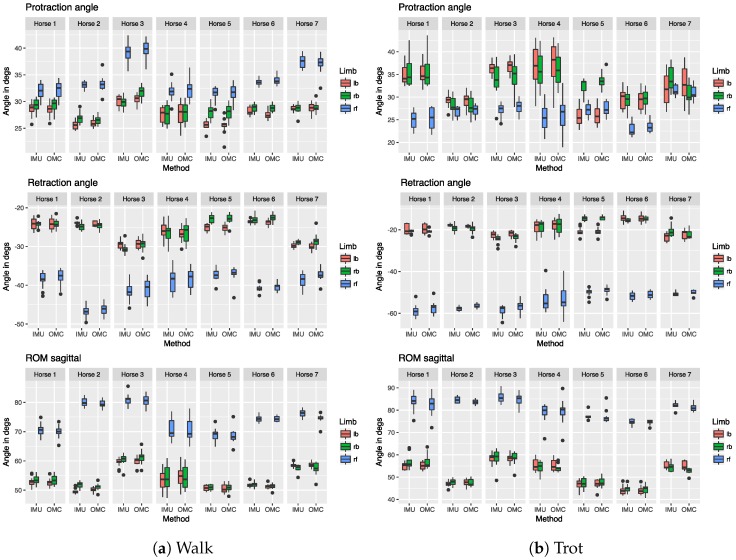
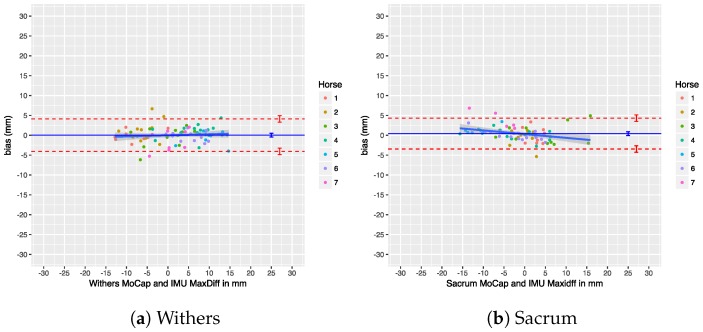
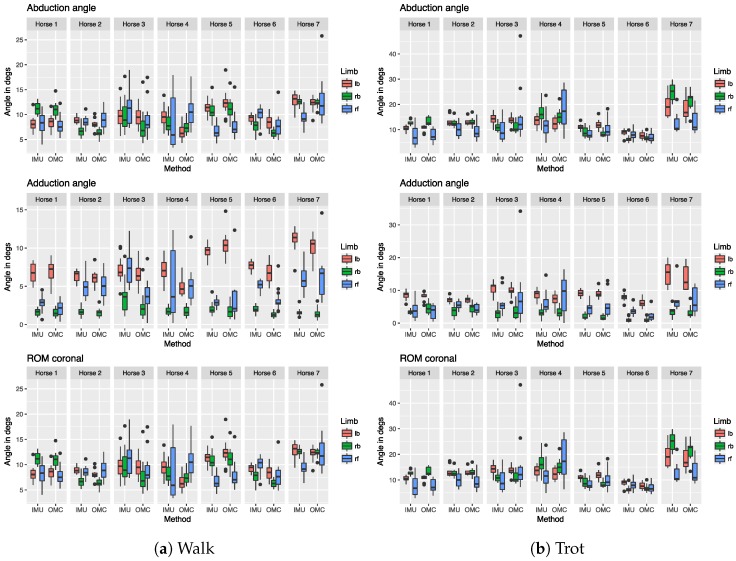
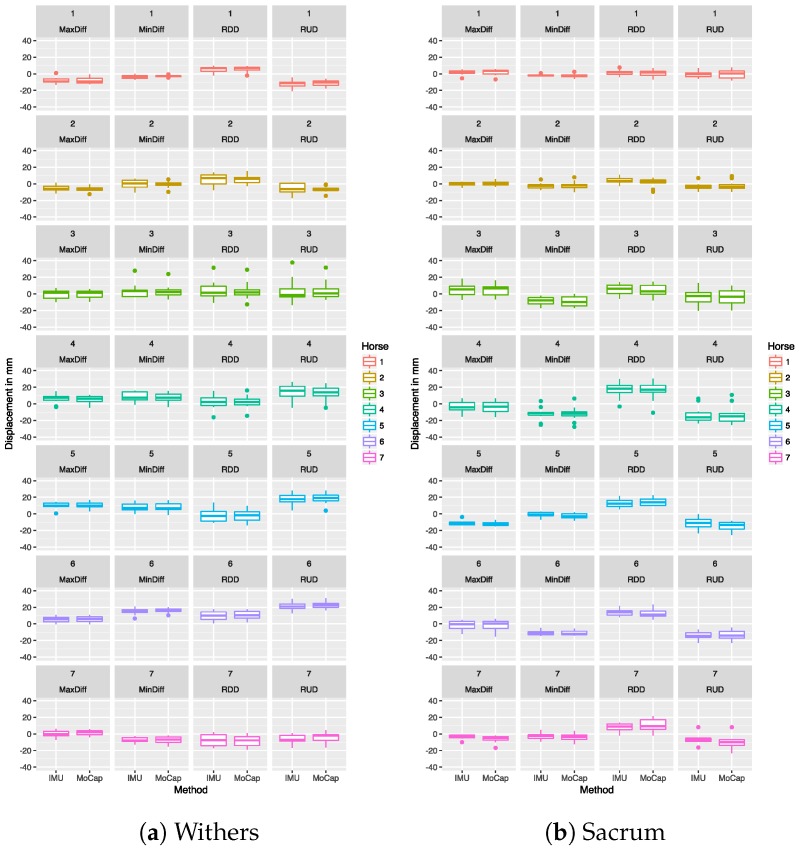
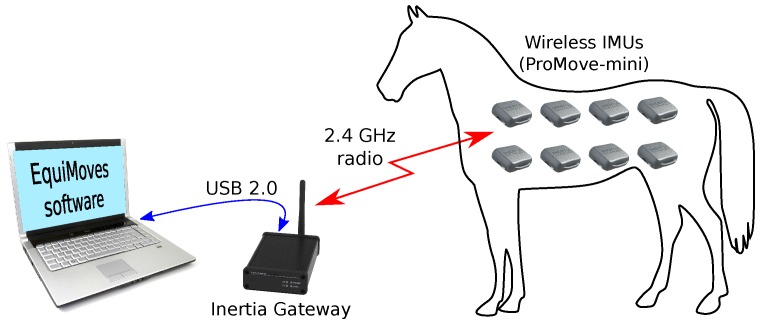
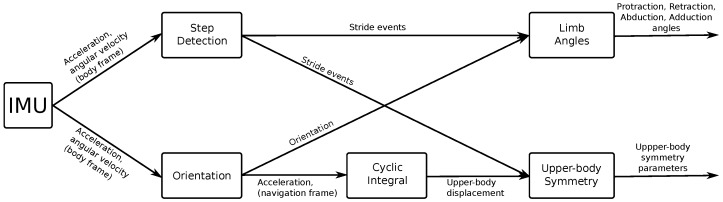
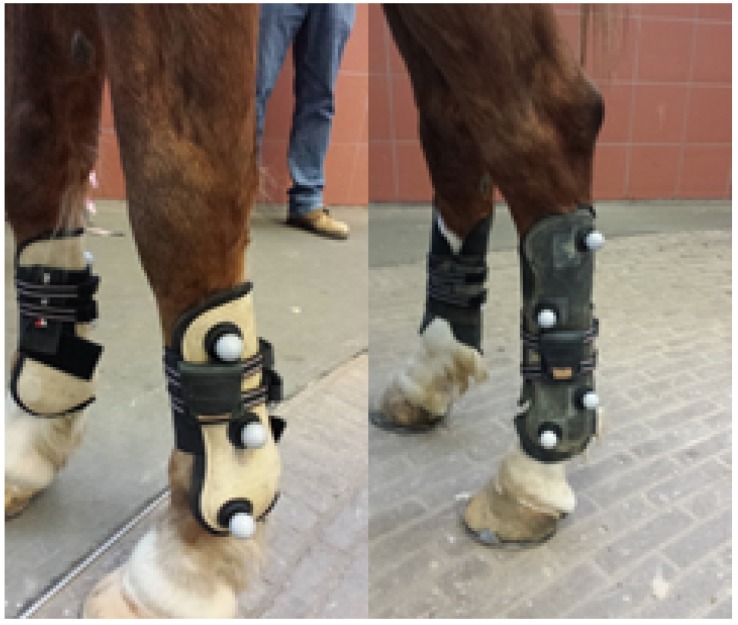
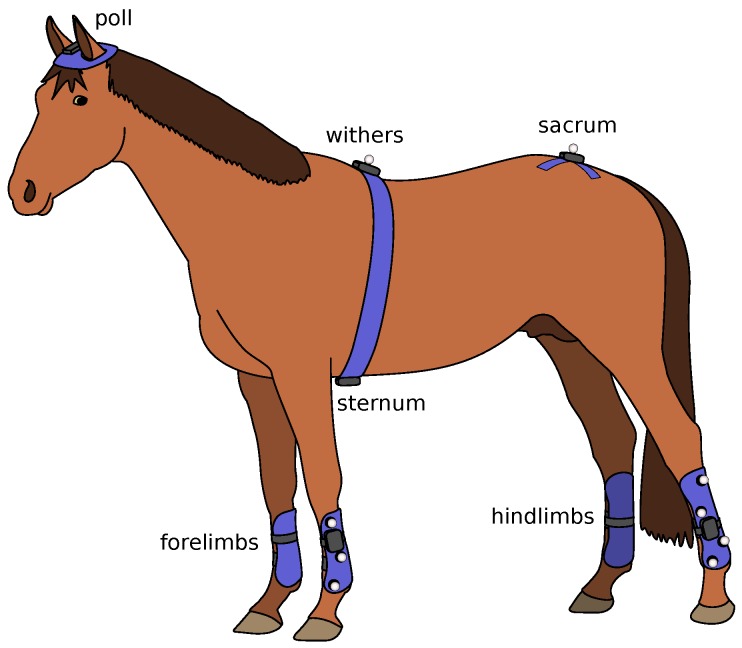
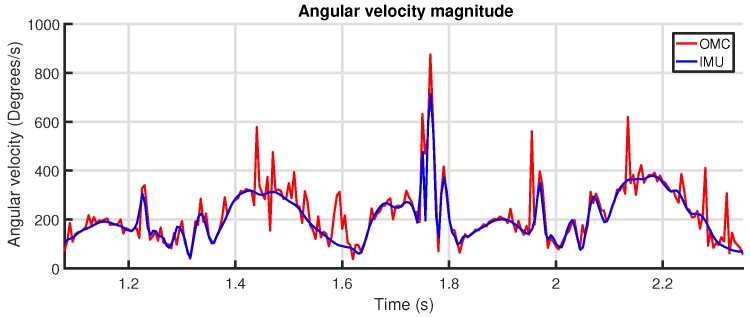
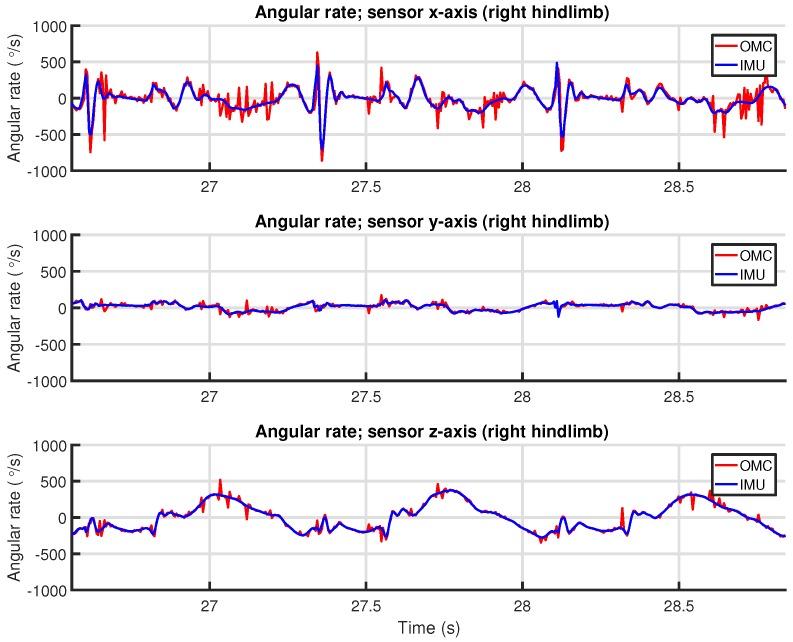
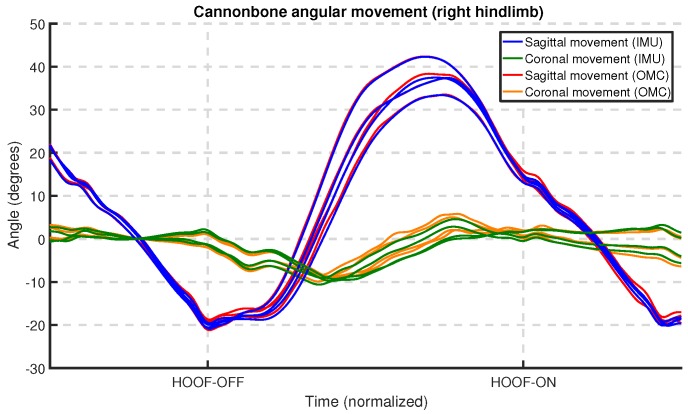
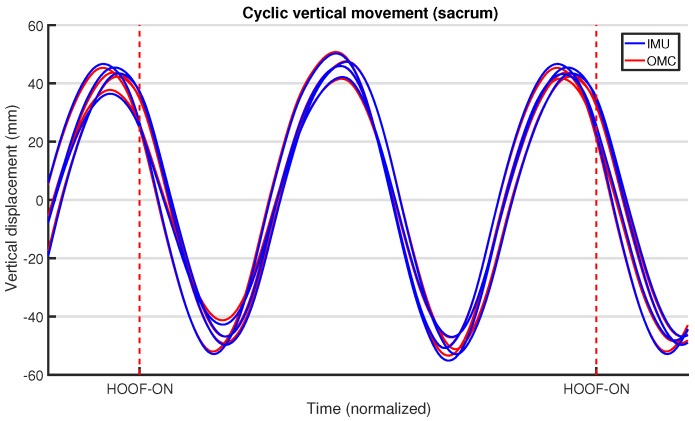
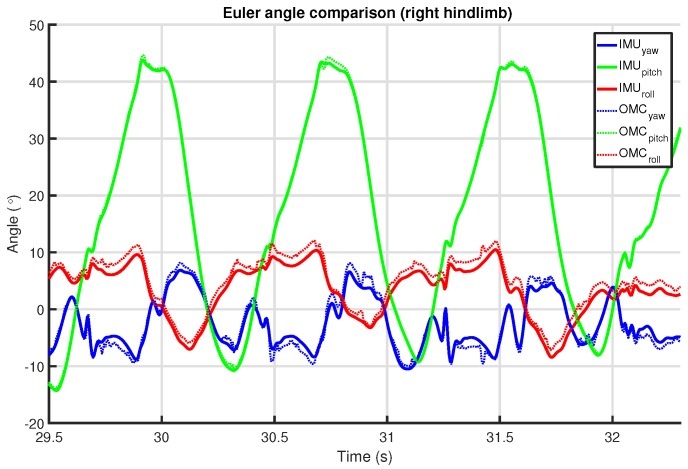
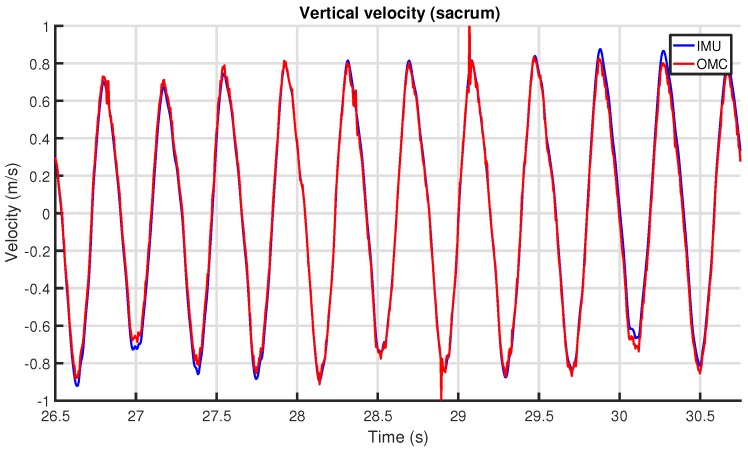
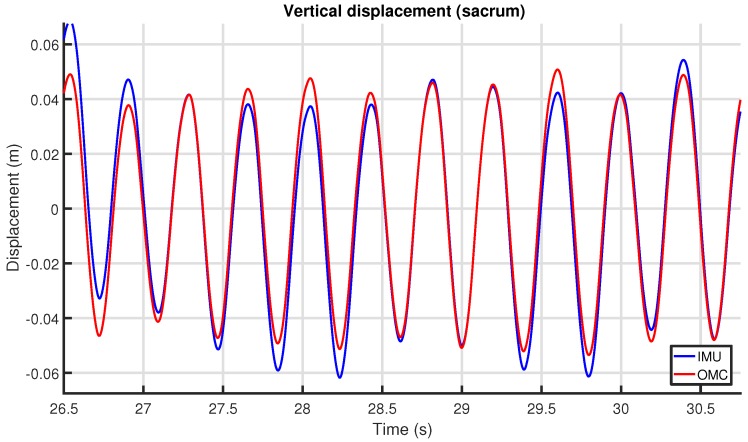
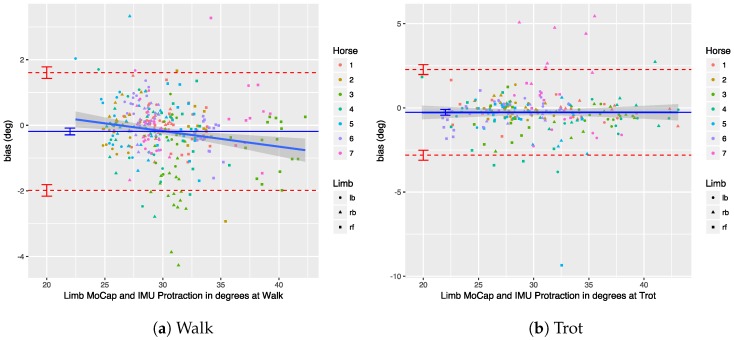
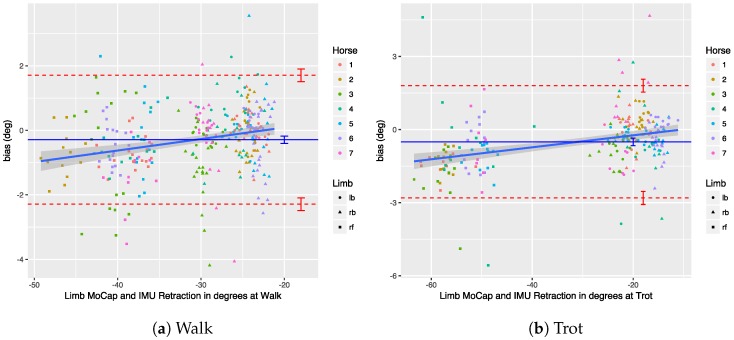
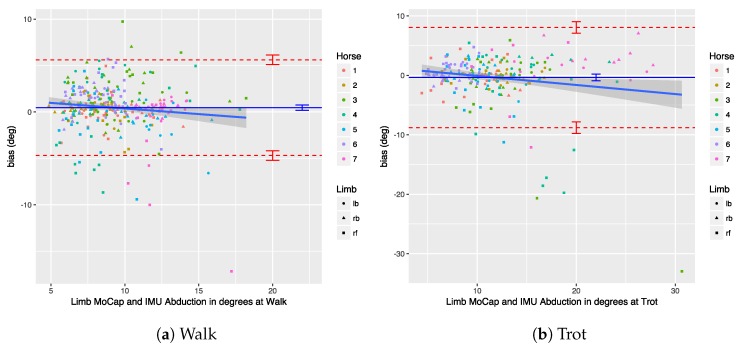
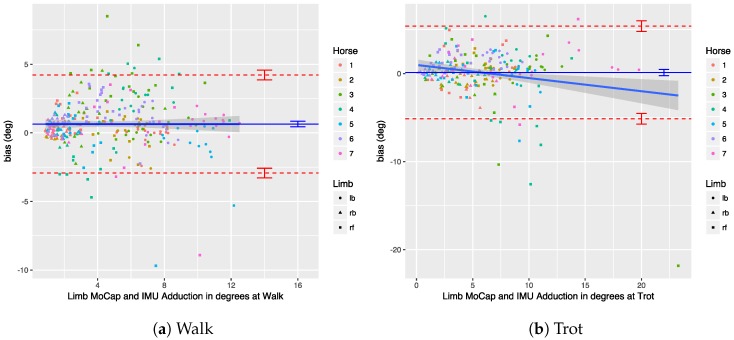
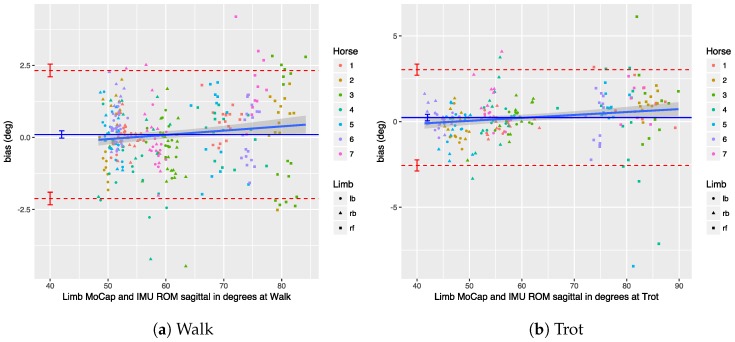
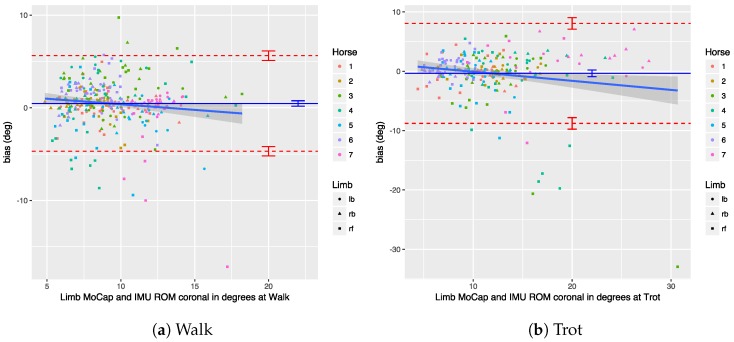
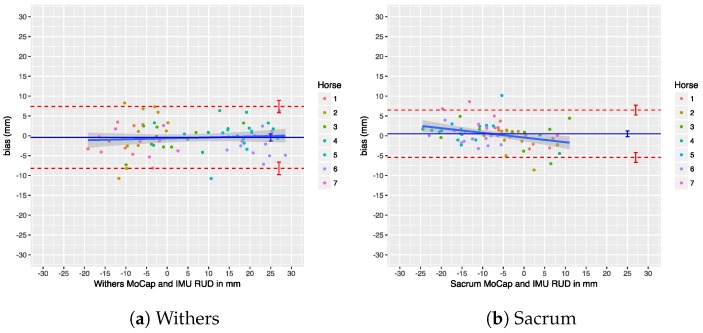
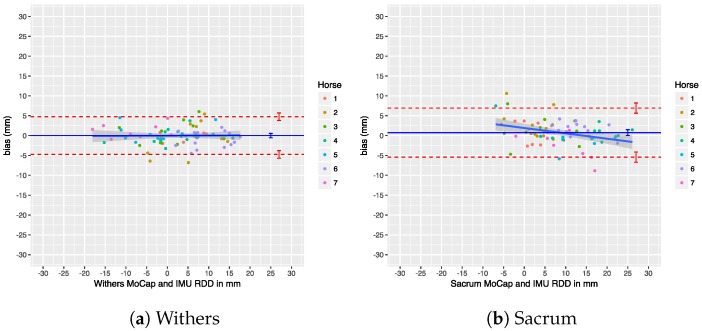
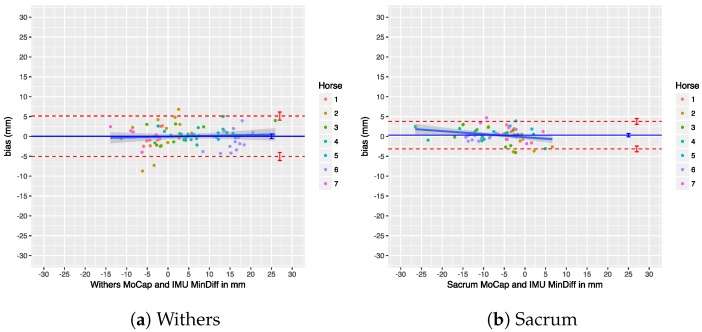
In this paper, we describe and validate the EquiMoves system, which aims to support equine veterinarians in assessing lameness and gait performance in horses. The system works by capturing horse motion from up to eight synchronized wireless inertial measurement units. It can be used in various equine gait modes, and analyzes both upper-body and limb movements. The validation against an optical motion capture system is based on a Bland-Altman analysis that illustrates the agreement between the two systems. The sagittal kinematic results (protraction, retraction, and sagittal range of motion) show limits of agreement of ± 2.3 degrees and an absolute bias of 0.3 degrees in the worst case. The coronal kinematic results (adduction, abduction, and coronal range of motion) show limits of agreement of - 8.8 and 8.1 degrees, and an absolute bias of 0.4 degrees in the worst case. The worse coronal kinematic results are most likely caused by the optical system setup (depth perception difficulty and suboptimal marker placement). The upper-body symmetry results show no significant bias in the agreement between the two systems; in most cases, the agreement is within ±5 mm. On a trial-level basis, the limits of agreement for withers and sacrum are within ±2 mm, meaning that the system can properly quantify motion asymmetry. Overall, the bias for all symmetry-related results is less than 1 mm, which is important for reproducibility and further comparison to other systems.
在本文中,我们描述并验证了 EquiMoves 系统,该系统旨在帮助马科兽医评估马的跛行和步态表现。该系统通过从多达八个同步的无线惯性测量单元捕获马的运动来工作。它可以用于各种马的步态模式,并分析上半身和肢体的运动。与光学运动捕捉系统的验证是基于 Bland-Altman 分析,该分析说明了两个系统之间的一致性。矢状面运动学结果(前伸、后缩和矢状面运动范围)显示,在最坏的情况下,一致性的限制为±2.3 度,绝对偏差为 0.3 度。冠状面运动学结果(内收、外展和冠状面运动范围)显示,在最坏的情况下,一致性的限制为-8.8 和 8.1 度,绝对偏差为 0.4 度。冠状面运动学结果较差很可能是由于光学系统设置(深度感知困难和标记物放置不理想)造成的。上半身对称性结果显示,两个系统之间的一致性没有显著的偏差;在大多数情况下,一致性在±5 毫米以内。在试验水平上,肩隆和荐骨的一致性限制在±2 毫米以内,这意味着该系统能够正确地量化运动的不对称性。总的来说,所有与对称性相关的结果的偏差都小于 1 毫米,这对于可重复性和与其他系统的进一步比较非常重要。