Department of Bioengineering and Therapeutic Sciences and California Institute for Quantitative Biosciences, University of California, San Francisco, California, USA.
Chemistry and Chemical Biology Graduate Program, University of California, San Francisco, California, USA.
mBio. 2018 Mar 13;9(2):e02289-17. doi: 10.1128/mBio.02289-17.
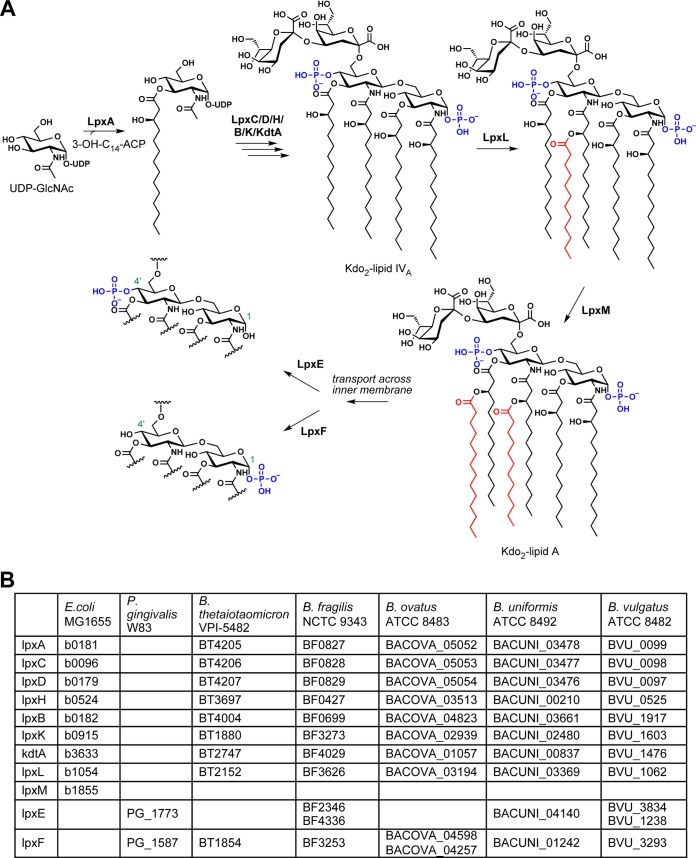
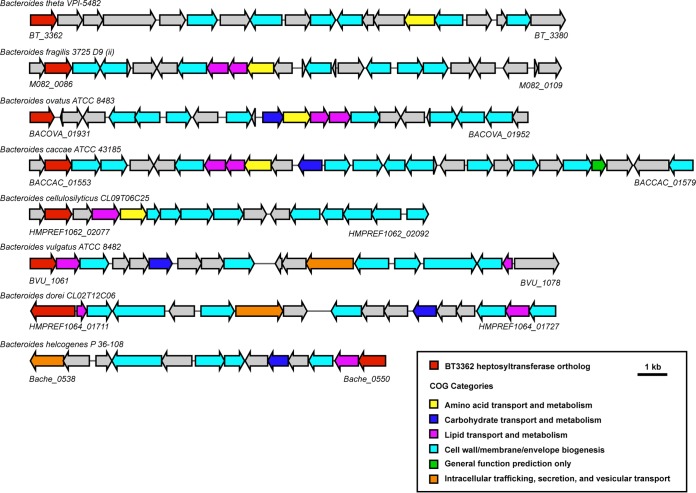
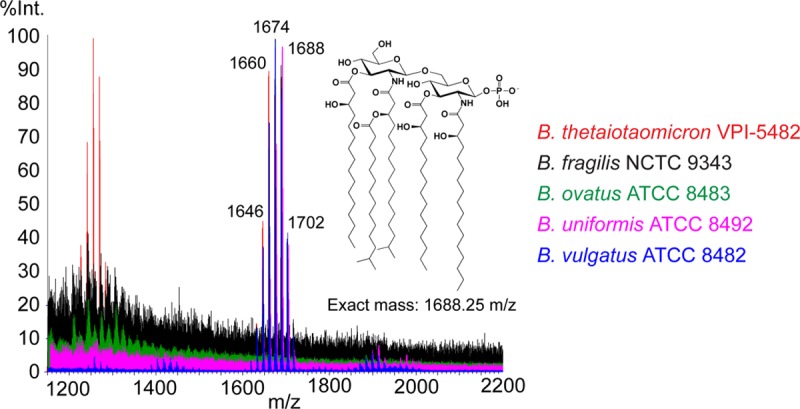
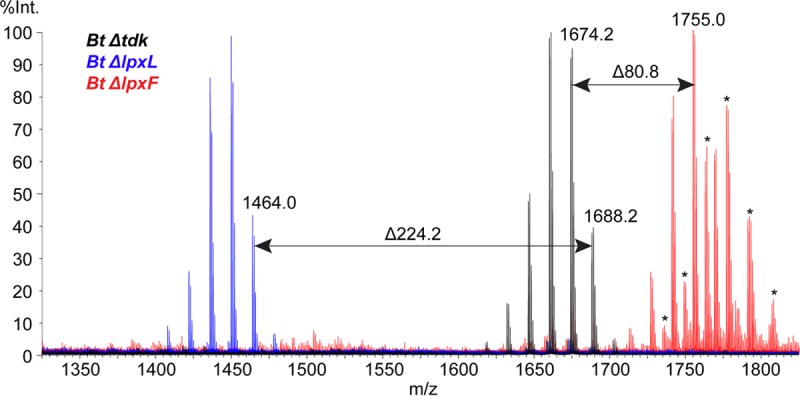
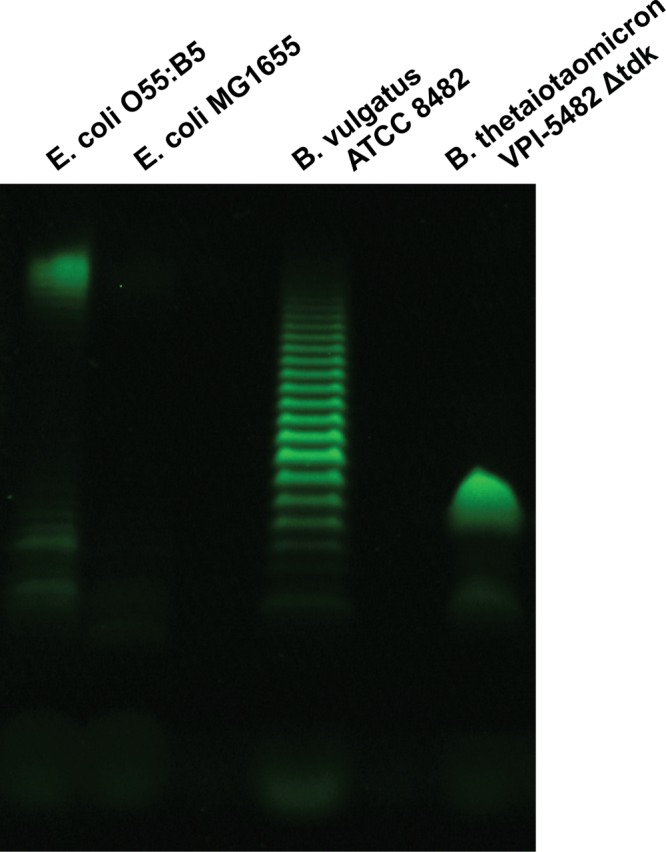
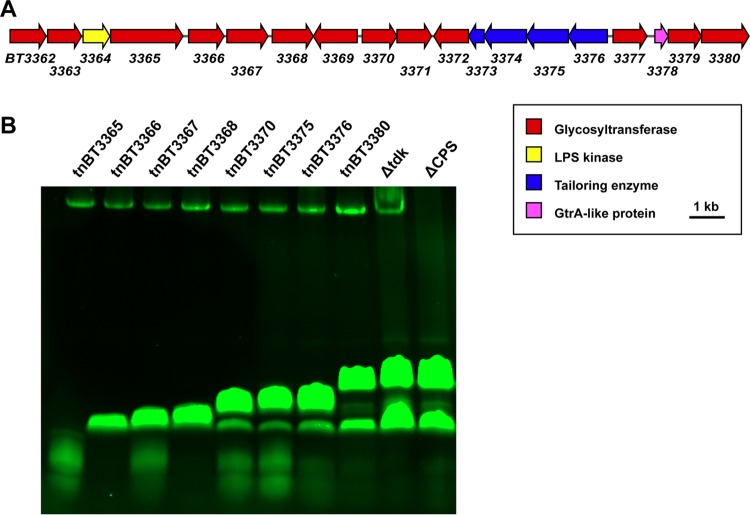
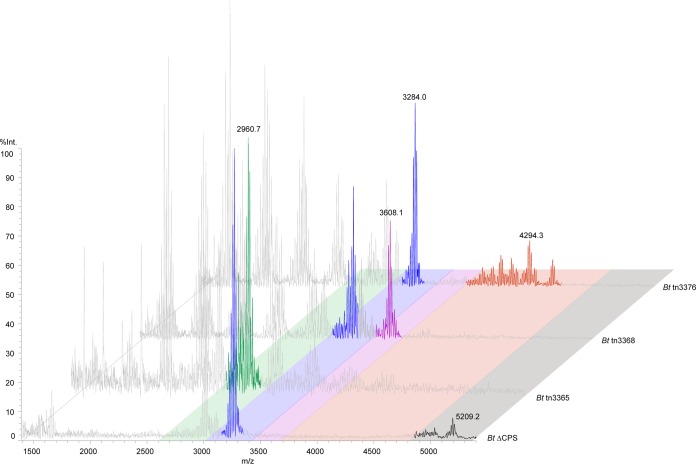
Lipopolysaccharide (LPS), a cell-associated glycolipid that makes up the outer leaflet of the outer membrane of Gram-negative bacteria, is a canonical mediator of microbe-host interactions. The most prevalent Gram-negative gut bacterial taxon, , makes up around 50% of the cells in a typical Western gut; these cells harbor ~300 mg of LPS, making it one of the highest-abundance molecules in the intestine. As a starting point for understanding the biological function of LPS, we have identified genes in VPI 5482 involved in the biosynthesis of its lipid A core and glycan, generated mutants that elaborate altered forms of LPS, and used matrix-assisted laser desorption ionization-time of flight (MALDI-TOF) mass spectrometry to interrogate the molecular features of these variants. We demonstrate, , that the glycan does not appear to have a repeating unit, and so this strain produces lipooligosaccharide (LOS) rather than LPS. This result contrasts with ATCC 8482, which by SDS-PAGE analysis appears to produce LPS with a repeating unit. Additionally, our identification of the LOS oligosaccharide gene cluster allowed us to identify similar clusters in other species. Our work lays the foundation for developing a structure-function relationship for LPS/LOS in the context of host colonization. Much is known about the bacterial species and genes that make up the human microbiome, but remarkably little is known about the molecular mechanisms through which the microbiota influences host biology. A well-known mechanism by which bacteria influence the host centers around lipopolysaccharide (LPS), a component of the Gram-negative bacterial outer membrane. Pathogen-derived LPS is a potent ligand for host receptor Toll-like receptor 4, which plays an important role in sensing bacteria as part of the innate immune response. Puzzlingly, the most common genus of human gut bacteria, , produces LPS but does not elicit a potent proinflammatory response. Previous work showing that LPS differs structurally from pathogen-derived LPS suggested the outlines of an explanation. Here, we take the next step, elucidating the biosynthetic pathway for LPS and generating mutants in the process that will be of great use in understanding how this molecule modulates the host immune response.
脂多糖 (LPS) 是一种细胞相关的糖脂,构成革兰氏阴性细菌外膜的外叶,是微生物与宿主相互作用的典型介质。最常见的革兰氏阴性肠道细菌分类群 ,占典型西方肠道中细胞的 50%左右;这些细胞含有约 300 毫克 LPS,使其成为肠道中含量最高的分子之一。作为理解 LPS 生物学功能的起点,我们已经确定了 VPI 5482 中参与其脂质 A 核心和聚糖生物合成的基因,生成了产生改变形式 LPS 的突变体,并使用基质辅助激光解吸电离飞行时间 (MALDI-TOF) 质谱法来研究这些变体的分子特征。我们证明,聚糖似乎没有重复单元,因此该菌株产生的是脂寡糖 (LOS) 而不是 LPS。这一结果与 ATCC 8482 形成对比,根据 SDS-PAGE 分析,该菌株似乎产生具有重复单元的 LPS。此外,我们对 LOS 寡糖基因簇的鉴定使我们能够在其他 物种中识别类似的簇。我们的工作为在宿主定植的背景下研究 LPS/LOS 的结构-功能关系奠定了基础。人们对构成人类微生物组的细菌物种和基因了解很多,但对微生物群影响宿主生物学的分子机制却知之甚少。细菌影响宿主的一个众所周知的机制是围绕脂多糖 (LPS) 展开的,LPS 是革兰氏阴性细菌外膜的组成部分。病原体衍生的 LPS 是宿主受体 Toll 样受体 4 的有效配体,在作为先天免疫反应一部分的细菌感应中发挥重要作用。令人费解的是,人类肠道中最常见的细菌属 产生 LPS,但不会引起强烈的促炎反应。先前的研究表明, LPS 在结构上与病原体衍生的 LPS 不同,这表明了解释的大致轮廓。在这里,我们迈出下一步,阐明 LPS 的生物合成途径,并在此过程中生成突变体,这将对理解该分子如何调节宿主免疫反应有很大帮助。