Liu Etta Y L, Xu Miranda L, Jin Yan, Wu Qiyun, Dong Tina T X, Tsim Karl W K
Shenzhen Key Laboratory of Edible and Medicinal Bioresources, SRI, The Hong Kong University of Science and Technology, Shenzhen, China.
Division of Life Science, Center for Chinese Medicine, The Hong Kong University of Science and Technology, Hong Kong, Hong Kong.
Front Mol Neurosci. 2018 Feb 27;11:59. doi: 10.3389/fnmol.2018.00059. eCollection 2018.
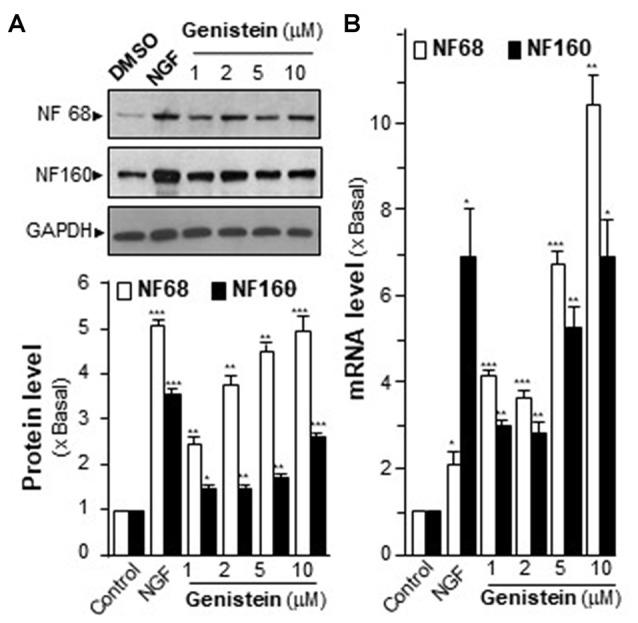
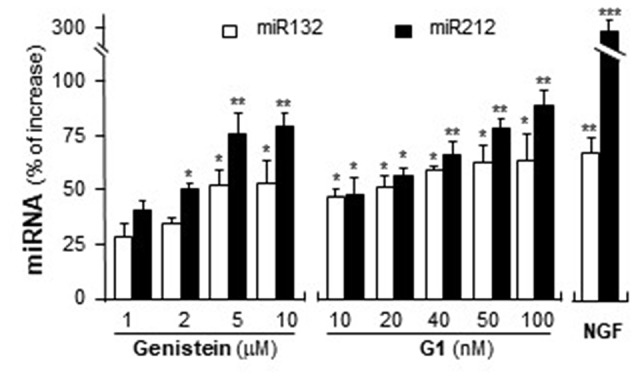
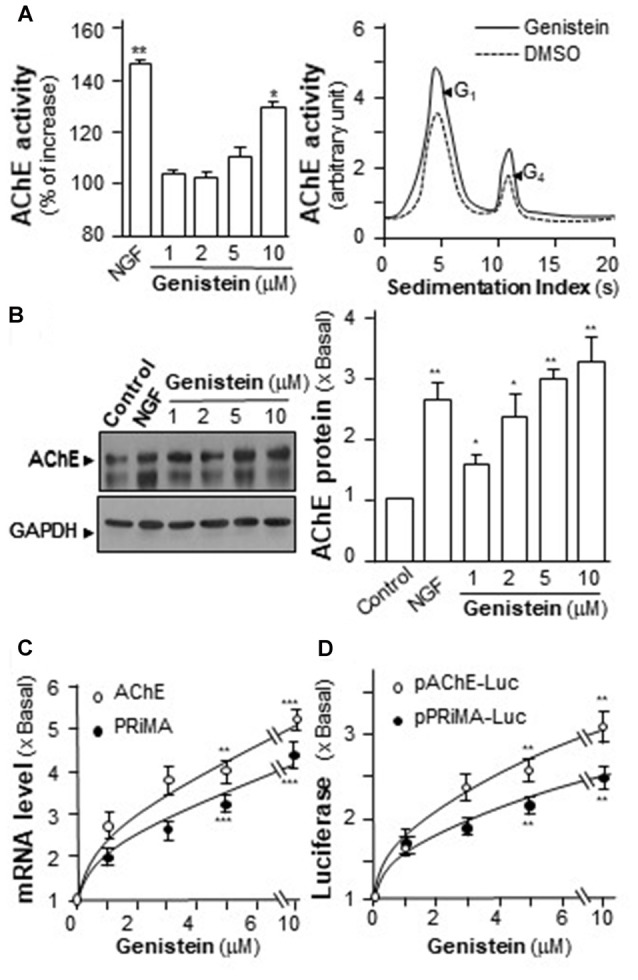
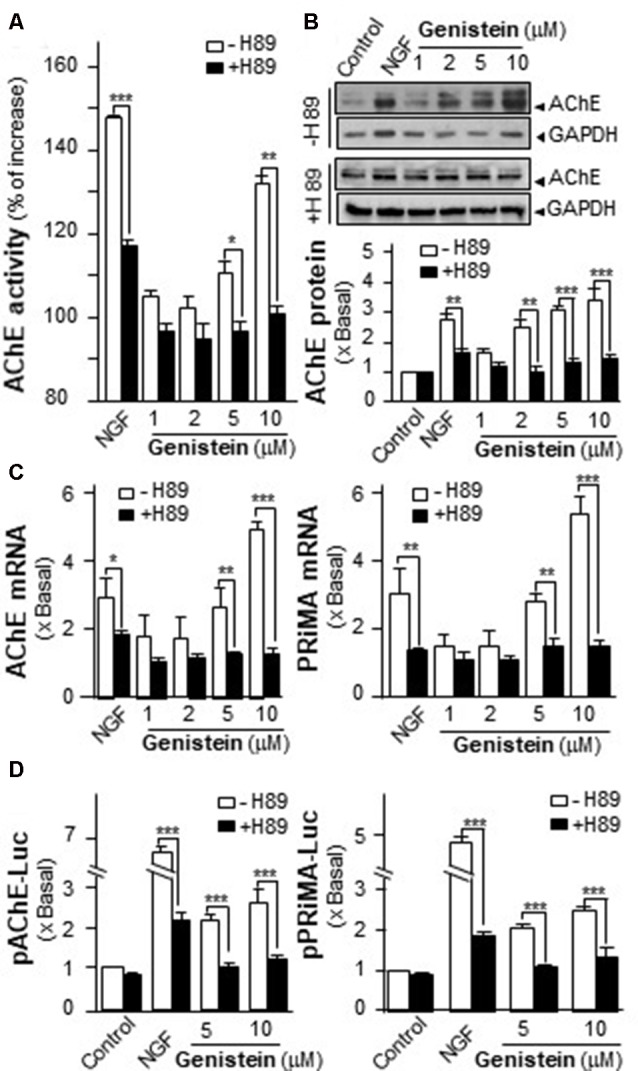
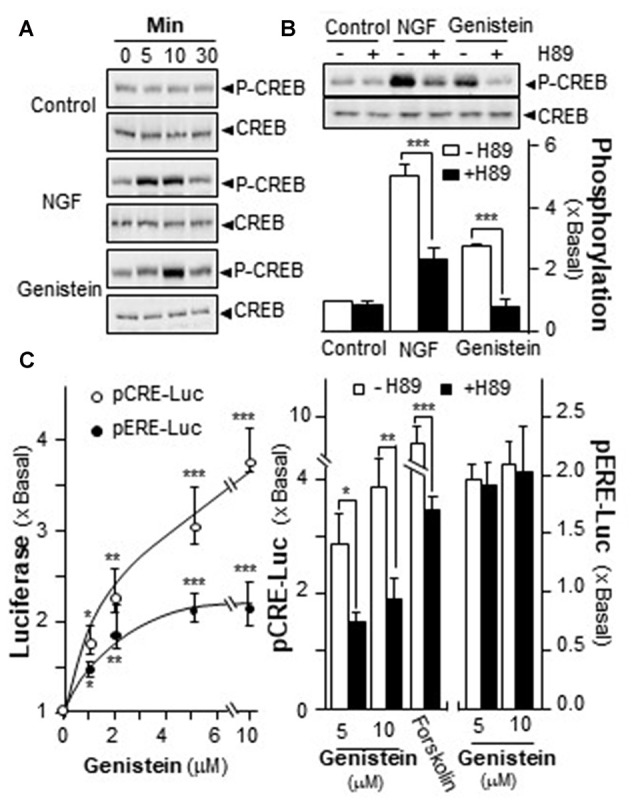
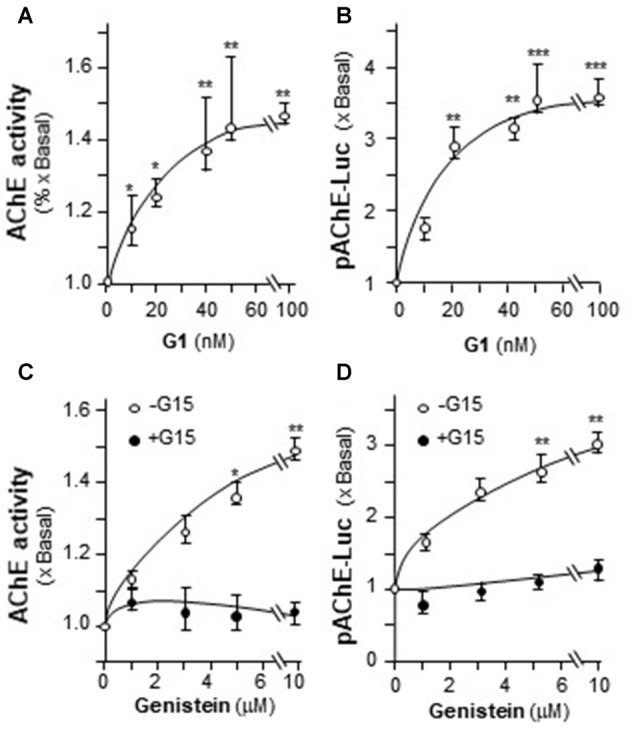
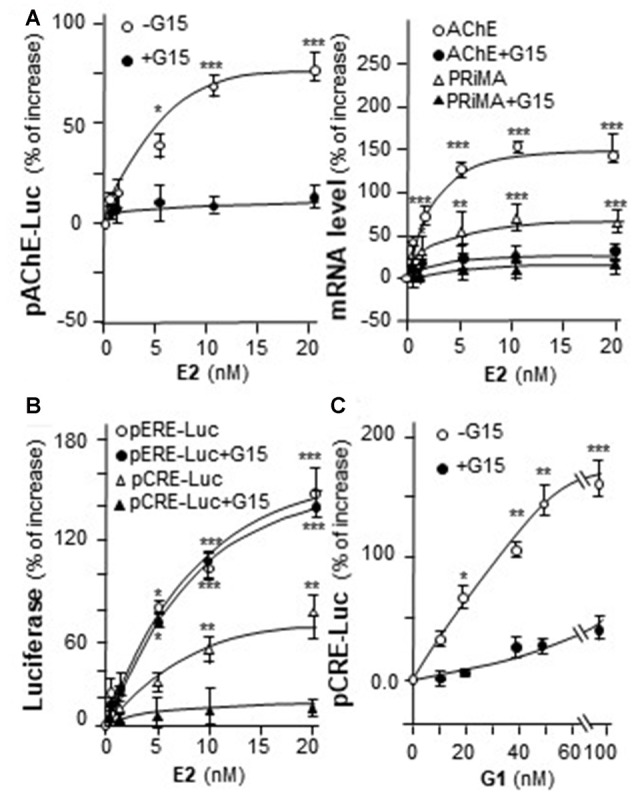
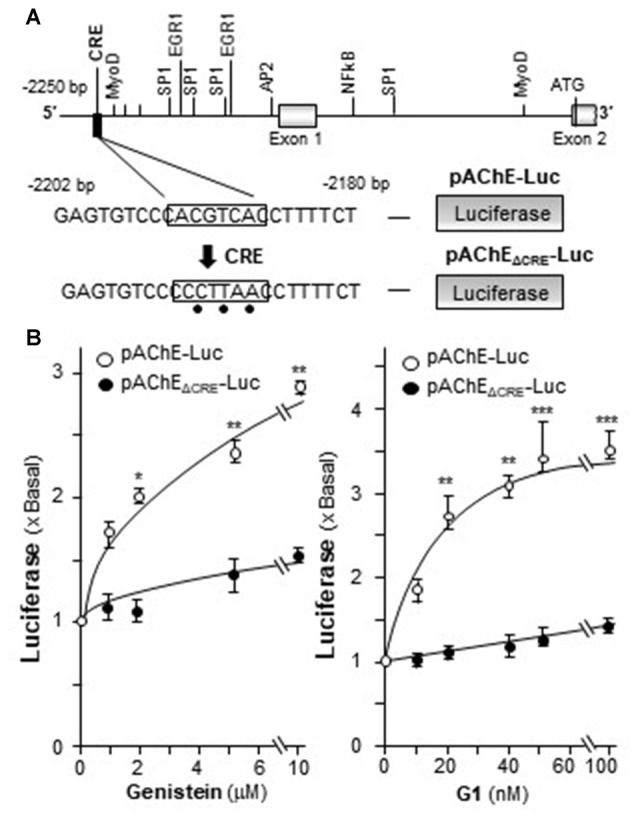
Genistein, 4',5,7-trihydroxyisoflavone, is a major isoflavone in soybean, which is known as phytestrogen having known benefit to brain functions. Being a common phytestrogen, the possible role of genistein in the brain protection needs to be further explored. In cultured PC12 cells, application of genistein significantly induced the expression of neurofilaments (NFs), markers for neuronal differentiation. In parallel, the expression of tetrameric form of proline-rich membrane anchor (PRiMA)-linked acetyl-cholinesterase (G4 AChE), a key enzyme to hydrolyze acetylcholine in cholinergic synapses, was induced in a dose-dependent manner: this induction included the associated protein PRiMA. The genistein-induced AChE expression was fully blocked by the pre-treatment of H89 (an inhibitor of protein kinase A, PKA) and G15 (a selective G protein-coupled receptor 30 (GPR30) antagonist), which suggested a direct involvement of a membrane-bound estrogen receptor (ER), named as GPR30 in the cultures. In parallel, the estrogen-induced activation of GPR30 induced AChE expression in a dose-dependent manner. The genistein/estrogen-induced AChE expression was triggered by a cyclic AMP responding element (CRE) located on the gene promoter. The binding of this CRE site by cAMP response element-binding protein (CREB) induced gene transcription. In parallel, increased expression levels of miR132 and miR212 were found when cultured PC12 cells were treated with genistein or G1. Thus, a balance between production and destruction of AChE by the activation of GPR30 was reported here. We have shown for the first time that the activation of GPR30 could be one way for estrogen or flavonoids, possessing estrogenic properties, to enhance cholinergic functions in the brain, which could be a good candidate for possible treatment of neurodegenerative diseases.
染料木黄酮,即4',5,7-三羟基异黄酮,是大豆中的一种主要异黄酮,被认为是对脑功能有益的植物雌激素。作为一种常见的植物雌激素,染料木黄酮在脑保护中的潜在作用仍需进一步探索。在培养的PC12细胞中,应用染料木黄酮可显著诱导神经丝(NFs)的表达,神经丝是神经元分化的标志物。同时,富含脯氨酸的膜锚定蛋白(PRiMA)连接的乙酰胆碱酯酶(G4 AChE)的四聚体形式的表达呈剂量依赖性诱导,G4 AChE是胆碱能突触中水解乙酰胆碱的关键酶,这种诱导包括相关蛋白PRiMA。染料木黄酮诱导的AChE表达被H89(蛋白激酶A,PKA的抑制剂)和G15(选择性G蛋白偶联受体30(GPR30)拮抗剂)预处理完全阻断,这表明在培养物中一种名为GPR30的膜结合雌激素受体直接参与其中。同时,雌激素诱导的GPR30激活以剂量依赖性方式诱导AChE表达。染料木黄酮/雌激素诱导的AChE表达由位于基因启动子上的环磷酸腺苷反应元件(CRE)触发。环磷酸腺苷反应元件结合蛋白(CREB)与该CRE位点结合诱导基因转录。同时,当用染料木黄酮或G1处理培养的PC12细胞时,发现miR132和miR21 的表达水平增加。因此,本文报道了通过GPR30激活实现AChE产生与破坏之间的平衡。我们首次表明,GPR30的激活可能是具有雌激素特性的雌激素或类黄酮增强脑胆碱能功能的一种方式,这可能是治疗神经退行性疾病的一个良好候选方法。