Adetayo Adekunle M, James Olutayo, Adeyemo Wasiu L, Ogunlewe Mobolanle O, Butali Azeez
Department of Surgery, Babcock University, Ilishan-Remo, Nigeria.
Department of Oral and Maxillofacial Surgery, College of Medicine, University of Lagos, Lagos, Nigeria.
J Korean Assoc Oral Maxillofac Surg. 2018 Feb;44(1):3-11. doi: 10.5125/jkaoms.2018.44.1.3. Epub 2018 Feb 26.
The unilateral cleft lip (UCL) repair technique has evolved extensively over the past century into its modern form and has been identified as an important determinant of treatment outcome. The aim of this study was to evaluate and compare treatment outcomes following repair of UCL using either the Tennison-Randall (triangular) technique or the Millard rotation-advancement technique.
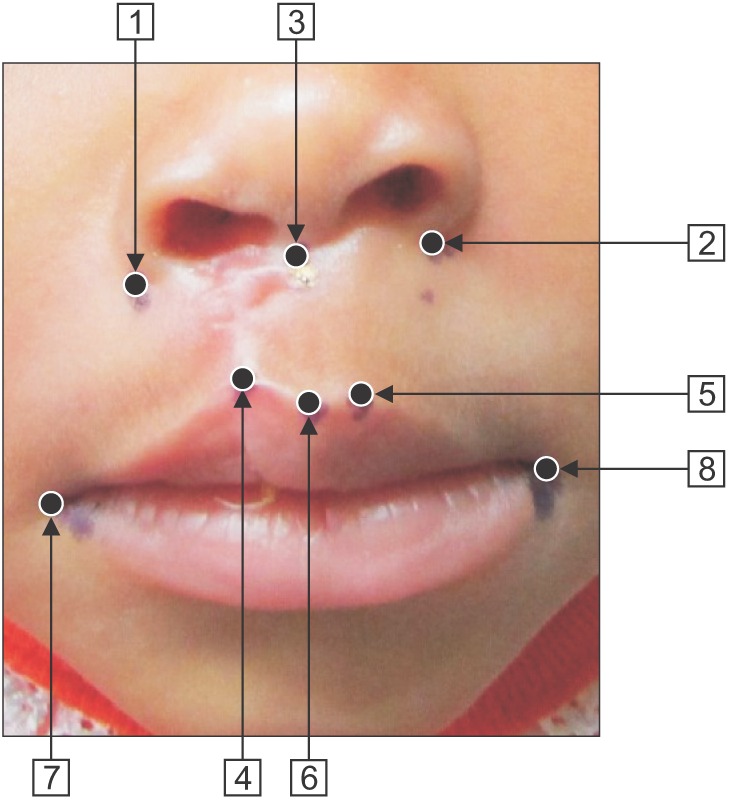
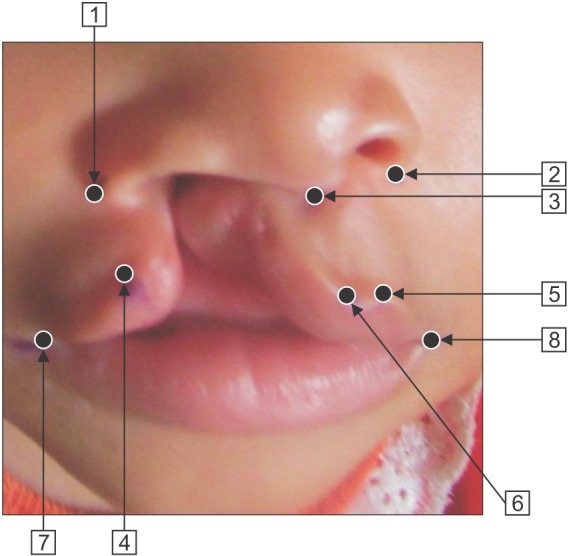
This was a prospective randomized controlled study conducted at the Lagos University Teaching Hospital between January 2013 and July 2014. A total of 48 subjects with UCL presenting for primary surgery and who satisfied the inclusion criteria were recruited for the study. The subjects were randomly allocated into two surgical groups through balloting. Group A underwent cleft repair with the Tennison-Randall technique, while group B underwent cleft repair with the Millard rotation-advancement technique. Surgical outcome was assessed quantitatively according to anthropometric measurements, using a method described by Cutting and Dayan (2003).
Our 48 enrolled subjects were evenly divided into the two surgery groups (n=24 for both group A and group B). Twenty-seven subjects were male (56.3%) and 21 were female (43.8%), making a sex ratio of 1.3:1. The Millard group showed a greater increase in postoperative horizontal length and vertical lip height and a greater reduction in nasal width and total nasal width. Meanwhile, the Tennison-Randall group showed better reduction of Cupid's-bow width and better philtral height.
We did not find any significant differences in the surgical outcomes from the two techniques. The expertise of the surgeon and individual patient preferences are the main factors to consider when selecting the technique for unilateral cleft repair.
在过去一个世纪中,单侧唇裂(UCL)修复技术已广泛发展为现代形式,并被视为治疗效果的重要决定因素。本研究旨在评估和比较采用坦尼森-兰德尔(三角形)技术或米勒德旋转推进技术修复单侧唇裂后的治疗效果。
这是一项于2013年1月至2014年7月在拉各斯大学教学医院进行的前瞻性随机对照研究。共有48例接受初次手术且符合纳入标准的单侧唇裂患者被纳入本研究。通过抽签将受试者随机分为两个手术组。A组采用坦尼森-兰德尔技术进行唇裂修复,而B组采用米勒德旋转推进技术进行唇裂修复。根据人体测量学方法,采用Cutting和Dayan(2003年)描述的方法对手术效果进行定量评估。
我们纳入的48名受试者平均分为两个手术组(A组和B组均为n = 24)。27名受试者为男性(56.3%),21名受试者为女性(43.8%),性别比为1.3:1。米勒德组术后水平长度和垂直唇高增加更多,鼻宽和总鼻宽减小更多。同时,坦尼森-兰德尔组在修复丘比特弓宽度和人中高度方面表现更好。
我们未发现两种技术在手术效果上有任何显著差异。选择单侧唇裂修复技术时,主要应考虑外科医生的专业技能和患者个人偏好。