Schurr Roey, Nitzan Mor, Eliahou Ruth, Spinelli Laurent, Seeck Margitta, Blanke Olaf, Arzy Shahar
Neuropsychiatry Lab, Department of Neurology, Hadassah Hebrew University Medical Center, Jerusalem, Israel.
Faculty of Medicine, Hadassah Hebrew University Medical School, Jerusalem, Israel.
Front Comput Neurosci. 2018 Feb 28;12:11. doi: 10.3389/fncom.2018.00011. eCollection 2018.
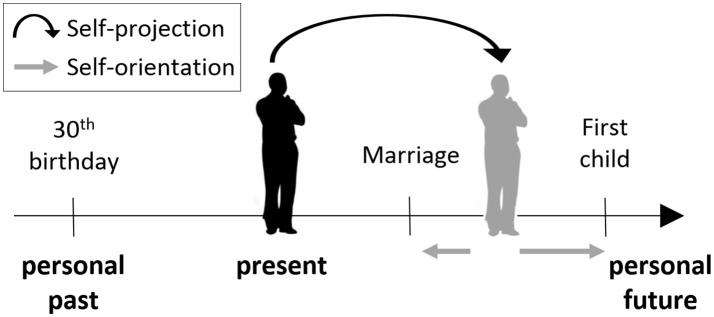
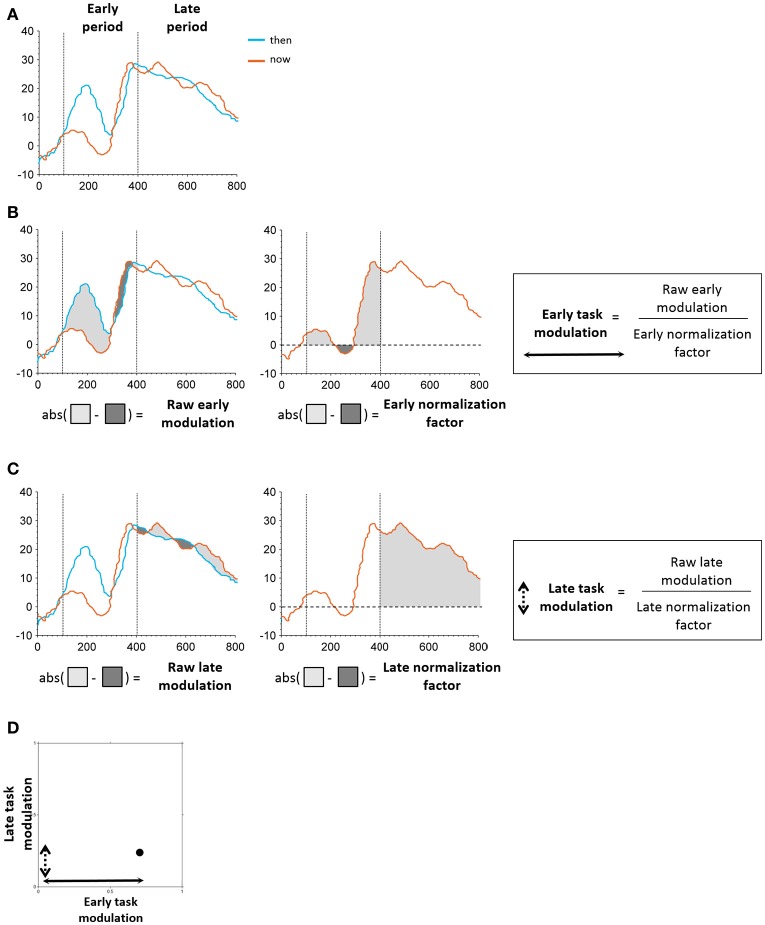
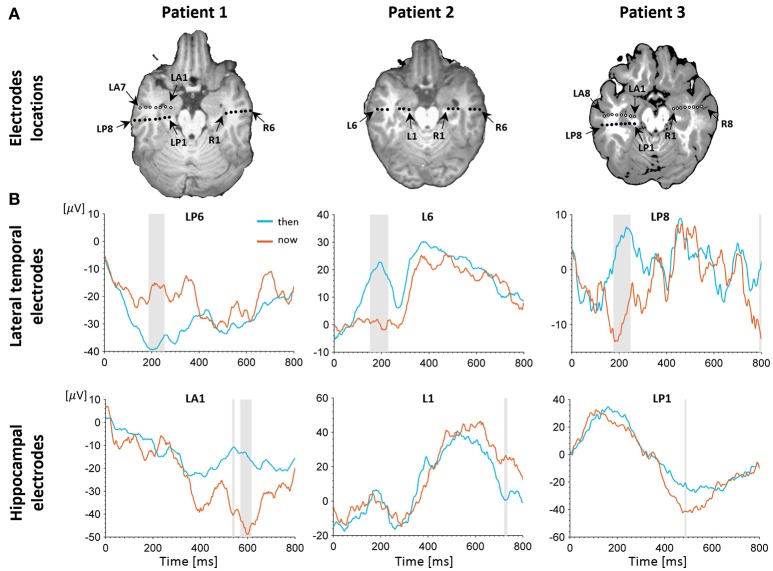
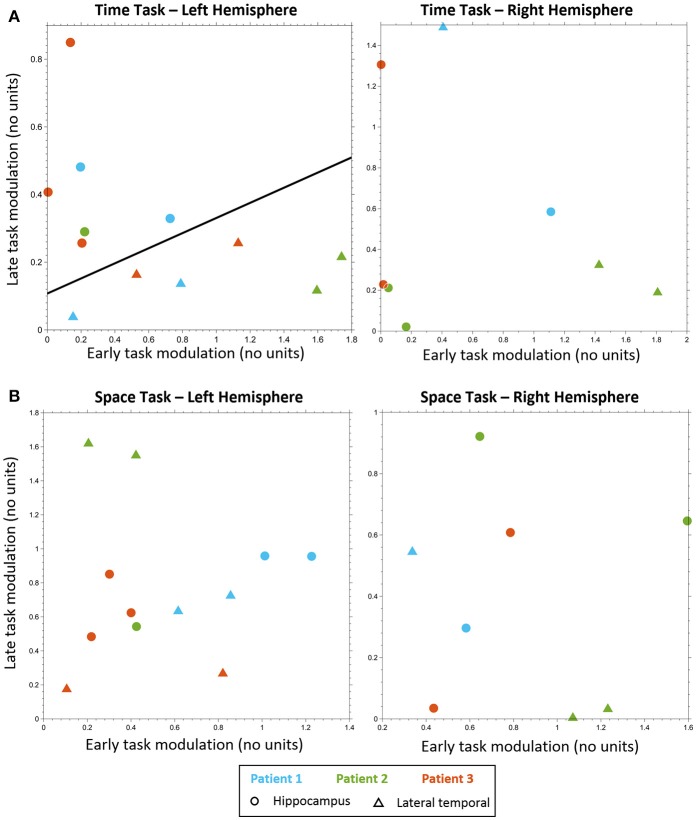
In mental time travel (MTT) one is "traveling" back-and-forth in time, remembering, and imagining events. Despite intensive research regarding memory processes in the hippocampus, it was only recently shown that the hippocampus plays an essential role in encoding the temporal order of events remembered, and therefore plays an important role in MTT. Does it also encode the temporal relations of these events to the remembering self? We asked patients undergoing pre-surgical evaluation with depth electrodes penetrating the temporal lobes bilaterally toward the hippocampus to project themselves in time to a past, future, or present time-point, and then make judgments regarding various events. Classification analysis of intracranial evoked potentials revealed clear temporal dissociation in the left hemisphere between lateral-temporal electrodes, activated at ~100-300 ms, and hippocampal electrodes, activated at ~400-600 ms. This dissociation may suggest a division of labor in the temporal lobe during self-projection in time, hinting toward the different roles of the lateral-temporal cortex and the hippocampus in MTT and the temporal organization of the related events with respect to the experiencing self.
在心理时间旅行(MTT)中,个体在时间中来回“穿梭”,回忆并想象事件。尽管对海马体中的记忆过程进行了深入研究,但直到最近才发现,海马体在编码所回忆事件的时间顺序方面起着至关重要的作用,因此在心理时间旅行中也发挥着重要作用。它是否还对这些事件与回忆自我之间的时间关系进行编码呢?我们让接受术前评估的患者,其深度电极从双侧颞叶向海马体穿透,将自己投射到过去、未来或当前的某个时间点,然后对各种事件进行判断。对颅内诱发电位的分类分析显示,在左半球,颞叶外侧电极在约100 - 300毫秒时被激活,海马体电极在约400 - 600毫秒时被激活,二者存在明显的时间分离。这种分离可能表明在时间自我投射过程中颞叶存在分工,暗示了颞叶外侧皮质和海马体在心理时间旅行以及相关事件相对于体验自我的时间组织中的不同作用。