School of Biomedical Sciences, The University of Hong Kong, Pokfulam, Hong Kong.
Department of Paediatrics and Adolescent Medicine, The University of Hong Kong, Pokfulam, Hong Kong.
Nucleic Acids Res. 2018 May 4;46(8):4054-4071. doi: 10.1093/nar/gky186.
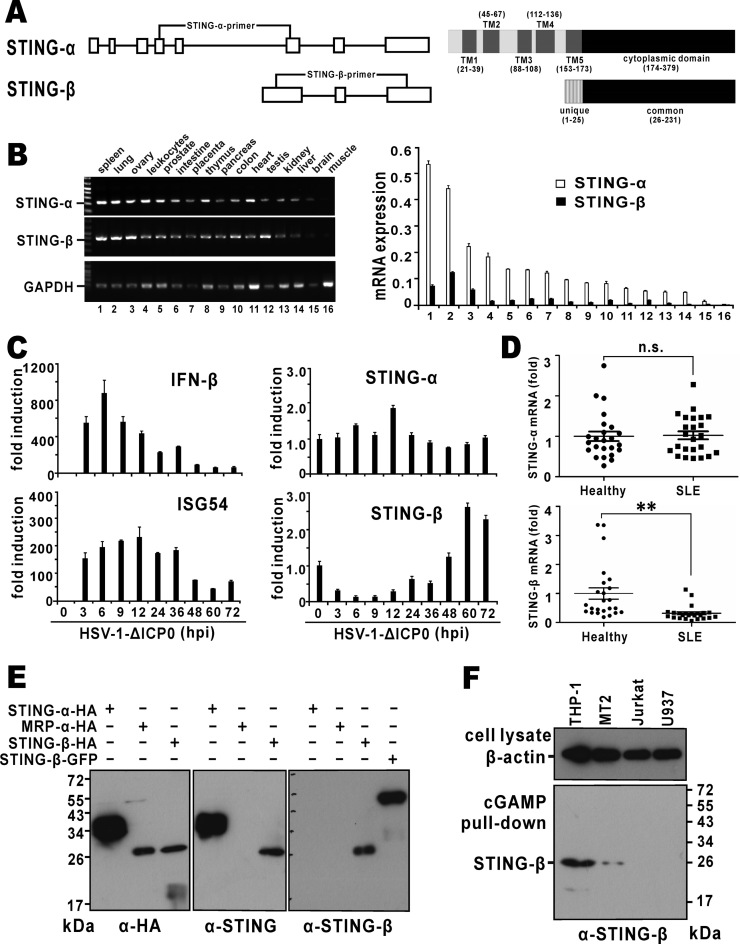
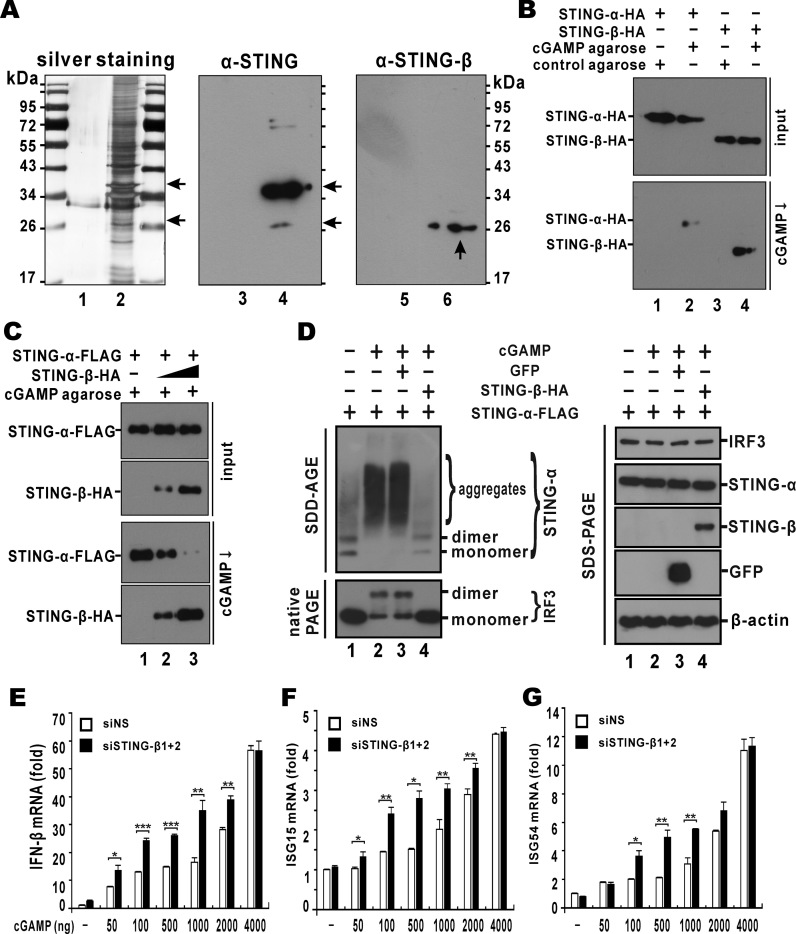
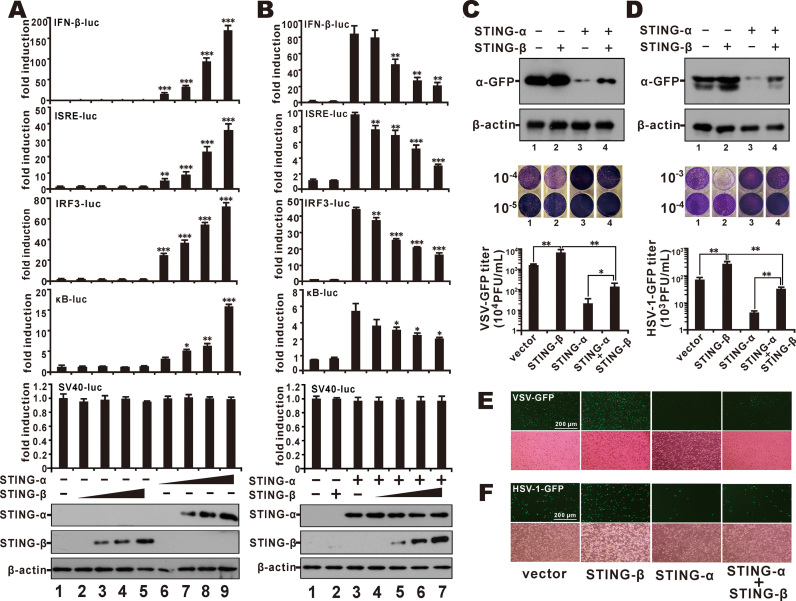
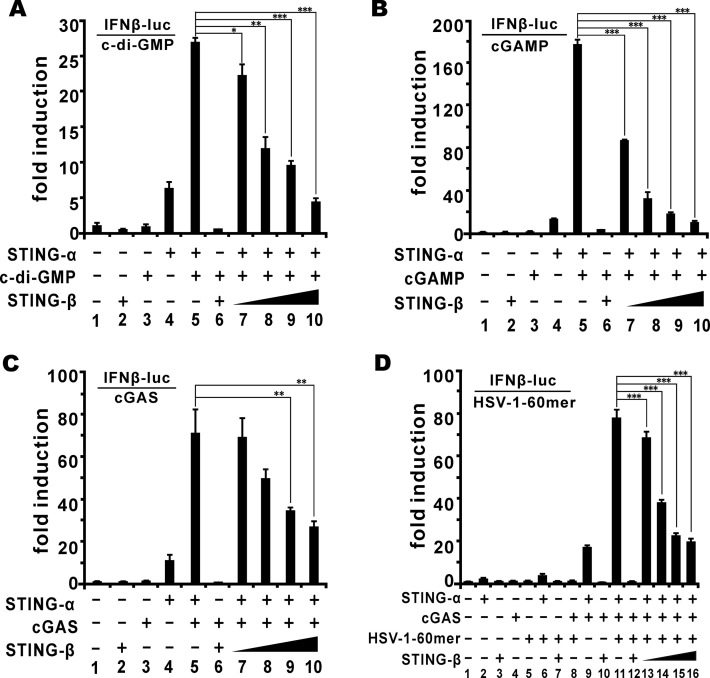
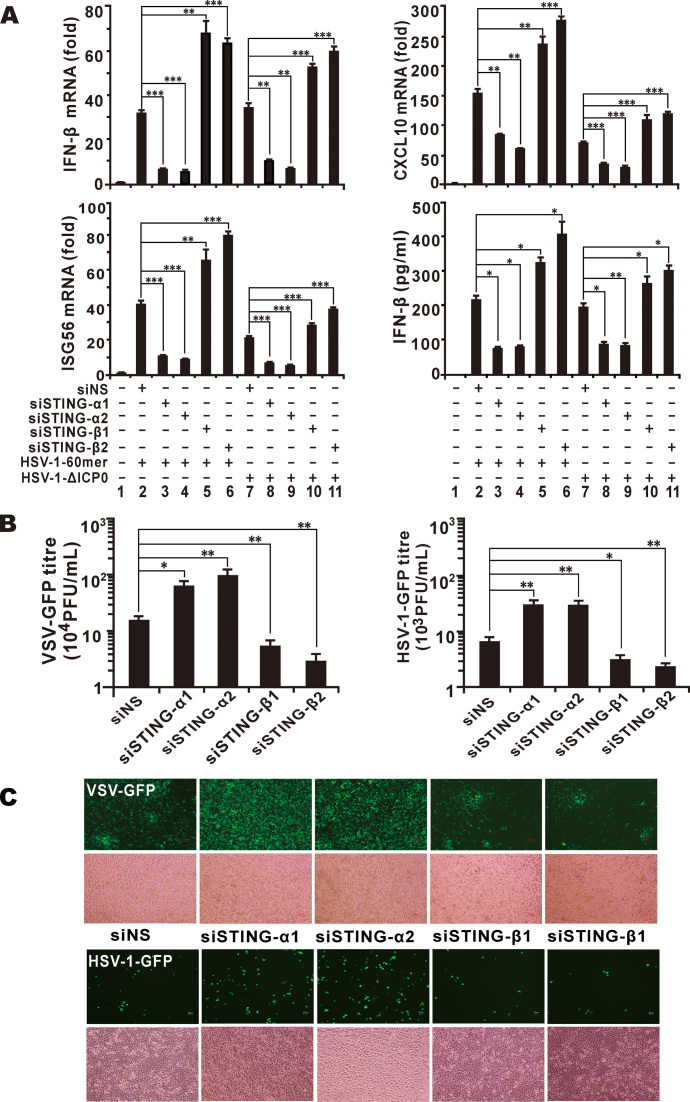
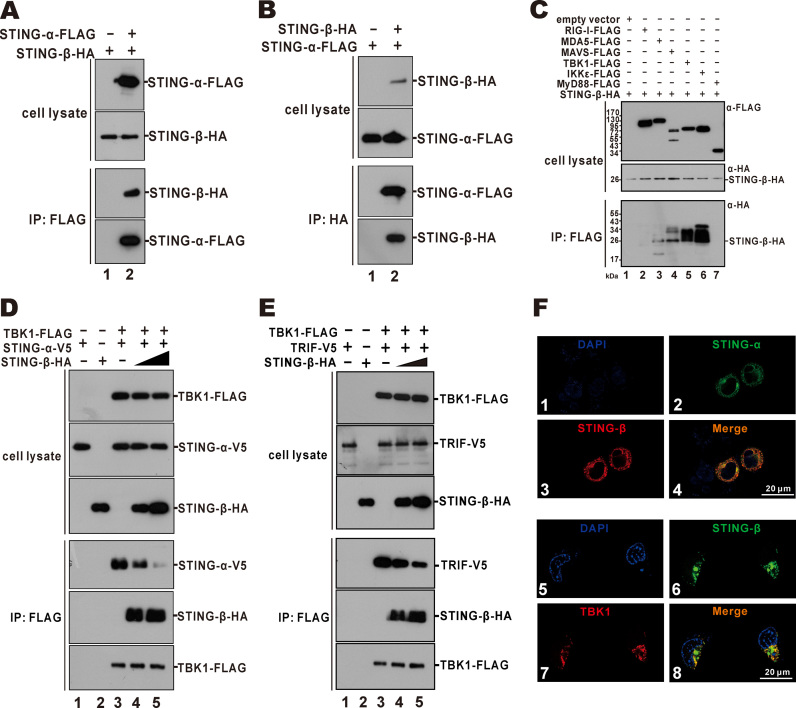
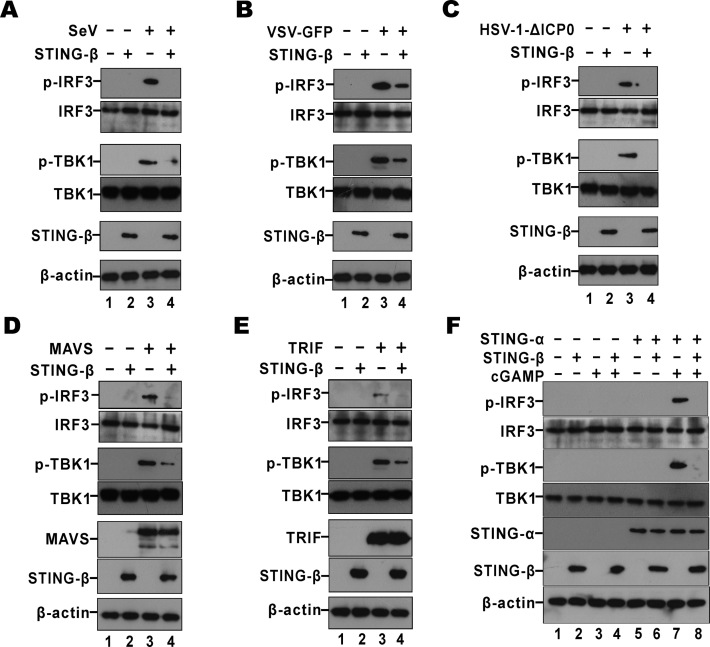
STING is a core adaptor in innate nucleic acid sensing in mammalian cells, on which different sensing pathways converge to induce type I interferon (IFN) production. Particularly, STING is activated by 2'3'-cGAMP, a cyclic dinucleotide containing mixed phosphodiester linkages and produced by cytoplasmic DNA sensor cGAS. Here, we reported on a novel transcript isoform of STING designated STING-β that dominantly inhibits innate nucleic acid sensing. STING-β without transmembrane domains was widely expressed at low levels in various human tissues and viral induction of STING-β correlated inversely with IFN-β production. The expression of STING-β declined in patients with lupus, in which type I IFNs are commonly overproduced. STING-β suppressed the induction of IFNs, IFN-stimulated genes and other cytokines by various immunostimulatory agents including cyclic dinucleotides, DNA, RNA and viruses, whereas depletion of STING-β showed the opposite effect. STING-β interacted with STING-α and antagonized its antiviral function. STING-β also interacted with TBK1 and prevented it from binding with STING-α, TRIF or other transducers. In addition, STING-β bound to 2'3'-cGAMP and impeded its binding with and activation of STING-α, leading to suppression of IFN-β production. Taken together, STING-β sequesters 2'3'-cGAMP second messenger and other transducer molecules to inhibit innate nucleic acid sensing dominantly.
STING 是哺乳动物细胞中先天核酸感应的核心衔接蛋白,不同的感应途径在此汇聚以诱导 I 型干扰素(IFN)的产生。特别是,STING 被 2'3'-cGAMP 激活,这是一种含有混合磷酸二酯键的环状二核苷酸,由细胞质 DNA 传感器 cGAS 产生。在这里,我们报道了一种新型的 STING 转录本异构体 STING-β,它主要抑制先天核酸感应。没有跨膜结构域的 STING-β 在各种人体组织中以低水平广泛表达,并且病毒诱导的 STING-β与 IFN-β 的产生呈负相关。狼疮患者的 STING-β 表达下降,而这些患者中 I 型 IFNs 通常过度产生。STING-β 抑制了各种免疫刺激剂(包括环二核苷酸、DNA、RNA 和病毒)诱导的 IFNs、IFN 刺激基因和其他细胞因子的产生,而 STING-β 的耗竭则显示出相反的效果。STING-β 与 STING-α 相互作用并拮抗其抗病毒功能。STING-β 还与 TBK1 相互作用,阻止其与 STING-α、TRIF 或其他转导子结合。此外,STING-β 与 2'3'-cGAMP 结合并阻碍其与 STING-α 的结合和激活,从而抑制 IFN-β 的产生。总之,STING-β 隔离了 2'3'-cGAMP 第二信使和其他转导子分子,从而主要抑制先天核酸感应。