Wei Dan, Zheng Ningning, Zheng Lanyan, Wang Leting, Song Liang, Sun Luning
Department of Pathophysiology, College of Basic Medical Science, China Medical University, Shenyang, China.
Department of Pathogen Biology, College of Basic Medical Science, China Medical University, Shenyang, China.
Front Pharmacol. 2018 Mar 2;9:137. doi: 10.3389/fphar.2018.00137. eCollection 2018.
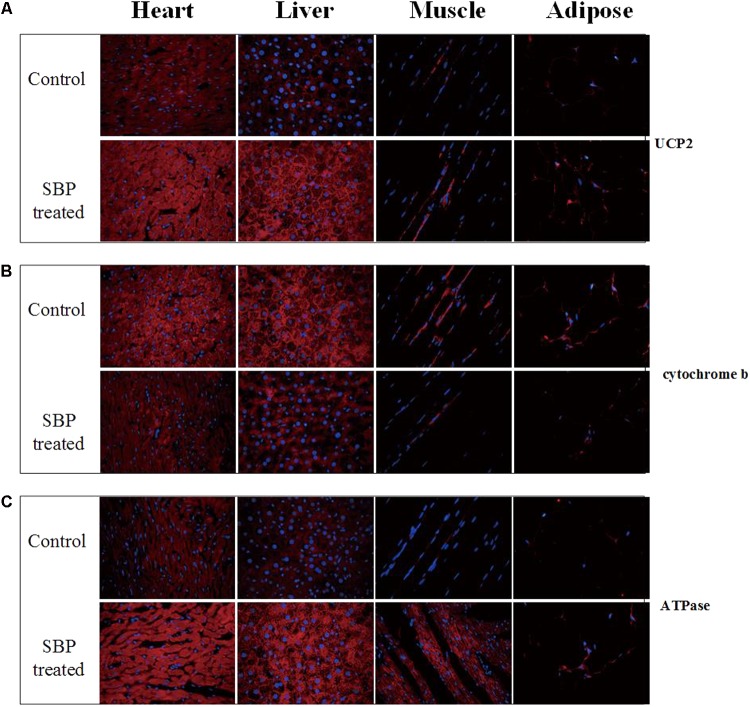
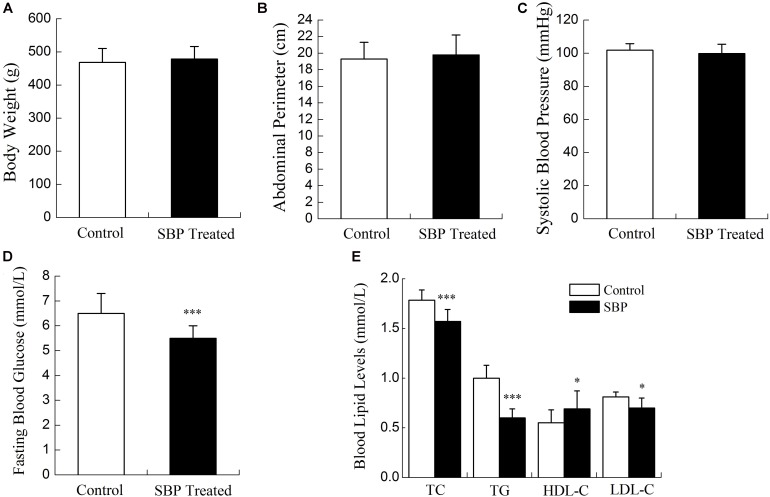
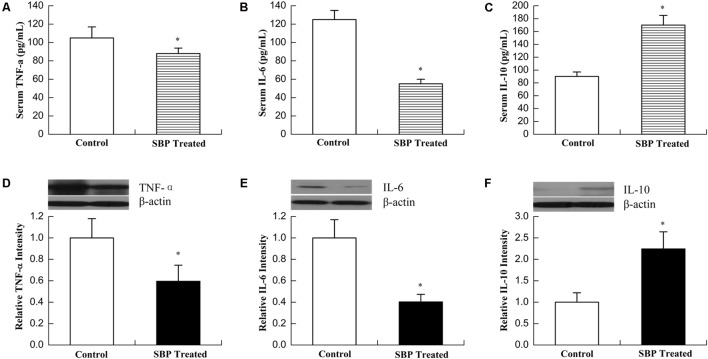
Metabolic syndrome (MS) is a global epidemic that has great socioeconomic and public health implications. This study reports observed effects of the Shexiang Baoxin Pill (SBP) in a rat model of MS and explores its underlying mechanisms of action. A diet-induced rat model of MS was established according to accepted methods, and the rats were randomly divided into two groups: a control group (0.9% NaCl, 100 mg/kgd) and a SBP-treated group (SBP, 100 mg/kgd). Systolic blood pressures, fasting blood glucose (FBS) levels, triglyceride (TG) levels, high-density lipoprotein cholesterol (HDL-C) levels, body weights, and abdominal perimeters were dynamically monitored and analyzed. Serum leptin, adiponectin, TNF-α, IL-6, and IL-10 levels were measured by ELISA. Leptin, adiponectin, TNF-α, IL-6, and IL-10 expression in adipose tissue, as well as AMP-activated protein kinase (AMPK) and peroxisome proliferator-activated receptor gamma coactivator 1-α (PGC-1α) expression in heart, liver, skeletal muscle, and adipose tissue was measured by western blot. Expression of the mitochondrial protein UCP2, Cytochrome b and ATPase was observed by immunofluorescent staining. SBP significantly decreased serum TG, TC, LDL-C levels and increased HDL-C levels. SBP also optimized the leptin/adiponectin ratio by decreasing leptin expression and increasing adiponectin expression in adipose tissue. SBP antagonized inflammatory reactions by promoting IL-10 expression in adipose tissue while inhibiting TNF-α and IL-6 expression. SBP improved lipid metabolism by up-regulating the expression of AMPK and PGC-1α. Furthermore, SBP decreased the severity of MS and its complications by adjusting the expression of several mitochondrial proteins, including UCP2, Cytochrome b and ATPase. SBP exhibits prominent therapeutic effects in the setting of MS. Possible mechanisms of action may be related to its anti-inflammatory and anti-oxidative characteristics, as well as its effects on improving lipid metabolism and protecting mitochondrial function.
代谢综合征(MS)是一种全球性流行病,具有重大的社会经济和公共卫生影响。本研究报告了麝香保心丸(SBP)在MS大鼠模型中的观察效果,并探讨其潜在作用机制。根据公认方法建立饮食诱导的MS大鼠模型,将大鼠随机分为两组:对照组(0.9%氯化钠,100mg/kg·d)和SBP治疗组(SBP,100mg/kg·d)。动态监测并分析收缩压、空腹血糖(FBS)水平、甘油三酯(TG)水平、高密度脂蛋白胆固醇(HDL-C)水平、体重和腹围。通过酶联免疫吸附测定法(ELISA)测量血清瘦素、脂联素、肿瘤坏死因子-α(TNF-α)、白细胞介素-6(IL-6)和白细胞介素-10(IL-10)水平。通过蛋白质免疫印迹法测量脂肪组织中瘦素、脂联素、TNF-α、IL-6和IL-10的表达,以及心脏、肝脏、骨骼肌和脂肪组织中AMP激活蛋白激酶(AMPK)和过氧化物酶体增殖物激活受体γ辅激活因子1-α(PGC-1α)的表达。通过免疫荧光染色观察线粒体蛋白解偶联蛋白2(UCP2)、细胞色素b和ATP酶的表达。SBP显著降低血清TG、总胆固醇(TC)、低密度脂蛋白胆固醇(LDL-C)水平,并提高HDL-C水平。SBP还通过降低脂肪组织中瘦素表达并增加脂联素表达来优化瘦素/脂联素比值。SBP通过促进脂肪组织中IL-10表达同时抑制TNF-α和IL-6表达来拮抗炎症反应。SBP通过上调AMPK和PGC-1α的表达来改善脂质代谢。此外,SBP通过调节包括UCP2、细胞色素b和ATP酶在内的几种线粒体蛋白的表达来降低MS及其并发症的严重程度。SBP在MS情况下表现出显著的治疗效果。可能的作用机制可能与其抗炎和抗氧化特性以及改善脂质代谢和保护线粒体功能的作用有关。