Soliman Sameh S M, Raizada Manish N
Sharjah Institute for Medical Research, College of Pharmacy, University of Sharjah, Sharjah, United Arab Emirates.
Faculty of Pharmacy, Zagazig University, Zagazig, Egypt.
Front Microbiol. 2018 Mar 2;9:353. doi: 10.3389/fmicb.2018.00353. eCollection 2018.
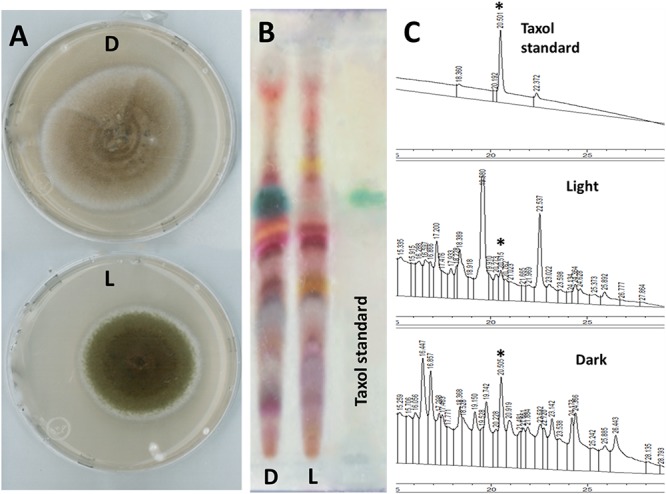
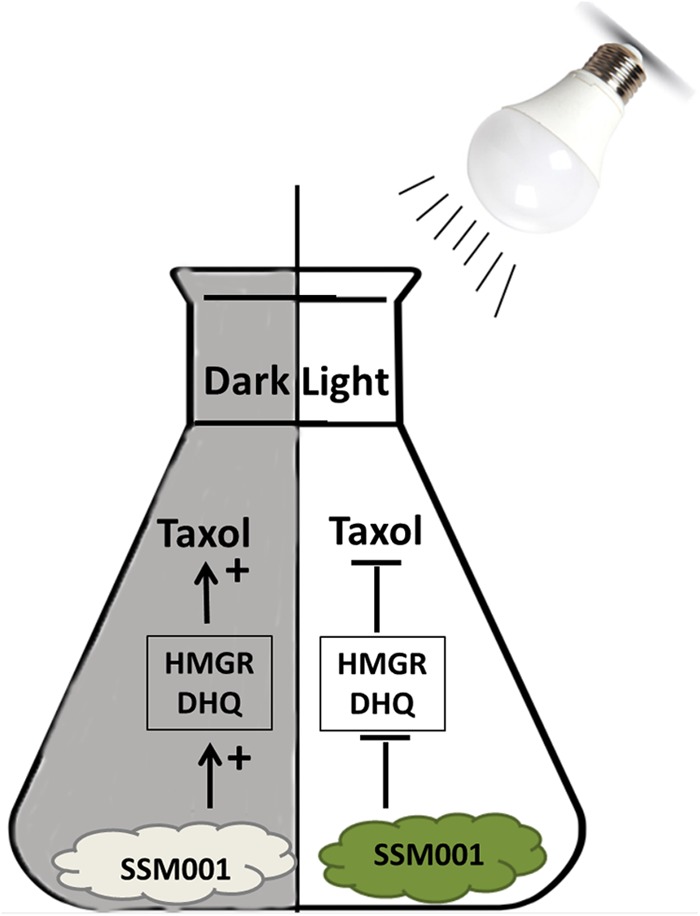
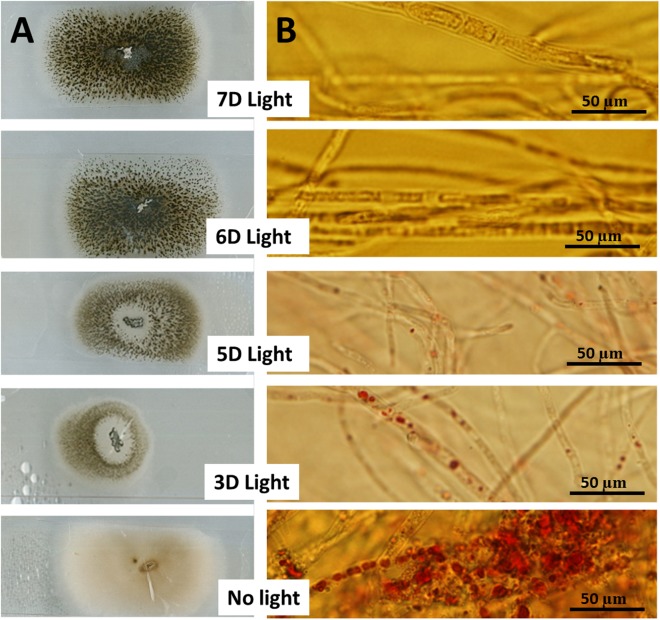
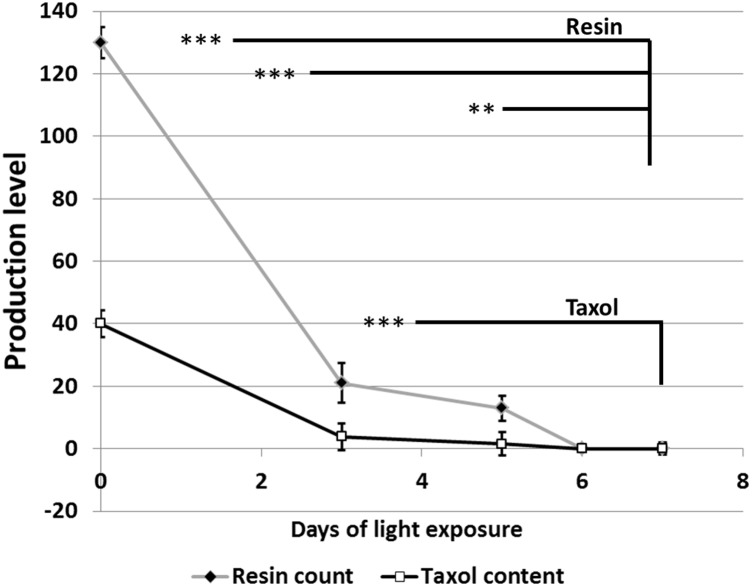
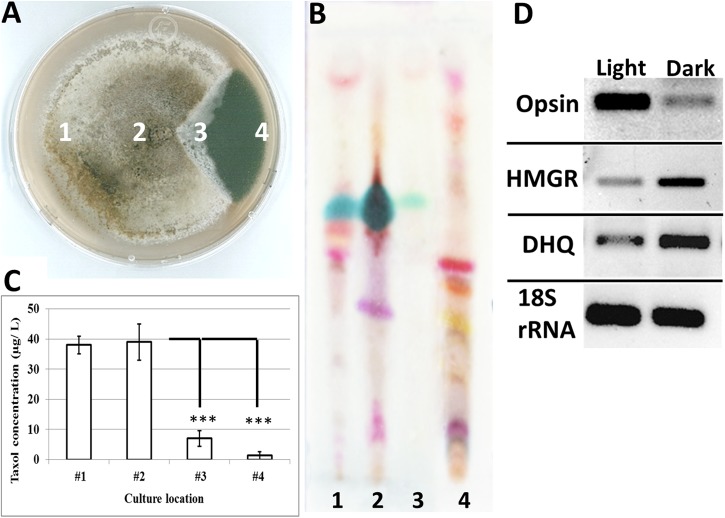
Fungal Taxol acquired lots of attention in the last few decades mainly because of the hope that fungi could be manipulated more easily than yew trees to scale up the production level of this valuable anticancer drug. Several researchers have studied diverse factors to enhance fungal Taxol production. However, up to date fungal Taxol production has never been enhanced to the commercial level. We have hypothesized that optimization of fungal Taxol production may require clear understanding of the fungal habitat in its original host plant. One major feature shared by all fungal endophytes is that they are located in the internal plant tissues where darkness is prominent; hence here the effect of light on fungal Taxol production was tested. Incubation of Taxol-producing endophytic SSM001 fungus in light prior to inoculation in Taxol production culture media showed dramatic loss of Taxol accumulation, significant reduction in Taxol-containing resin bodies and reduction in the expression of genes known to be involved in Taxol biosynthesis. The loss of Taxol production was accompanied by production of dark green pigments. Pigmentation is a fungal protection mechanism which is photoreceptor mediated and induced by light. Opsin, a known photoreceptor involved in light perception and pigment production, was identified in SSM001 by genome sequencing. SSM001 opsin gene expression was induced by white light. The results from this study indicated that the endophytic fungus SSM001 required the dark habitat of its host plant for Taxol production and hence this biosynthetic pathway shows a negative response to light.
在过去几十年里,真菌紫杉醇备受关注,主要是因为人们希望相较于红豆杉,真菌更易于操控,从而扩大这种珍贵抗癌药物的生产规模。一些研究人员研究了多种因素以提高真菌紫杉醇的产量。然而,迄今为止,真菌紫杉醇的产量从未提高到商业水平。我们推测,优化真菌紫杉醇的生产可能需要清楚了解其在原始宿主植物中的真菌栖息地。所有内生真菌共有的一个主要特征是它们位于植物内部组织中,那里光线昏暗;因此,在此测试了光照对真菌紫杉醇产量的影响。在接种到紫杉醇生产培养基之前,将产紫杉醇的内生真菌SSM001在光照下培养,结果显示紫杉醇积累量急剧下降,含紫杉醇的树脂体显著减少,且参与紫杉醇生物合成的已知基因的表达也降低。紫杉醇产量的损失伴随着深绿色色素的产生。色素沉着是一种由光感受器介导并由光诱导的真菌保护机制。通过基因组测序在SSM001中鉴定出一种已知的参与光感知和色素产生的光感受器视蛋白。SSM001视蛋白基因的表达受白光诱导。这项研究的结果表明,内生真菌SSM001需要其宿主植物的黑暗栖息地来生产紫杉醇,因此这条生物合成途径对光呈现负反应。