Laboratory of Biochemistry, Faculty of Pharmaceutical Sciences, Tokushima Bunri University, Tokushima 770-8514, Japan.
Division of Virology, Department of Microbiology and Immunology, Institute of Medical Science, University of Tokyo, Tokyo 108-8639, Japan.
J Biol Chem. 2018 May 11;293(19):7126-7138. doi: 10.1074/jbc.RA117.001683. Epub 2018 Mar 19.
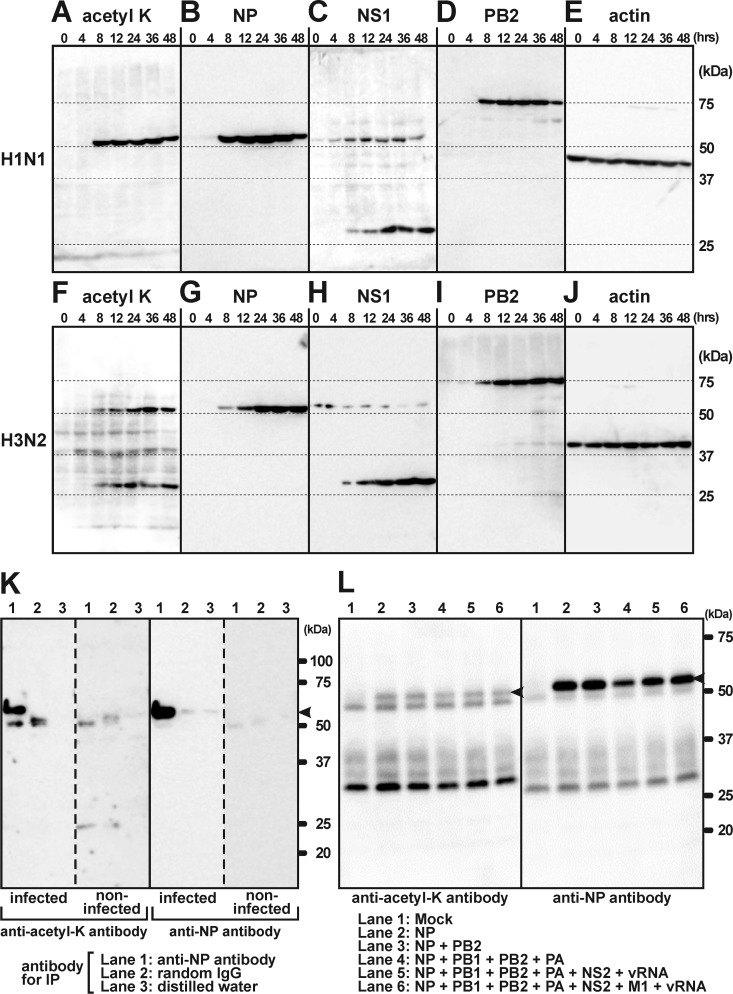
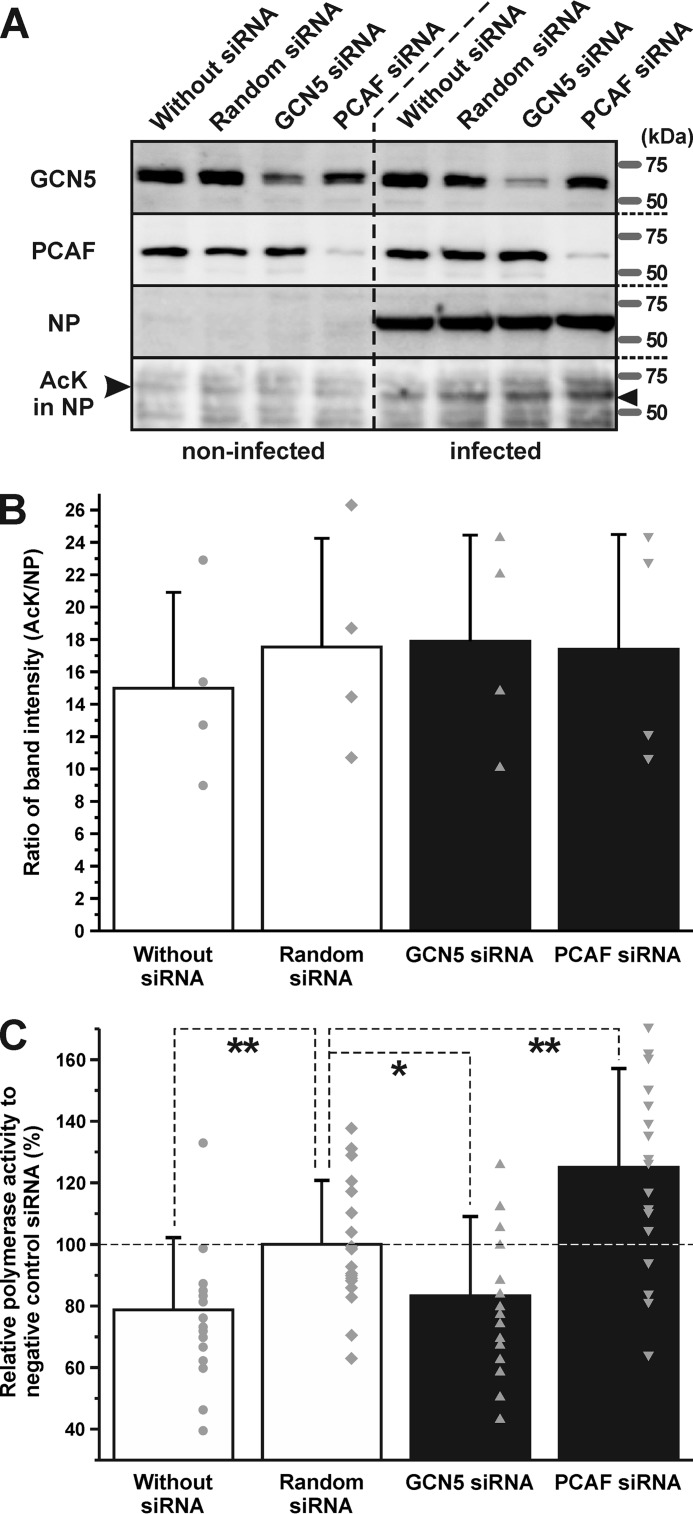
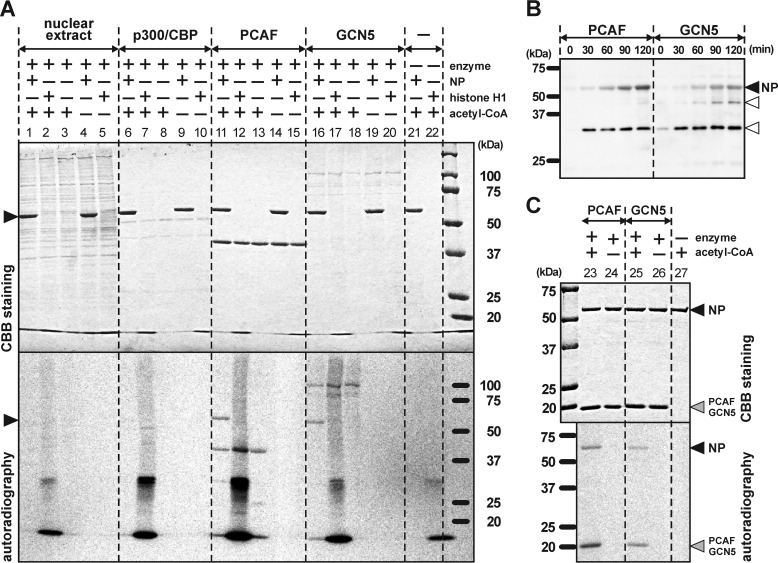
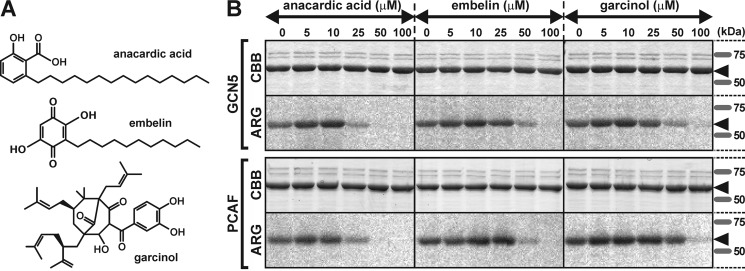
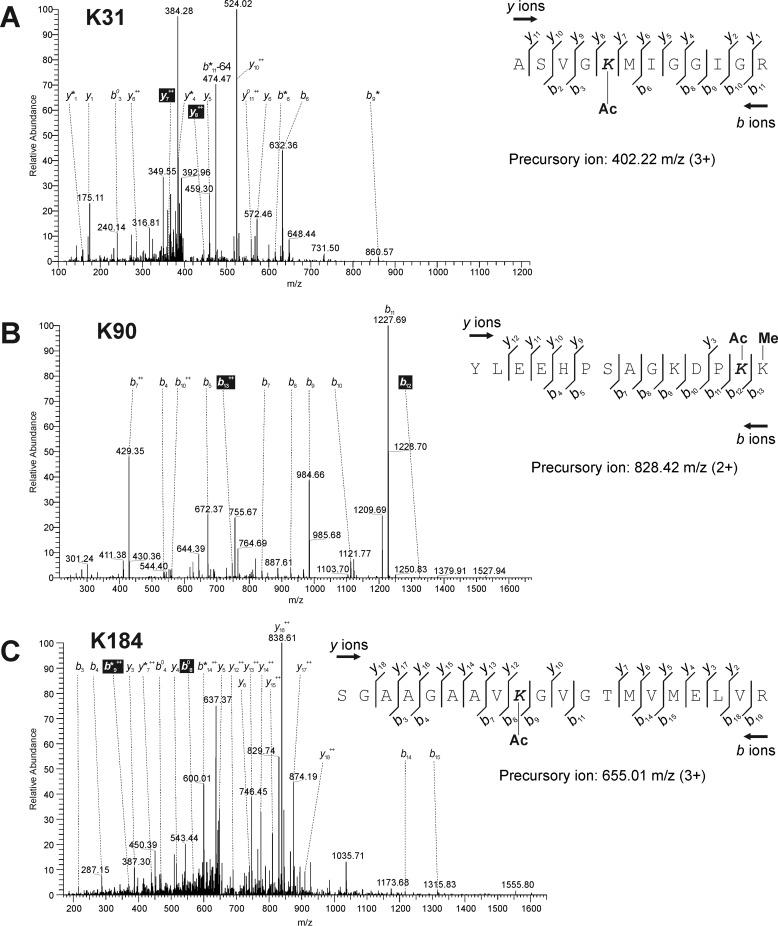
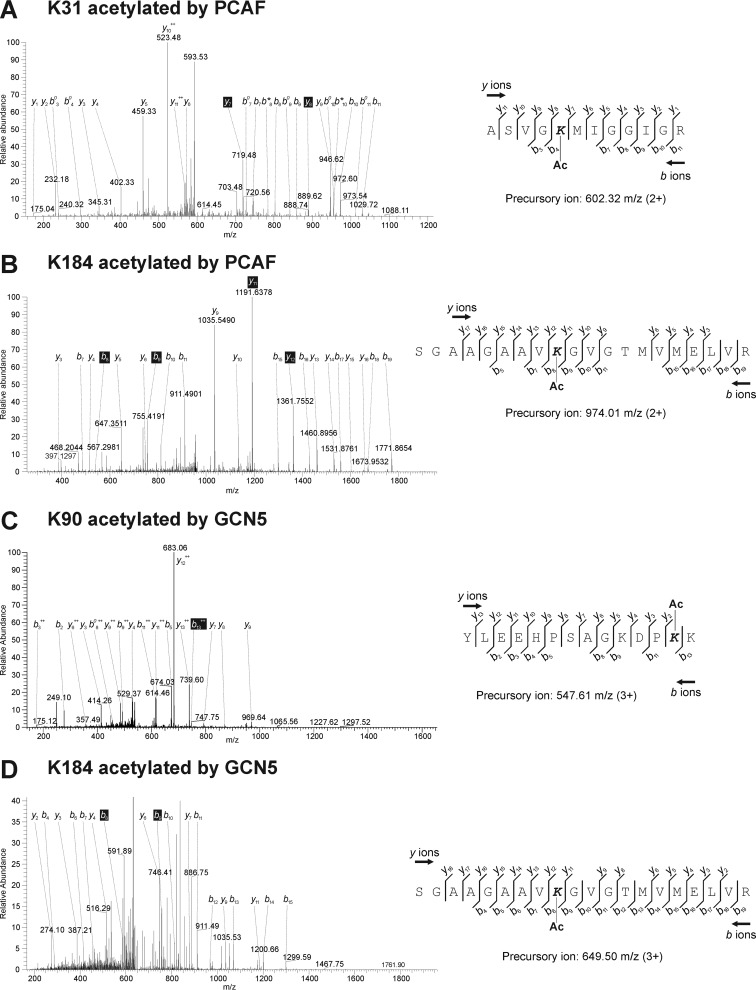
Histone acetylation plays crucial roles in transcriptional regulation and chromatin organization. Viral RNA of the influenza virus interacts with its nucleoprotein (NP), whose function corresponds to that of eukaryotic histones. NP regulates viral replication and has been shown to undergo acetylation by the cAMP-response element (CRE)-binding protein (CBP) from the host. However, whether NP is the target of other host acetyltransferases is unknown. Here, we show that influenza virus NP undergoes acetylation by the two host acetyltransferases GCN5 and P300/CBP-associated factor (PCAF) and that this modification affects viral polymerase activities. Western blot analysis with anti-acetyl-lysine antibody on cultured A549 human lung adenocarcinoma epithelial cells infected with different influenza virus strains indicated acetylation of the viral NP. A series of biochemical analyses disclosed that the host lysine acetyltransferases GCN5 and PCAF acetylate NP MS experiments identified three lysine residues as acetylation targets in the host cells and suggested that Lys-31 and Lys-90 are acetylated by PCAF and GCN5, respectively. RNAi-mediated silencing of and did not change acetylation levels of NP. However, interestingly, viral polymerase activities were increased by the silencing and were decreased by the silencing, suggesting that acetylation of the Lys-31 and Lys-90 residues has opposing effects on viral replication. Our findings suggest that epigenetic control of NP via acetylation by host acetyltransferases contributes to regulation of polymerase activity in the influenza A virus.
组蛋白乙酰化在转录调控和染色质组织中起着至关重要的作用。流感病毒的 RNA 与核蛋白 (NP) 相互作用,其功能与真核生物的组蛋白相对应。NP 调节病毒复制,并已被证明可被宿主的环腺苷酸反应元件 (CRE)-结合蛋白 (CBP) 乙酰化。然而,NP 是否是其他宿主乙酰转移酶的靶标尚不清楚。在这里,我们表明流感病毒 NP 可被两种宿主乙酰转移酶 GCN5 和 CBP 相关因子 (PCAF) 乙酰化,并且这种修饰会影响病毒聚合酶活性。用抗乙酰化赖氨酸抗体对感染不同流感病毒株的培养的 A549 人肺腺癌细胞进行的 Western blot 分析表明病毒 NP 发生了乙酰化。一系列生化分析表明宿主赖氨酸乙酰转移酶 GCN5 和 PCAF 乙酰化 NP。MS 实验鉴定了宿主细胞中三个赖氨酸残基作为乙酰化靶标,并提示 Lys-31 和 Lys-90 分别被 PCAF 和 GCN5 乙酰化。和 的 RNAi 介导的沉默并没有改变 NP 的乙酰化水平。然而,有趣的是,聚合酶活性通过沉默增加,通过沉默降低,表明 Lys-31 和 Lys-90 残基的乙酰化对病毒复制有相反的影响。我们的研究结果表明,宿主乙酰转移酶通过乙酰化对 NP 的表观遗传控制有助于调节流感 A 病毒的聚合酶活性。