Tianjin Neurological Institute, Key Laboratory of Post-neurotrauma Neuro-repair and Regeneration in Central Nervous System, Ministry of Education and Tianjin City, Tianjin 300052, China.
Department of Neurosurgery, Tianjin Medical University General Hospital, Tianjin 300052, China.
Theranostics. 2018 Feb 7;8(6):1540-1557. doi: 10.7150/thno.22952. eCollection 2018.
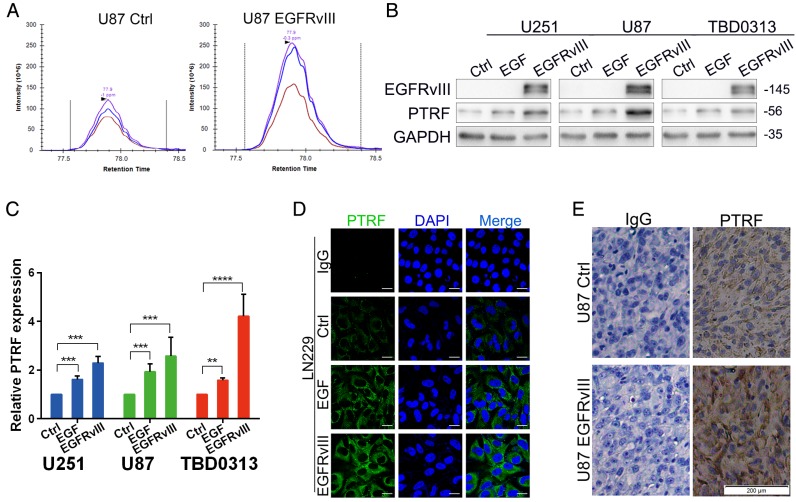
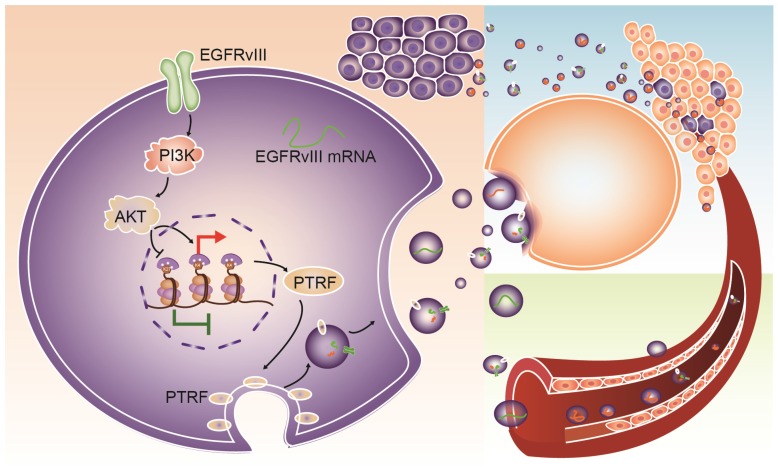
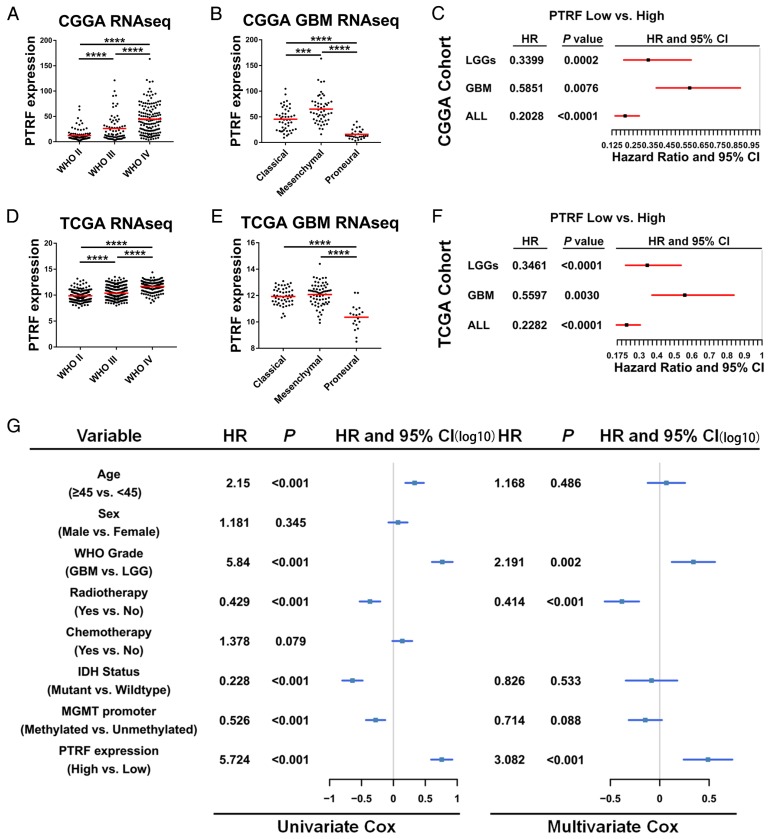
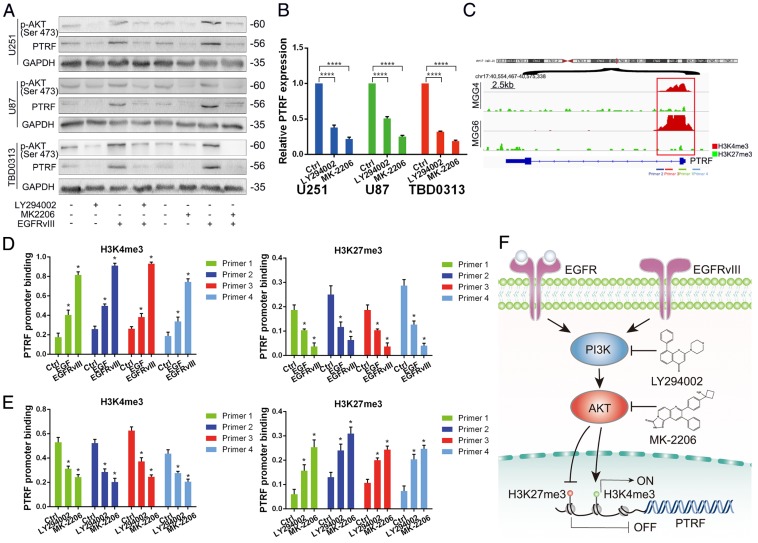
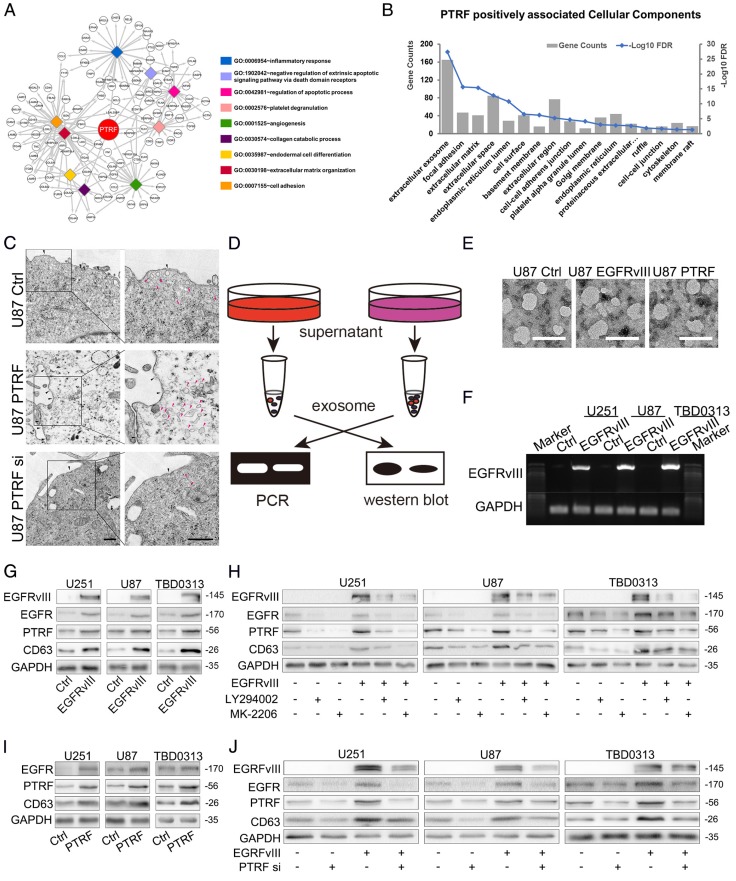
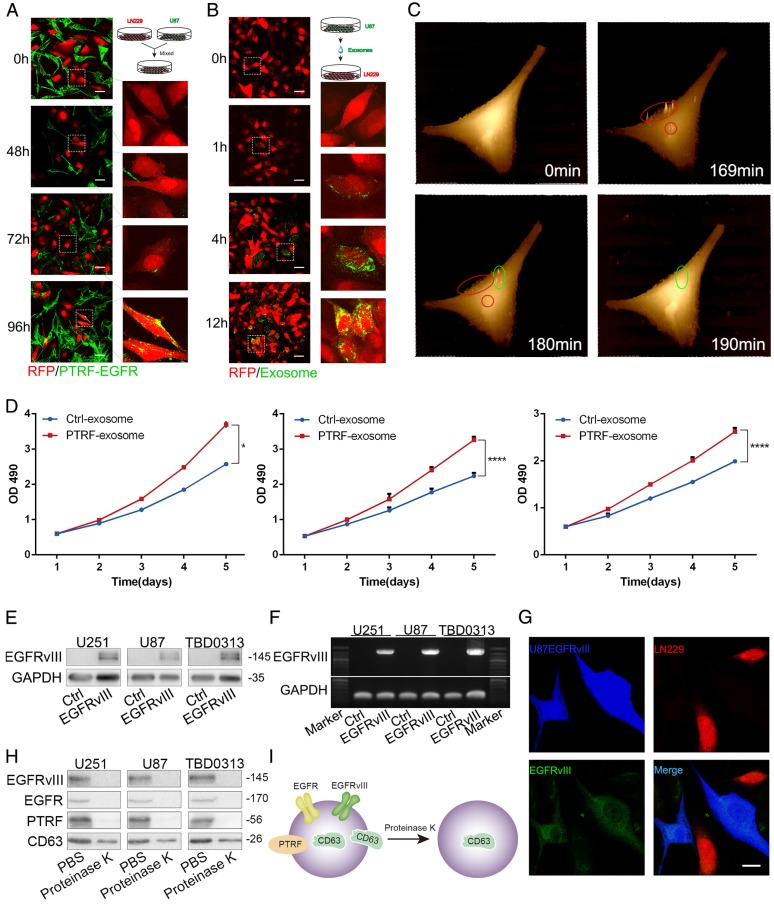
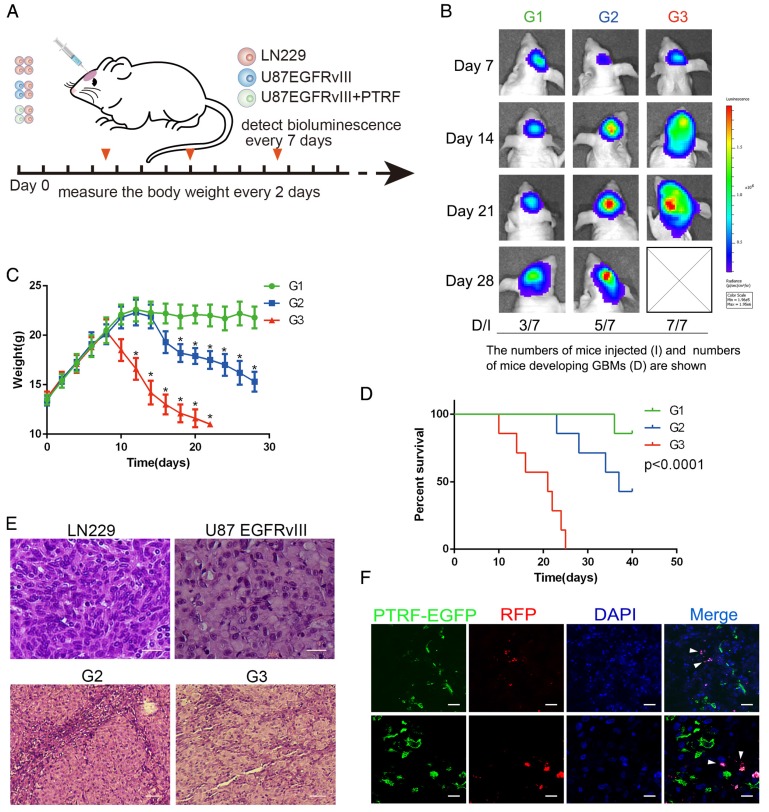
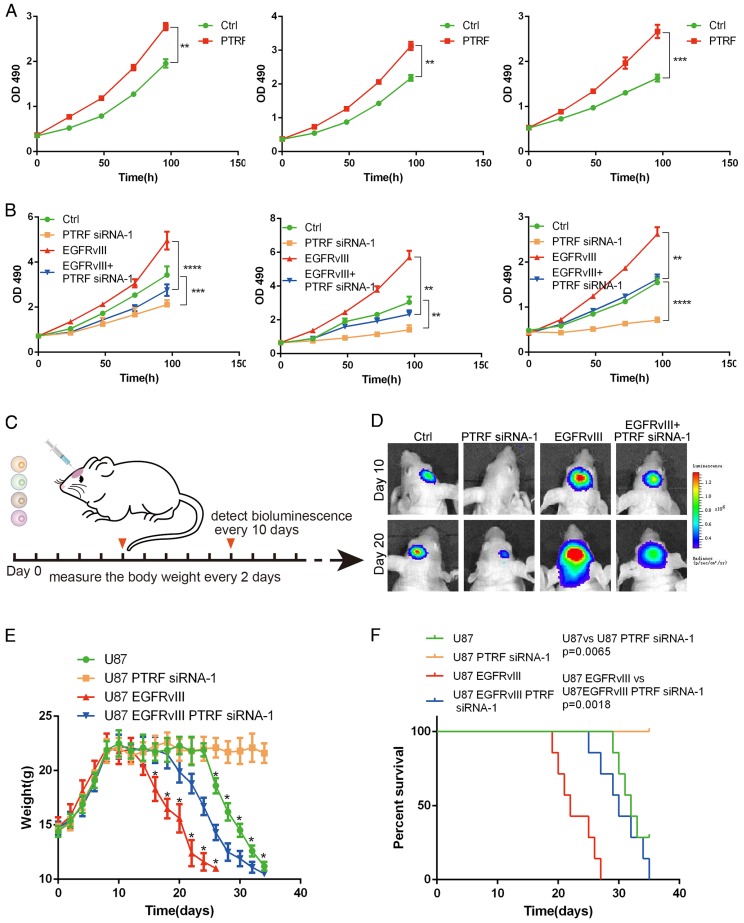
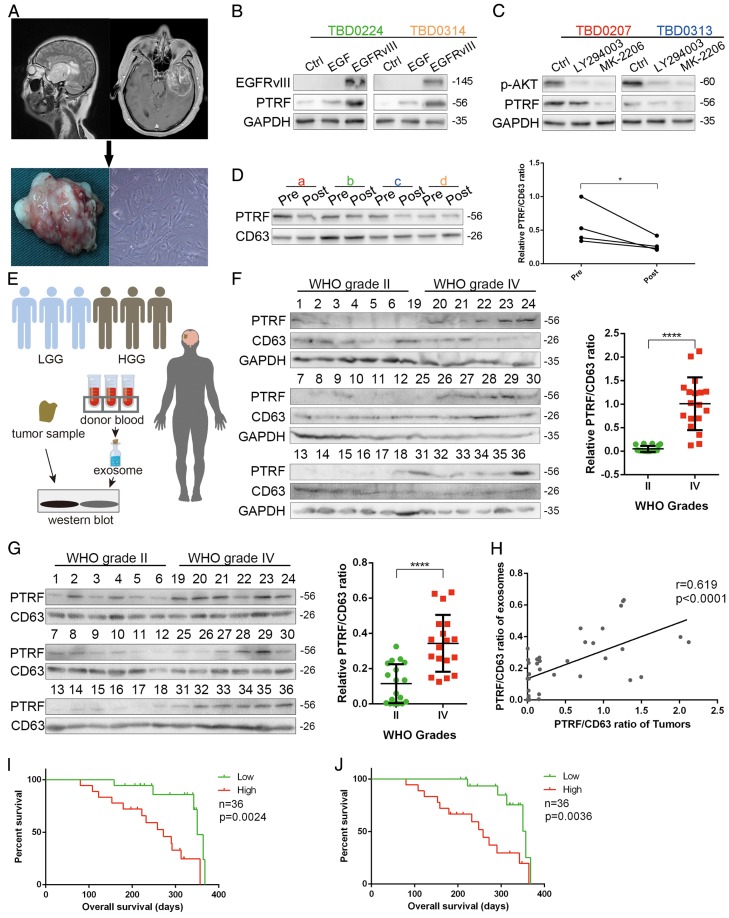
Exosomes play critical roles in intercellular communication in both nearby and distant cells in individuals and organs. Polymerase I and transcript release factor (PTRF), also known as Cavin1, has previously been described as a critical factor in caveola formation, and aberrant PTRF expression has been reported in various malignancies. However, the function of PTRF in tumor progression remains controversial, and its role in glioma is poorly understood. In this study, we report that PTRF is associated with malignancy grade and poor prognosis in glioma patients. Our previous study using two proteomics methods, tandem mass tag (TMT) and data-independent acquisition (DIA), showed that EGFRvIII overexpression increased PTRF expression at the protein level. In contrast, blocking PI3K and AKT using LY294002 and MK-2206, respectively, decreased PTRF expression, showing that PTRF is regulated in the EGFR/PI3K/AKT pathway. ChIP-PCR analysis showed that PTRF is transcriptionally regulated by the H3K4me3 and H3K27me3 modifications. Furthermore, PTRF overexpression increased exosome secretion and induced cell growth in vitro. More importantly, overexpressing PTRF induced the malignancy of nearby cells in vivo, suggesting that PTRF alters the microenvironment through intercellular communication via exosomes. Furthermore, analysis of clinical samples showed a positive correlation between tumor grade and PTRF expression in both tumor tissues and exosomes isolated from blood harvested from glioma patients, and PTRF expression in exosomes isolated from the sera of GBM patients was decreased after surgery. In conclusion, PTRF serves as a promising biomarker in both tumor samples and serum exosomes, thus facilitating the detection of glioma and potentially serving as a therapeutic target for glioblastoma multiforme.
外泌体在个体和器官中邻近和远处细胞的细胞间通讯中发挥着关键作用。聚合酶 I 和转录释放因子(PTRF),也称为 Cavin1,先前被描述为形成小窝的关键因素,并且在各种恶性肿瘤中已经报道了异常的 PTRF 表达。然而,PTRF 在肿瘤进展中的功能仍然存在争议,其在神经胶质瘤中的作用知之甚少。在这项研究中,我们报告 PTRF 与神经胶质瘤患者的恶性程度和预后不良相关。我们之前使用两种蛋白质组学方法,串联质量标签(TMT)和数据非依赖性采集(DIA)的研究表明,EGFRvIII 过表达增加了 PTRF 在蛋白质水平上的表达。相比之下,分别使用 LY294002 和 MK-2206 阻断 PI3K 和 AKT,降低了 PTRF 的表达,表明 PTRF 在 EGFR/PI3K/AKT 通路中受到调控。ChIP-PCR 分析表明,PTRF 是由 H3K4me3 和 H3K27me3 修饰转录调控的。此外,PTRF 过表达增加了外泌体的分泌并诱导体外细胞生长。更重要的是,过表达 PTRF 诱导体内邻近细胞的恶性转化,表明 PTRF 通过外泌体通过细胞间通讯改变微环境。此外,对临床样本的分析表明,肿瘤组织和从神经胶质瘤患者采集的血液中分离的外泌体中肿瘤分级与 PTRF 表达之间存在正相关,并且从 GBM 患者血清中分离的外泌体中的 PTRF 表达在手术后降低。总之,PTRF 既是肿瘤样本又是血清外泌体中的有前途的生物标志物,因此有利于检测神经胶质瘤,并可能成为多形性胶质母细胞瘤的治疗靶标。